

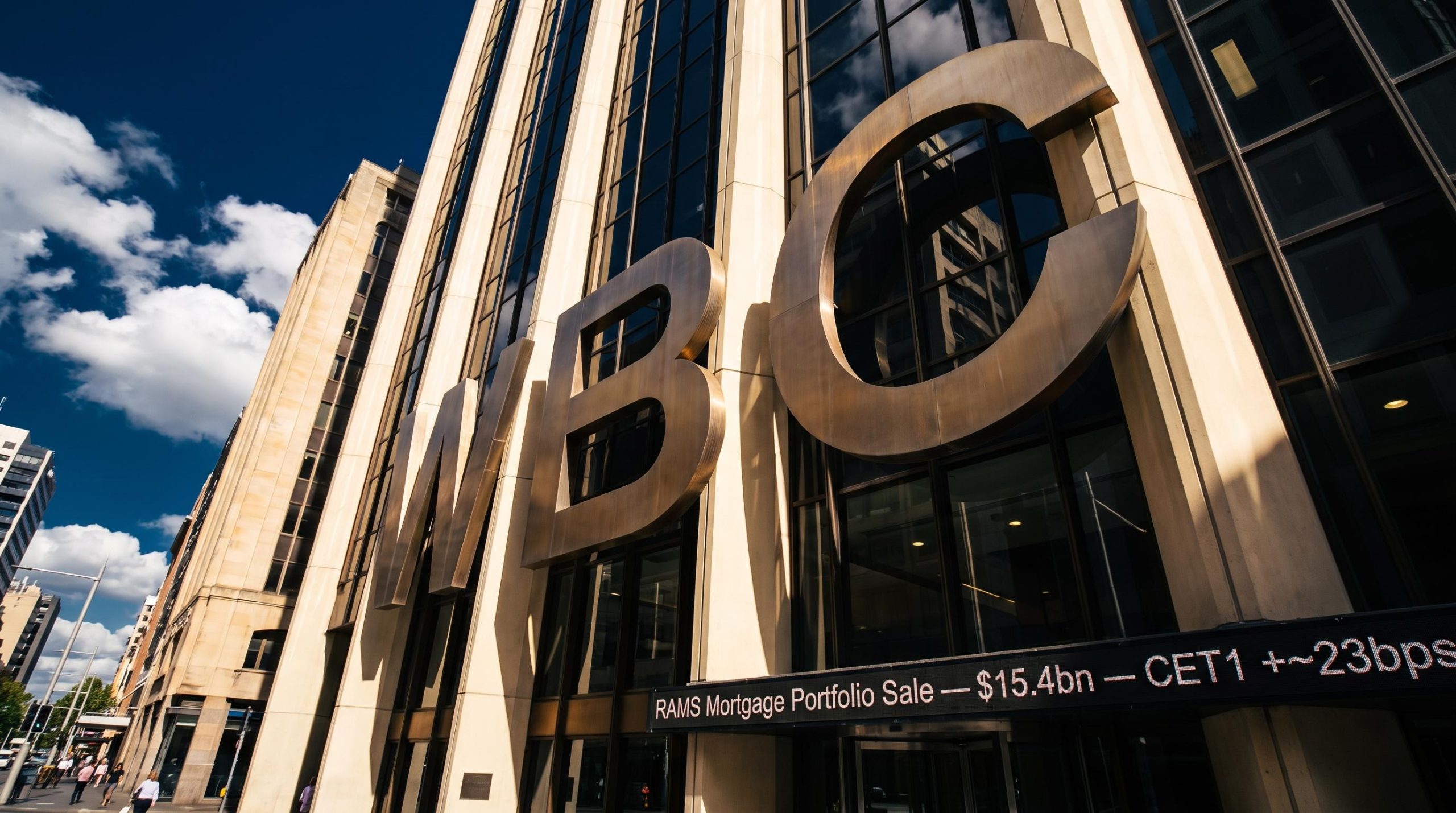
Westpac Banking Corporation has completed the sale of its RAMS mortgage portfolio, valued at approximately $15.4 billion at completion, to a consortium comprising Pepper Money, credit funds and accounts managed by KKR, and PIMCO managed funds. The transaction strengthens the Westpac balance sheet and lifts its Common Equity Tier 1 (CET1) ratio by approximately 23 basis points. It marks a further step in the bank’s simplification strategy.
What the deal delivers for Westpac
The completed RAMS mortgage portfolio sale delivers two stated benefits for Westpac: a strengthened balance sheet and reduced operational complexity.
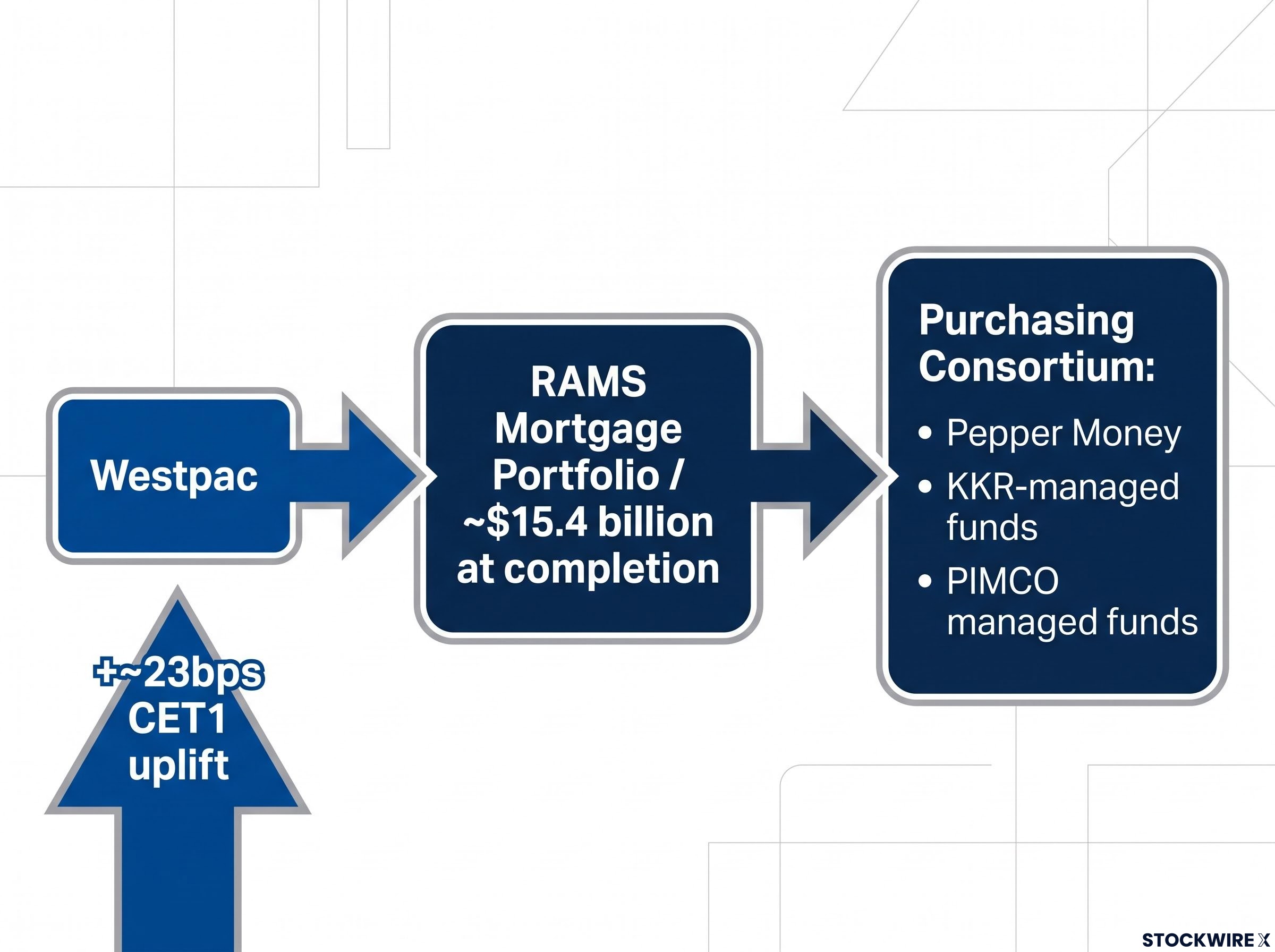
The most quantifiable outcome is the capital uplift. Westpac’s CET1 ratio has increased by approximately 23 basis points following completion. For bank investors, improvements in capital ratios matter because they enhance the regulatory buffer, provide greater balance sheet flexibility, and can support the capacity for future shareholder returns.
It should be noted that neither the sale price nor any accounting gain or loss on the transaction was disclosed in the announcement.
The RAMS portfolio transaction costs included a $75 million post-tax charge to reported net profit, confirmed ahead of the 1H26 results as Westpac also added new provisions for energy-intensive sector exposures.
| Metric | Detail | Investor Significance |
|---|---|---|
| Portfolio size | ~$15.4bn at completion | Material reduction in balance sheet complexity |
| CET1 impact | +~23bps | Strengthened capital position |
| Buyer | Pepper Money + KKR-managed funds + PIMCO managed funds | Smooth transition partner secured |
James Hutton, Managing Director, Home Lending
“The completion of this transaction further simplifies Westpac and reflects our ongoing focus on becoming a simpler, stronger bank delivering great outcomes for our customers. Throughout the transition, our priority has been supporting RAMS customers and ensuring a smooth transition to Pepper Money. I’d like to thank our customers and employees for their support.”
When big ASX news breaks, our subscribers know first
Understanding CET1 and why bank simplification matters
The Common Equity Tier 1 (CET1) ratio is the core measure of a bank’s capital strength relative to its risk-weighted assets. In simple terms, it shows how much high-quality capital a bank holds to absorb potential losses.
A higher CET1 ratio generally benefits investors. It signals greater resilience, provides regulatory headroom, and can improve a bank’s capacity to pay dividends or conduct buybacks.
Westpac 1H26 results confirmed a CET1 ratio of 12.4% alongside $2.7 billion in surplus capital, with the pending RAMS portfolio completion flagged as providing a further 22 basis points of uplift to that position.
By divesting a non-core mortgage portfolio, Westpac has freed up capital and reduced operational complexity in one move. The ~23bps uplift is modest but positive.
Why investors watch CET1:
-
Signals balance sheet strength
-
Underpins capacity for shareholder returns
-
Provides a buffer against economic shocks
The simplification strategy in focus
The RAMS exit sits within Westpac’s stated focus on becoming “a simpler, stronger bank delivering great outcomes for our customers.”
The investment case is straightforward. Shedding non-core assets sharpens the bank’s focus on its core operations while improving capital efficiency. Throughout the process, the transition of RAMS customers to Pepper Money was a stated priority.
Strategic takeaways from the transaction include:
-
Non-core RAMS portfolio divested
-
Capital position strengthened (~23bps CET1)
-
Operational complexity reduced
The completed sale advances Westpac’s simplification agenda, delivering a stronger capital position and a leaner operational footprint in a single transaction.
Stay Ahead on ASX Banking and Finance News
Big News Blast delivers FREE breaking ASX financial sector news directly to your inbox within minutes of release, complete with in-depth analysis. Join 20,000+ investors who never miss a market-moving announcement. Click the “Free Alerts” button at StockWire X to get ahead of the market the moment news breaks.