Three central banks, five of the world’s most valuable companies reporting within days of each other, and a market still unable to answer the one question underpinning current tech valuations: does AI spending eventually pay off at scale. This week does not offer many places to hide.
Barclays strategists, led by Emmanuel Cau, are flagging this compressed calendar as a stress test for equity markets unlike anything in recent memory. The Federal Reserve, European Central Bank (ECB), and Bank of Japan (BOJ) will all deliver decisions and guidance before the week is out, while Microsoft, Meta, Amazon, and Apple report earnings with the AI capital expenditure debate still unresolved. Alphabet’s results failed to settle investor nerves. High real interest rates running beneath all of this reduce the market’s cushion for disappointment at any point in the sequence.
This piece maps each catalyst in order of its market-moving potential, identifies what signals actually matter beyond the headline decisions, and gives you a framework for interpreting outcomes as they land. The decisions themselves are largely priced in. What is not priced in is the tone, the guidance, and what happens when multiple unexpected signals arrive simultaneously.
Why this week is structurally different from a typical catalyst-heavy stretch
Busy weeks happen. What makes this one different is not the number of events but how they interact with each other. Central bank tone directly affects the discount rate applied to AI capital expenditure narratives. At the same time, AI earnings guidance affects the growth expectations central banks themselves reference. These are not parallel storylines. They are analytically entangled.
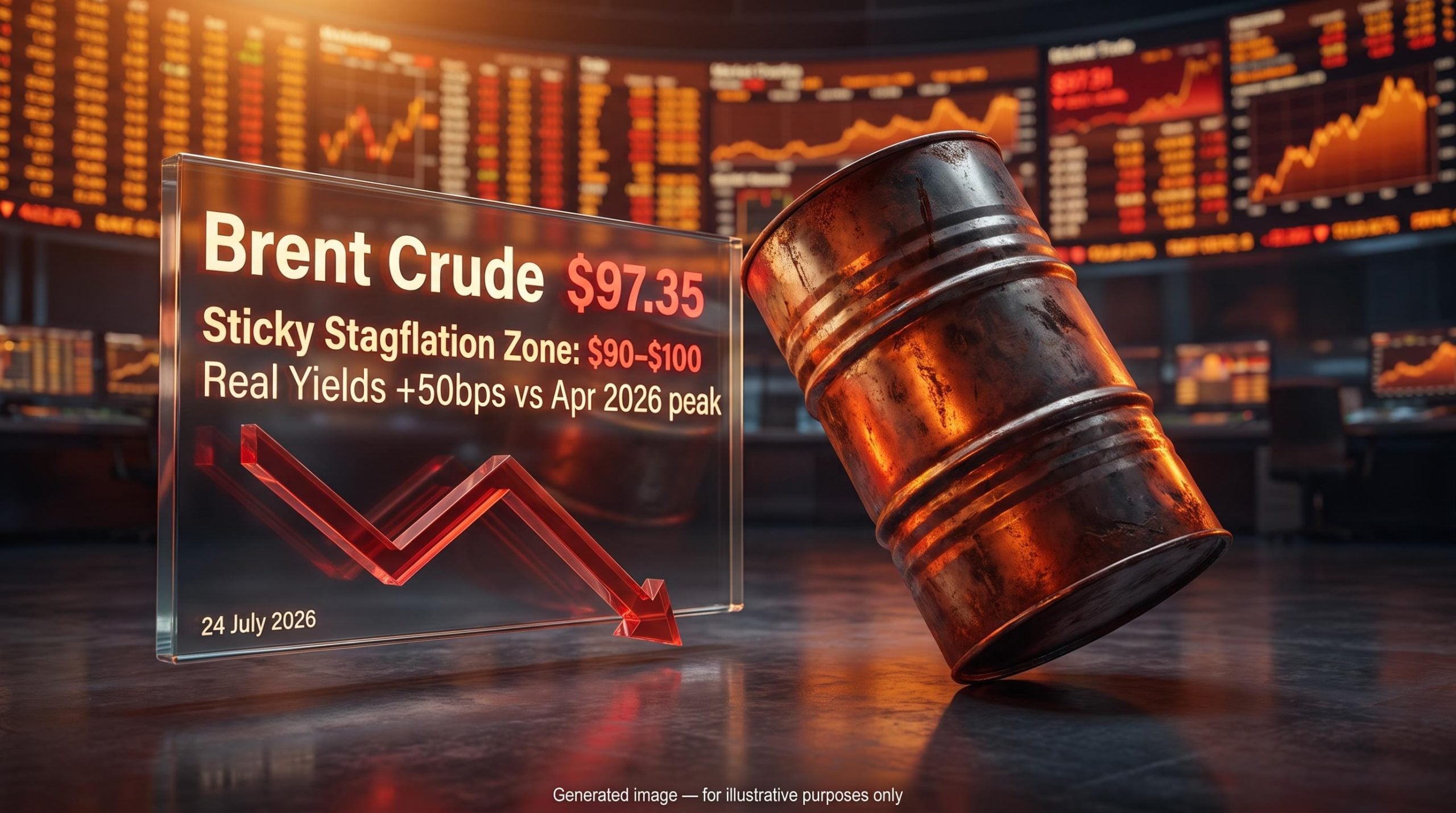
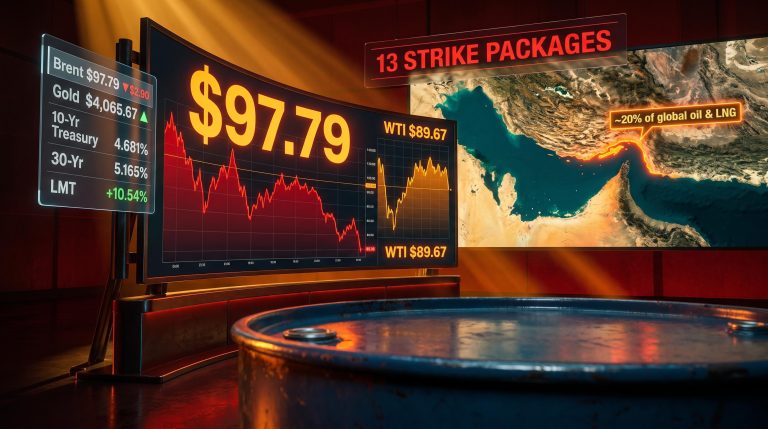
That entanglement matters more than usual because of the rate environment. The 10-year Treasury yield sits at approximately 4.66%; the 30-year is near 5.14%. S&P 500 earnings are expected to grow approximately 24.5% year-over-year for calendar year 2026, setting a demanding bar that leaves almost no room for negative surprises.
AI infrastructure investment contributed approximately 1.09 percentage points of a 2.0% headline US GDP growth rate in Q1 2026, a share large enough that the Federal Reserve has launched internal working groups explicitly tasked with evaluating whether it represents durable productivity growth or front-loaded demand that will compress once the buildout cycle matures.
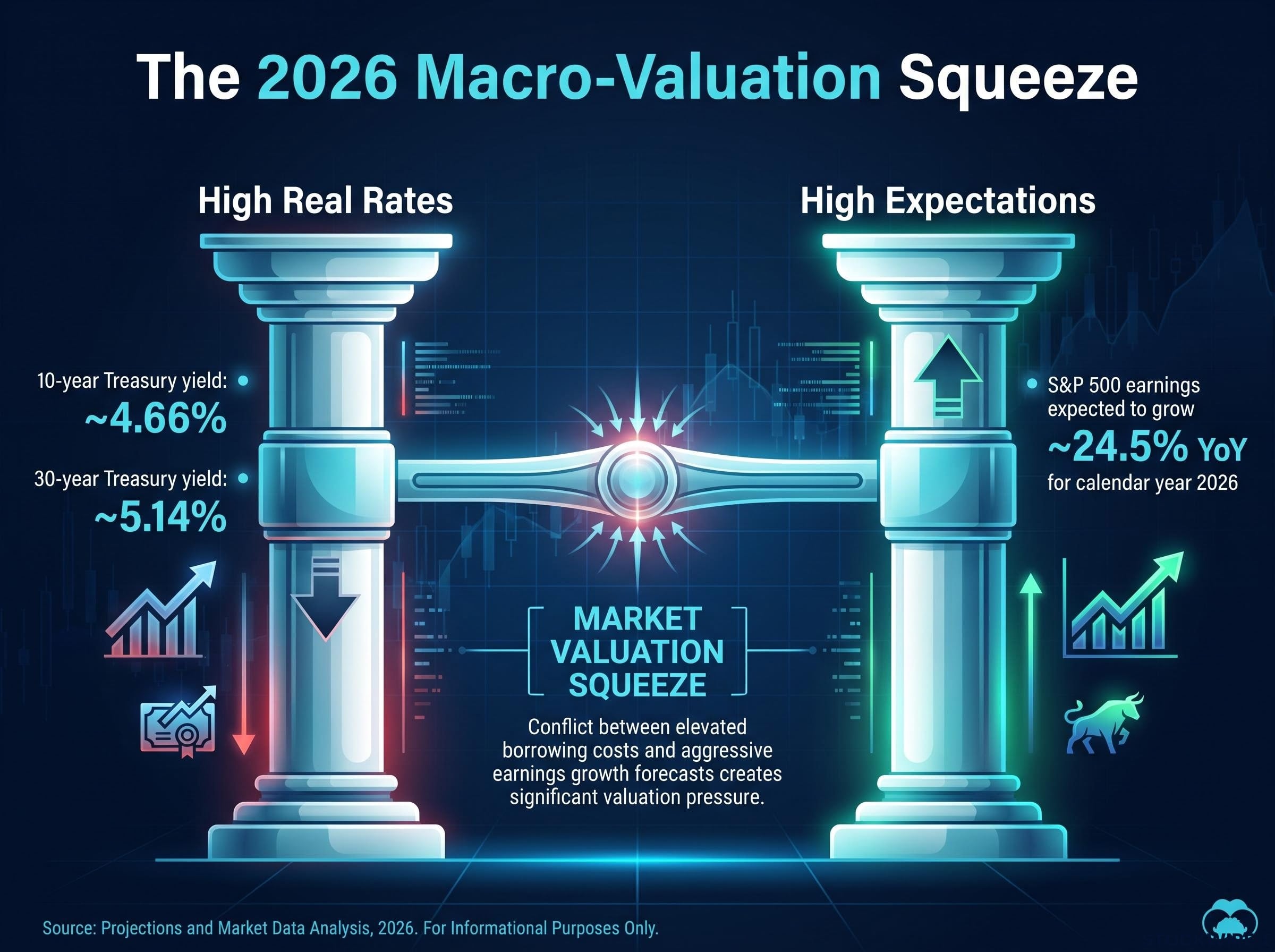
Barclays strategists, led by Emmanuel Cau, characterise this environment as one where elevated real interest rates are rarely accompanied by low market volatility. Historically, high real rate regimes are associated with episodic volatility, not stable, low-volatility conditions.
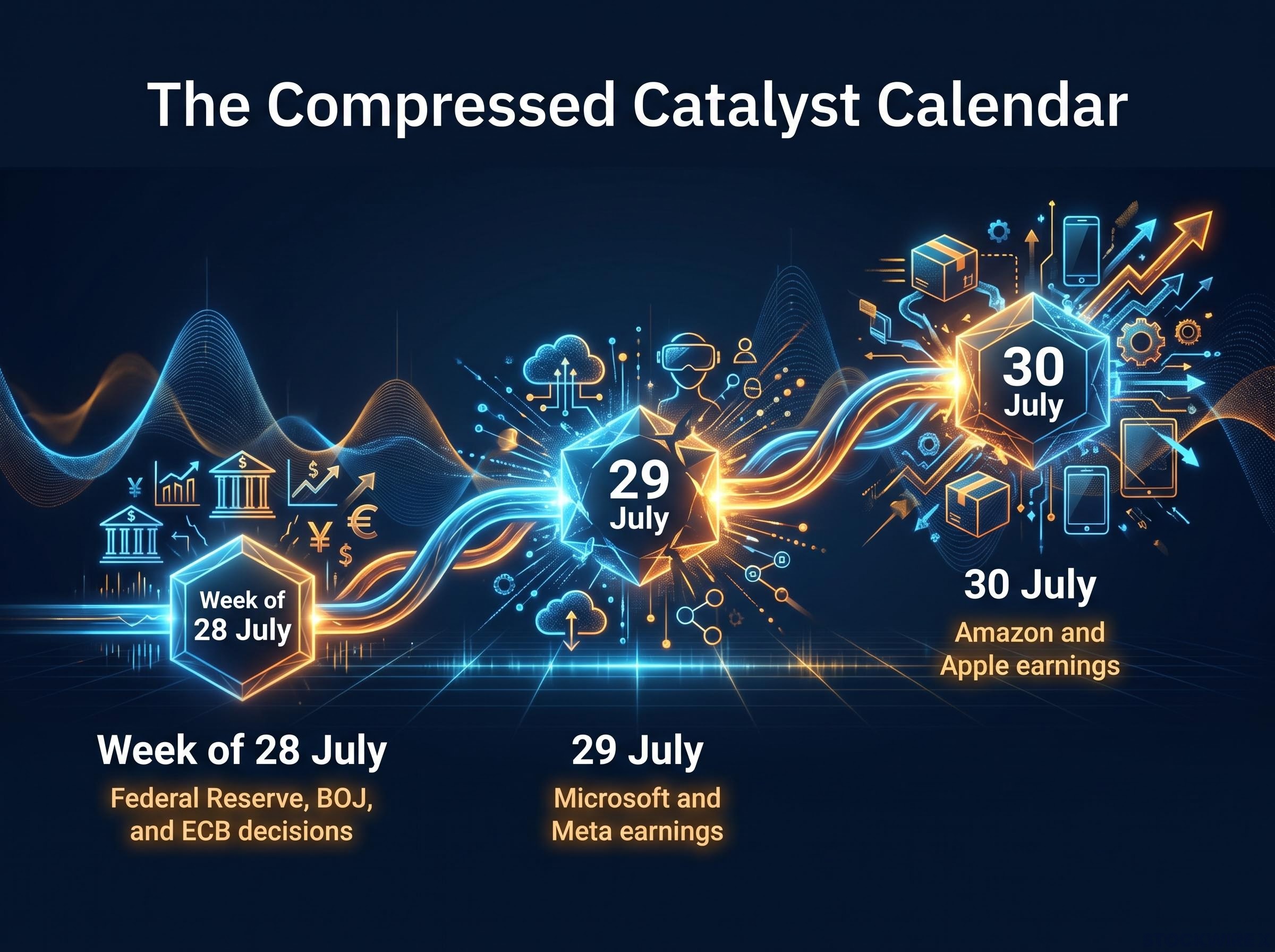
Here is the compressed calendar:
- Week of 28 July: Federal Reserve decision and press conference
- Week of 28 July: Bank of Japan decision
- 29 July: Microsoft and Meta earnings
- 30 July: Amazon and Apple earnings
- Week of 28 July: ECB decision
The practical implication for you: a single hawkish surprise from the BOJ or a single disappointing AI guidance comment from Microsoft does not stay contained to its asset class this week. The calendar compression means contagion across sectors is more likely than in a spread-out earnings season.
When big ASX news breaks, our subscribers know first
The Federal Reserve’s meeting: the decision is settled, the press conference is not
No rate change is expected. Fed funds futures reflect near-unanimous consensus on a hold, and this is not where the analytical energy should sit.
The market risk lives entirely in Jerome Powell’s press conference. Specifically, watch for his framing of inflation persistence versus labour market conditions and any language shift around the timing and conditions for rate cuts. The 10-year yield at 4.66% already prices a prolonged restrictive environment, but a press conference that pushes the first cut further out has a direct valuation effect on rate-sensitive sectors, compressing the multiple that growth stocks can sustain.
The 10-year TIPS real yield has reached 2.22% under Fed Chair Kevin Warsh, establishing a real yield hurdle rate that every equity multiple, credit spread, and AI capex narrative must now clear, and investors still running sub-1% real rate assumptions in valuation models are producing systematically optimistic outputs.
Here is what to track in Powell’s remarks:
- Hawkish press conference signals: Language emphasising persistent inflation above target, characterisation of the labour market as “still too tight,” explicit pushback against market pricing of near-term cuts. Sectors most exposed: utilities, real estate, and long-duration growth stocks.
- Neutral-to-dovish press conference signals: Acknowledgement that inflation has made “further progress,” emphasis on two-sided risks to the outlook, any suggestion that the committee is “approaching” the point where rate adjustments become appropriate. This scenario would offer relief to rate-sensitive names and support equity multiples.
The statement itself is almost irrelevant. Knowing that the press conference is where the signal lives lets you direct your attention appropriately rather than reacting to the initial decision headline.
What the Bank of Japan carry-trade risk actually means for global markets
The BOJ has shifted from being the last ultra-dovish major central bank toward incremental tightening. That shift matters far beyond Japan because it anchors one of the largest structural trades in global finance: the yen carry trade.
The carry trade works like this. Investors borrow in yen, where interest rates have historically been near zero, and use those funds to buy higher-yielding assets globally, including equities, credit, and bonds in the US, Europe, and emerging markets. When the BOJ tightens, borrowing costs in yen rise, the yen strengthens, and the economics of those leveraged positions deteriorate. Traders are forced to sell their higher-yielding assets to repay yen-denominated borrowing. The selling is not orderly. It hits everything at once.
The 2024 episode remains the clearest reference point for how yen carry trade dynamics transmit stress globally: speculative positioning cleared 40-60% within weeks, yet no cascading structural breakdown in equity markets followed, a distinction that matters when calibrating how much of a BOJ surprise to price as systemic versus episodic.
Barclays strategists have pointed to the events of summer 2024 as a reference point, noting that the BOJ’s hawkish pivot at that time contributed to a disorderly carry-trade reversal that spread rapidly across global equities and credit markets.
Two scenarios are on the table. An outright surprise hike would be the most disruptive, but even a hold paired with clearly accelerated hawkish guidance could force meaningful repositioning in FX and equity markets. Recent hawkish signals from the BOJ suggest an accelerated pace of rate increases is under active consideration.
If you hold global equities, credit, or any high-yield asset, you are exposed to the carry-trade channel whether you hold a single yen position or not. Yen-denominated leverage is embedded in the system, and a BOJ surprise can hit your portfolio through channels that have nothing to do with your actual position thesis.
How to read the BOJ reaction in real time
The first indicator to check immediately after the decision is USD/JPY and other yen crosses. A sharp yen rally (USD/JPY falling) signals that carry-trade positions are under pressure.
The second, more important signal is correlation. When FX volatility, global equity futures, and credit spreads all move together, widening simultaneously, that pattern identifies systematic carry-risk reduction in progress. That is the moment when the BOJ decision has stopped being a Japanese event and has become a global one.
Big Tech earnings and the AI capex reckoning that Alphabet could not resolve
Alphabet delivered its Q2 2026 results around 22 July, and by most conventional measures the numbers held up well. What did not follow was any relief in investor sentiment. Barclays strategists noted that strong figures from one of the biggest AI spenders in the world failed to meaningfully ease concerns about whether AI-related capital expenditure is sustainable, leaving the remaining large technology reporters to face that scrutiny in the days ahead. The burden of proof has shifted. Spending commitments made on the promise of future returns are no longer being taken at face value.
The cluster is tight. Microsoft and Meta report on 29 July. Amazon and Apple follow on 30 July. Several trillion dollars of market capitalisation will effectively report within days.
| Company | Report Date | Key Metric to Watch |
|---|---|---|
| Alphabet | ~22 July (reported) | Google Cloud revenue growth; AI capex guidance |
| Microsoft | 29 July | Azure revenue growth; margin trajectory vs. infrastructure costs |
| Meta | 29 July | AI-enhanced ad revenue; free cash flow normalisation timeline |
| Amazon | 30 July | AWS segment revenue; capex-to-revenue conversion rate |
| Apple | 30 July | Services growth; AI feature monetisation signals |
The market is not asking whether AI is transformative in the long run. It is asking whether the current rate of spending is being matched by current revenue generation. Any guidance that widens that gap will be treated as a valuation problem, not a growth story. The three specific metrics investors are interrogating:
The current AI investment cycle has pushed US IT spending to 4.9% of GDP in Q1 2026, surpassing both the dot-com era peak of approximately 4.2% and the cloud buildout peak of approximately 3.8%, with Goldman Sachs projecting that meaningful enterprise ROI will not emerge until 2027-2028, which is precisely the timeline that makes near-term capex guidance so consequential for current equity valuations.
- AI-linked segment revenue growth: Google Cloud, Azure, AWS, and AI-enhanced advertising products are where monetisation should show up first. Growth here is the proof of concept.
- Margin trajectory against rising infrastructure costs: Whether cloud and AI revenues grow fast enough to offset the rising cost of data centres, AI chips, and capacity build-outs. Higher investment without commensurate revenue support could trigger sharp re-ratings.
- Free cash flow guidance: Markets want explicit signals on how long elevated AI spending will last and when management expects returns to normalise free cash flow. This is the number that separates investment from excess.
Knowing which specific numbers to watch beyond headline earnings per share lets you interpret these releases analytically rather than reacting to the stock move itself.
The ECB decision and why September’s meeting is what markets are really pricing
The ECB decision is the least immediately volatile of the three central bank events this week. It is also the most structurally consequential for European positioning.
The rate decision itself is expected to be calibrated and largely telegraphed. The analytical weight sits on whether the tone keeps a September 2026 rate hike explicitly on the table or begins to soften that optionality. At its most recent meeting, the ECB signalled that a further rate increase in September remains a live possibility, and how firmly policymakers continue to stand behind that option is the key signal to extract.
Here is how to read the two scenarios:
- If ECB keeps September hike firmly on the table: Persistently high real rates are reinforced, extending the headwind for European growth stocks and more leveraged names. Credit conditions remain tight through year-end, and the second-half outlook for rate-sensitive European equities deteriorates.
- If ECB language softens toward September optionality: Short-term relief for European equities, particularly growth names. However, European real rates remain high by post-2010 standards regardless of individual meeting outcomes. A softer tone delays the pressure; it does not remove it.
For investors with European equity exposure, the signal to extract is not the rate decision itself but the degree of confidence in September optionality. The more firmly it stays open, the more European credit and growth names need to be held with awareness of a second tightening shock before year-end.
What a week without a clear verdict means for positioning into August
The most likely outcome of this week is ambiguity. Some positive signals, some negative signals, across different events, with no single clear verdict that resolves the calendar cleanly.
That is the scenario most investors are least prepared for. The genuinely dangerous outcome is not a single negative surprise but multiple negative signals arriving close together: a BOJ surprise, disappointing AI capex guidance from two or more hyperscalers, and a hawkish Fed press conference. In a compressed calendar, these interactions amplify rather than offset. Each negative signal reprices the context in which the next event is interpreted.
Barclays research frames compressed catalyst calendars as precisely the environments where options markets can misprice tail risk, particularly under high real rate regimes where the market’s cushion for disappointment is already thin.
Here are the four practical monitoring variables, in priority order:
- BOJ language and USD/JPY movement: The first and highest-impact event. A sharp yen rally signals carry-trade stress with global transmission potential.
- Fed press conference tone on cut timing: Hawkish language on inflation persistence or pushback on market rate-cut expectations reprices the duration premium across asset classes.
- AI-segment revenue and capex guidance across tech reporters: The gap between spending and monetisation, measured across Microsoft, Meta, Amazon, and Apple collectively, not individually, is the signal.
- Options-implied volatility as the cross-asset signal: Rising implied volatility across equity, FX, and credit simultaneously indicates the market is repricing the entire catalyst cluster, not just one event.
The practical implication is not to predict the outcome but to have a pre-formed interpretation framework ready before each event. Knowing what a hawkish surprise looks like in each dimension means you can act on signal rather than reacting to noise after the market has already moved.
What the next 72 hours will actually tell you about 2026’s market direction
Every thread this week connects to the same overarching question: can risk assets sustain current valuations in a world of persistently high real rates and unproven AI returns?
The conditions under which this week resolves constructively are specific. Central banks signal a rate plateau rather than continued tightening. Tech AI guidance shows revenue beginning to catch up to spending commitments. The BOJ holds without accelerating its hawkish path. Under those conditions, the S&P 500’s expected earnings growth of approximately 24.5% year-over-year looks achievable, and the second half of 2026 opens with risk appetite intact.
The conditions under which it resolves bearishly are equally specific:
- Signals pointing to a constructive second half: Central bank language confirms a plateau rather than further tightening; AI-linked segment revenues show acceleration relative to capex; BOJ holds without escalating guidance
- Signals pointing to continued pressure: Multiple hawkish central bank surprises compound within days; the gap between AI spending and monetisation widens across two or more hyperscalers; options-implied volatility spikes across asset classes simultaneously
Barclays strategists have been explicit that the synchronised move toward monetary tightening across the major central banks represents a durable regime change, not a transient adjustment. In their framing, the era of accommodative global policy has run its course, and risk assets now face a prolonged period of adaptation to genuinely higher real rates.
The week ahead will not give you a final answer. It will sharpen your priors about whether the rate plateau and AI monetisation narratives are holding. Investors who emerge from the next 72 hours with a clearer read on those two questions have a material informational advantage for positioning through August and into the second half of 2026.
This article is for informational purposes only and should not be considered financial advice. Investors should conduct their own research and consult with financial professionals before making investment decisions. Past performance does not guarantee future results. Financial projections are subject to market conditions and various risk factors.