Consumer confidence in Australia plunged to decade lows during the first quarter of 2026. The conventional response dictated a retreat to cash, yet retail investor behaviour followed an entirely different trajectory. Back-to-back Reserve Bank of Australia (RBA) rate hikes pushed the cash rate to 4.10% amid rising international trade tensions, creating intense macroeconomic pressure.
Household budgets faced severe strain as global oil shocks compounded domestic inflation. Rather than liquidating, actual platform transaction data reveals an unreported pivot in portfolio construction that sentiment surveys alone miss. The gap between stated fear and executed trades offers a precise map of where capital is actually moving.
An analysis of these aggregate flows demonstrates how the non-resource investment community is adapting to sustained volatility. Market participants are treating the current environment not as a signal to exit, but as a mechanism to reposition their holdings toward international markets.
Decoding the Move Toward Offshore Equity Allocations
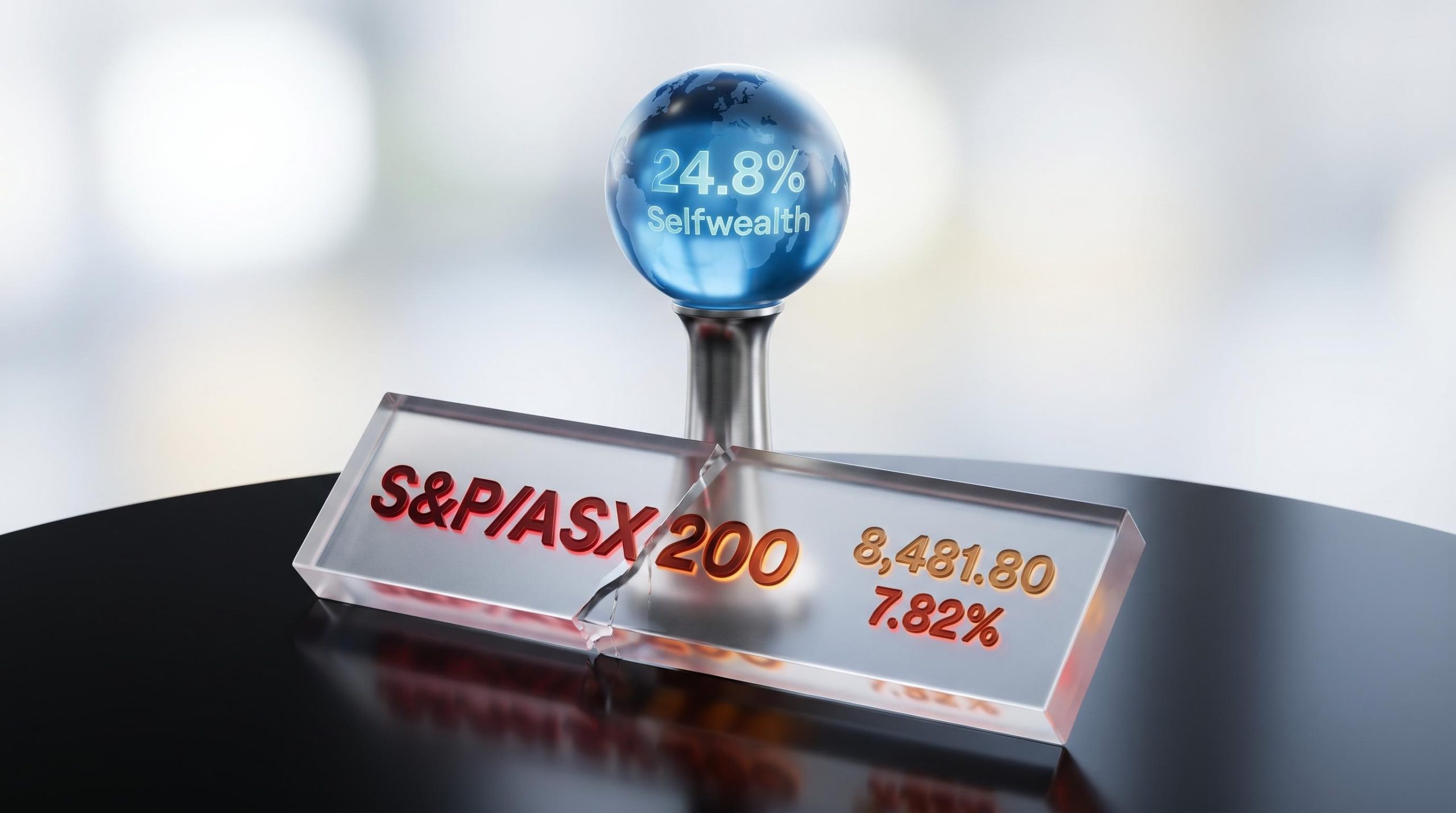
Official platform flow data remains unreleased regarding a structural shift away from domestic bias toward global technology and healthcare assets. The S&P/ASX 200 recorded a steep 7.82% drop during March 2026.
Simultaneously, offshore-focused funds became the most heavily acquired investment class on platforms like Selfwealth. Diversified fund products have effectively replaced domestic standalone equities as the primary mechanism for securing international exposure.
Recent Australian market concentration analysis highlights the heavy weighting toward legacy banking and mining sectors, a structural vulnerability that explains why local capital is migrating toward global diversified funds.
The data presents a clear contradiction between stated confidence and executed strategy. An Australian Shareholders’ Association (ASA) survey conducted in April 2026 showed that 56.0% of respondents reported diminished confidence. Despite this pessimism, 56.2% of retail investors are holding their current positions.
More importantly, 24.8% of surveyed investors are actively buying into market volatility. Understanding this flow of funds demonstrates that current market turbulence serves as an entry opportunity for global exposure rather than a signal to liquidate.
| Metric | General Survey Sentiment (ASA) | Platform Transaction Reality (Selfwealth) |
|---|---|---|
| Investor Confidence | 56.0% report diminished confidence | Sustained acquisition of global assets |
| Portfolio Strategy | 56.2% holding current positions | Offshore funds rank as top acquisition class |
| Volatility Response | Stated concern over geopolitical risk | 24.8% actively buying into turbulence |
The Underperformance of the Domestic Index
The domestic index decline accelerated late in the first quarter. The S&P/ASX 200 fell from 9,198.60 at the end of February 2026 to close at 8,481.80 by the end of March 2026.
This domestic pressure forces capital to seek geographic diversification. As local equities absorb the impact of tightening monetary policy, offshore allocations offer a calculated hedge against single-market concentration risk.
When big ASX news breaks, our subscribers know first
Rethinking Traditional Safe Havens in a High Inflation Era
A traditional safe haven asset is an investment expected to retain or increase in value during times of market turbulence. Historically, precious metals serve this function, typically rallying during periods of geopolitical friction or severe economic uncertainty. When traditional equities decline, capital usually rotates into these tangible commodities to preserve purchasing power.
The data from April 2026 presents a paradox that challenges this historical definition. Domestic inflation reached 3.7% in February 2026, and macroeconomic anxiety remains exceptionally high. Yet, this environment has not translated into broad retail gold accumulation across major digital platforms.
The historic inverse relationship that typically supports traditional safe haven assets is currently fracturing under the weight of sustained energy shocks and strong institutional liquidity drains.
Selfwealth data shows precious metal acquisition orders dropped in late 2025 and the first quarter of 2026. While older demographics may still view physical commodities as the ultimate hedge, the broader retail market is recalibrating defence. Modern portfolios increasingly achieve protection through sector diversification rather than direct commodity allocation.
A smaller but notable group of traditional investors is still rotating selectively toward gold based on ASA data. However, the foundational mechanics of defensive positioning are shifting. This evolution equips market participants to evaluate whether their own defensive allocations rely on outdated historical assumptions or current structural realities.
Characteristics of traditional safe haven assets include physical scarcity and negative correlation to broad equities. Modern defensive sector ETFs provide targeted exposure to non-cyclical industries like global healthcare. * Traditional models require capital reallocation during crises, whereas diversified funds build defence directly into the asset mix.
Portfolio Evolution “The parameters of a defensive asset are expanding beyond physical commodities; modern market participants increasingly utilise global healthcare and technology index funds as primary mechanisms for capital preservation.”
Generational Divides in Managing Market Volatility
The aggregate shift toward global diversification fractures distinctly along age demographics. Evaluating portfolio construction preferences by age reveals exactly who is driving this market rotation and how risk tolerance is evolving.
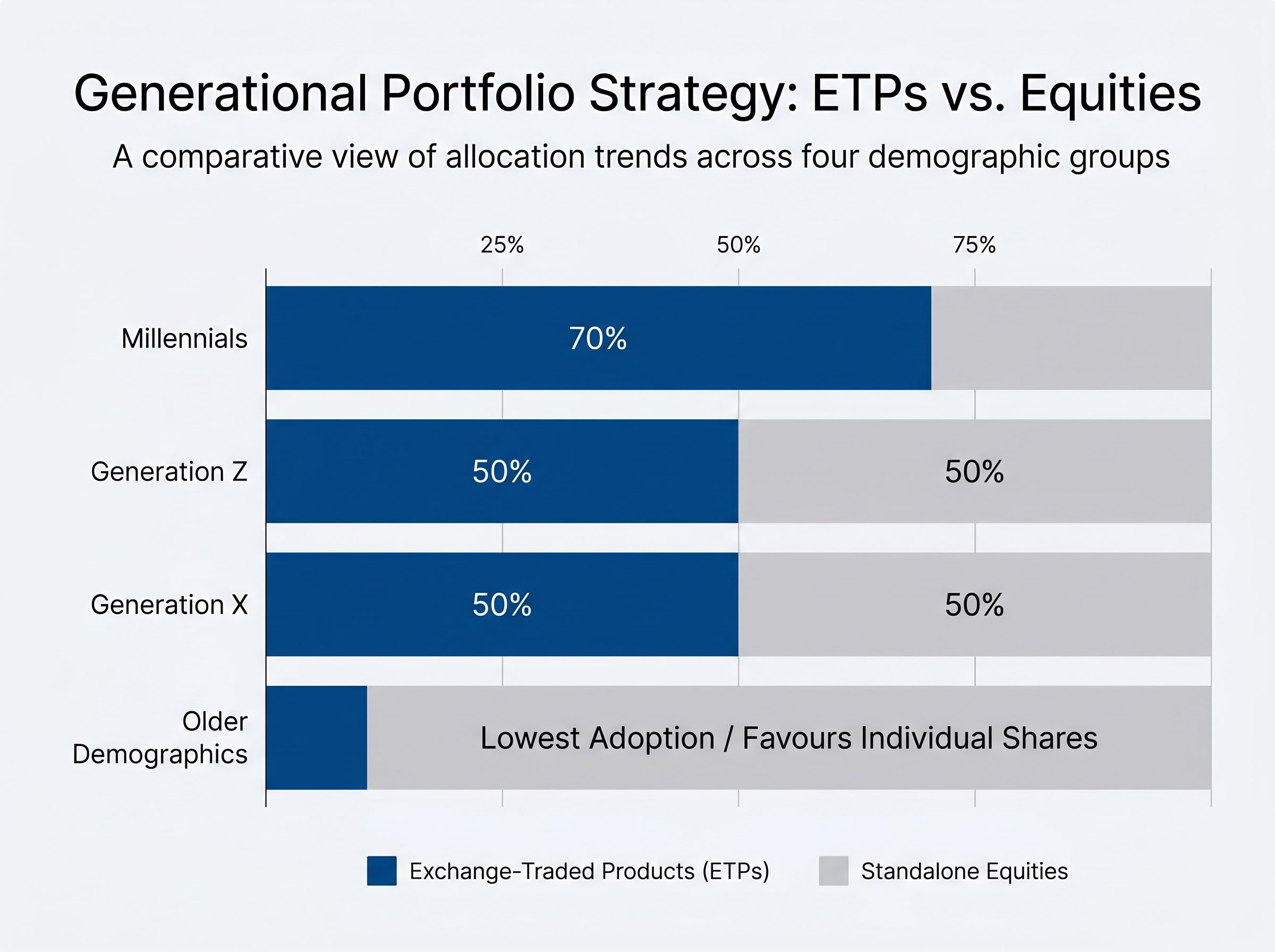
Younger investors rely heavily on exchange-traded products, while older cohorts maintain a preference for individual stock picking. According to company data, Millennial accounts allocate roughly 70% of total capital to exchange-traded products. This structured approach allows younger demographics to access global markets without the concentration risk of single equities.
The ASX Australian Investor Study data validates this structural transition, confirming that emerging retail cohorts prioritize broad index exposure over the stock-picking methodologies historically preferred by older market participants.
According to company data, Generation Z and Generation X maintain a strict 50/50 ratio between standalone equities and diversified funds. Older demographic groups continue to favour individual company shares, although they are progressively adopting broader fund structures. These demographic splits directly shape the aggregate data recorded across Australian investment platforms.
By identifying with specific generational patterns, market participants can benchmark their own asset allocation strategy against peer activity.
- Millennials: Highest adoption rate, allocating 70% of total capital to exchange-traded products.
- Generation Z: High adoption rate, maintaining a balanced 50/50 ratio with standalone equities.
- Generation X: Moderate adoption rate, matching the balanced 50/50 allocation of younger peers.
- Older demographics: Lowest adoption rate, favouring individual shares while slowly integrating fund structures.
The Whiplash Effect of Policy Shifts and Headline Shocks
Retail trading velocity changes drastically depending on the specific origin of a macroeconomic shock. Market participants process different types of fear through entirely distinct transaction patterns.
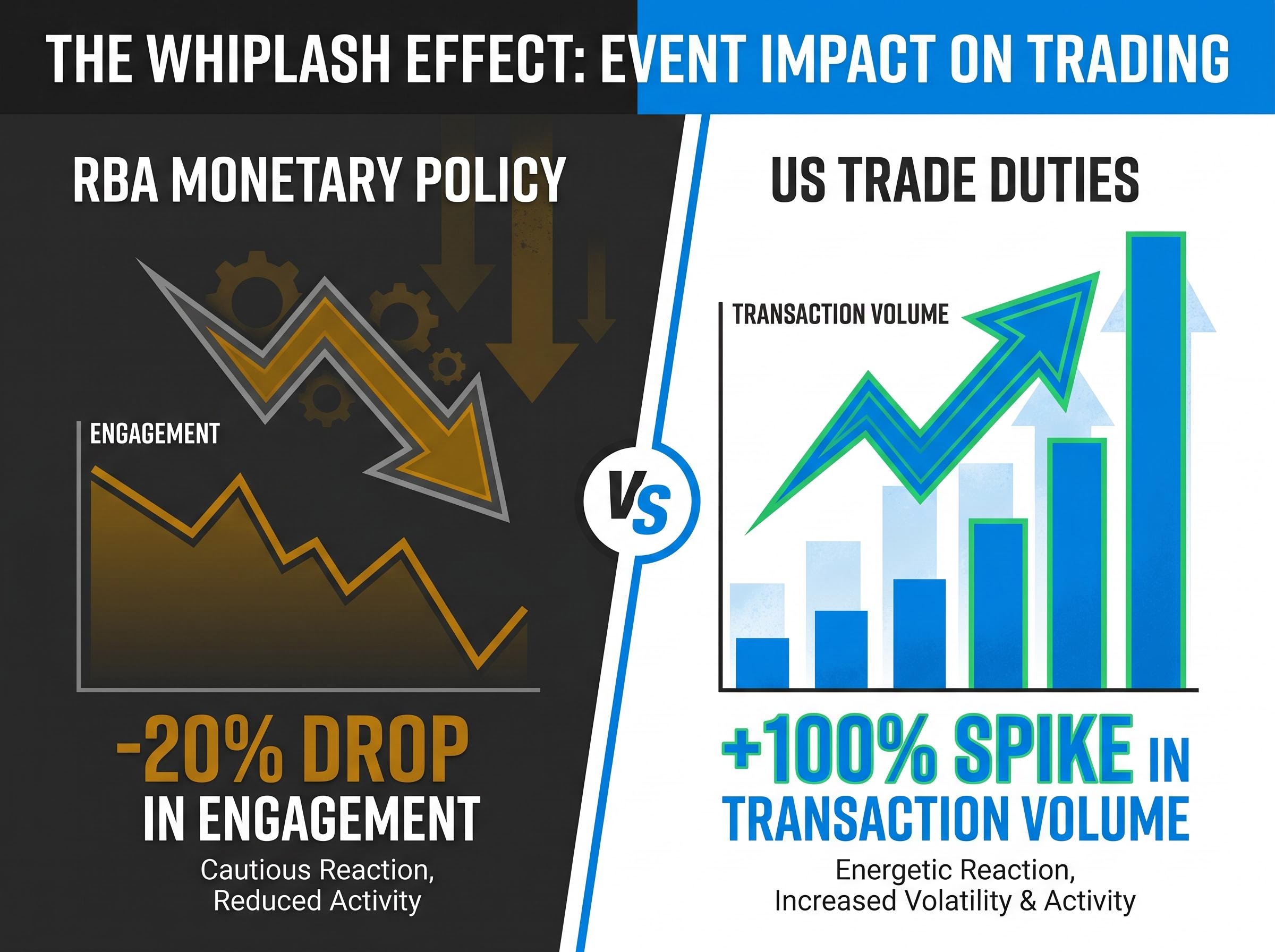
Domestic monetary policy changes suppress trading activity, forcing investors into a holding pattern. According to company data, following the benchmark interest rate increase by the RBA, user engagement metrics declined by 20%. Investors absorb local borrowing cost increases by freezing portfolio adjustments while evaluating the impact on household cash flow.
Conversely, international news triggers massive volume spikes. According to company data, system transaction quantities increased by 100% when United States trade duties were declared. Accelerated information pricing has largely eliminated slow-moving market inefficiencies, simultaneously elevating trader anxiety and transaction frequency during global events.
The widespread algorithmic trading integration across retail platforms has permanently compressed the response window, forcing market participants to recalibrate their portfolios the moment macroeconomic data drops.
Market expectations project the RBA cash rate to reach approximately 4.71% by December 2026. Recognising these reaction patterns helps distinguish between events that require immediate portfolio adjustment and those that simply require patience. This awareness actively reduces emotional trading errors.
RBA Monetary Policy: Triggers a 20% drop in engagement, prompting cautious evaluation and delayed capital deployment. US Trade Duties: Triggers a 100% spike in transaction volume, driving immediate reallocation and rapid pricing adjustments.
Evaluating the New Rules of Capital Rotation
Australian retail investors are not universally fleeing risk. Instead, they are recalibrating where risk and safety actually live within a modern portfolio. The divergence between stated consumer pessimism and active global accumulation proves that capital is rotating rather than retreating.
Global exchange-traded funds and healthcare sectors are now serving the function historically held by domestic blue chips and precious metals. As the domestic index faces continued pressure, geographic diversification provides the structural defence that single-market allocations lack.
Investors assessing their portfolios for the projected RBA rate environment through the end of 2026 must recognise this shift. Capital preservation in a high-rate regime increasingly relies on targeted international exposure rather than cash stockpiling.
Investors exploring ways to systematically capture these international equity discounts will find our comprehensive walkthrough of resilient asset allocation strategies helpful for balancing offshore dollar-cost averaging with domestic fixed-income yields.
Past performance does not guarantee future results. Financial projections regarding interest rates are subject to market conditions and various risk factors.
This article is for informational purposes only and should not be considered financial advice. Investors should conduct their own research and consult with financial professionals before making investment decisions.