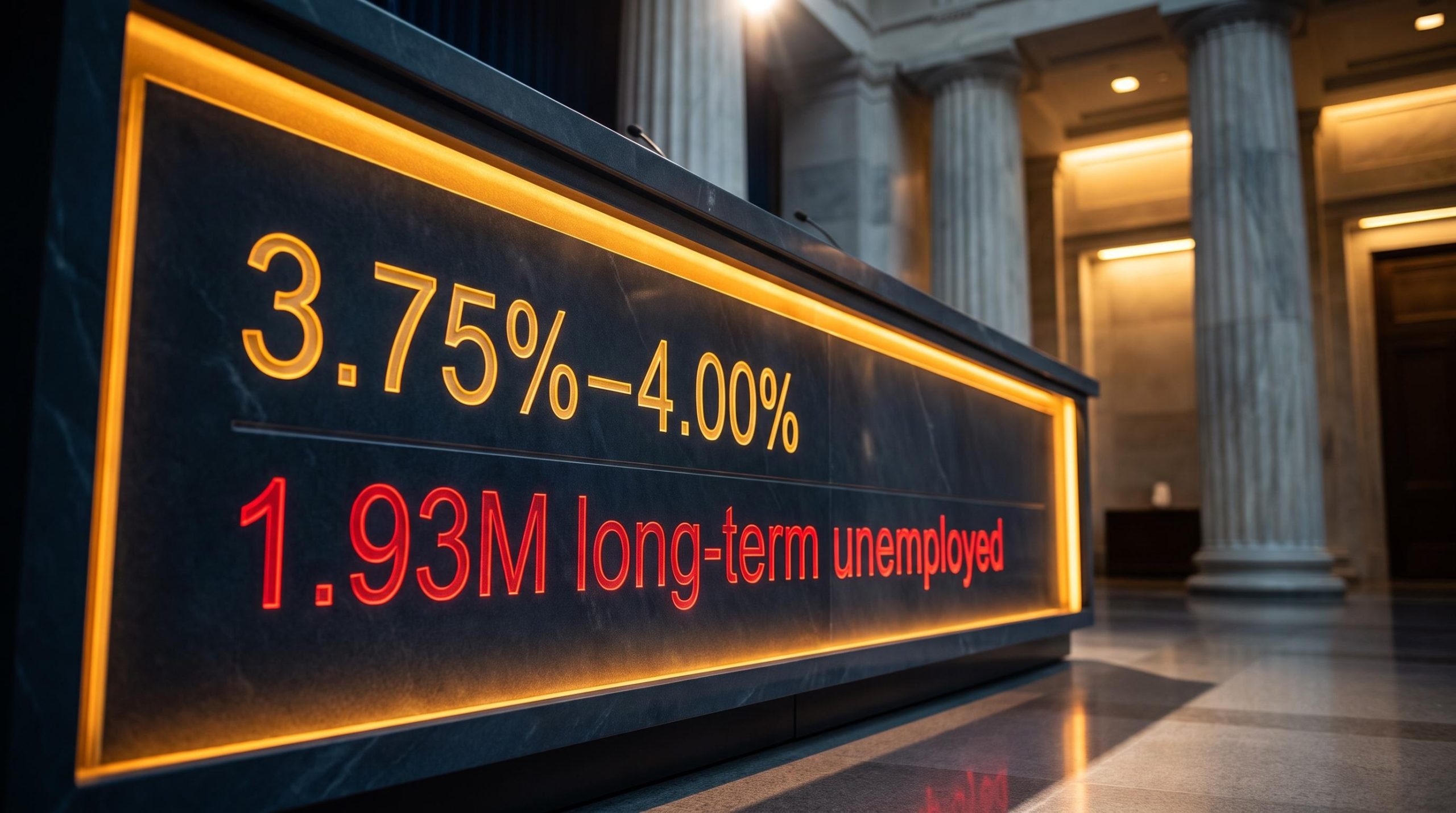
The complete obstruction of the Strait of Hormuz has frozen global petroleum and liquefied natural gas shipments. This energy shock has triggered a severe correlation breakdown across financial markets in late April 2026.
Investors typically rely on safe haven assets to provide protection during geopolitical crises, but these traditional defensive instruments are currently failing their historical tests. Gold is retreating, government bonds are suffering acute drawdowns, and equities are pricing in sustained inflation.
The resulting volatility has completely upended standard portfolio allocation models that worked seamlessly throughout the previous decade. The severity of the disruption leaves no sector untouched by the cascading effects of energy scarcity.
Australian investors must understand why these foundational market mechanics are fracturing under current conditions. This analysis explores the macro forces driving anomalies in precious metals and global debt, outlining exactly how local portfolios can rebalance for immediate protection and future growth.
The Mechanics of Market Defence in a Supply Crisis
A defensive investment historically provides negative correlation to share markets, meaning its value rises when equities fall. This structural balance is supposed to insulate capital during widespread economic panic.
The current reality has dismantled this baseline expectation. Brent crude prices surged from $101.44 in late March 2026 to a sustained trading range between $104 and $114 per barrel by late April 2026.
This supply-driven inflation prevents central banks from cutting interest rates to stimulate the broader economy. During historical crises like the 1970s oil shocks or the 2022 supply chain disruptions, similar patterns emerged with devastating effects on balanced portfolios.
Recent BIS research on asset correlation confirms that traditional government debt loses its hedging properties when supply-driven inflation forces simultaneous declines across both equity and fixed-income markets.
Unlike the demand-side recessions of the past decade, monetary policy makers cannot deploy rate cuts to rescue failing equity valuations today. The blockage affecting worldwide petroleum and LNG shipments forces interest rates higher just when global growth is contracting. This specific restriction alters the fundamental landscape for risk-off positioning.
| Asset Category | Traditional Crisis Behavior | April 2026 Reality | Primary Driver |
|---|---|---|---|
| Precious Metals | Capital appreciation | Price contraction | Yield deficit |
| Government Bonds | Yield compression | Severe price drawdowns | Inflationary pressure |
| Major Currencies | Broad stability | Extreme divergence | Energy reliance |
When big ASX news breaks, our subscribers know first
Why Precious Metals Are Retreating Despite Geopolitical Turmoil
The instinct to hoard physical bullion during international conflict is deep-rooted. Yet, physical commodities are punishing investors who rely on outdated assumptions about their protective qualities.
Spot gold trading ranges in late April 2026 reflect a sharp correction, sitting between $4,570 and $4,705 USD. Local pricing shows similar weakness, with Australian spot gold trading between $6,373 and $6,888 AUD. This retreat follows an extraordinary valuation increase over the preceding two years.
The reversal reveals the hidden mechanics of yield deficits pushing capital elsewhere. Three distinct macro forces are currently suppressing bullion prices:
While institutional gold price predictions forecast significant upside based on central bank accumulation, the immediate reality for retail investors remains heavily constrained by the high real yields available in debt markets.
Currency Strength: The extraordinary strength of the US Dollar diminishes worldwide purchasing power for dollar-denominated commodities. Liquidity Drains: Rapid share market declines force institutional investors to liquidate precious metals to cover margin calls and immediate cash requirements. * Yield Deficit: Holding zero-yield physical assets carries a severe disadvantage when fixed-income instruments offer high, guaranteed returns.
Understanding these drivers stops the reader from making poor capital allocation decisions based on historical panic responses. The market is aggressively pricing in the opportunity cost of holding non-yielding assets.
Unpacking the Global Bond Rout and Rising Yields
Fixed-income markets are exhibiting severe price volatility as inflation fears push yields higher. Bond prices and yields share an inverse relationship, meaning existing debt instruments lose market value when new bonds offer higher interest rates. Long-term debt instruments are suffering acute drawdowns as investors demand greater compensation for the risk of extended government borrowing tied to the international conflict.
The RBA bond market mechanics outline how these secondary market price adjustments mathematically balance older issuances against newly mandated sovereign borrowing rates.
The US 10-year Treasury yield currently sits at 4.36%, forcing a global repricing of sovereign risk. Australian debt has followed this exact trajectory. The Australian 10-year Government Bond yield reached 5.02% as of 29 April 2026, devastating the capital value of existing bond portfolios.
Bond Returns: Yield Versus Capital Gain
The alarming capital losses displayed on brokerage screens only represent part of the fixed-income reality. Paper losses on bond principal do not impact the actual realised yield if the instrument is held to its conclusion. Fixed-income investments continue to distribute scheduled payments regardless of secondary market depreciation.
Investors holding to maturity are entirely insulated from these temporary price fluctuations. This fundamental mechanism shifts the focus from price anxiety to reliable income generation during periods of severe equity volatility. Recognising this dynamic prevents the premature selling of fundamentally sound debt instruments.
Strategic Portfolio Adjustments for the 2026 Environment
Theoretical market analysis must translate into a clear roadmap for wealth preservation and strategic acquisition. The current breakdown in cross-asset correlations requires a defensive posture focused on immediate stability rather than speculative commodity plays. Historical market data shows financial markets frequently recover and price in resolutions well before official conflict treaties are finalised.
This defensive approach also protects against severe equity market mispricing, as algorithmic trading models continue to treat fundamental supply shocks as routine dips rather than structural economic ceilings.
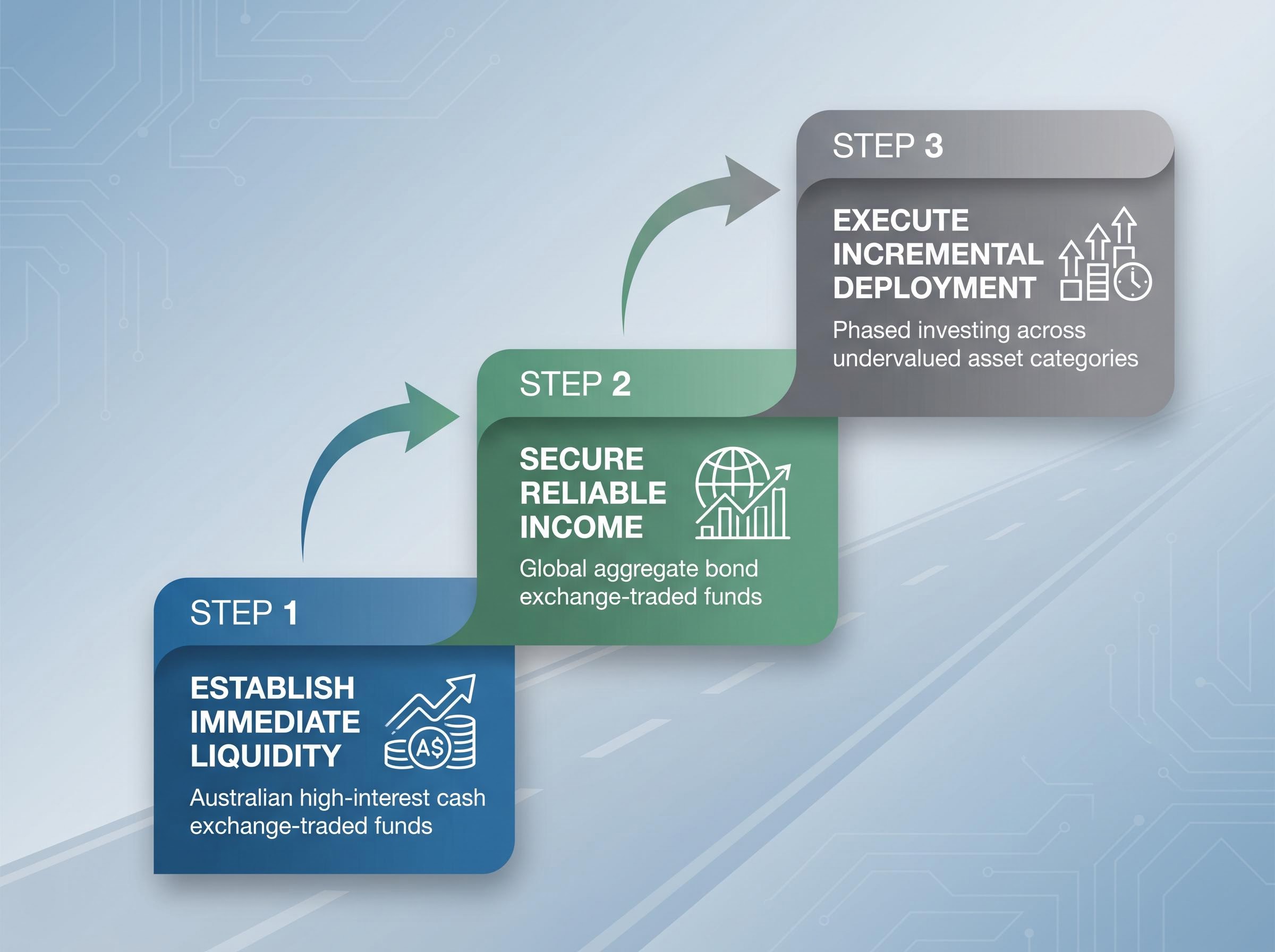
Australian investors can navigate this volatility by implementing a phased defence strategy.
- Establish Immediate Liquidity: Prioritise capital preservation by utilising Australian high-interest cash exchange-traded funds. This ensures adequate capital is available to cover immediate costs and unexpected margin requirements.
- Secure Reliable Income: Allocate capital toward global aggregate bond exchange-traded funds rather than chasing speculative gold plays. These instruments capture elevated yields and stabilise portfolio returns through guaranteed coupon payments.
- Execute Incremental Deployment: Utilise consistent, phased investing across undervalued asset categories. This systematic approach captures opportunities during sustained market drawdowns without risking entire allocations at the bottom of the cycle.
This methodology ensures capital remains protected while positioning portfolios to absorb further geopolitical shocks. Maintaining high liquidity preserves purchasing power while broader markets recalibrate to the energy deficit. Strategic patience allows investors to acquire high-quality assets at distressed valuations.
The Currency Factor and Australian Market Resilience
Historical market models previously defined currency safety through institutional stability, but national reliance on energy now dictates valuation. The American currency is strengthening rapidly, driven by domestic energy self-sufficiency and sustained high Federal Reserve interest rates.
Nations heavily reliant on petroleum imports are experiencing severe currency devaluation as their import costs skyrocket. The Japanese Yen is struggling significantly under the weight of these surging oil import requirements.
These cascading energy-driven supply side shocks are already compressing corporate margins in import-dependent economies, forcing households to rapidly shift their spending toward discount and value-oriented sectors.
Australia presents a uniquely resilient profile in this fractured global environment. As a net energy exporter, Australia possesses structural economic support that buffers the Australian Dollar against global supply shocks. The domestic energy sector provides a natural counterbalance to the inflationary pressures devastating manufacturing-heavy economies.
Market Paradigm Shift “The traditional framework for currency safety has fractured. Valuation is no longer determined solely by sovereign credit ratings, but by a nation’s immediate reliance on imported energy during supply crises.”
This dynamic provides a natural buffer for domestic equities and local purchasing power. Local investors hold a distinct structural advantage in their home market during this specific commodity crisis. The Australian economy essentially exports the very commodity causing distress elsewhere.
Positioning for the Post-Crisis Economic Recovery
The defensive anomalies of April 2026 demonstrate that rigid reliance on historical correlation models is a liability during supply-driven inflation. Protective positioning now requires holding liquid, high-quality diversified investments rather than retreating into physical commodities. The structural advantages of the domestic Australian market provide a sturdy foundation for local portfolios to weather the immediate energy shock.
Maintaining absolute discipline during peak volatility allows investors to capture the eventual market inflection point. The eventual resolution of the petroleum bottleneck will trigger rapid capital rotation, rewarding those who preserve purchasing power today.
Investors exploring where this capital will eventually flow can read our detailed coverage of geopolitical stock market drivers, which explains how persistent inflation is fundamentally shifting institutional allocations toward alternative energy infrastructure.
This article is for informational purposes only and should not be considered financial advice. Investors should conduct their own research and consult with financial professionals before making investment decisions. Past performance does not guarantee future results. Financial projections are subject to market conditions and various risk factors.