
The Korea Fair Trade Commission stripped the corporate exemption of e-commerce leader Coupang on 29 April 2026, directing personal regulatory liability onto its United States national founder. This abrupt redesignation transforms the oversight framework for the retail giant, placing founder Bom Kim personally responsible for international disclosures and domestic compliance. Coupang regulatory scrutiny has rapidly escalated from routine domestic administration to an international legal dispute. The official decree mandates sweeping disclosures of overseas holdings and family transactions, altering how the company operates within South Korea.
Investors are closely monitoring the situation as authorities aggressively target a United States citizen operating a New York-listed entity. The sudden shift threatens to rewrite the governance playbook for international businesses holding significant regional market share. This analysis unpacks the legal reasoning behind the ruling, the company’s planned retaliation, and the minimal expected impact on daily commerce.
The internal catalyst behind the sudden governance designation
The regulatory reversal from corporate immunity to personal liability pivots entirely on newly uncovered internal family dynamics. Following the major post-2025 data breach involving 34 million customers, authorities conducted intensive on-site physical workplace inspections to scrutinise executive oversight. Investigators found that Kim’s younger brother, Kim Yoo-seok, was actively participating in core corporate strategy despite lacking formal executive board status in the domestic affiliate.
This localised scrutiny provided the Korea Fair Trade Commission with the necessary evidence to intervene in the macro-level corporate structure. Regulators officially designated Bom Kim as the controlling figure on 29 April 2026, citing his sibling’s extensive influence over daily delivery logistics. These granular compensation and operational findings legally voided the company’s previous corporate exemption.
Authorities argued that the younger brother wielded inappropriate power without proportional public accountability. They justified their intervention using three specific pieces of internal evidence against the founder’s brother:
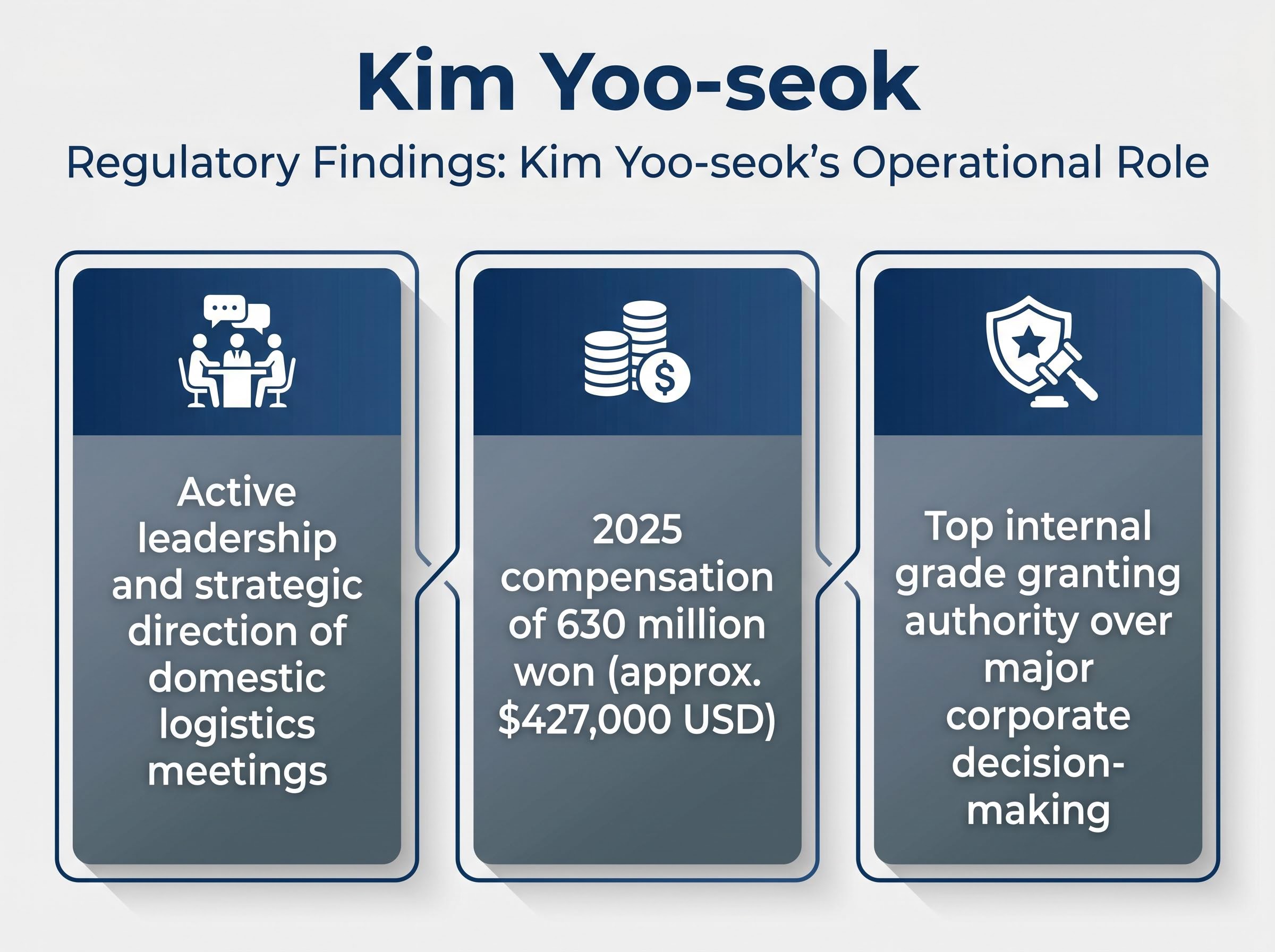
Active leadership and strategic direction of domestic logistics meetings Annual 2025 compensation of 630 million won (approximately $427,000 USD), mirroring standard board-level remuneration * Possession of a top internal grade granting authority over major corporate decision-making
When big ASX news breaks, our subscribers know first
Decoding South Korea’s complex conglomerate control laws
To comprehend why a family member’s salary triggered such a massive compliance shift, global investors must understand the legally recognised “same person” designation in South Korean corporate law. This unique regional regulatory mechanism targets large business groups to prevent families from masking wealth transfers or misusing influence. When domestic affiliates exceed specific financial thresholds, the government can designate an individual, rather than a corporation, as the ultimate controlling entity.
The proposed KFTC same person designation guidelines establish specific verification criteria for determining management control, directly addressing scenarios where unregistered relatives exercise operational influence over domestic affiliates.
The e-commerce leader easily surpasses the 5 trillion won domestic asset threshold required to legally justify conglomerate status. Korea Fair Trade Commission official Choi Jang-gwan stated that the ruling ensures the prevention of control misuse now that relatives are demonstrably involved in domestic management. The designation places immense new compliance burdens directly onto the founder, fundamentally changing his personal legal exposure.
The rules mandate intense public disclosure of intra-family transactions and overseas business activities. The founder must now legally disclose all overseas affiliates where his stakes exceed 20%, alongside any indirect domestic holdings.
| Previous Corporate Status | New Personal Liability Requirements |
|---|---|
| Exempt from individual controlling entity rules | Bom Kim legally designated as the ultimate controlling entity |
| Standard corporate financial reporting | Mandatory disclosure of all intra-family transactions |
| No foreign asset tracking | Required disclosure of overseas affiliates with stakes over 20% |
| Corporate liability for compliance failures | Personal regulatory liability and stricter governmental investigations |
Corporate leadership prepares an aggressive administrative defense
The company is not accepting the governmental findings passively, preparing instead to launch an aggressive administrative lawsuit to cancel the designation. Corporate leadership rejects the regulatory interpretation of its internal management hierarchy, arguing the local authorities have mischaracterised the brother’s operational role. The defence centres on the fact that there are zero Kim family stakes in the Korean affiliates, simplifying the governance structure far below the typical family-owned conglomerate.
Official Corporate Stance “The regulatory ruling misrepresents our transparent management hierarchy and ignores the existing rigorous oversight we maintain under United States securities regulations.”
The administrative defence strategy relies heavily on the argument that existing United States Securities and Exchange Commission oversight already guarantees adequate governance transparency. Management maintains that Kim Yoo-seok holds a non-executive status under regional law. His presence in South Korea is strictly a dispatch from the United States headquarters, complicating the local jurisdiction argument.
Leveraging international trade agreements in local courts
The legal resistance extends beyond domestic corporate law to invoke major international trade protections. Legal representatives plan to cite the Korea-United States Free Trade Agreement most-favoured-nation clause, alleging the ruling discriminates against United States investors. The company argues that applying these complex conglomerate rules to a foreign national and a foreign-listed entity represents an unfair extraterritorial overreach.
The official United States Trade Representative summary of KORUS FTA national treatment provisions highlights strict guarantees designed to protect cross-border investments from discriminatory regulatory enforcement.
Wall Street shrugs off the international boardroom drama
While the administrative friction escalates, the financial markets are interpreting the regulatory dispute as a contained administrative headache rather than an operational crisis. The steady reality of daily commerce remains completely undisturbed by the international boardroom drama. Real-time metrics from 29 April 2026 demonstrate robust market resilience, proving that shareholders separate headline noise from core business fundamentals.
Financial professionals anticipate minimal disruption to the established e-commerce supply chains or revenue generation. The regulatory burden increases heavily at the executive level, but it does not alter the fundamental logistics networks that drive the company’s profitability. Analysts note that existing compliance frameworks already satisfy the transparency needs of institutional shareholders.
Market confidence held remarkably steady through the immediate trading sessions:
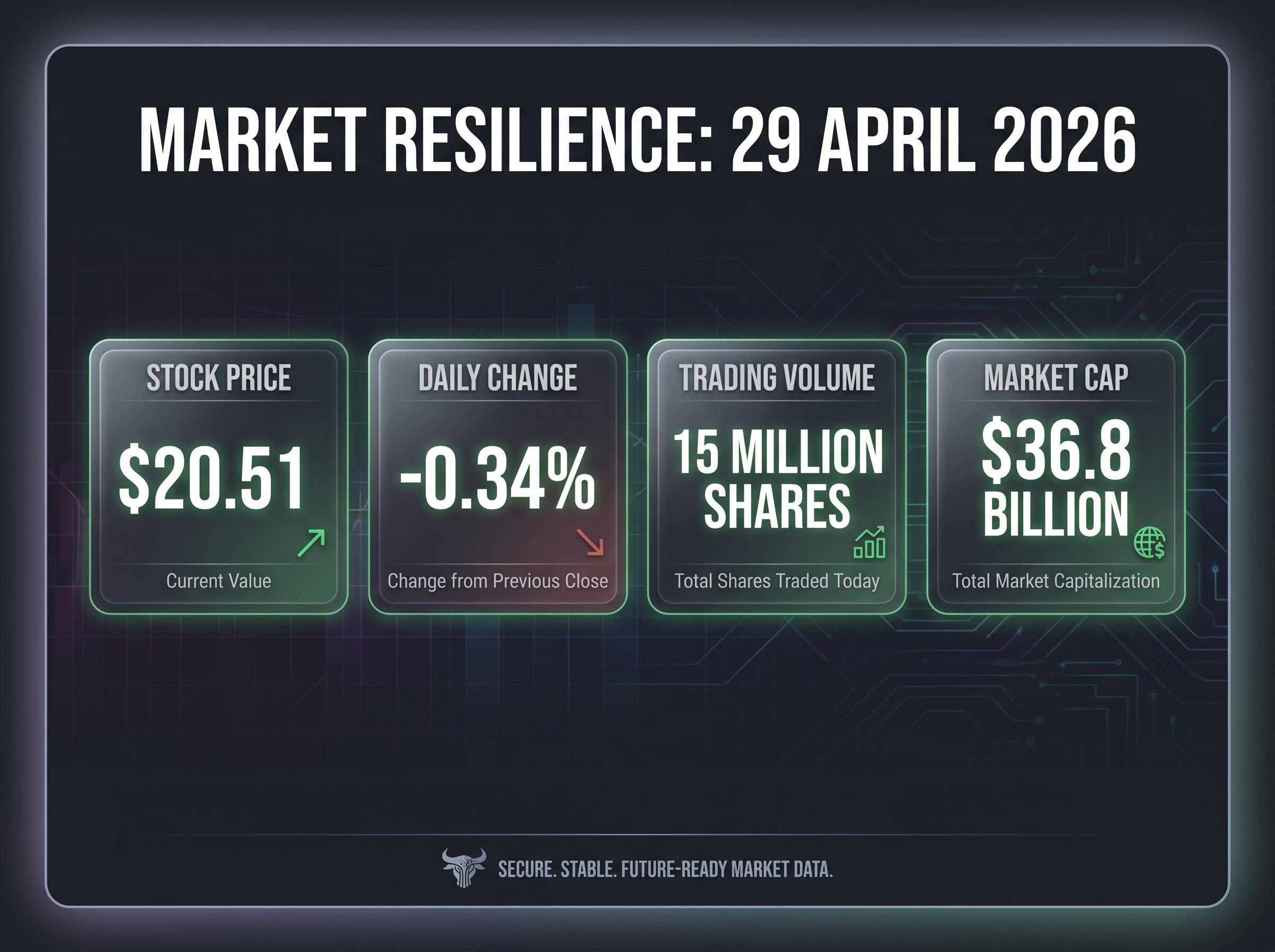
Intraday stock prices traded near $20.51 on the day of the announcement The shares recorded a marginal -0.34% change on a strong 15 million share trading volume * The implied market capitalisation remained stable at roughly $36.8 billion
Looming geopolitical friction over cross-border oversight
The collision between domestic securities laws and regional regulatory ambitions carries risks that extend far beyond a single corporate entity. Applying regional conglomerate rules to a United States national challenges established international business norms. Legal scholars compare this heightened scrutiny to the historic domestic pressure faced by Samsung executive Lee Jae-yong, though with the added complexity of cross-border legal frameworks.
Potential escalation into bilateral trade disputes
The dispute threatens to reignite geopolitical friction over data sovereignty and national security. United States lawmakers previously raised specific security concerns following the earlier data breaches, demonstrating an existing political interest in the company’s oversight. The extraterritorial application of domestic rules risks pushing a local corporate dispute into a bilateral trade issue.
There is currently an absence of immediate United States government intervention regarding the designation. However, analysts highlight this silence as a major future risk factor, especially if the discrimination claims under the free trade agreement gain traction. Diplomatic spillover remains a distinct possibility if local courts uphold the strict liability requirements.
For investors exploring how other foreign companies are successfully expanding within this regulatory environment, our deep-dive into South Korea distribution agreements details the performance-based structures and commercial commitments currently being executed by international firms in the region.
The timeline for judicial review and diplomatic fallout
The unprecedented regulatory action sets a critical precedent for foreign-listed companies operating massive domestic subsidiaries. Regional compliance mandates are on a direct collision course with international corporate structures, testing the limits of extraterritorial legal enforcement. The administrative lawsuit will dictate whether South Korean corporate law can successfully bind foreign executives to domestic transparency thresholds.
Everyday consumers and retail shareholders are unlikely to see any immediate disruptions to services or revenues while the courts process the administrative lawsuit. The core logistics engine will continue running while the executive suite manages the diplomatic fallout.
This article is for informational purposes only and should not be considered financial advice. Investors should conduct their own research and consult with financial professionals before making investment decisions. Past performance does not guarantee future results. Financial projections are subject to market conditions and various risk factors.