The odds of a November rate hike from the Reserve Bank of Australia (RBA) roughly doubled in a matter of days, and a single speech did most of the work. Markets went from pricing a hike as an outside chance to treating it as close to a coin toss. Many investors are filing that shift under noise, which may be a mistake.
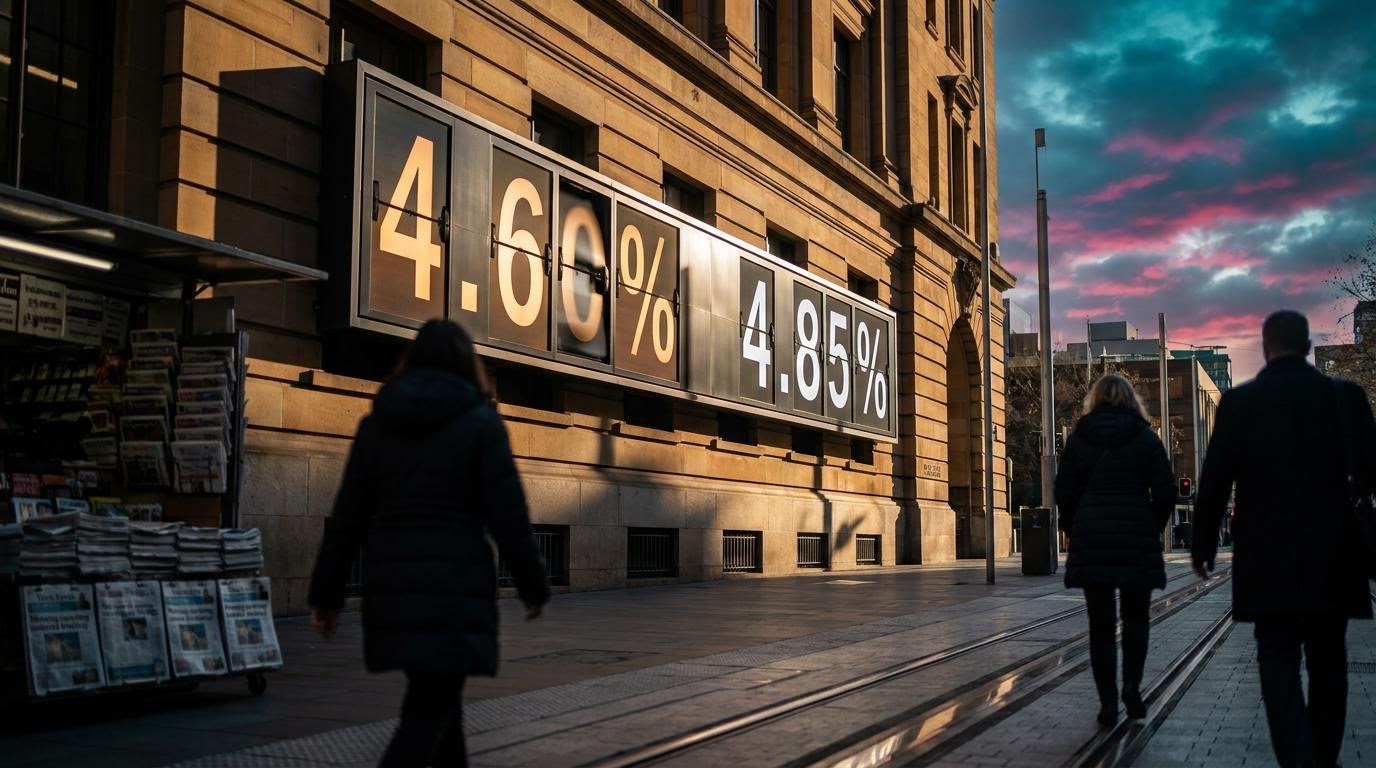
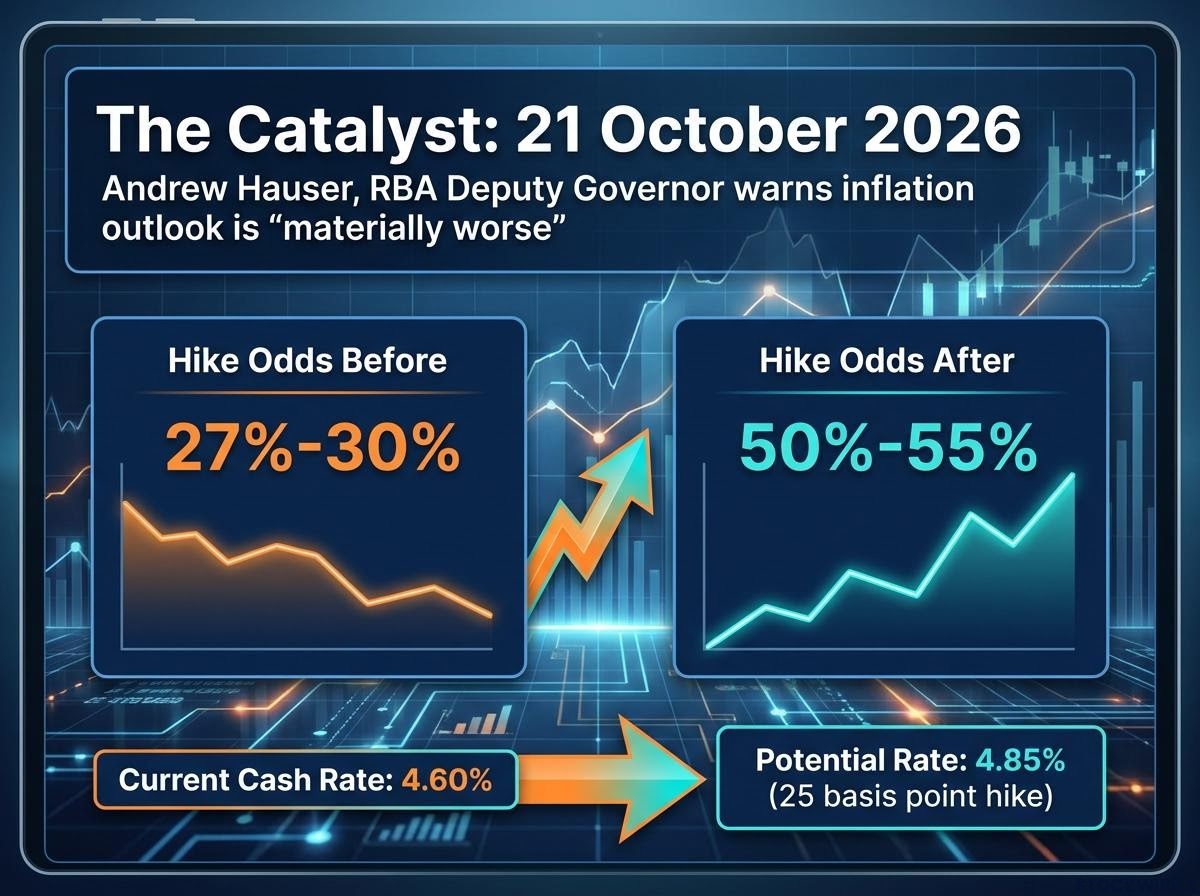
On 21 October 2026, Deputy Governor Andrew Hauser warned that the inflation outlook was “materially worse” than the RBA expected in its August forecasts. The warning lands six days before the September-quarter Consumer Price Index (CPI) on 28 October, with the cash rate at 4.60%.
The backdrop is not helping. Global bond yields are elevated, oil sits near US$109 a barrel and security incidents in the Gulf are reaching energy infrastructure.
Here is what is driving the repricing, where Australia’s big four bank economists disagree, and which parts of your portfolio and borrowing look most sensitive to the outcome.
Why did one speech move the odds on an RBA rate hike?
Hauser did not announce a policy change. He described a problem, and the problem was not a single inflation print.
“Materially worse” Andrew Hauser, RBA Deputy Governor, on how the inflation outlook compares with the RBA’s August forecasts (21 October 2026).
What the RBA’s own survey is telling it
Business liaison, the RBA’s regular conversations with firms, showed cost pressures as the leading concern. A growing share of firms are passing those higher costs on to customers.
The sharper signal came from the Business Outlook and Sentiment Survey (BOSS), run with Macquarie University. It found a rising share of businesses now regard inflation of 3%-3.5% as the “new normal”, above the RBA’s 2%-3% target band.
That is an expectations problem. Inflation expectations are what people and businesses believe prices will do in future, and they feed into wage claims and pricing decisions, which can keep inflation high on their own. Hauser also acknowledged the cost of tightening, citing rising mortgage hardship and more calls to the National Debt Helpline.
Survey readings like the BOSS result are one gauge, but market-based inflation expectations derived from breakevens and swaps offer a second, investor-driven view, and a widening gap between the two can signal shifting risk appetite rather than a genuine repricing of inflation.
How pricing reacted
The market response was fast but uneven across sources:
- Implied odds of a 25 basis point November hike rose from about 27%-30% to about 50%-55% (ABC cited 51%; one source cited 54.9%)
- Intraday snapshots ranged between roughly 40% and 51% depending on timing
- A hike would lift the cash rate from 4.60% to 4.85% (a basis point is one hundredth of a percentage point)
- August annual headline CPI was 4.0%, up from 3.5% in July; annual trimmed mean was 3.6%
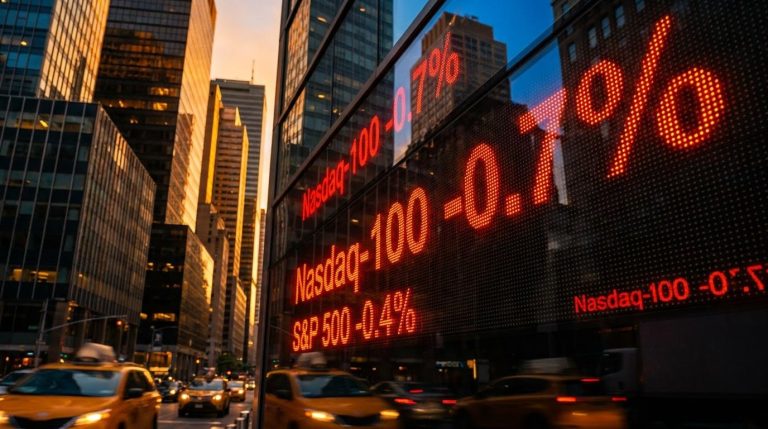
- The ASX 200 still finished 0.2% higher on 21 October
Equities barely flinched, but the rates market moved hard. If businesses and households settle on 3%-3.5% as normal, the RBA has less room to look through a temporary shock. That means you should read rate risk as higher for longer, not as a one-meeting event.
When big ASX news breaks, our subscribers know first
How do bond yields, oil and geopolitics feed into RBA decisions?
On a screen, the inputs look separate: a US Treasury yield, an oil price, a currency quote. In practice they form a chain, and each link can push Australian rates in the same direction.
According to the original market commentary, which was not independently confirmed in dated reports, the US 10-year yield sat around 5.12%. The French-German 10-year spread was about 159bp, the widest since the 2012 eurozone debt crisis, and oil rose 0.9% to about US$109 a barrel.
Here is how those numbers travel:
- Global yields: Higher overseas yields lift global borrowing costs and can push Australian yields and funding costs up before the RBA acts.
- Oil and commodities: Transport, production and energy costs rise, hitting headline inflation first.
- Geopolitics: Escalation adds risk premia, the extra return investors demand for uncertainty, across energy, shipping, currencies and shares.
- RBA reaction: A one-off oil spike may be tolerated if expectations stay anchored. If they drift, the RBA may tighten to stop second-round effects, where higher prices feed into wages and rents.
- Australian dollar: Strong commodity prices support export income, but safe-haven buying of the US dollar can weaken the AUD, making imported fuel and goods dearer.
- Equities: Energy and resources may benefit, while rate-sensitive growth, property, utilities and heavily indebted businesses are exposed.
The fourth link decides everything. The same oil price can be a passing spike or a persistent shock, and expectations determine which one the RBA believes it is facing.
War-driven energy costs rarely stay in the energy line of the CPI basket; they also travel through airfares, freight and imported goods, which is one reason a persistent oil shock can look like broad demand-driven inflation.
| Channel | Direct effect | Likely effect on RBA | Asset exposure |
|---|---|---|---|
| Global yields | Higher funding costs | Tightens conditions before any move | Bonds, long-duration growth stocks |
| Oil | Higher headline inflation | Hawkish if expectations drift | Energy (benefits), transport (exposed) |
| Geopolitics | Higher risk premia | Adds upside inflation risk | Energy, aluminium, broad equities |
| AUD | Ambiguous direction | Weaker AUD adds imported inflation | Importers, offshore earners |
The takeaway for you is that financial conditions for Australian borrowers and investors can tighten before the RBA moves at all. The November decision is one part of a wider tightening, not the whole of it.
Could Middle East escalation after the US midterms hit oil and aluminium?
Nothing in the Gulf has yet removed meaningful supply from the market. The risk is building around it.
Two incidents on 21 October showed conflict edging towards energy infrastructure:
- The US State Department ordered non-emergency staff and their families to leave Saudi Arabia amid intensified attacks by Iran-aligned Houthi forces (Reuters, CNN)
- Saudi air defences intercepted a drone targeting a Saudi Aramco facility at Shaybah; falling debris killed two expatriate workers and injured two others, though operations were reportedly not materially disrupted
Oil is the obvious channel. Aluminium is the quieter one.
Gulf aluminium exposure The Gulf holds about 9% of global aluminium smelting capacity and a considerably larger share of global trade, according to Westpac IQ.
The original market commentary noted aluminium fell about 20% mid-year on hopes of a resolution and has not recovered, so it carries room to move if those hopes fade. No dated latest price was available to confirm the current level.
Timing matters most. Reports that Donald Trump would not strike Iran before the November 2026 midterms leave the post-election window open, and Westpac IQ flagged that oil and aluminium markets could tighten after the vote.
The risk for you is asymmetric. Escalation could lift headline inflation just as the RBA weighs how hard to lean against expectations, so energy exposure works better as a hedge against that scenario than as a bet on it.
What does the NextDC sell-off reveal about data-centre power risk?
While the macro story built slowly, one ASX growth stock lost close to half its value in a session.
What went wrong
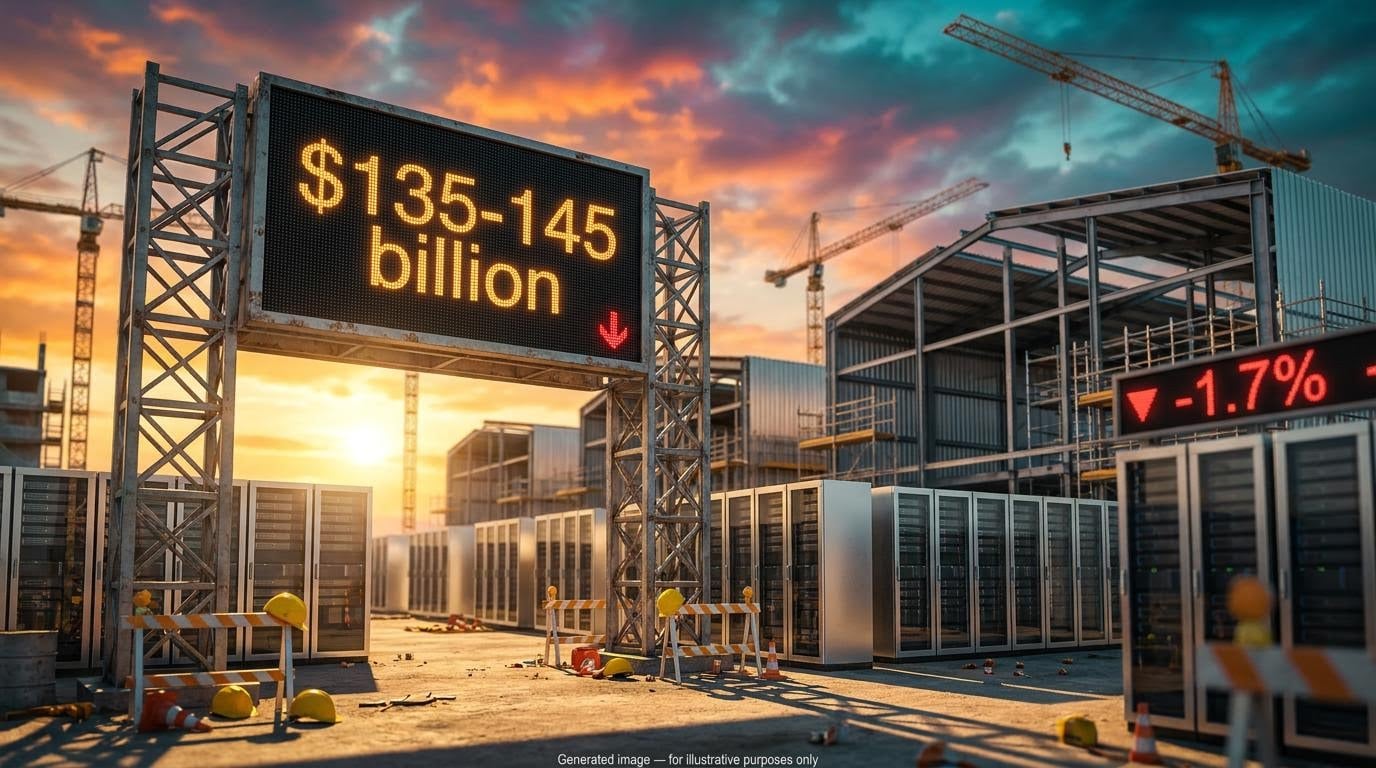
NextDC shares fell about 41.7% to close at $5.35 (Canberra Times), with intraday falls of 42%-44% and roughly $3.1 billion of market value erased early.
The cause was not weak demand. In September 2026, Jemena Electricity Networks suspended parts of the works needed to boost power supply to the M3 Melbourne site in West Footscray, after community and stakeholder opposition, including objections to large overhead power poles. The council and stakeholders withheld consent pending more consultation.
The facility sits about 15 metres from homes, and residents raised concerns about diesel emissions and noise. Jemena does not expect to restart works before February 2027, and the next grid supply increase is now expected in FY28.
| Item | Before | After | Change |
|---|---|---|---|
| FY27 revenue guidance | $615M-$640M | $475M-$500M | Cut |
| FY27 capex | Not specified | $4.5B-$5.0B | About $750M lower |
| Contracted revenue this year | Included | Deferred | About $140M |
| Land and new developments | Proceeding | On hold | Paused |
What investors can test
The core lesson is that contracted demand is not the same as deliverable capacity. Grid connections sit outside an operator’s control, so connection risk becomes revenue and valuation risk.
Three tests apply to any data-centre exposure:
- Grid connection: Who controls the power upgrade, and is it fully approved?
- Council approval and energisation timing: Is there a realistic date for power to flow, and does local consent exist?
- Customer termination rights: Can tenants walk away if power arrives late?
NextDC says the capacity remains under contract, subject to customer rights, and data hall construction continues. Possible mitigants include redesigned power routes, underground cabling, staged capacity and a revised power ramp. If you hold AI or data-centre exposure, value projects on realistic energisation dates rather than headline megawatts, because the market has shown it will punish unresolved connection and social-licence risk heavily.
Investors exploring the wider valuation case for NextDC and its peers can read our deep-dive into Australian data centre oversupply risk, which weighs the forecast supply gap against the construction wave.
Hike or hold: where economists split and what could prove each side wrong
The big four banks are split down the middle, and both camps have a coherent case.
| Institution | Call | Key reasoning |
|---|---|---|
| ANZ (Adam Boyton, Jack Chambers) | Hike | Uncomfortably high inflation, second-round risks, firmer RBA rhetoric |
| Westpac (Luci Ellis) | Hike | Persistent inflation, household resilience, data-centre investment spillovers |
| CBA | Hold | Finely balanced decision, with risks of further increases building |
| NAB (Sally Auld) | Hold | Policy lags; weaker spending, employment and PMI indicators |
Even Westpac is not unanimous. Other commentary attributed to Justin Smirk argued the inflation surprise had not yet cleared the bar for a hike, given softer labour and wage outcomes.
The hawks emphasise expectations and energy pass-through. The doves emphasise that earlier tightening takes time to bite and that activity is already slowing.
Mortgage hardship is not the only strain on households; mortgage application declines of up to 15% at the major banks suggest higher rates are already cooling credit demand, which supports the doves’ case on policy lags.
What would prove each side wrong
The Q3 trimmed mean is the decisive evidence. Consensus sits around 1.0% for the quarter and about 3.5% annually, and Hauser indicated the quarterly result was likely higher than the RBA had assumed. No single authoritative consensus exists for annual headline CPI.
The hike case weakens with a sharp CPI undershoot, softer employment or consumption, worsening mortgage hardship or a reversal in energy prices. The hold case breaks if expectations come unanchored before slower growth can ease price pressure.
Practical steps before 28 October
Pricing swung from about 27% to 55% in days, so treat November as genuinely uncertain and prepare for both outcomes. General steps include:
- Stress-test mortgage repayments against a further rise
- Keep an emergency cash buffer
- Diversify so no single rate scenario drives your results
- Avoid timing decisions around headlines
- Keep tactical moves inside a written long-term plan
- Apply ASIC MoneySmart principles: understand fees, risks and liquidity, and be wary of guaranteed returns
This is general information only. Seek advice tailored to your debt, tax position and risk tolerance.
What the 28 October CPI settles, and what it leaves open
The September-quarter print, especially the trimmed mean, will largely settle the November question. It will not resolve the deeper issues: whether businesses keep treating 3%-3.5% inflation as normal, how high global yields stay and whether Gulf tension turns into lost supply.
After the release, three markers matter: the early-November RBA decision, Gulf developments once the US midterms pass, and whether Jemena holds to its February 2027 restart timeline for NextDC’s M3 site.
The useful decision is the one you make before the data lands. Work out now how your portfolio and borrowing would hold up under a hike and under a hold, so the result informs your plan rather than replaces it.
This article is for informational purposes only and should not be considered financial advice. Investors should conduct their own research and consult with financial professionals before making investment decisions. Past performance does not guarantee future results. Financial projections and forward-looking statements are speculative and subject to market conditions and various risk factors.