Nvidia Posts Record $81.6B Quarter, Stock Slips Anyway
36 mins ago


OpenAI, the company behind ChatGPT and last valued at $852 billion, could be days away from submitting a confidential IPO registration to the Securities and Exchange Commission (SEC). The filing would set in motion what is positioned to become one of the most significant technology listings in a generation. With Goldman Sachs and Morgan Stanley leading the effort and a potential market debut targeted as early as September 2026, the window for investors to understand what is coming, and what remains unresolved, is now. What follows covers the mechanics of the confidential filing process, where OpenAI’s financials stand, the risks still hanging over the offering, and the specific disclosures retail investors should track as the process unfolds.
OpenAI is preparing to submit a draft S-1 registration statement confidentially to the SEC, with the filing potentially occurring within days, according to the Wall Street Journal, citing people with knowledge of the situation. Goldman Sachs and Morgan Stanley are the named lead underwriters assisting in drafting the registration documents.
The earliest targeted public market debut is September 2026, though the timeline remains subject to revision based on SEC review cycles and prevailing market conditions. The involvement of two bulge-bracket banks and a specific calendar target signal that this process has crossed from speculation into active preparation.
The three facts investors should anchor to:
A confidential IPO filing is not secrecy for its own sake. Under SEC rules, companies planning public offerings may submit draft registration materials (an S-1 or draft registration statement) without immediate public disclosure. The mechanism allows issuers to work through SEC staff feedback, correct potential disclosure errors, and resolve ambiguities before the document faces public scrutiny.
The process follows a structured sequence:
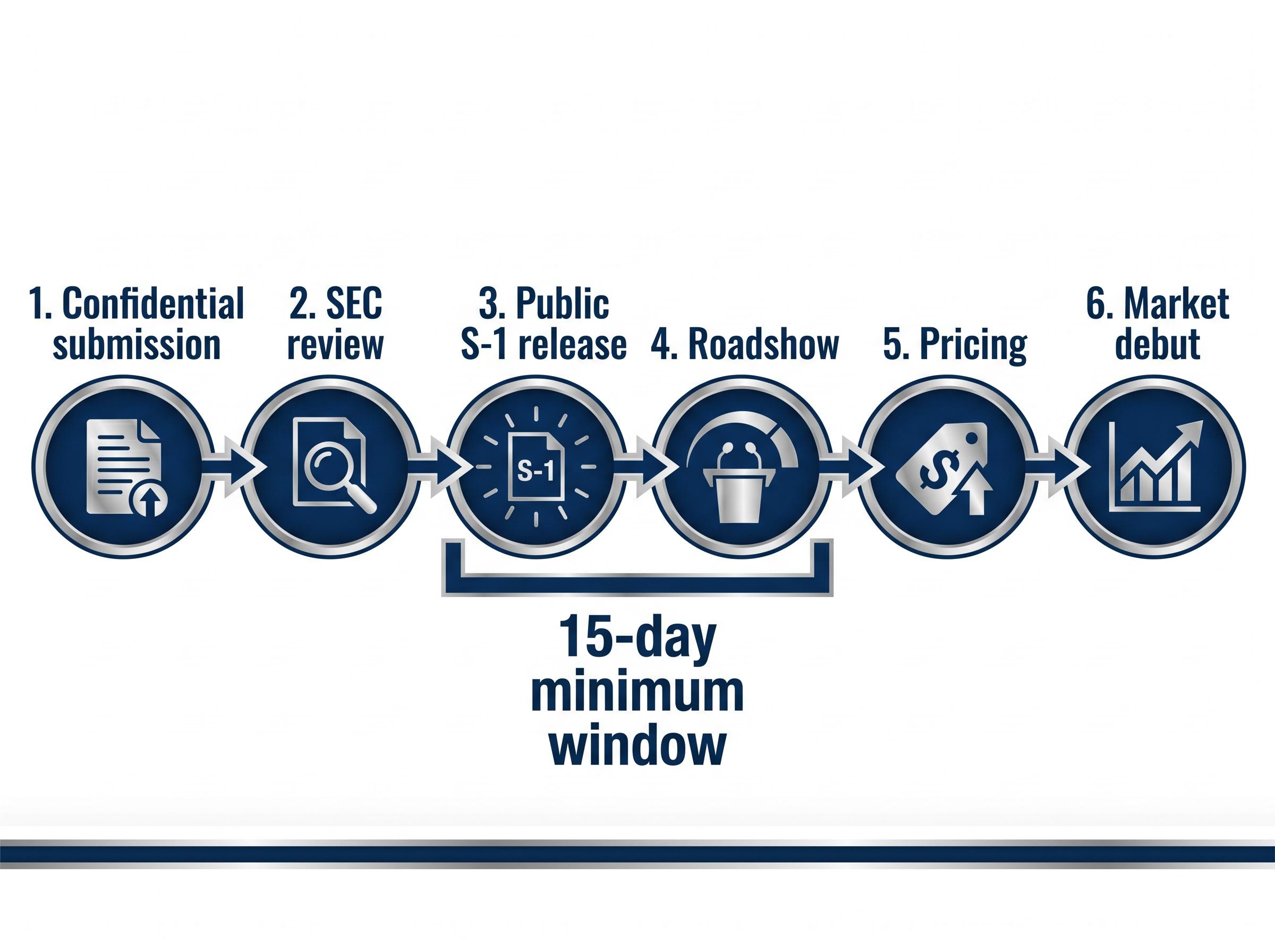
The 15-day rule is the single most important milestone for retail investors. Until the public S-1 is released, no audited financials, risk factor disclosures, or management discussion will be available outside OpenAI’s private investor base.
The skills required for reading an S-1 prospectus extend beyond the headline financials: the management discussion and analysis section, the risk factors hierarchy, and the use-of-proceeds disclosure each reward close reading in ways that summary coverage rarely captures.
The typical timeline from confidential filing to market debut spans several weeks to a few months, depending on the depth of SEC review and the number of required amendments.
The growth numbers are difficult to dismiss. OpenAI closed its $122 billion Series C funding round on 31 March 2026, the largest private funding round on record, establishing a post-money valuation of $852 billion. Revenue has followed a steep trajectory, with the company generating approximately $3.7 billion in full-year 2024, roughly $6 billion in 2025, and reaching a $24-25 billion annualised run rate by early 2026.
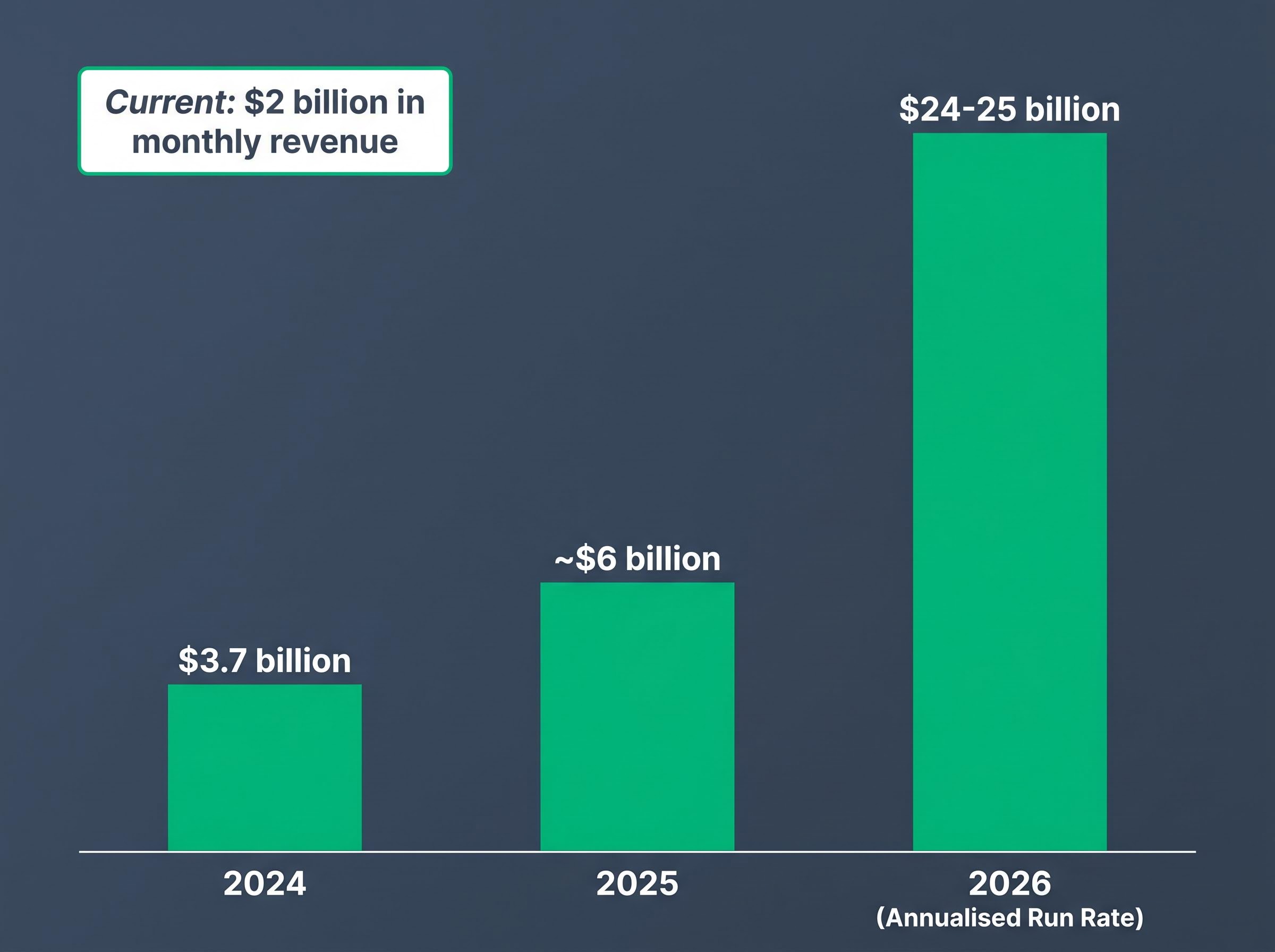
OpenAI is currently generating $2 billion in monthly revenue, driven by ChatGPT subscriptions, API usage, and accelerating enterprise adoption.
Enterprise revenue now exceeds 40% of total revenue and is projected to approach parity with consumer revenue by the end of 2026. That shift matters: enterprise contracts tend to carry longer duration and higher retention than consumer subscriptions, which strengthens the recurring revenue argument.
| Year | Revenue | Primary Driver |
|---|---|---|
| 2024 | $3.7 billion | ChatGPT subscriptions and early API adoption |
| 2025 | ~$6 billion | Expanded enterprise contracts and consumer growth |
| 2026 (annualised run rate) | $24-25 billion | Enterprise acceleration and API revenue scaling |
Then there is the cost side. Despite this revenue trajectory, losses remain material. OpenAI’s infrastructure and compute spending, including ongoing data centre buildout, continues to outpace revenue growth in absolute terms. The S-1 will need to address the path to profitability directly, and the valuation multiple implied by an $852 billion private figure against $24-25 billion in annualised revenue leaves limited room for that answer to be vague.
Neither of the risks below is necessarily a deal-breaker. Both, however, will appear in the S-1’s risk factors section, and both will surface during roadshow questioning. Knowing what to look for in those disclosures gives investors a measurable advantage in evaluating the offering.
A federal jury dismissed Elon Musk’s lawsuit against OpenAI on 18 May 2026 on statute-of-limitations grounds. The immediate legal threat has diminished. Musk, however, announced plans to appeal the verdict to the 9th Circuit, which means the litigation remains a live disclosure item in any registration statement.
The jury dismissal removed the most acute scenario, an injunction that could have delayed or blocked the offering. The appeal keeps the matter on the disclosure ledger.
Anthropic has emerged as the most significant near-term enterprise AI challenger to OpenAI, with particular strength in business-to-business adoption, developer traction, and model quality perception among technical buyers. Analyst commentary in recent months has framed Anthropic as outpacing OpenAI in certain enterprise adoption metrics.
At a valuation that already requires significant multiple expansion to justify, the competitive landscape makes the enterprise revenue breakdown in the S-1 one of the most closely watched sections of the document.
The public S-1 release is the single most important event for retail investors. Until that document is available, audited financials, a detailed management discussion, and the full risk factors section remain inaccessible. The 15-day minimum window between the public S-1 release and the roadshow is the preparation window investors should plan around.
The specific disclosures and signals worth tracking, in order of priority:
September 2026 is the earliest potential debut, not a guaranteed date. Investors should treat the confidential filing as the start of a structured process rather than the beginning of a countdown.
Investors exploring the broader market environment into which OpenAI would debut will find our full explainer on tech sector valuation conditions, which covers sell-side forecast overextension, record institutional overweight positioning in US technology, and the compounding effect of simultaneous large-cap listings on available capital in the IPO market.
OpenAI’s confidential filing marks the formal beginning of a structured SEC process, not the finish line. What investors now know: the filing mechanism is a standard regulatory pathway with a specific public disclosure trigger, the revenue trajectory is steep but the cost structure remains unresolved, and two live risks (the Musk appeal and Anthropic’s enterprise momentum) will shape both the S-1’s disclosures and the roadshow’s reception.
The material information, audited financials, a confirmed valuation range, and management’s profitability guidance, arrives when the public S-1 is released. That document, not the confidential filing itself, is the moment to watch.
This article is for informational purposes only and should not be considered financial advice. Investors should conduct their own research and consult with financial professionals before making investment decisions. Forward-looking statements regarding OpenAI’s IPO timeline, valuation, and financial performance are subject to change based on market developments, regulatory review, and company decisions.
A confidential IPO filing allows a company to submit its draft S-1 registration statement to the SEC without immediate public disclosure, giving it time to address staff feedback before the document is publicly released at least 15 days before the roadshow begins.
Retail investors will not have access to audited financials, risk factors, or management guidance until OpenAI's public S-1 is released, which must occur at least 15 days before the company begins its roadshow or publicly announces the offering.
OpenAI is valued at $852 billion following its $122 billion Series C round closed on 31 March 2026, and is generating approximately $2 billion in monthly revenue, equivalent to a $24-25 billion annualised run rate as of early 2026.
The two primary risks are Elon Musk's ongoing appeal of his dismissed lawsuit against OpenAI, which must be disclosed in the S-1 risk factors, and Anthropic's growing enterprise AI market share, which could pressure OpenAI's pricing power and complicate its valuation multiple.
Investors should prioritise the confirmed IPO valuation range, the profitability timeline in the management discussion section, the enterprise versus consumer revenue breakdown, the treatment of the Musk litigation in risk factors, and the announcement of a roadshow date as a signal that pricing is imminent.