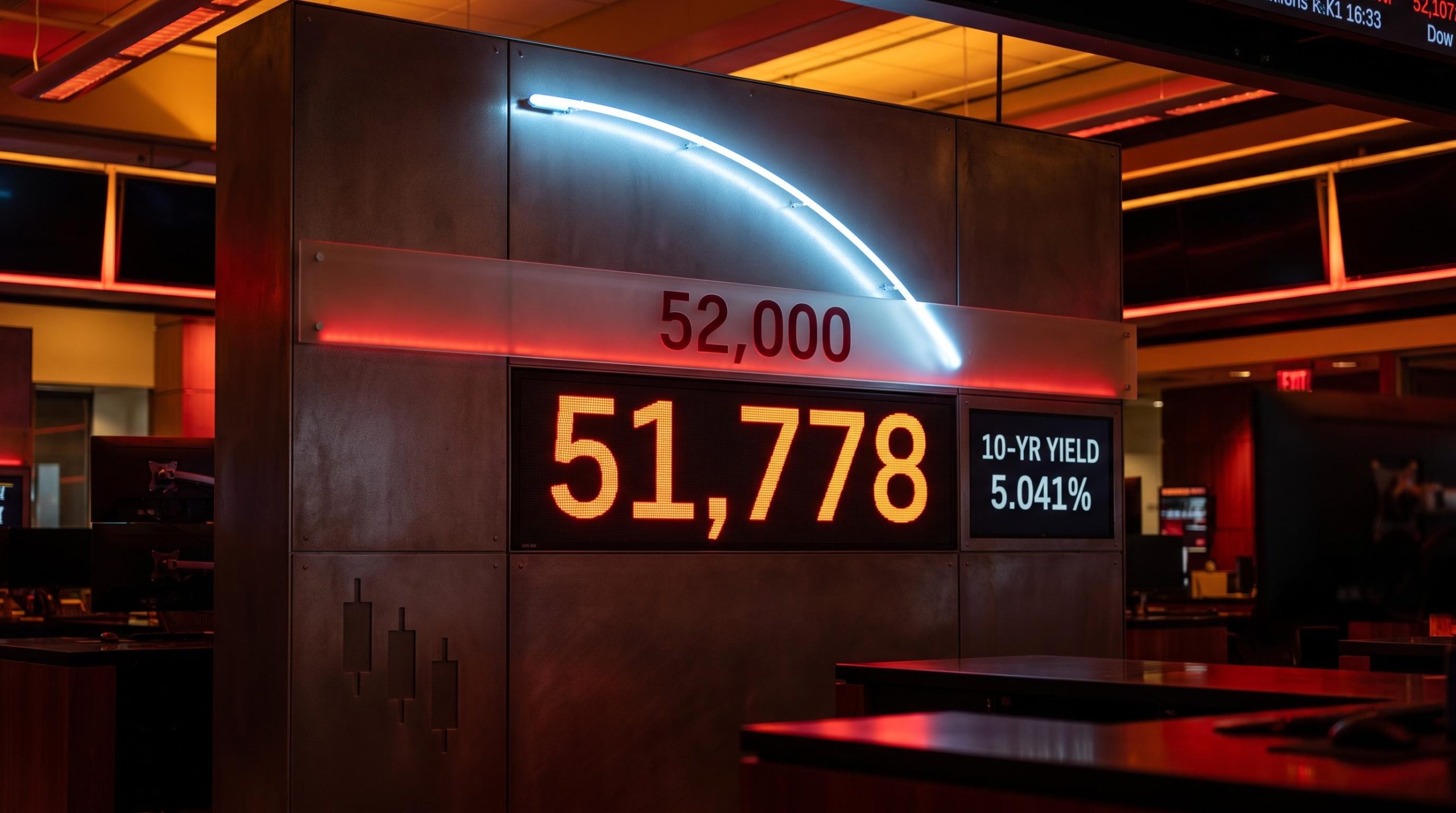
The economic impact of the Middle East conflict has shifted from a theoretical risk to a physical pricing shock. The closure of the Strait of Hormuz has severed a major artery of global energy distribution, forcing domestic markets to instantly reprice base commodities. This event represents a historic supply disruption with long-term implications for the United States economy.
Approximately 20 percent of global oil and liquefied natural gas trade normally flows through this chokepoint. With an anticipated US economic blockade on Iran restricting alternative supply routes, energy markets have fundamentally reset their baselines. The scale of this interruption removes previous pricing models from consideration.
International Energy Agency Assessment “The ongoing conflict has caused the largest supply disruption in the history of the global oil market.”
The domestic reality of this geopolitical event materialised rapidly at the fuel pump. Before the conflict began, the national average for gasoline sat at $3.00 per gallon. By late April 2026, that average spiked to between $4.20 and $4.25 per gallon.
Institutional commodity desks expect this pricing pressure to persist. WTI crude oil reached $104.44 per barrel on 29 April 2026, reflecting deep market anxiety regarding forward supply availability.
This aggressive spike dictates a new foundational driver for the macroeconomic environment. Readers must understand exactly why energy costs have fundamentally reset and what this means for baseline economic stability across all sectors.
| Metric | Pre-Conflict Baseline | Late April 2026 Level |
|---|---|---|
| WTI Crude Oil | Normal market levels | $104.44 per barrel |
| US National Average Gasoline | $3.00 per gallon | $4.20 to $4.25 per gallon |
How global chokepoints trigger domestic inflation
Energy shocks transition from distant geopolitical events into local retail prices through a highly specific economic transmission mechanism. A barrel of oil dictates the cost of transportation, which then increases manufacturing expenses and ultimately forces retail costs higher. This cycle erodes consumer purchasing power over time.
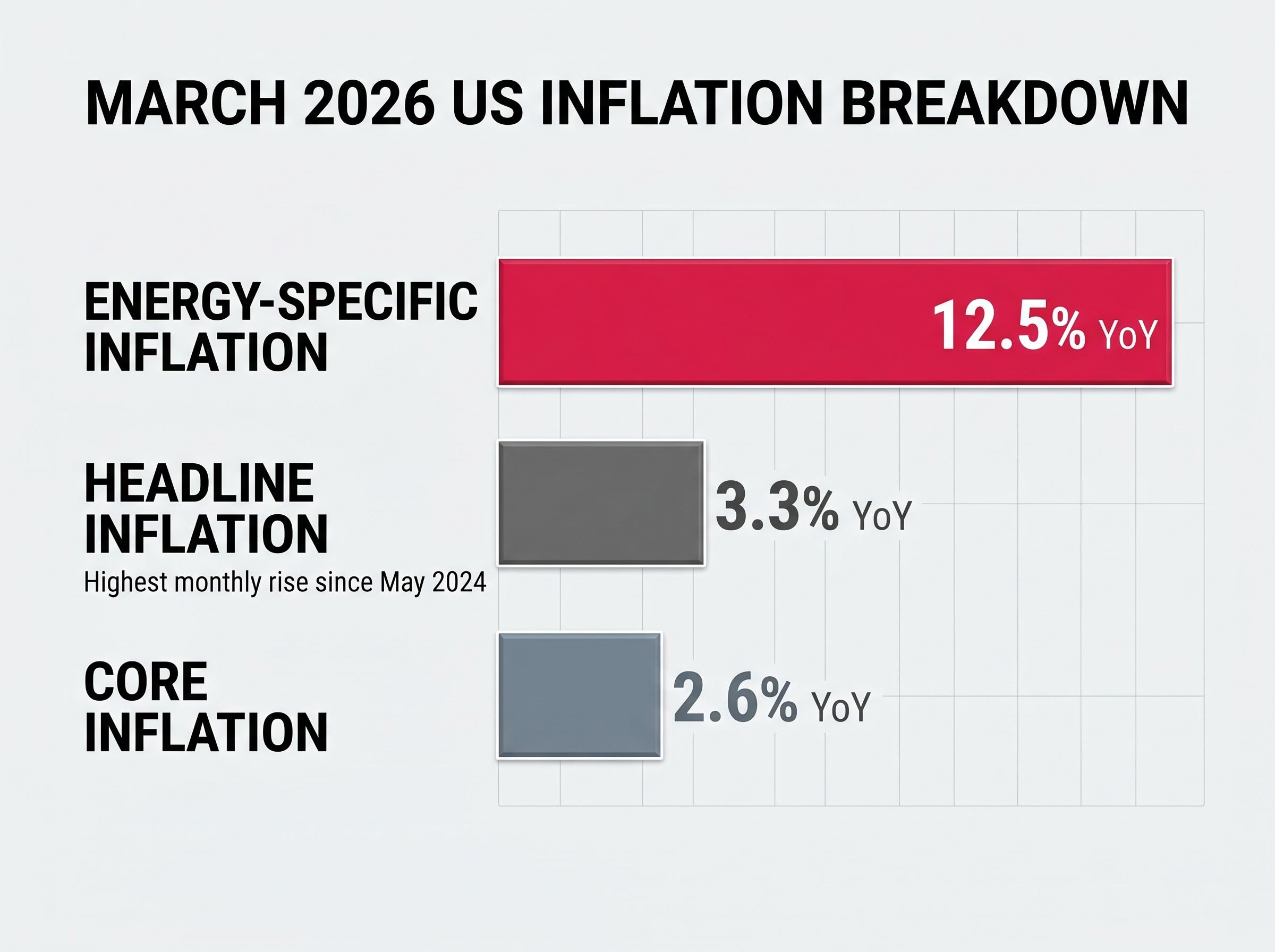
To understand the severity of this specific spike, analysts separate underlying economic health from event-driven price movements. This separation is highly visible in the recent inflation data.
Headline Inflation: This metric measures total price changes across all consumer goods and services. US headline inflation surged to 3.3 percent year-on-year in March 2026, marking the highest monthly rise since May 2024. Energy-Specific Inflation: This category isolates fuel, electricity, and utility costs. Driven by the Strait of Hormuz closure, energy prices increased 12.5 percent year-on-year. * Core Inflation: This metric excludes volatile food and energy sectors to measure structural price stability. Core inflation rose to a more contained 2.6 percent year-on-year, proving the current broad spike is driven heavily by the energy sector.
When sustained elevated energy costs bleed into broader economic categories, the financial pressure compounds. Logistics providers pass their increased diesel expenses onto retailers, who then increase shelf prices.
Understanding this division helps readers separate underlying economic health from event-driven price spikes. This economic literacy provides a framework to better interpret future inflation reports and trace how a distant maritime chokepoint forces local consumer prices higher.
For readers wanting to understand the historical precedents for this dynamic, our full explainer on oil prices and recession risk details how every major market contraction since 1973 has followed this exact sequence of supply disruptions and rising input costs.
When big ASX news breaks, our subscribers know first
The American consumer squeeze and retail rotation
The abstract data of energy inflation translates into a tightening financial vice for American households. The dual pressures of rising transportation and medical costs are actively crowding out discretionary spending. This dynamic forces a rapid recalibration of shopping habits across the retail sector.
Transportation costs have risen 4.1 percent, directly reflecting higher fuel prices and elevated vehicle maintenance expenses. Concurrently, medical care costs have increased by 3.7 percent. These two non-negotiable categories absorb an expanding share of household income, leaving less capital for non-essential purchases.
Shoppers are abandoning full-price retail environments to manage their shrinking budgets. This consumer pivot dictates where capital will flow over the coming quarters.
Discount retailers as the ultimate beneficiaries
This budget contraction drives a clear substitution effect across the retail sector. Middle-income shoppers trade down to discount chains, seeking relief from the pricing pressure that has infected daily necessities.
Institutional portfolios are rapidly adjusting to this consumer shift towards value by reallocating capital away from premium consumer discretionary stocks and fortifying defensive retail positions.
Analysts anticipate this consumer rotation will feature heavily in upcoming corporate disclosures. Major discount retailers, including Walmart and Dollar General, operate on delayed reporting timelines and will release their calendar Q1 data in mid-May.
These mid-May reports will serve as a primary barometer for domestic consumer health. Market observers will watch foot traffic metrics, average ticket sizes, and gross margins to determine which retail sectors are structurally positioned to benefit from the current economic constraints.
Institutional paralysis and the Fed’s final transition
The inflation shock arrives at a difficult transition point for the United States central bank. The Federal Reserve faces an institutional paralysis, trapped between fighting supply-driven inflation and avoiding an artificial economic contraction.
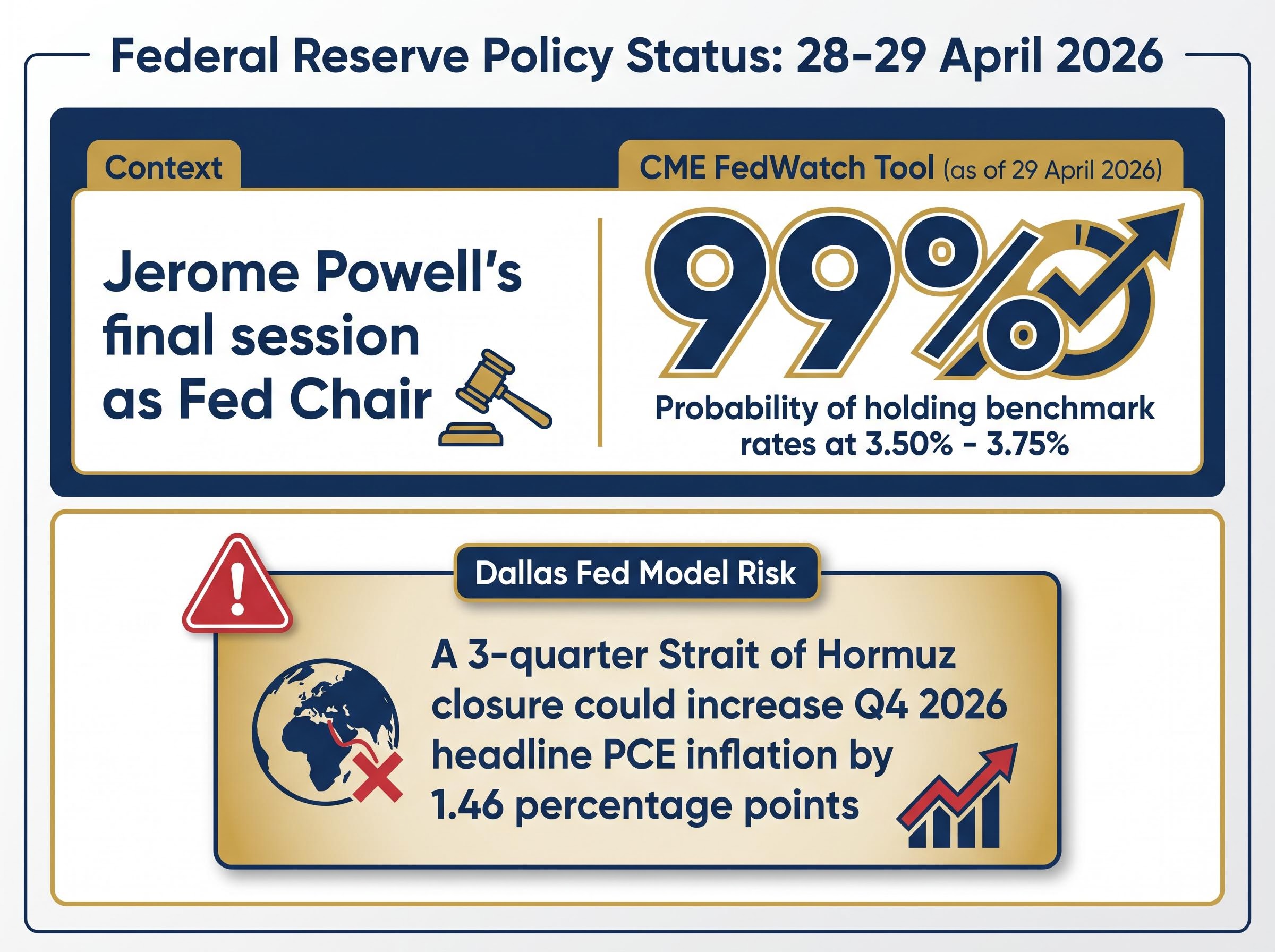
The 28-29 April 2026 Federal Reserve meeting coincides with Jerome Powell’s final session as Fed Chair. This leadership transition is heavily complicated by unexpected supply disruptions, forcing monetary policy into a static holding pattern.
Market expectations strongly favour the central bank maintaining its current policy. As of 29 April 2026, the CME FedWatch Tool projects a 99 percent probability that the Fed will hold benchmark rates in the 3.50 to 3.75 percent range.
Several Fed officials have noted recently that future rate hikes remain on the table if these elevated inflation levels persist. The central bank lacks the flexibility to cut rates while energy prices surge, leaving them with few options.
Navigating the stagflation threat
This immobility raises the threat of stagflation, an economic environment defined by high inflation and stagnant economic growth. The Dallas Fed recently modelled the long-term risks of a prolonged Middle East disruption.
According to their analysis, if the Strait of Hormuz remains closed for three quarters, it could increase Q4 2026 headline PCE inflation by 1.46 percentage points. This modelling signals severe risks for late-year economic health.
The Dallas Fed economic modeling explicitly links these prolonged supply chain blockages to structural inflation pressure, demonstrating how geopolitical risks directly alter the trajectory of baseline consumer costs.
This data provides readers with a clear expectation of monetary policy stagnation. Fixed-income strategies must adjust to a higher-for-longer interest rate environment as the central bank waits out the geopolitical disruption.
Corporate casualties: The travel and aviation margin hit
Consumer hesitation and surging operational costs are systematically eroding profit margins across the broader economy. The travel industry is absorbing the immediate damage, facing a combination of diminished traveller confidence and severe margin compression.
Fluctuating aviation fuel costs are restricting forward-looking visibility for commercial airlines. While the broader aviation sector has hesitated to update its guidance, leisure booking companies are already issuing explicit warnings to the market.
Aviation operators are acutely vulnerable to surging fuel costs, which directly compress operating margins and limit the ability to pass expenses onto budget-conscious travellers.
Booking Holdings released its Q1 2026 earnings on 28 April 2026, and management formally lowered its FY26 financial outlook. The company reported that geopolitical unrest suppressed first-quarter room night expansion.
The earnings release outlined a specific sequence of pressures hitting travel providers:
- Consumer budget constraints limiting discretionary domestic travel spending.
- Rising jet fuel operational costs compressing commercial airline margins.
- International booking hesitation directly tied to the expanding Middle East conflict.
The contrast between explicit warnings from booking platforms and airline silence highlights a sector in transition. Airlines rely heavily on fuel hedging strategies, which temporarily mask the true cost of crude oil spikes before eventually rolling over into higher operating expenses.
Once these hedges expire, carriers must absorb the full market price, leading to inevitable ticket price hikes or further margin deterioration. By tracking these specific corporate casualties, investors gain a framework for identifying vulnerable sectors in their portfolios as operational costs scale higher.
Navigating the long tail of geopolitical volatility
The cascading effects from the Strait of Hormuz disruption flow directly from global shipping lanes to the American household budget. With WTI crude establishing a $104.44 baseline, ongoing market volatility requires defensive portfolio positioning rather than aggressive growth assumptions.
Widespread margin compression and slowing aggregate demand pose a serious threat to record equity valuations, especially as two-thirds of major index components begin flagging energy expenses in their forward guidance.
Supply-side inflation shocks typically compress corporate margins before they trigger widespread central bank intervention. Readers should monitor upcoming retail earnings reports and Federal Reserve rhetoric to gauge the depth of the consumer contraction. This provides a clear mental checklist of what to monitor next, transforming a complex global crisis into a navigable economic reality.
This article is for informational purposes only and should not be considered financial advice. Investors should conduct their own research and consult with financial professionals before making investment decisions. Past performance does not guarantee future results, and financial projections are subject to market conditions and various risk factors.