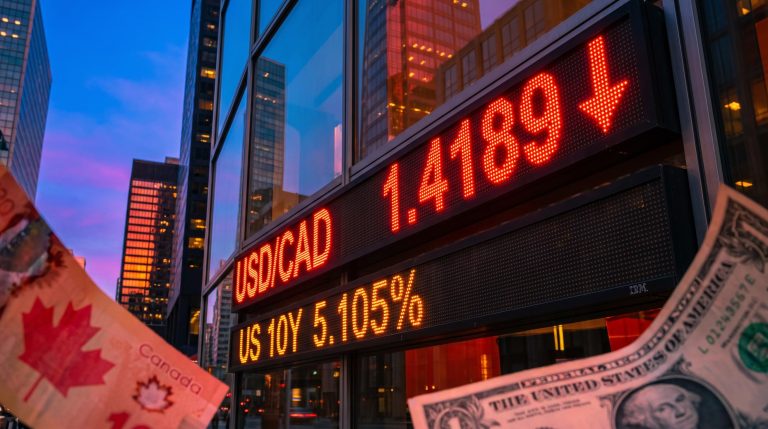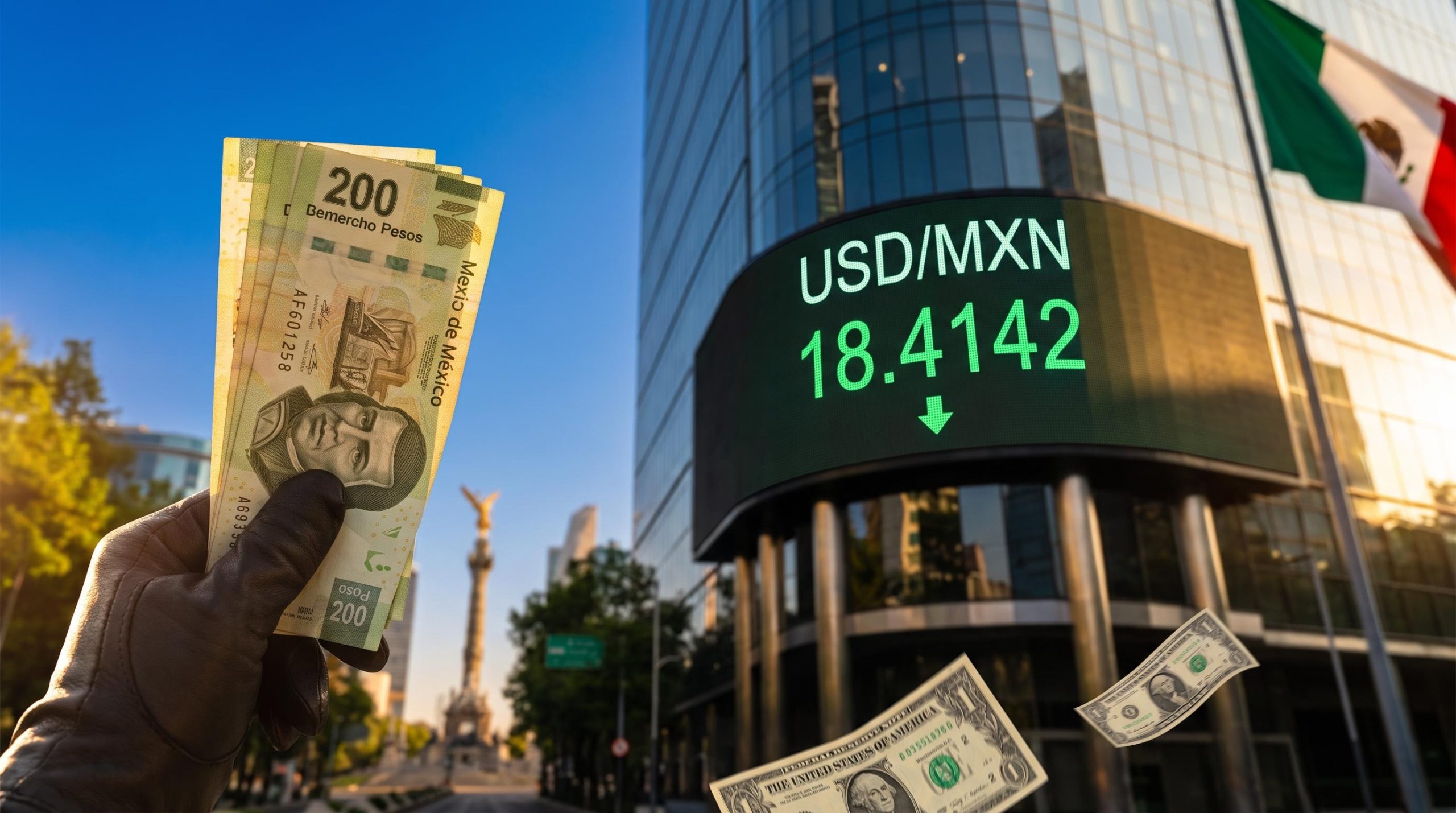
The Mexican peso gained on Thursday, 15 October 2026, with USD/MXN closing at 18.4142, down about 0.44%. The move came a day after US consumer prices ran hotter than forecast, and the same day producer prices also came in above expectations.
Headline US consumer price inflation (CPI) reached 3.7% year on year against 3.6% expected. Producer prices (PPI), which track what businesses pay, jumped 6.3% against a consensus near 5.5%. Yet the US Dollar Index (DXY), a gauge of the dollar against six major currencies, slipped to about 102.00.
The peso’s path was not a straight line. It first sold off toward 18.51 after the CPI release, then reversed.
Here is why hot data did not deliver a strong dollar, which levels matter next, and which signals (a Warsh speech and Middle East headlines) will help you read the next move like this one.
Why did the peso rally when inflation came in hot?
The first reaction was the obvious one. Hotter inflation suggested the Federal Reserve would raise rates sooner, so traders bought dollars and USD/MXN jumped toward 18.51. CNBC reported that odds of a 25 basis point October hike surged to 53.7% intraday, up from 22.1% the day before.
Then the pricing unwound.
| Indicator (September) | Actual | Consensus |
|---|---|---|
| Headline CPI y/y | 3.7% | 3.6% |
| Headline CPI m/m | 0.6% | 0.6% |
| Core CPI y/y | 2.6% | 2.5% |
| Headline PPI y/y | 6.3% | 5.5% (The Hill); 5.3% (FXStreet) |
| Headline PPI m/m | 1.3% | 0.6% |
By Thursday, Reuters put October hike odds near 27% based on CME pricing, while Prime Terminal showed 26%. A December hike stayed heavily priced, at about 89.5% per Reuters and near 92% per Prime Terminal. The sources differ slightly because they draw on different pricing feeds, but both point the same way.
Futures pricing has been volatile all autumn, with October hike odds swinging from single digits to above 70% on Fed communication alone, which explains why Thursday’s repricing was so sharp.
Three forces turned the trade:
- Dollar softness: the DXY fell between 0.51% and 0.54%, depending on the source.
- Hike timing: markets accepted that inflation argues for tightening eventually, but pushed the next move out to December. Convera noted Fed Chair Kevin Warsh has resisted committing to a path on one report.
- Positioning: BBVA Research said the peso fell about 3% in September once a hike was fully priced, leaving long-dollar bets ripe for profit-taking.
For you, the lesson is that the headline number is not the signal. The peso moves on whether data changes the expected timing of Fed action, so watch the pricing reaction rather than the print.
What drives the peso beyond a single data day?
Step back from Thursday’s swings and the forces setting the peso’s direction look less friendly. The key one is the interest rate gap between Mexico and the US, which fuels the carry trade: borrowing in a low-yielding currency to hold a higher-yielding one.
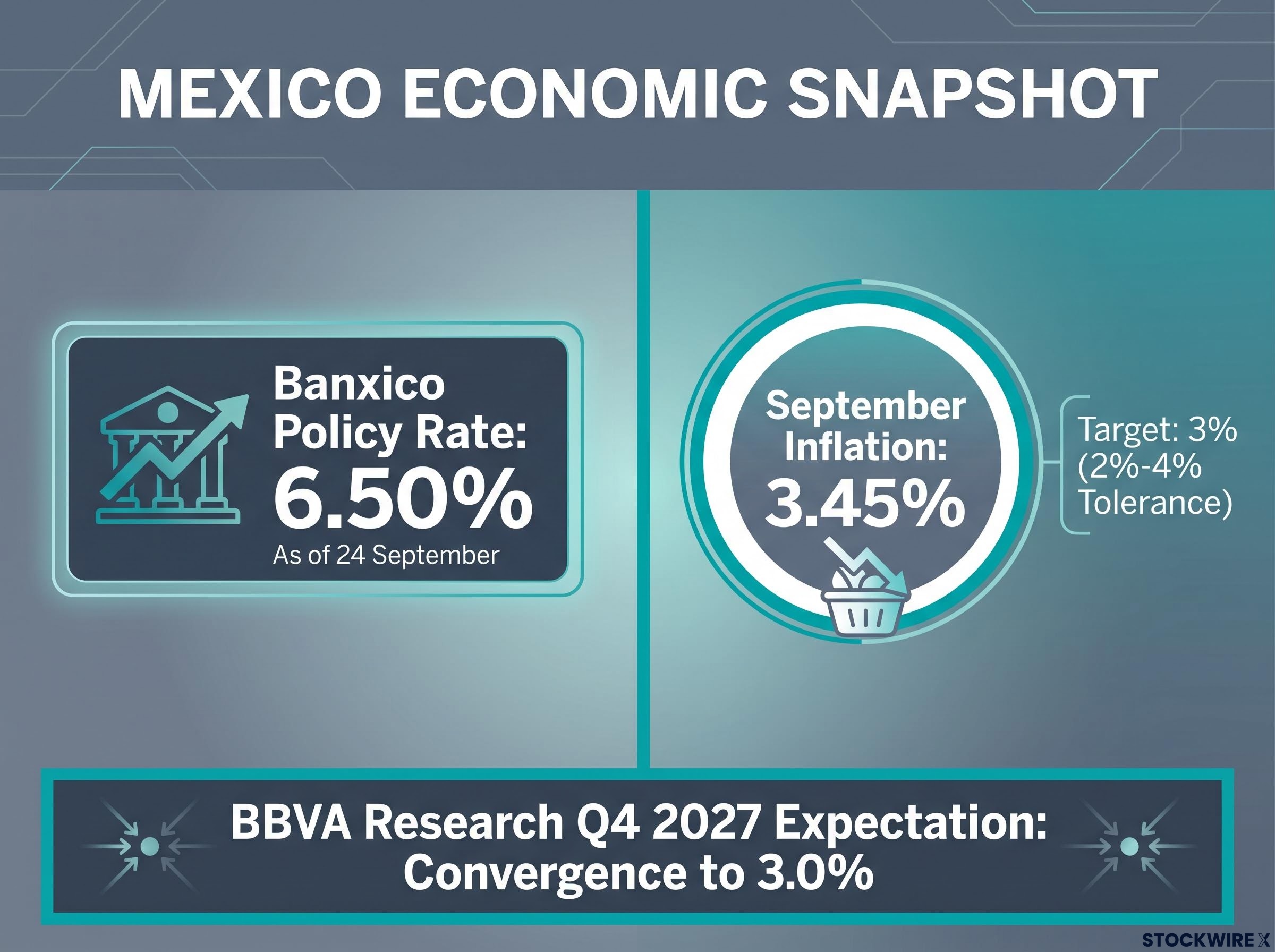
The Bank of Mexico (Banxico) held its policy rate at 6.50% on 24 September, a third straight meeting without change. Its minutes left room for further easing. That narrows the expected spread and trims the carry demand that has long supported the peso, the most traded currency in Latin America.
The US-Mexico gap is now at its narrowest rate differential since 2015, around 250 basis points, which is the core reason carry demand for the peso is weakening.
Mexico’s inflation, reported at 3.45% in September (a figure not independently confirmed), sits above Banxico’s 3% target but inside its 2%-4% tolerance band. BBVA Research expects convergence to 3.0% in Q4 2027, which leaves room for cuts.
The structural case still holds. Nearshoring, manufacturing integration with the US and oil export revenue explain why the peso, about 3% stronger year to date, recovers after shocks. The cyclical case, built on a shrinking rate gap and crowded positioning, argues for caution in the near term.
| Driver | Effect on MXN | Current read |
|---|---|---|
| Fed expectations | Delayed hikes support the peso | October odds fell; December heavily priced |
| Banxico | Cuts weaken the peso | Hold at 6.50%, easing room left |
| Carry | Wider spread supports the peso | Spread narrowing |
| Nearshoring | Structural support | Multi-year driver since 2023 |
| Oil | Mixed: export gain, US inflation risk | Middle East tensions elevated |
| Risk appetite | Risk-off hurts the peso | Fragile |
Geopolitics and the energy channel
Fighting between the Houthis and Saudi Arabia persisted, both Washington and Tehran asserted authority over the Strait of Hormuz, and Israel’s prime minister, Benjamin Netanyahu, was reported to have cautioned that striking Iran is a realistic option. A renewed energy shock would likely lift oil and US inflation, and the risk-off dollar demand would probably outweigh Mexico’s oil benefit at first. No source quantifies an Iran-specific or USMCA-review effect on Thursday’s move.
The structural story explains the resilience, but the narrowing rate gap means one strong day is not proof the trend has turned.
Where does USD/MXN go next, and what could change it?
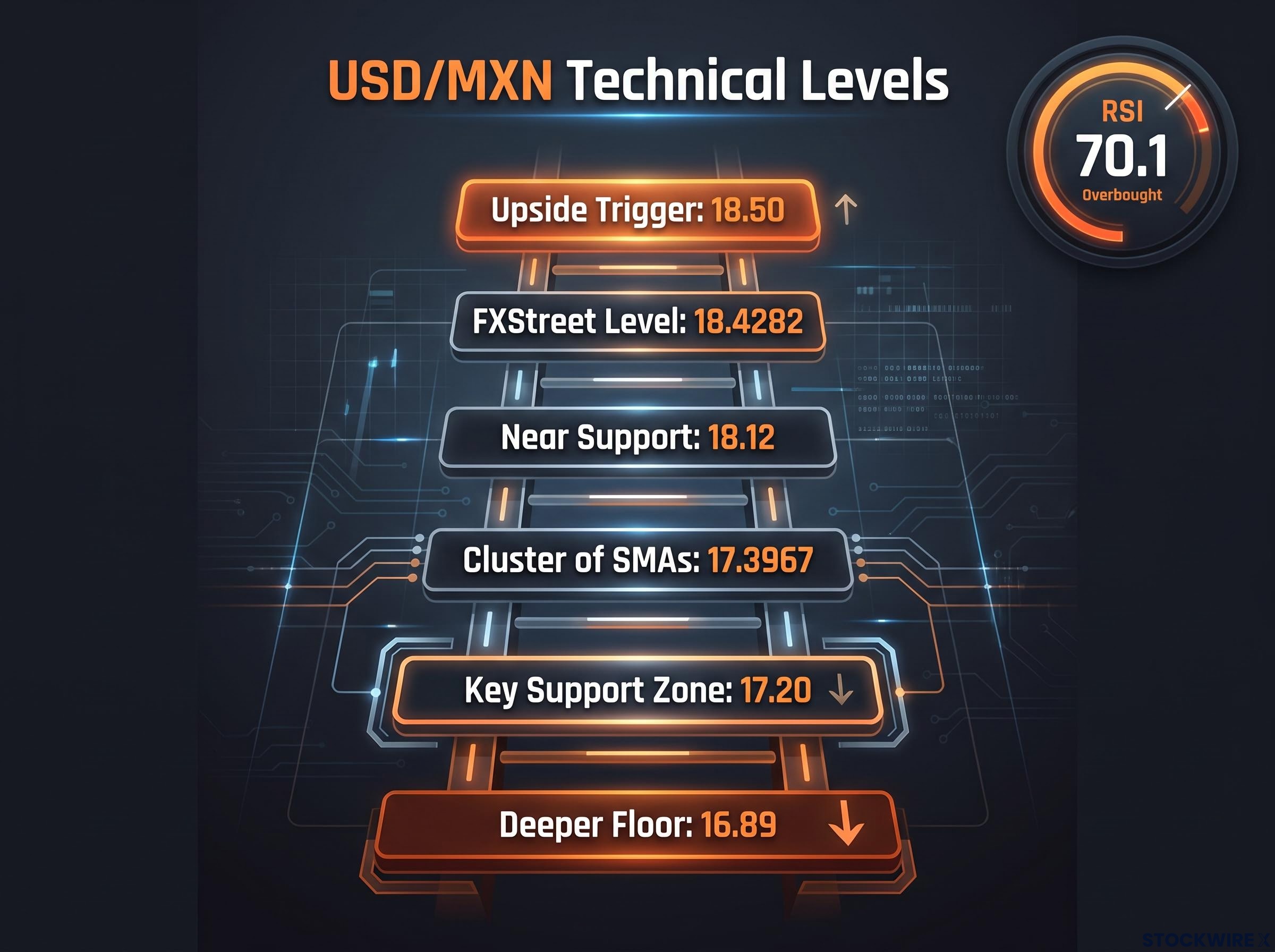
The daily chart still leans toward the dollar. FXStreet’s analysis puts the pair at 18.4282, well above a cluster of simple moving averages (average prices over set periods) near 17.3967. Former downtrend resistance near 18.12 is now read as support.
Momentum is cooling. The Relative Strength Index (RSI), a 0-100 measure of recent price momentum, sits at 70.1, a level FXStreet reads as slowing momentum after a sharp rally rather than extreme overbought. That makes further profit-taking plausible.
- Upside trigger: sustained trading above 18.50
- Near support: 18.12 (FXStreet)
- Key support zone: 17.20 (TMGM)
- Deeper floor: 16.89 (FXStreet and TMGM)
FXStreet and TMGM cite different support levels because they describe different parts of the chart structure. FXStreet sees no clear resistance overhead.
Convera’s upside scenario Sustained trading above 18.50 could open a path toward 19 as carry positions unwind.
The next scheduled catalyst is Warsh’s speech at the IMF annual meeting, ahead of the Fed’s 28 October decision. A hawkish tone could revive October and December pricing and lift the dollar; a one-report-is-not-policy message could soften it.
Until USD/MXN breaks decisively below support, treat Thursday’s peso gain as a pullback within a dollar-leaning picture. These levels are technical views and may change with market conditions.
For readers wanting the committee view, our detailed coverage of the Fed rate hike outlook shows how 16 of 18 officials still pencil in another hike.
What Thursday’s peso move changes, and what it does not
The peso’s gain was a dollar and positioning reversal, not a vote of confidence in Mexican fundamentals. Hot CPI and PPI prints shifted the Fed debate toward December rather than October, and that timing change, plus profit-taking, did the work.
If you track the pair, four variables decide whether the gain sticks: Warsh’s IMF remarks, pricing for the 28 October Fed meeting, Banxico’s easing path and Middle East energy headlines. A break below support confirms a turn. A push above 18.50 would undo it.
This article is for informational purposes only and should not be considered financial advice. Investors should conduct their own research and consult with financial professionals before making investment decisions. Past performance does not guarantee future results. Financial projections are subject to market conditions and various risk factors.
—