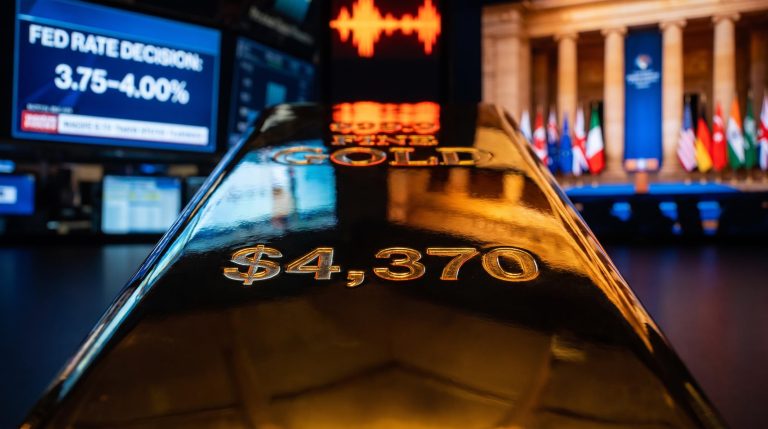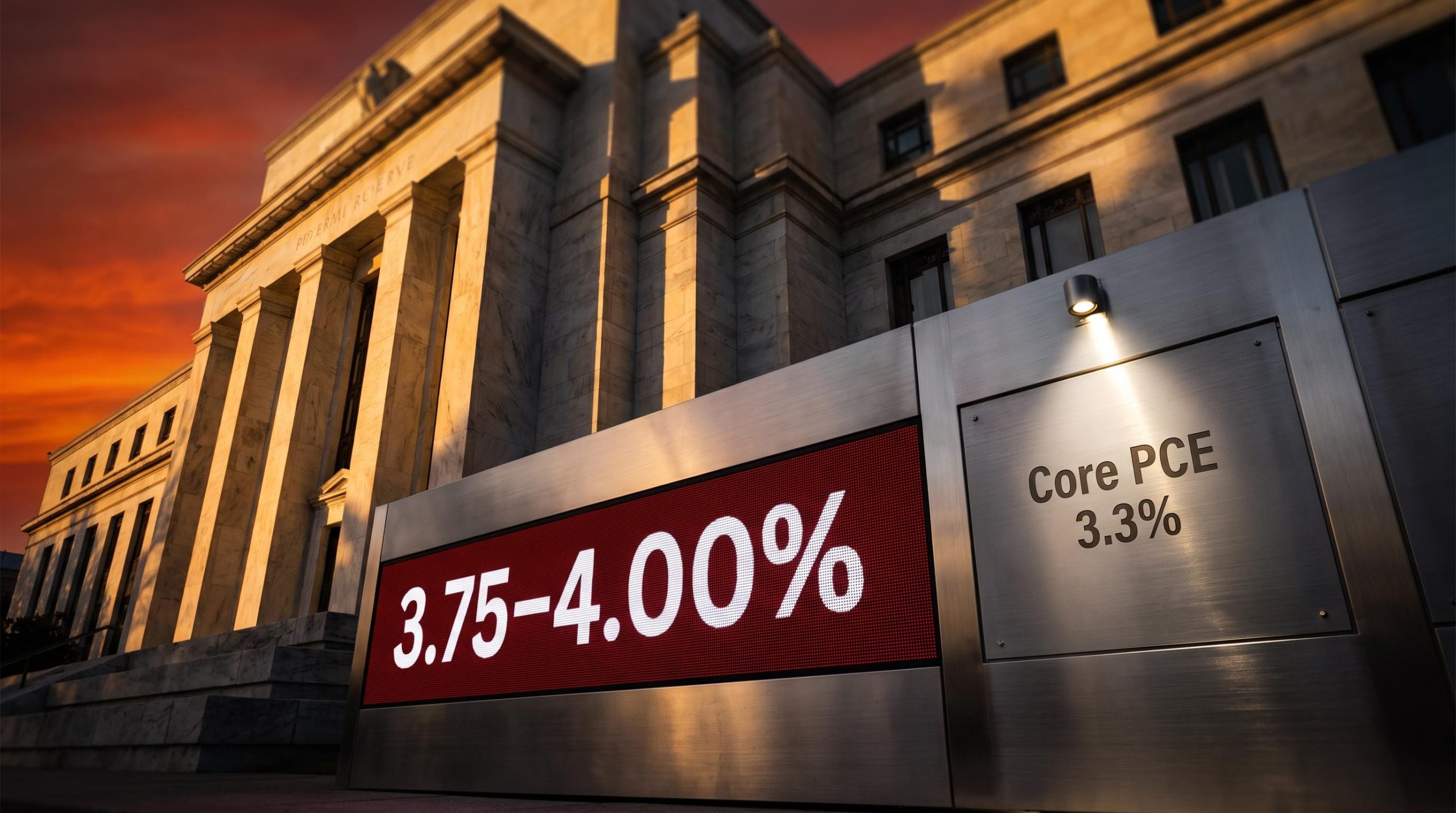
The Federal Reserve raised its benchmark interest rate to a target range of 3.75-4.00% last week, its first increase since 2023, and Boston Fed President Susan Collins is already signalling the next one is coming.
In an interview with the Associated Press, Collins projected at least one more hike before the year ends, followed by a prolonged hold that would keep rates steady throughout the following year and into 2027.
What makes this moment distinct is not that Collins is defending the September decision. She is laying out a full rate path, and she is naming geopolitical energy shocks as the mechanism keeping inflation stubbornly above the Fed’s 2% target.
That surfaces a specific tension worth understanding: one more hike is coming, then a long pause, and the whole sequence rests on oil prices the Fed cannot control. Here is what that means for inflation expectations, markets, and the energy price risk sitting underneath the Fed’s calculus.
Collins makes her case: one more hike, then a long pause
Collins is not looking backward. Her comments to the AP were a forward projection, and the shape of that projection is what markets are now pricing.
She broke the path into two parts. First, at least one additional rate increase within the current year. Then, rates held steady through the whole of the following year, a deliberate “hike then hold” posture that signals more tightening is coming but a long stretch of restraint follows it.
The Federal Reserve Board’s press release confirms the starting point: the FOMC voted on 15-16 September 2026 to raise the target range by a quarter point to 3.75-4.00%, effective 17 September 2026. As CNBC reported, it was the first hike since 2023, ending a prolonged pause.
Collins was pointed about why she still sees more work to do. She said she was not seeing the degree of inflation improvement she had expected, a specific shortfall in progress rather than a vague note of caution.
The signal from Collins: She indicated she was not observing the degree of inflation improvement she had anticipated, suggesting progress toward the 2% target remains insufficient relative to what the Fed expected.
For investors, the read is straightforward. The Fed is not finished tightening, but it is also not planning a drawn-out campaign. The question is no longer whether another hike arrives; it is how long the hold lasts and what breaks it.
When big ASX news breaks, our subscribers know first
What the inflation data actually shows, and why the Fed is not satisfied
Collins described a shortfall in progress. The numbers she is reading make that shortfall visible.
Start with the Bureau of Labor Statistics (BLS) August 2026 Consumer Price Index (CPI), released 11 September 2026. Headline CPI rose 0.4% on the month and sat 3.4% higher year-over-year. Core CPI, which strips out food and energy, came in softer at 2.4% year-over-year and 0.3% on the month.
Then the Fed’s preferred gauge. The Bureau of Economic Analysis (BEA) reported headline Personal Consumption Expenditures (PCE), the inflation measure the Fed watches most closely, up 3.7% year-over-year for July 2026, with core PCE at 3.3%.
That core PCE figure is the one that most directly explains Collins’ dissatisfaction. The Fed targets 2%, and core PCE is running 3.3%. The gap is more than a full percentage point, and that arithmetic is the case for another hike.
The Federal Reserve dual mandate requires the Fed to pursue both maximum employment and stable prices simultaneously, and when the two objectives conflict, the gap between core PCE at 3.3% and the 2% target determines which side of the mandate commands the dominant policy response.
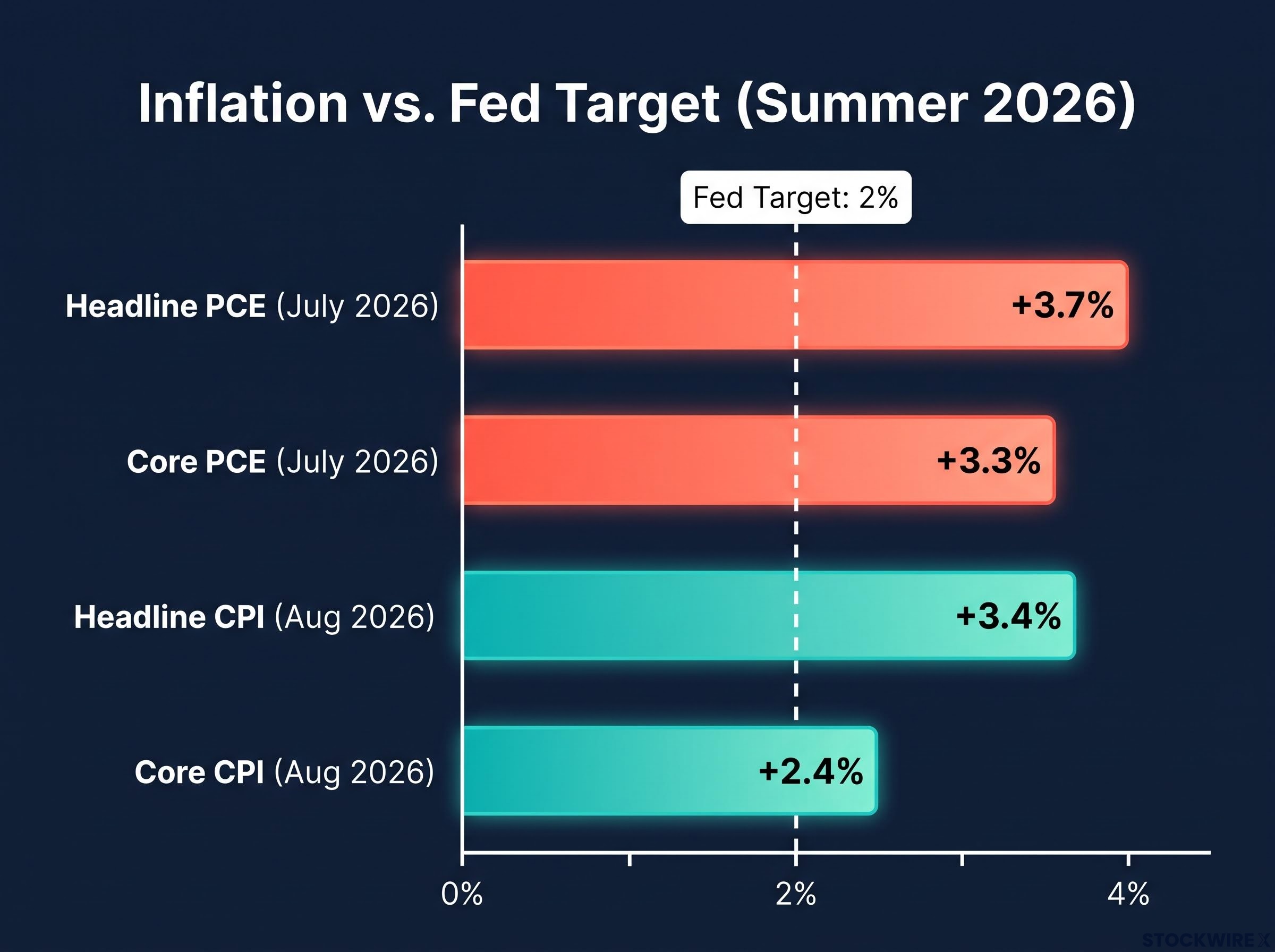
Here is how the readings stack up against the target.
| Indicator | Latest Reading | Period | Fed Target |
|---|---|---|---|
| Headline CPI (YoY) | +3.4% | August 2026 | 2% |
| Headline CPI (MoM) | +0.4% | August 2026 | 2% |
| Core CPI (YoY) | +2.4% | August 2026 | 2% |
| Headline PCE (YoY) | +3.7% | July 2026 | 2% |
| Core PCE (YoY) | +3.3% | July 2026 | 2% |
The Fed’s own language matches the data:
- The 16 September 2026 FOMC statement notes that “inflation remains elevated,” the official characterisation of insufficient progress.
- The same statement frames the hike as supporting “a timelier return to the Committee’s 2% goal,” a direct signal that policymakers judged the pace of disinflation too slow.
The FOMC’s September 2026 press release confirms the Committee characterised inflation as ‘elevated’ and framed the quarter-point increase as supporting a timelier return to the 2% goal, the official language underpinning Collins’ subsequent forward guidance.
For readers, the value here is the ability to check the Fed’s homework. With core PCE more than a full point above target, the case for one more hike is genuinely data-justified, not simply rhetorical.
How Middle East conflict is driving energy prices into the Fed’s inflation calculus
The inflation reading the Fed just acted on has a specific culprit, and it sits thousands of miles from Washington.
Oil prices spiked back above $100 per barrel in September 2026, driven by fresh attacks on shipping and the effective closure of the Strait of Hormuz, the Gulf chokepoint that carries a large share of the world’s seaborne crude. Tanker strikes and Gulf hostilities are pushing risk premia straight into crude prices.
The price timeline shows just how fast this moved:
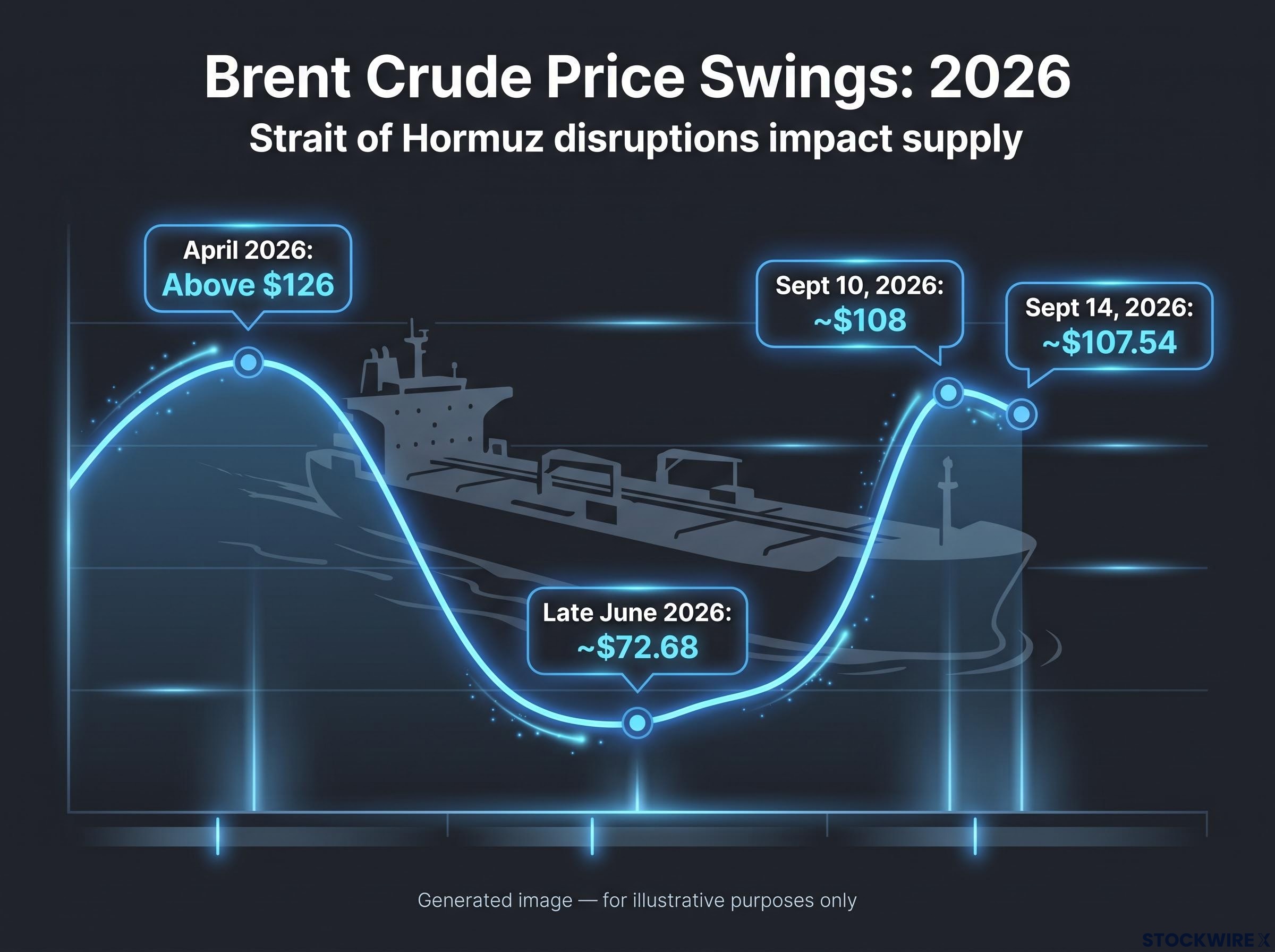
- Brent crude reached approximately $107.54 per barrel on 14 September 2026, up 2.8% on the day, per Moneycontrol.
- World Oil, citing Bloomberg, reported Brent settling near $108 and West Texas Intermediate (WTI) above $104 on 10 September 2026.
- The BBC reported oil at roughly $105 per barrel on 10 September 2026, tied directly to the Strait of Hormuz closure.
- WTI traded around $102-104 per barrel across mid-September 2026, per Reuters and Bloomberg.
The mechanism, per Reuters and the BBC: Strikes on U.S. and Iranian-linked tankers produced the biggest wave of attacks on Gulf shipping since the war began, while the closure of the Strait of Hormuz is preventing supplies from reaching global markets.
What makes this signal difficult for the Fed is its instability. Reuters reported Brent above $126 per barrel in April 2026, then Al Jazeera recorded it falling to roughly $72.68 by late June 2026 as supply expectations shifted, before it spiked back above $107 in September. The Fed must judge whether this shock is transitory or persistent, and the price history offers no easy answer.
From the Strait of Hormuz to the gas pump: how supply disruption becomes inflation
The pass-through chain is direct. Disrupted shipping routes raise crude input costs, those costs flow into refined fuel prices, and refined fuel prices land in the gasoline component of the CPI and in transportation costs across the wider economy.
The BLS put a number on it: gasoline prices rose 3.9% in August, accounting for over one-third of the entire monthly headline CPI increase. That single line item was the largest contributor to the inflation reading Collins cited when she justified the hike.
The energy story is why the Fed cannot wave off geopolitics as beyond its remit. Collins named Middle East tensions explicitly, which means every future oil move feeds directly into how the Fed calibrates its remaining hike and the length of its hold. Barclays, cited by Reuters in March 2026, warned Brent could test $120 per barrel if the conflict persists.
War-driven inflation channels operate partly outside official energy categories: diesel prices have surged roughly 50% since February 2026 against a 26% rise in crude futures, because damaged Gulf refining infrastructure has created a separate scarcity premium in refined products that headline CPI figures never fully capture.
What a rate hold through 2027 would mean for markets, and where the risks sit
Collins gave investors a scenario to price: rates held steady at 3.75-4.00% through the following year. If that plays out, borrowing costs stay elevated for longer than many investors previously expected, and that reprices several asset classes at once.
Here is where the pressure lands:
- Equities: Higher rates raise the hurdle for risk assets. Government bond yields become more competitive with stocks, financing costs stay high, and the present value of future earnings falls, a particular drag on growth and high-multiple technology names.
- Bonds: A prolonged hold at elevated levels keeps the yield curve flat or slow to normalise, with term premia elevated on inflation uncertainty. Long-duration bonds carry heightened price risk until inflation clearly softens.
- The dollar: The dollar index rose approximately 0.5% following the hike, reflecting expectations of continued policy divergence. Higher real rates attract foreign capital and support the currency, which can weigh on dollar-exposed international equities.
Collins does not speak for a unanimous Fed-watching consensus, though. A Reuters poll on 9 September 2026 found a majority of economists expecting a hold for the rest of the year, with only a minority backing another hike. Dissenting voices are sharper still. Bernard Yaros of Oxford Economics told Morningstar that economic conditions do not warrant hikes and that the Fed will likely stay on pause.
KPMG’s August 2026 warning: If the Fed hikes too sharply, it risks turning a cooling labour market into a weaker one and undermining equity market gains.
At the hawkish extreme, Bank of America warned of the possibility of up to three 2026 hikes, an outlier view that has drawn pushback from economists fearing overtightening.
Fiscal dominance constraints set a structural ceiling on how aggressively the Fed can tighten: with federal debt at roughly 122% of GDP, each 1-percentage-point increase in the average interest rate on that debt costs approximately 1.2% of GDP annually, compared to just 0.3% of GDP in 1981, which is one reason the hike-then-hold posture Collins described may reflect more than just inflation arithmetic.
The variable that could break the hold in either direction is energy. A sustained slide in oil toward the June lows would ease inflation pressure and potentially bring easing forward. A renewed escalation in the Gulf and another crude spike would reinforce the case for more tightening.
The geopolitical variable the Fed cannot control, and what to watch next
Collins has given markets a plan, but the plan is written in pencil. Her projected path is explicitly conditioned on geopolitical developments that neither the Fed nor markets can forecast reliably.
The Brent range in a single year proves the point: above $126 in April, roughly $72.68 in late June, and back above $107 in mid-September. Collins herself flagged that geopolitical events could continue generating upward pressure specifically on energy prices, and the Strait of Hormuz remains the most consequential single supply variable in that picture.
For readers tracking whether her rate path actually holds, here is what to watch, in order:
- The November 2026 FOMC meeting, the logical timing for the projected additional hike given the September decision has already passed.
- The next CPI and PCE releases, which will show whether the core inflation gap to 2% is finally closing.
- The status of the Strait of Hormuz and Gulf shipping security, the single biggest driver of near-term energy prices.
- Any further forward guidance from Collins or other Fed officials, which would confirm or revise the hike-then-hold sequence.
Both outcomes are live. A faster-than-expected return to 2% inflation, if energy prices fall, and a further deterioration in Gulf supply routes, if the conflict escalates, would each rewrite the path Collins described. The next oil move, driven by events no central bank controls, is the variable that decides which way it goes.
For readers tracking the energy variable that determines whether Collins’ rate path holds or breaks, our deep-dive into the Hormuz oil risk premium explains why the IEA projects a two-year supply chain recovery timeline even under a best-case resolution, making a rapid crude price reversal structurally unlikely.
This article is for informational purposes only and should not be considered financial advice. Investors should conduct their own research and consult with financial professionals before making investment decisions. Past performance does not guarantee future results. Financial projections are subject to market conditions and various risk factors, and forward-looking statements about the rate path are speculative and subject to change based on economic and geopolitical developments.