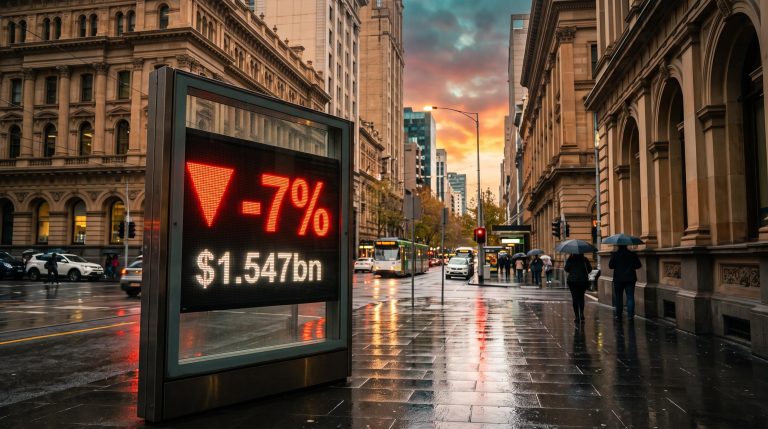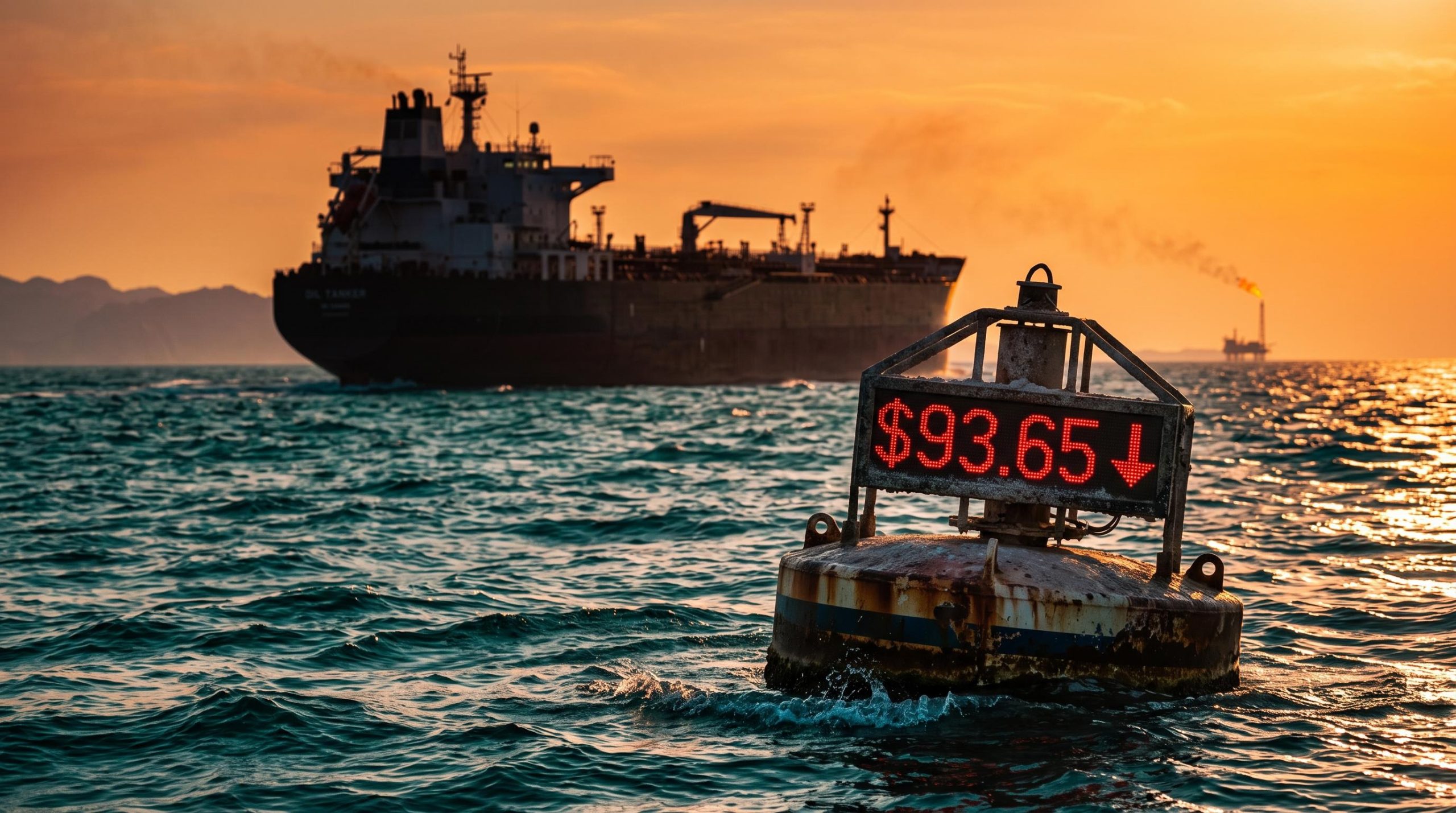
Brent crude fell more than 10% to about $93 a barrel after the US election, slipping below $100 for the first time since 7 October. Yet Rabobank strategists say the slide is “false relief,” and that the Brent crude price may not stay this low.
Rabobank’s Michael Every and global energy strategist Joe DeLaura argue that the election result had already been largely priced in before the drop. Their comments appeared in secondary coverage of the bank’s Global Daily note dated 5 November 2026.
If the outcome was expected, the fall says more about fading fears of a wider conflict than about any improvement in oil supply.
Here is why a cheaper barrel can sit alongside unchanged Gulf supply risk, and what would need to change for the fall to last.
Why did Brent fall 10% if the election was already priced in?
An expected event should not produce a double-digit move. This one did.
News18 reported Brent at $93.65 a barrel on 5 November, down $0.97 (1.03%), after a fall of more than 8% in the previous session. Those figures have not been independently confirmed.
- Latest reported price: $93.65/bbl
- Cumulative post-election fall: more than 10%
- First trade below $100 since: 7 October, when Brent touched $99.62
- Last settlement below $100: before 22 September (per Invezz, unconfirmed)
| Item | Finding |
|---|---|
| Latest reported Brent price | $93.65/bbl (5 November 2026) |
| Latest-session fall | 1.03% ($0.97) |
| Post-election fall | More than 10% |
| First below $100 since | 7 October 2026 |
| Last settlement below $100 | Before 22 September 2026 |
Rabobank said the result “had largely been priced in both by prediction markets, and grown-up markets.” The rest of the move came from US-Iran diplomatic contacts that eased immediate fears of escalation. Traders removed part of the risk premium, which is the extra amount buyers pay for oil because of the chance of a future supply disruption.
Goldman Sachs had estimated that a premium of roughly $27 a barrel explained most of October’s rally (unconfirmed). Much of that cushion has now been taken out of the price.
Goldman’s framing of the geopolitical risk premium as a separable layer on top of fundamentals explains why it can vanish within a day of a credible de-escalation signal, while the physical market stays tight.
Rabobank’s verdict “A US pivot away from direct involvement therefore offers no assurance of sustainably lower oil prices after the initial selloff of false relief.”
Tanker attacks in the Strait of Hormuz continue, and so do threats of renewed US strikes. The barrels have not changed; the mood has. That means the price you see today could reverse without a single tanker being lost.
What does Iranian influence over the Gulf put at risk beyond crude oil?
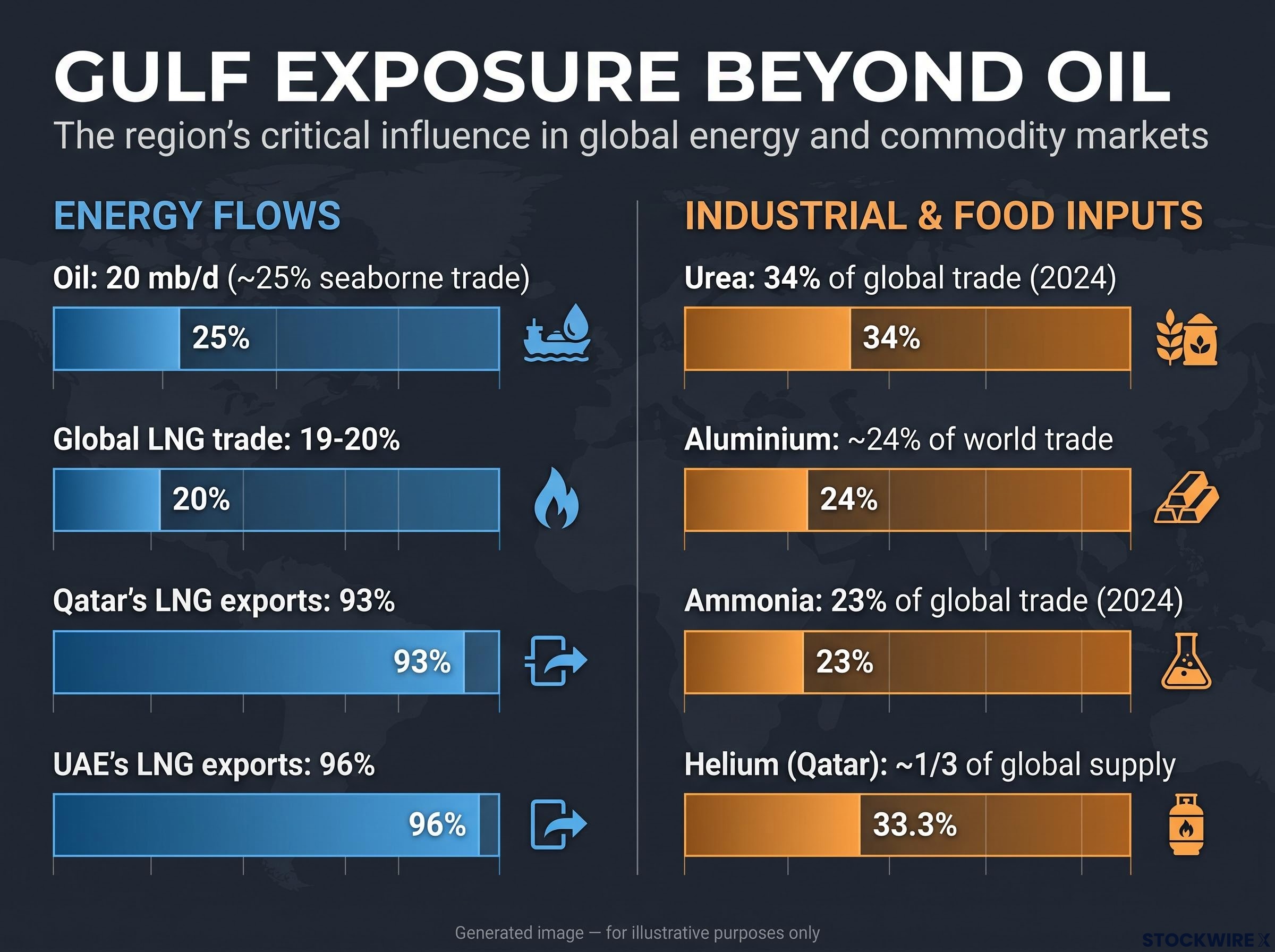
DeLaura’s wider warning is that an Iran left as the leading force in the Persian Gulf would not safeguard ongoing deliveries of oil, aluminium, helium, liquefied natural gas (LNG) and fertilisers. The figures below measure different things (trade through the strait, Gulf production, or global seaborne exports), so they cannot be compared directly.
Energy flows through the strait
The International Energy Agency (IEA) estimates about 20 million barrels per day (mb/d) of oil and products passed through Hormuz in 2025, roughly 25% of seaborne oil trade. The strait also carries about 19-20% of global LNG trade, including about 93% of Qatar’s LNG exports and 96% of the UAE’s. The IEA notes that bypass routes are limited, so even partial disruption, higher insurance or longer voyages can push up the cost of each delivered barrel.
Industrial and food inputs
The exposure extends well beyond fuel.
| Commodity | Reported exposure | Source |
|---|---|---|
| Aluminium | Roughly 24% of world trade | Secondary reporting |
| Helium | Qatar about one-third of global supply, reported at a standstill | Politifact |
| Ammonia | 23% of global trade (2024) | IFA |
| Urea | 34% of global trade (2024) | IFA |
Rabobank also suggests Gulf states might end up fighting to resist Tehran’s grip on the waterways, or have to shoulder steeper security bills. For you, that means a Gulf shock would reach power bills, industrial inputs and food costs together, not just the petrol pump.
What could still push the Brent crude price lower, and what is the US trade-off?
The case for further declines carries real weight.
Forces that could push prices lower
- IEA 2026 demand of about 102.4 mb/d, down about 2.6 mb/d, with a 2.5 mb/d fall in Q4 (unconfirmed)
- Rising supply from the US, Brazil, Argentina and Canada
- A credible US-Iran settlement that cuts insurance costs and reopens routes
Forces that could rebuild the premium
- Continued tanker attacks and infrastructure threats
- Limited bypass capacity at Hormuz
- Precedents such as the 2019 Abqaiq attacks and the Red Sea disruption, where concentrated targets produced outsized shocks
| Institution | View | Direction |
|---|---|---|
| Goldman Sachs | December 2026 forecast raised from $90 to $105; 2027 average from $80 to $88; about $140 if Gulf output stays 3.5 mb/d below 2025 | Higher |
| EIA | Q4 2026 average of $105 | Higher |
| IEA | 2026 demand about 102.4 mb/d | Lower |
| OPEC | 2026 demand about 105.7 mb/d | Higher |
The forecasts above are unconfirmed. Past performance does not guarantee future results, and projections are subject to market conditions and various risk factors.
Washington faces its own tension. Rabobank argues regional instability could strengthen the US position as an energy exporter, yet higher prices still lift domestic gasoline, diesel and petrochemical costs. With forecasters split this widely, the path for oil depends on diplomacy and shipping security far more than on the election.
The Hormuz oil risk premium has historically decompressed slowly, with the IEA projecting a two-year supply chain recovery even under a best-case resolution, which is why a single diplomatic contact rarely resets the market.
Three signals that will show whether the relief holds
The fall reflects reduced fear of escalation, while the physical exposure across oil, LNG and industrial inputs remains unchanged. The counterweights are weak demand, non-Gulf supply and diplomacy. Three signals will show which side wins:
- Tanker security and insurance costs in Hormuz. Falling premiums would suggest real de-escalation.
- The outcome of US-Iran talks. A durable agreement could remove much of the risk premium.
- Gulf LNG, helium and fertiliser flows. Disruption there would show the shock spreading.
Treat sub-$100 Brent as a reading of sentiment, and watch these signals before assuming it will last.
Data from the Hormuz shipping crisis shows that official declarations of an open strait can coexist with transits at a small fraction of the pre-war norm, because war-risk insurance and maritime union rules move on separate timelines.
This article is for informational purposes only and should not be considered financial advice. Investors should conduct their own research and consult with financial professionals before making investment decisions.