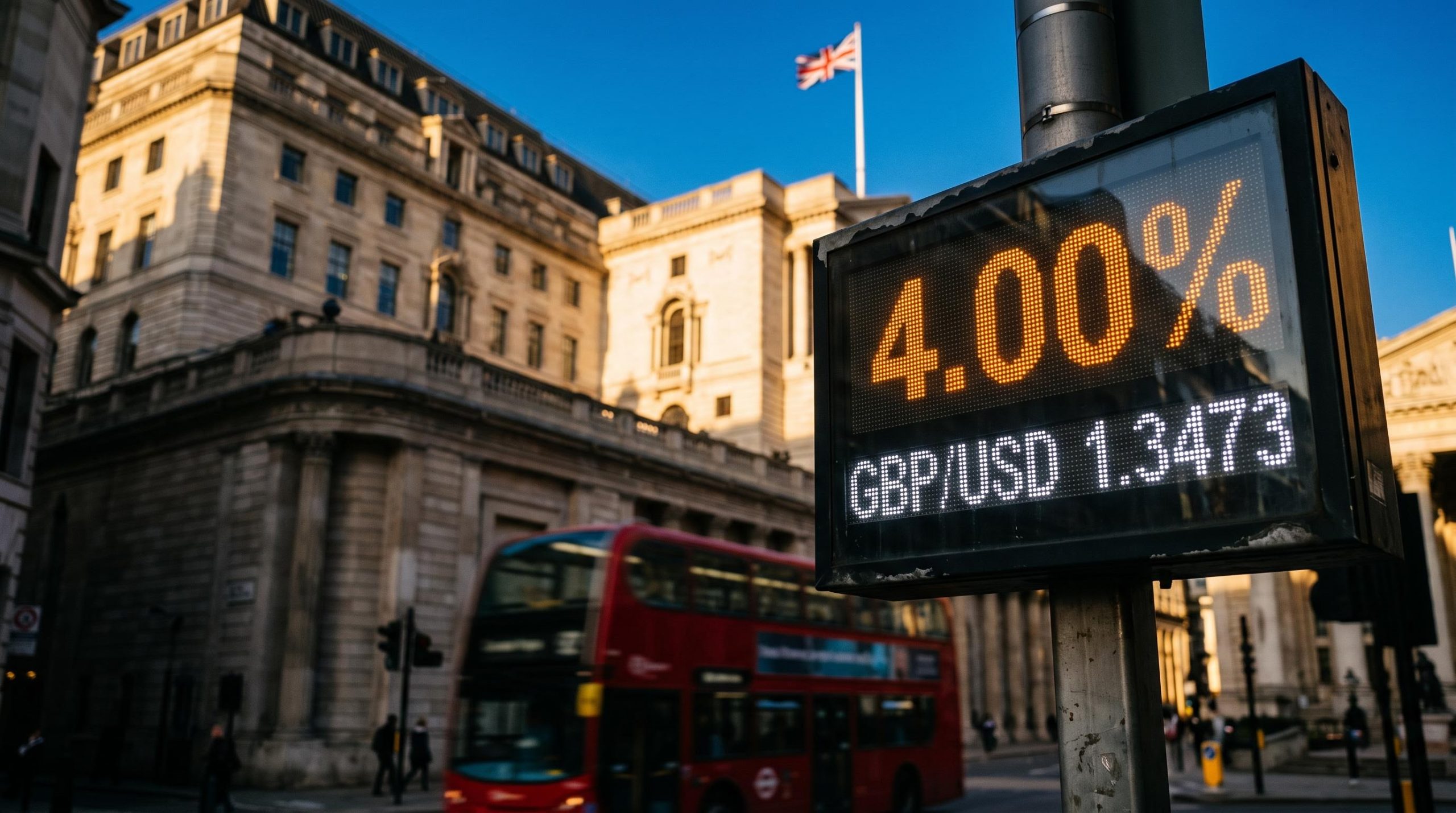
The Bank of England raised Bank Rate to 4.00% from 3.75% on Thursday, and sterling barely moved against the dollar. The Monetary Policy Committee (MPC) voted 8-1 for the rise, and the lone dissenter, Catherine Mann, wanted an even bigger increase.
That flat pound matters if you hold a mortgage, savings or any foreign currency. A rate rise usually lifts the pound, and this one did not.
The pressure behind the decision is clear. UK consumer prices rose 3.5% in the year to September 2026, well above the Bank’s 2% target.
This BoE interest rate decision carried three messages worth separating. The first is what Governor Andrew Bailey said about the risk that inflation runs higher than expected. The second is why a widely expected hike gave the pound so little lift. The third is how to read the Bank’s next move.
Why did sterling barely move after the BoE interest rate decision?
The pound stood still against the dollar. Reuters reporting put GBP/USD at about $1.3473, up just 0.01%. It traded near $1.3471 after the announcement, compared with $1.3454 just before, and touched a session high of about $1.3506.
The pattern across other currencies explains the quiet reaction better than the dollar move alone.
| Pair | Reported move | Context |
|---|---|---|
| GBP/USD | $1.3473 (+0.01%) | Flat; FXStreet heat map showed -0.04% |
| GBP/EUR | €1.2002 vs €1.1999 | Modestly firmer; about 83.48p per euro |
| GBP/JPY | -0.16% at about ¥212.93 | European session; full-day heat map -0.36% |
| GBP/AUD | +0.72% | Strongest pair on the FXStreet heat map |
| GBP/JPY (heat map) | -0.36% | Weakest pair on the FXStreet heat map |
Sources differ on the size of the moves because they measured at different times. The direction is consistent: flat against the dollar, firmer against the euro, weaker against the yen.
Markets had already priced in a 0.25 percentage point (25bp) rise. The supportive surprise was the vote split, because the only dissent pushed for more tightening, not less.
The yen tells the rest of the story. Sterling fell against it despite a UK rate rise, which points to forces outside Britain at work. Michael Pfister of Commerzbank said sterling’s recent strength partly reflects expectations that the Bank is catching up on tightening.
A pound that holds steady after a hike tells you the move was expected. If you hold sterling, the signal to watch is Bailey’s next steer and the data, not the hike itself.
The GBP/USD pre-decision setup centred on technical levels such as the 200-day moving average near 1.3390, which helps explain why a flat close after the announcement still left the pair range-bound.
When big ASX news breaks, our subscribers know first
What did Bailey say about upside inflation risks, the energy cap and Iran?
Bailey did not soften the warning. He said the Bank is tracking how much of the energy shock passes into prices, and he acknowledged that the risks to inflation lean upwards. The MPC said pipeline pressure was now enough to justify a higher Bank Rate.
“We lack evidence of second-round effects, but the larger shock raises the risk.” Monetary Policy Committee, 5 November 2026
Second-round effects are knock-on price rises, such as higher wages or service charges, that follow an initial shock. Reuters reported Bailey saying the rise would probably not be the last if the Middle East conflict continued.
Then he pulled back. Bailey said the hike should not be read as the start of an inevitable long run of increases, and that future choices depend on how quickly inflation returns to 2%.
Mann saw less room for patience. She worried that 3.5% inflation in September could weaken confidence in the Bank’s ability to bring prices back to target.
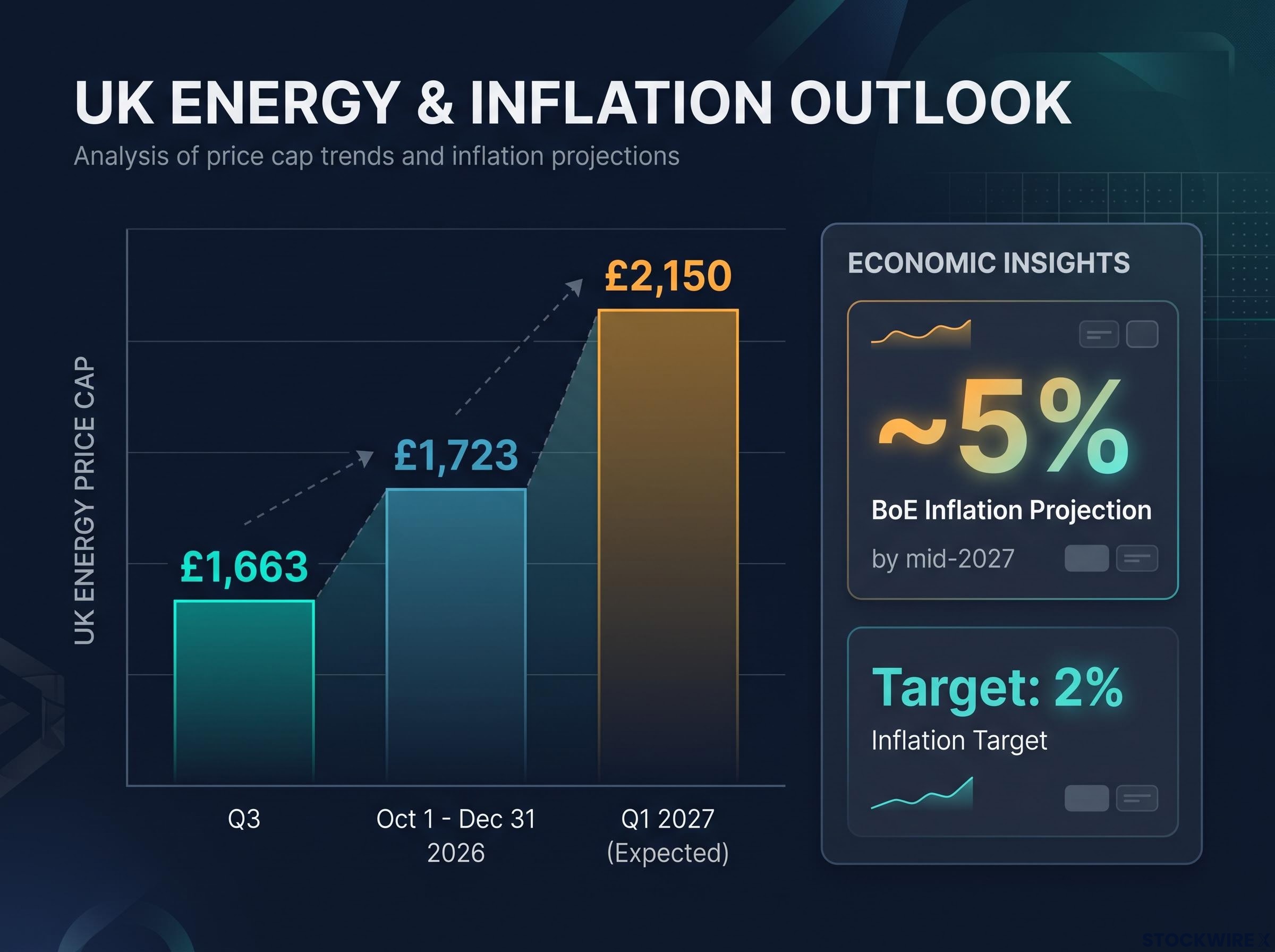
The Bank’s Monetary Policy Report projects inflation of about 5% by mid-2027 before it falls back towards target. Projections are subject to market conditions and various risk factors, and past performance does not guarantee future results.
Why a US-Iran deal would bring limited relief
Inflation is effectively locked in for now because of Ofgem’s energy price cap. The cap is £1,723 a year for a typical dual-fuel household from 1 October to 31 December 2026, up from £1,663 in Q3. The Bank expects about £2,150 in Q1 2027.
Three channels carry the shock forward:
- Cap timing: quarterly resets pass wholesale rises to households in stages.
- Supply chains: energy feeds transport, production and distribution costs.
- Wages and services: higher living costs may push pay claims and service prices.
Bailey said an end to the conflict would offer only modest relief, because some increases have already passed through the cap and into business pricing. He also warned against putting much weight on short-lived news not backed by a clear peace process.
With the cap heading towards roughly £2,150, you should expect household energy costs to keep feeding inflation into 2027, even if peace talks progress.
Is this the last hike? How economists read the path from here
The committee agreed on the hike but not on what comes next. The open question is whether this is a single insurance rise or the start of a second tightening phase.
The Bank’s September hold at 3.75% came on a 6-3 vote with three members already pressing for a hike, which shows how quickly the committee’s centre of gravity moved toward tightening.
| Commentator | Position | What would change their view |
|---|---|---|
| Paul Dales, Capital Economics | Insurance hike; rates could fall towards 3.5% in late 2027 or 2028 | Energy costs feeding into wages and services |
| Catherine Mann, MPC | Voted for 50bp, citing non-linear inflation risks | Clear evidence that inflation expectations are holding |
| Reuters-poll economists | Expected 25bp; split on further tightening | How long the conflict and energy shock last |
| Bloomberg reporting | Markets and economists divided beyond November | Whether domestic demand adds to the external shock |
Market pricing pointed to more hikes, while the Bank stressed they were not inevitable. Both readings are plausible on today’s evidence.
The case for caution rests on a simple limit: a higher interest rate cannot produce more energy. If energy prices fall and spillovers stay muted, the Bank risks tightening too far. Higher bills and higher borrowing costs together could also weaken growth, and borrowers refinancing fixed-rate mortgages face larger payments.
If you are refinancing a fixed-rate mortgage or holding sterling, watch wage and services pricing data, not just the headline energy story.
How BoE rates, QE and QT move the pound, and why today broke the pattern
Thursday’s quiet pound is easier to read once you know the usual rules and why they sometimes fail.
The usual rules
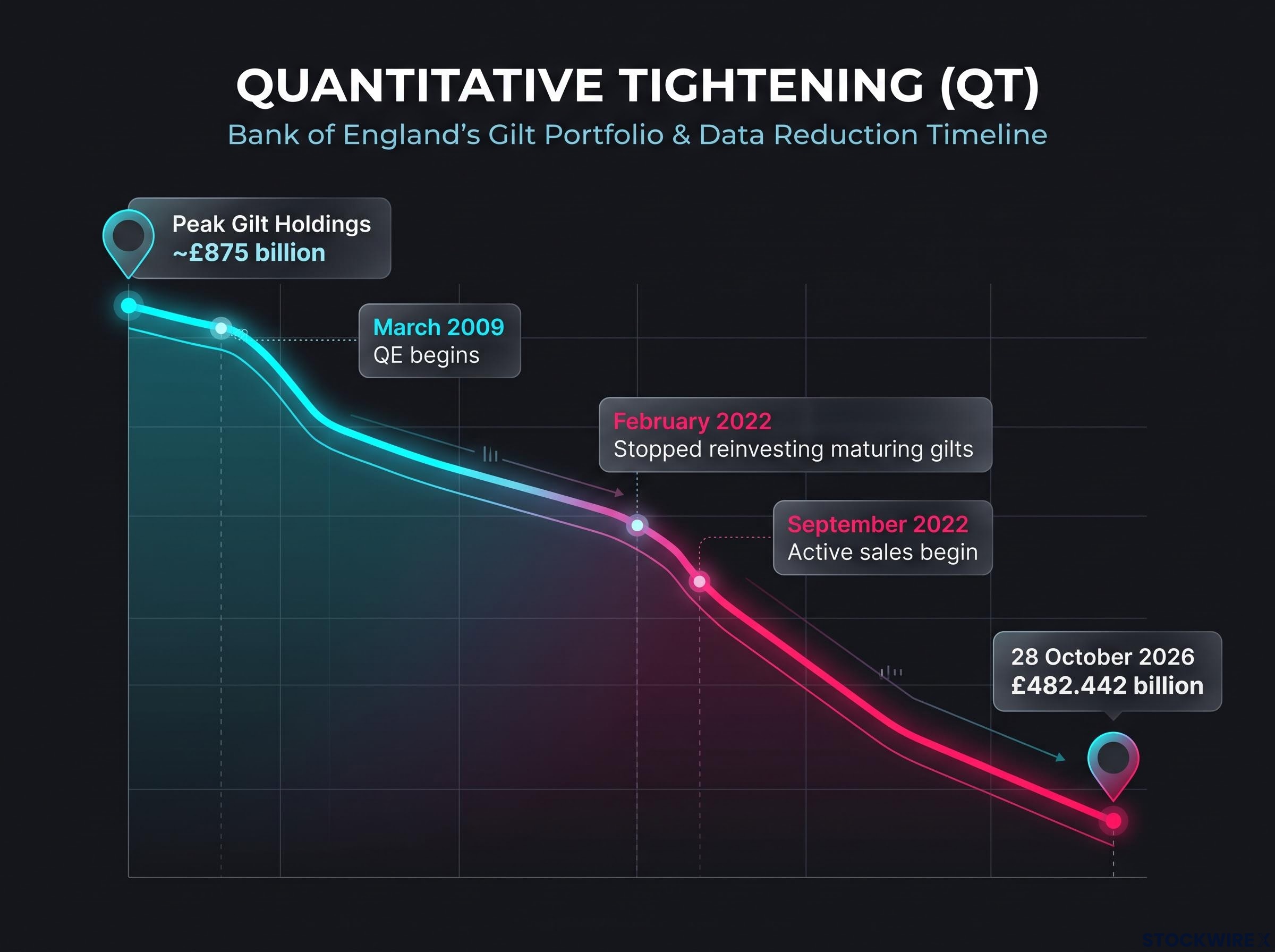
The Bank aims for 2% inflation, and Bank Rate is its main tool. Quantitative easing (QE) means the Bank creates money to buy bonds, which it began in March 2009. Quantitative tightening (QT) reverses that by shrinking those holdings.
| Tool | What it does | Typical GBP tendency | Caveat |
|---|---|---|---|
| Rate hike | Raises borrowing costs | Supportive | Little effect if already priced in |
| Rate cut | Lowers borrowing costs | Weighs on GBP | Depends on rates abroad |
| QE | Creates money to buy bonds | Usually weakens GBP | Depends on global risk appetite |
| QT | Shrinks bond holdings | Usually supportive | Smaller effect than QE |
QT is ongoing. Gilt holdings in the Asset Purchase Facility stood at £482.442 billion on 28 October 2026, down from a peak of roughly £875 billion. The Bank stopped reinvesting maturing gilts in February 2022 and began active sales in September 2022.
When the rules fail: 2022 and today
When the Bank lifted rates to 1.75% in August 2022, the pound did not rise mechanically, as recession fears and dollar strength weighed on it. In September and October 2022, gilt yields rose sharply and sterling collapsed, because markets read higher yields as fiscal stress.
Pressure on long-dated gilt yields, with the 30-year reaching its highest level since 1998 in September, shows how fiscal stress can overwhelm the usual rate-to-currency link.
Bank research published in 2026 found QE and QT effects depend on conditions at the time. A parliamentary warning also flagged that QT combined with heavy gilt issuance could add to instability.
Today followed the same logic. A hawkish Fed, strong US data and safe-haven demand for the yen all competed with the UK hike. Treat any BoE move as one input among several, and compare UK rate expectations with US, euro-area and Japanese ones before drawing conclusions about sterling.
Reading the next MPC signal after a priced-in hike
A priced-in 25bp rise, a firm warning on price pass-through and a deliberately open path add up to limited support for sterling for now.
Three variables will shape the next decision:
- Ofgem cap trajectory: whether the cap reaches about £2,150 in Q1 2027.
- Wage and services inflation: the clearest test of second-round effects.
- US-Iran conflict duration: Bailey tied further hikes to how long the shock lasts.
If those signals stay hot, the second-phase reading gains weight. If they cool, the insurance case strengthens, and your mortgage and currency decisions can follow the evidence rather than the headlines.
For readers wanting a repeatable method, our full explainer on reading BoE rate decisions shows how to weigh the vote split and the data that condition the next move.
These statements are speculative and subject to change based on market developments.
This article is for informational purposes only and should not be considered financial advice. Investors should conduct their own research and consult with financial professionals before making investment decisions.