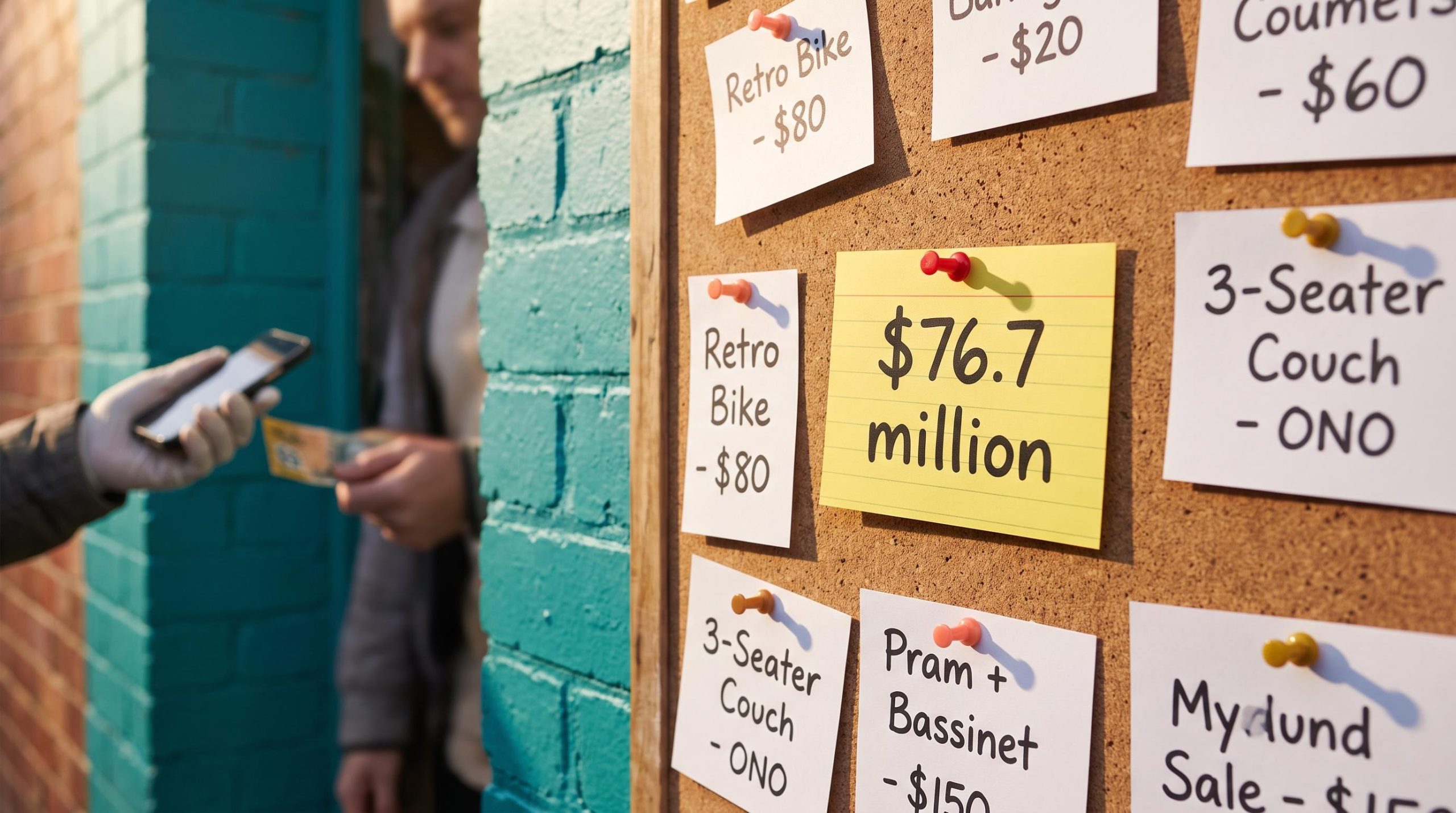
Australians reported $76.7 million in scam losses to Scamwatch in just three months. That covers January to March 2026, the third quarter of the 2025-26 financial year, according to the Australian Competition and Consumer Commission (ACCC) in its 5 June 2026 release. Around half of those losses, about $38.3 million, came through online contact methods such as fake websites, online advertisements, social media and mobile apps. If you assume a classifieds site is a safe middleman, those figures should give you pause, because the online classifieds business model was never designed to stand in the middle at all.
Think of a classifieds site as a noticeboard. A seller pins up a listing, a buyer makes contact, and the platform steps aside before any money changes hands.
That arrangement kept costs low for decades. The harder question is what happens to a business built on it when scam losses and new regulation start pushing back.
After reading this, you will be able to tell which model a marketplace company runs and know what to look for in its disclosures.
Where the noticeboard model breaks down
Follow a typical second-hand sale from start to finish:
- The listing generates the lead and lends the seller credibility.
- The conversation moves off the platform, to text messages or a private chat.
- Payment goes by bank transfer, cash or another outside channel.
- The platform has little or no view of the transaction.
- If something goes wrong, you may have no platform-based refund or dispute route.
Step three is where the danger sits. At the exact point your money is most exposed, the platform has left the room.
Consumer group CHOICE identifies this as the central gap: there is no platform-level intervention once users move from a listing to a private exchange of money.
The scale of losses
The National Anti-Scam Centre’s Targeting scams report, published 30 March 2026, found 12,248 people reported a loss to shopping scams in 2025, with reported losses of $10.8 million. Scamwatch’s shopping scams category combines online shopping scams and classified scams, so this figure is not classifieds alone.
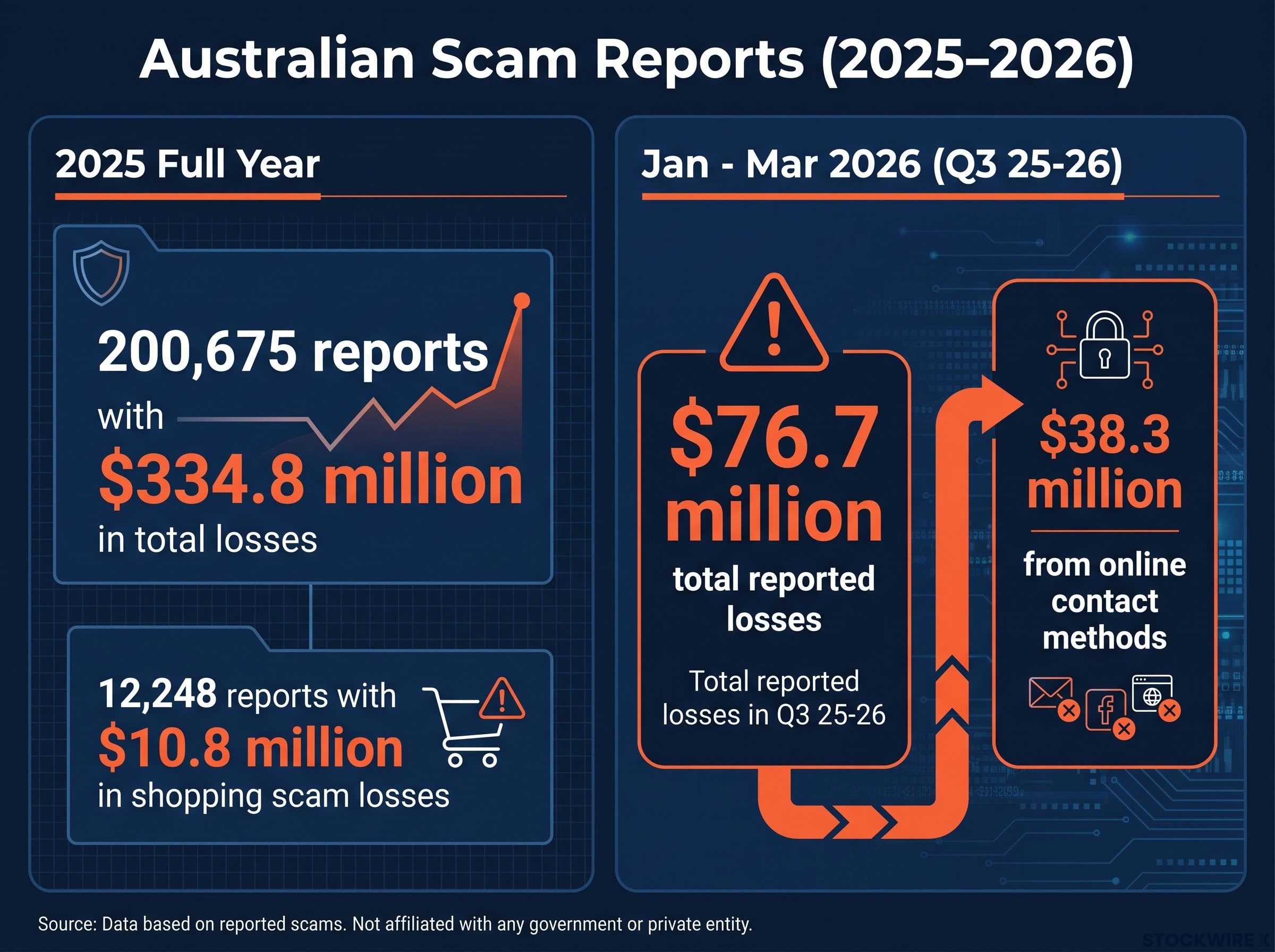
Across all categories, Scamwatch received 200,675 reports in 2025, with $334.8 million in reported losses. ACCC deputy chair Catriona Lowe has called scams a “wicked problem” that requires shared accountability, because they cross businesses, platforms and channels.
Scam losses are not limited to shopping and classifieds: you can see the wider picture in the record ASIC takedowns of scam websites, which still failed to stop total Australian losses climbing past $2 billion in 2025.
Why trust and revenue are linked
Scam losses hurt victims first, but they also hurt the business. Users who have been scammed, or who fear it, list and buy less.
A platform funded by listings and advertising earns nothing from the sale itself. Its income moves with advertising cycles and with competition from free social media marketplaces. Weaker trust and thin revenue per listing are not two separate problems; they are one problem, and each makes the other worse.
When big ASX news breaks, our subscribers know first
Classifieds versus transactional marketplaces: two different businesses
The simplest way to separate the two models is to ask one question: is the platform outside the exchange or inside it?
A classifieds platform makes its money from listing fees and advertising, and it remains a bystander to the exchange itself. A transactional marketplace operates within the exchange: it takes custody of the payment, can organise delivery, is able to intervene if a problem arises, and takes a cut of every transaction.
| Feature | Classifieds | Transactional marketplace |
|---|---|---|
| How it earns | Listing fees and advertising | A share of each transaction |
| Position relative to payment | Outside; payment happens elsewhere | Inside; the platform holds the payment |
| Ability to intervene | Limited once users leave the platform | Can hold funds, refund or handle disputes |
| Delivery role | None; buyers usually meet sellers | May arrange shipping |
A classifieds platform moving toward the transactional model usually follows a commercial logic in three steps:
- Trust and safety. Identity checks, seller monitoring and scam detection make you more willing to transact at all.
- Payments. Integrated payment gives the platform visibility and allows holds, refunds and dispute handling.
- Shipping. Integrated delivery removes the need for strangers to meet and widens the market beyond buyers who can collect in person.
Each step depends on the one before. Nobody routes payments through a platform they do not trust, and shipping only makes sense once the platform controls the payment.
The distinction is not just a commercial label. The ACCC’s Digital Platform Services Inquiry final report, published 23 June 2025, treated online retail marketplaces and classified-only services as separate categories. In broad terms, the first lets you complete a purchase through the platform; the second mainly provides listings and contact.
For you, the takeaway is this: where a platform sits relative to the payment determines what it earns, what it can prevent and what it is answerable for. That is the first thing to test in any marketplace company.
Where the Scams Prevention Framework stops and starts
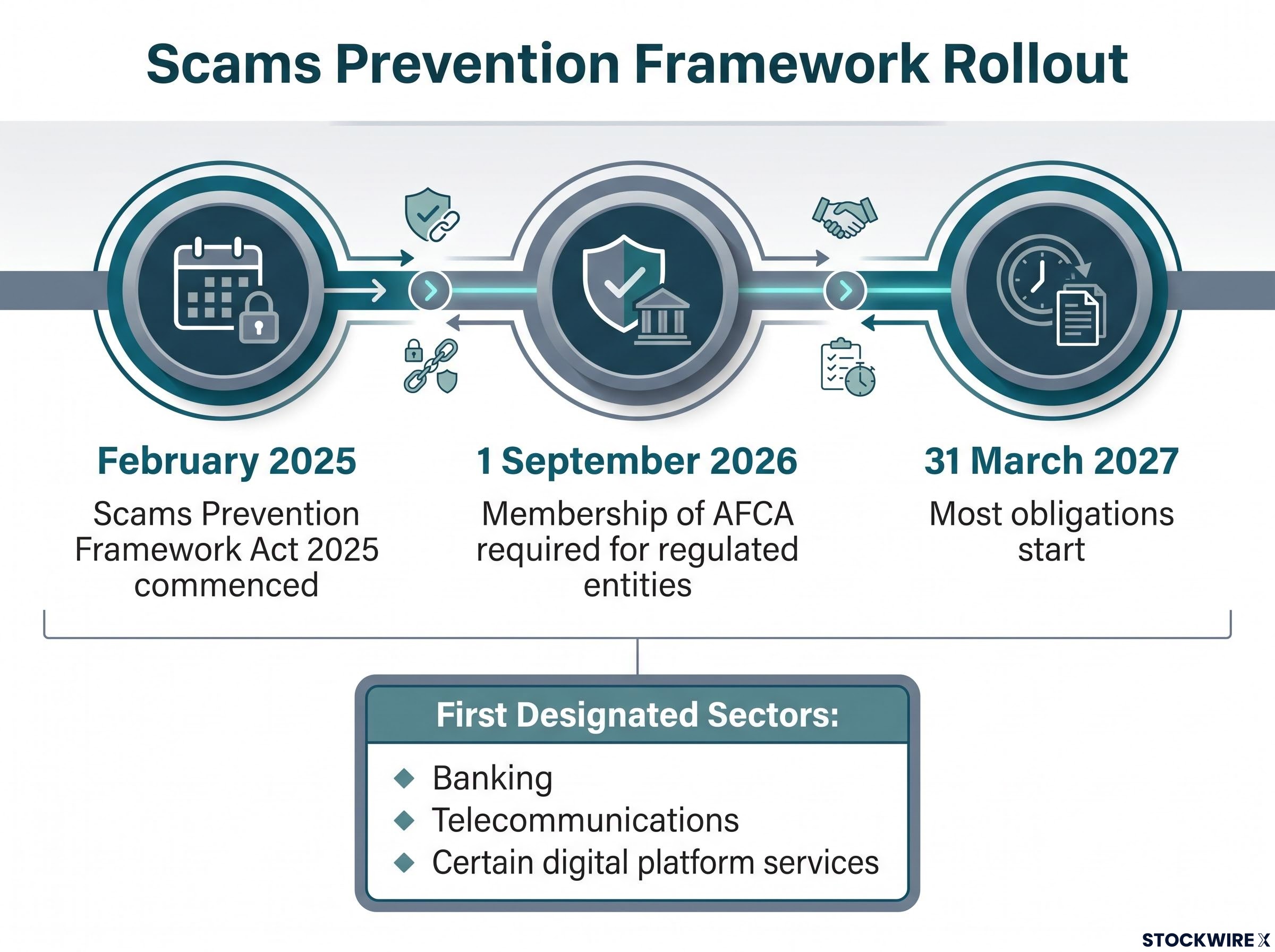
The Scams Prevention Framework Act 2025 commenced in February 2025. It requires regulated entities to take steps to prevent, detect, disrupt, report and respond to scams, backed by governance, information-sharing and dispute-resolution requirements.
The first designated sectors are:
- Banking
- Telecommunications
- Certain digital platform services: social media, paid search advertising and direct messaging
The ACCC is the general regulator and the sector regulator for digital platforms. The timeline runs in two stages:
- Membership of the Australian Financial Complaints Authority (AFCA) has been required for regulated entities since 1 September 2026.
- Most obligations start from 31 March 2027.
Look closely at that list and you will notice classified advertising services are not on it. CHOICE argues online marketplaces should be captured, while the ACCC and Treasury describe the current designated scope. The Government can designate further sectors.
What that means for you as a reader of company disclosures: any scam-prevention spending by a classifieds operator today is a business decision, not a compliance requirement under this framework.
Unresolved challenges and how to evaluate any marketplace
Nobody yet knows how the shift from noticeboard to transaction will play out. Transactional features on Australian classifieds platforms are at an early stage, so their revenue effect is not yet clear.
Open questions for the model
- Are users willing to pay for protected transactions, or will they keep to free cash deals? Fees may push some users back to cash.
- Is it possible for transaction income to expand quickly enough to make up for weakening advertising earnings?
- What will free social media marketplaces do in response?
- Might scam regulation be widened to cover classifieds, and what would that involve?
There is also a cost question. Low-value sales may not support the expense of payments and shipping, which limits how far the model can stretch.
Five questions to ask of any listed marketplace
Each uncertainty above becomes a question you can put to any company’s reports:
- Does it sit inside or outside the transaction?
- What share of revenue comes from transactions rather than advertising and listings?
- What has it disclosed about scam and fraud rates, and how does it measure them?
- Which regulatory frameworks apply now, and which might apply later?
- What transaction volumes has it reported, and over what period?
The answers will not tell you whether to buy anything. They will tell you whether a change in business model is actually happening.
General information only, not a recommendation.
Case study: Gumtree Australia Markets (ASX: GUM)
Gumtree Australia Markets (ASX: GUM) operates the Gumtree, CarsGuide and Autotrader marketplaces. The following points are company-stated:
- FY26 results (28 August 2026): revenue of $69.6 million, down 7%, which the company attributed to softer programmatic advertising and lower listings volumes in some categories due to competition.
- Trust and safety: the company states scams and fraud on Gumtree fell by more than 80% over two years of trust and safety investment. That is the company’s own measure and period.
- Gumtree Pay (April 2026): powered by Adyen (Euronext Amsterdam: ADYEN), the service reached 2,500 transactions in April 2026, with more than $1 million of goods transacted since launch.
Against the range of models outlined above, the company currently sits somewhere between classifieds and transactional.
Gumtree Pay is still small, and the company’s full FY26 results set out how it plans to build on it, with integrated shipping due in the first quarter of FY27.
The noticeboard, revisited: staying outside the transaction or moving inside it
Scam losses and scam regulation are pushing classifieds platforms toward a choice: remain the noticeboard, or move inside the transaction. Each path produces a different business, with different revenue, costs and obligations.
You can now tell which model a marketplace company runs, and you know which disclosures to read to check whether its claims hold up.
General information only, not a recommendation.
This article is for informational purposes only and should not be considered financial advice. Investors should conduct their own research and consult with financial professionals before making investment decisions.
Disclosure: StockWire X has a commercial relationship with Gumtree Australia Markets Limited (ASX: GUM).
—