
Ukraine’s new defence export reform expands the reach of 1414 Degrees’ SiNTL programme
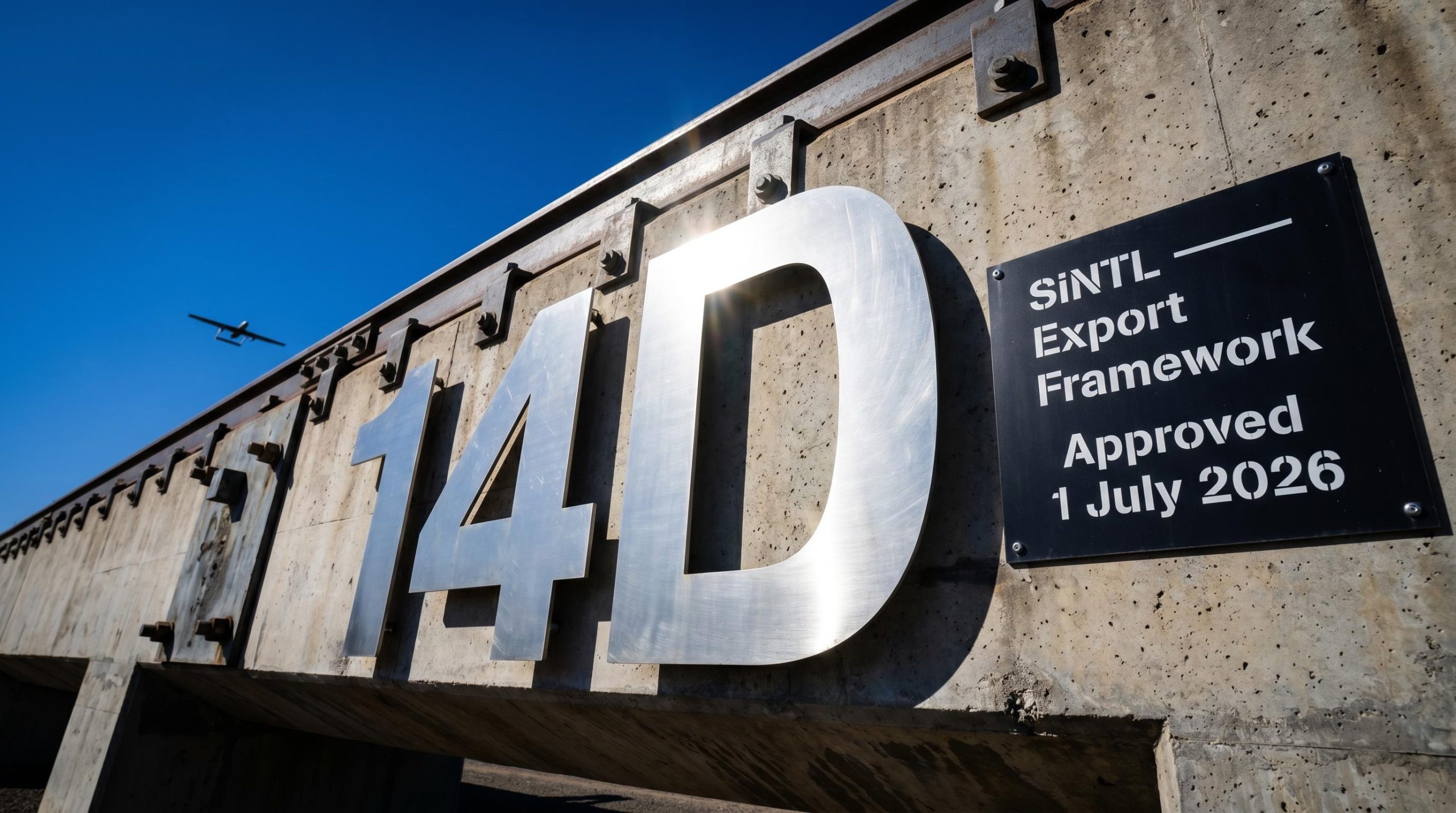
The commercial significance of 1414 Degrees’ (ASX:14D) SiNTL battery programme in Ukraine has increased following the Ukrainian Government’s approval of a new defence export framework. Approved by the Cabinet of Ministers of Ukraine on 1 July 2026, the mechanism enables approved domestically produced defence technologies to be exported to partner nations.
The reform follows the Company’s 11 June 2026 announcement that it had entered into a SiNTL Battery Qualification Testing and Expert Services Agreement with Ukrainian defence manufacturer Energia 2000.
The practical implication is meaningful. Subject to successful qualification testing and commercial agreements, Ukrainian UAV platforms incorporating SiNTL-based batteries may now have a pathway to supply allied defence markets, extending potential exposure well beyond a single domestic market.
When big ASX news breaks, our subscribers know first
What the export reform changes
Until now, commercial opportunities arising from successful validation of SiNTL technology within Ukraine were largely confined to domestic deployment. The new framework changes that dynamic in three key ways:
-
It establishes a legal export channel through which Ukrainian UAV manufacturers, including the Company’s programme partners, may supply allied markets, creating potential downstream demand for validated inputs such as SiNTL.
-
It enables the transfer of technology without requiring the alienation of intellectual property rights, aligning with 1414 Degrees’ model of retaining ownership of SiNTL while monetising through supply, licensing and royalties.
-
It reinforces the commercial rationale for validating SiNTL on platforms that now have a defined pathway to export markets, rather than domestic deployment alone.
The framework is designed for speed and scalability, with export applications processed within a defined 30-day timeframe. Participation is tied to countries in Ukraine’s “Drone Deal” initiative that hold bilateral or multilateral intergovernmental agreements with Ukraine.
For investors, the shift is straightforward: the potential addressable market for a validated SiNTL input moves from a single domestic market towards allied Europe and other partner nations, subject to approvals and commercial arrangements.
The commercial push into allied defence markets is backed by the Aerospace, Drone and Defence Advisory Board assembled by 1414 Degrees in May 2026, drawing on former senior executives from Lockheed Martin, Northrop Grumman, Airbus U.S. Space and Defense, and General Dynamics, alongside national security leaders with direct Pentagon and Joint Chiefs of Staff experience.
The Energia 2000 opportunity and Ukraine’s drone scale
The qualification testing agreement announced on 11 June 2026 provides for SiNTL-based battery technology to be evaluated across Energia 2000’s unmanned aerial vehicle (UAV) platforms, with performance assessed under operational conditions. If testing succeeds, the companies will negotiate commercial terms before deployment.
The six-stage qualification testing programme includes live battlefield evaluation across five active Ukrainian drone battalions, with successful completion intended to form the basis for adoption across Energia 2000’s full UAV production line.
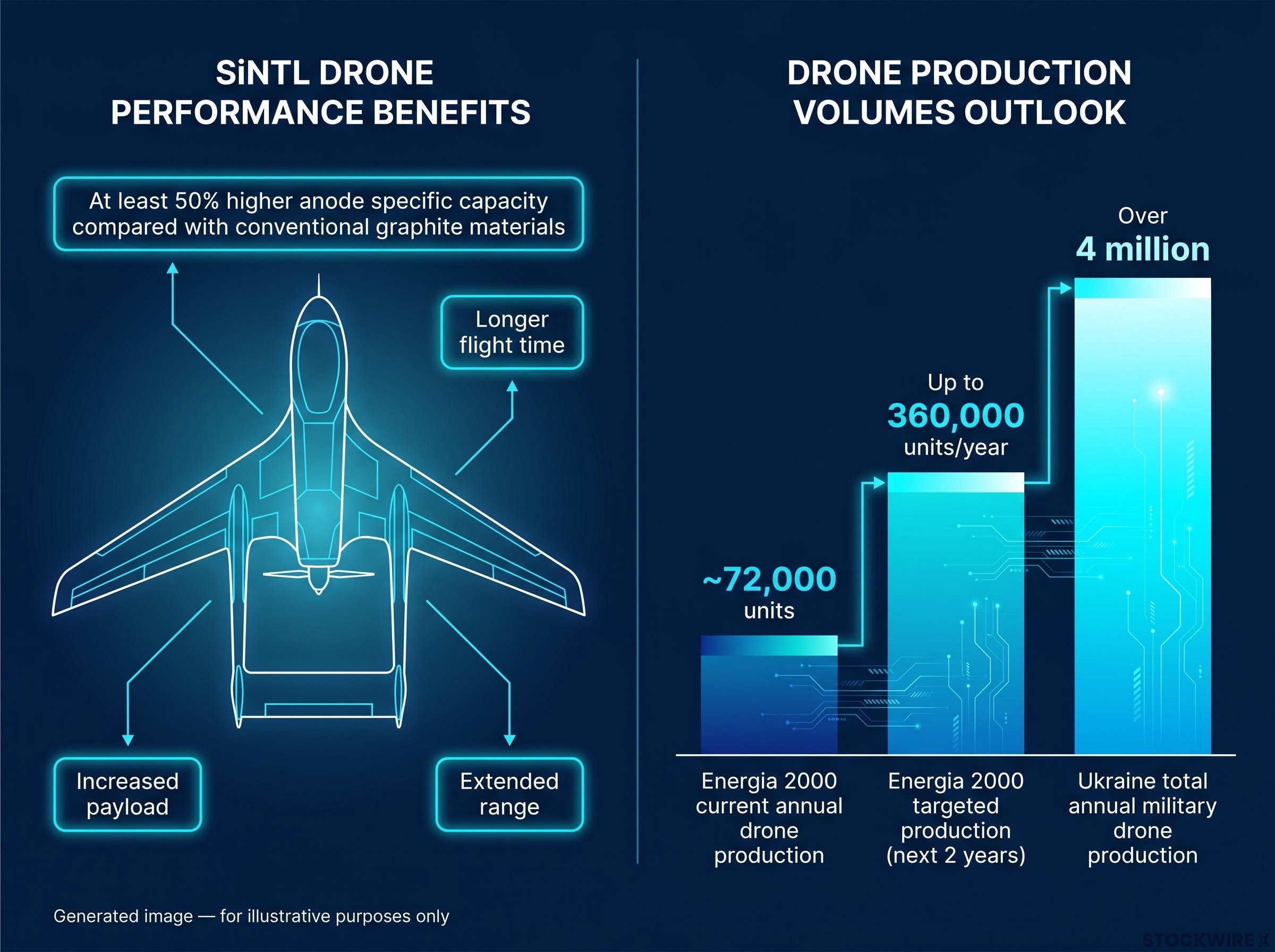
The scale context underlines why this matters. Energia 2000 has advised the Company of its current and targeted production volumes, set against Ukraine’s broader manufacturing base.
| Metric | Figure |
|---|---|
| Energia 2000 current annual drone production | ~72,000 units |
| Energia 2000 targeted production (next 2 years) | Up to 360,000 units/year |
| Ukraine total annual military drone production | Over 4 million |
| Export application processing time | 30 days |
These figures illustrate the demand pool that SiNTL could potentially serve if validated, though no supply relationship exists at this stage.
Why silicon anode technology matters for drones
SiNTL is a silicon-enhanced anode material designed to increase lithium-ion battery energy density while remaining compatible with existing lithium-ion manufacturing processes. In simple terms, the anode is the part of a battery that stores charge, and boosting its capacity allows more energy to be packed into the same footprint.
According to the Company, SiNTL has demonstrated at least 50% higher anode specific capacity compared with conventional graphite materials.
Energy density is a critical performance factor for UAVs. Greater energy density can support longer flight time, extended range, or increased payload, all of which are decisive in a demanding operating environment. This is why a battle-tested Ukrainian UAV market represents a valuable proving ground for the technology.
Executive Chairman’s perspective
Dr Kevin Moriarty, Executive Chairman of 1414 Degrees, framed the reform as a strategic development for the programme.
Dr Kevin Moriarty, Executive Chairman
“Only weeks after entering into our testing agreement with Energia 2000, the potential addressable market for successful deployment of SiNTL technology has expanded considerably.
“While significant milestones remain before commercialisation, this reform materially enhances the strategic value of our Ukrainian programme and reinforces our belief that advanced silicon anode technology can play an important role in next-generation defence battery systems.”
What’s next for the SiNTL programme
The roadmap ahead follows a defined sequence, with each step contingent on the one before it:
-
Qualification testing of SiNTL on Energia 2000’s platforms under operational conditions
-
If successful, negotiation of binding commercial terms before deployment
-
Potential integration into exportable platforms under the new export framework
The conditionality here is genuine and material. 1414 Degrees holds no export allocation or entitlement. The framework operates under martial-law-period settings, prioritises the operational requirements of the Ukrainian Defence Forces, and remains subject to government discretion and periodic review of eligible product categories. Any potential benefits are contingent on successful testing, execution of binding commercial agreements, and decisions by Ukrainian manufacturers and relevant authorities.
SiNTL sits within 1414 Degrees’ broader silicon materials platform, which also includes SiBrick®, SiBox® and SiPHyR®, alongside the development-ready Aurora Energy Precinct in South Australia.
Don’t Miss the Next Defence Tech Breakout
Big News Blast delivers FREE breaking ASX news directly to your inbox within minutes of release, complete with in-depth analysis already done for you. Over 20,000 active subscribers rely on it to stay ahead of market-moving developments across tech, defence, healthcare and beyond. Click the “Free Alerts” button at StockWire X to start receiving alerts the moment news breaks.