

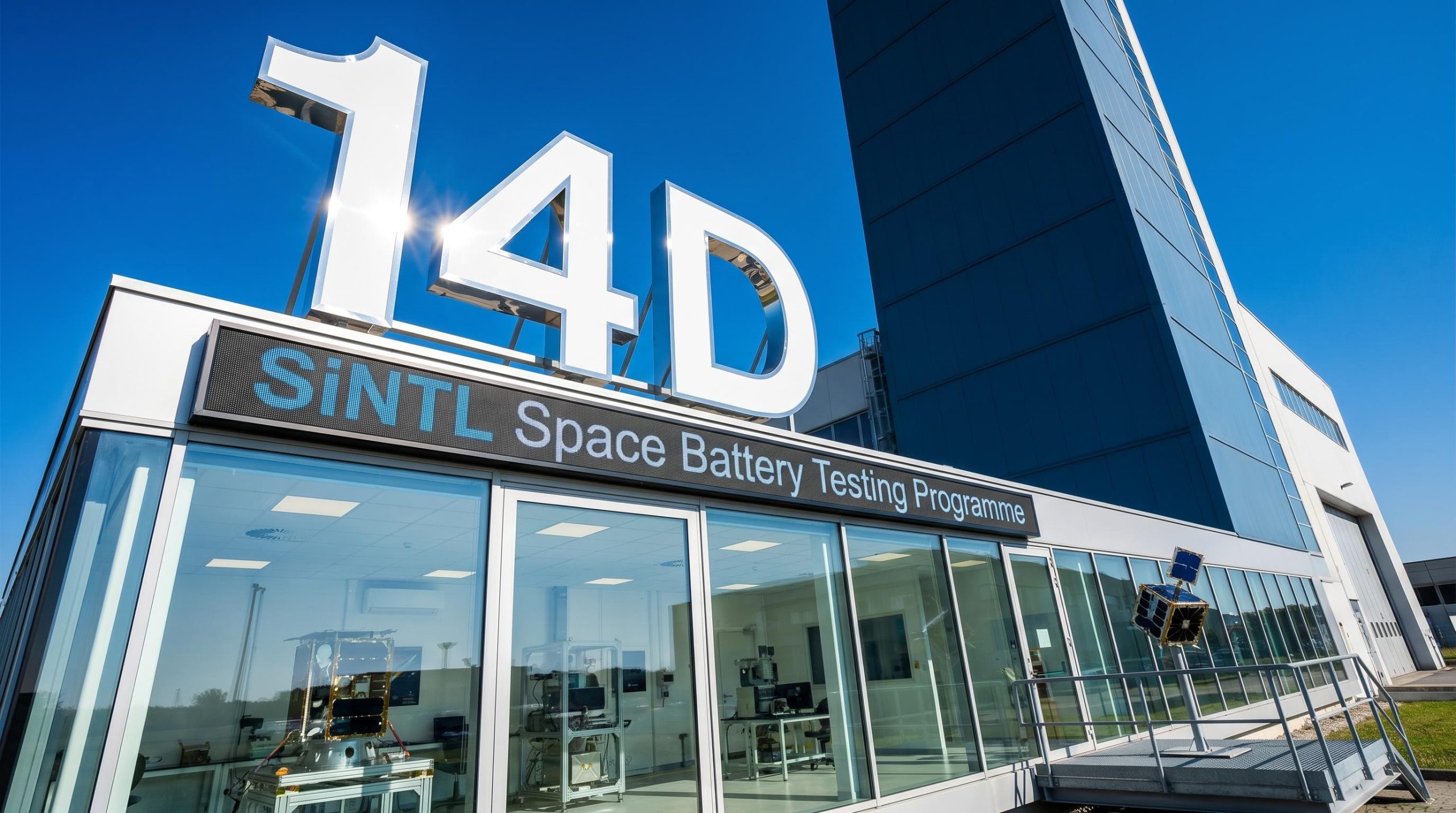
1414 Degrees enters space battery market with Orbit Boy partnership
1414 Degrees has signed an agreement with Orbit Boy to test SiNTL silicon-anode battery technology for satellite, rocket and spacecraft applications. The partnership provides a direct technical and commercial pathway into the space, satellite, aerospace and defence battery markets. 14D will subscribe for A$500,000 in equity in Orbit Express across two A$250,000 tranches tied to programme milestones.
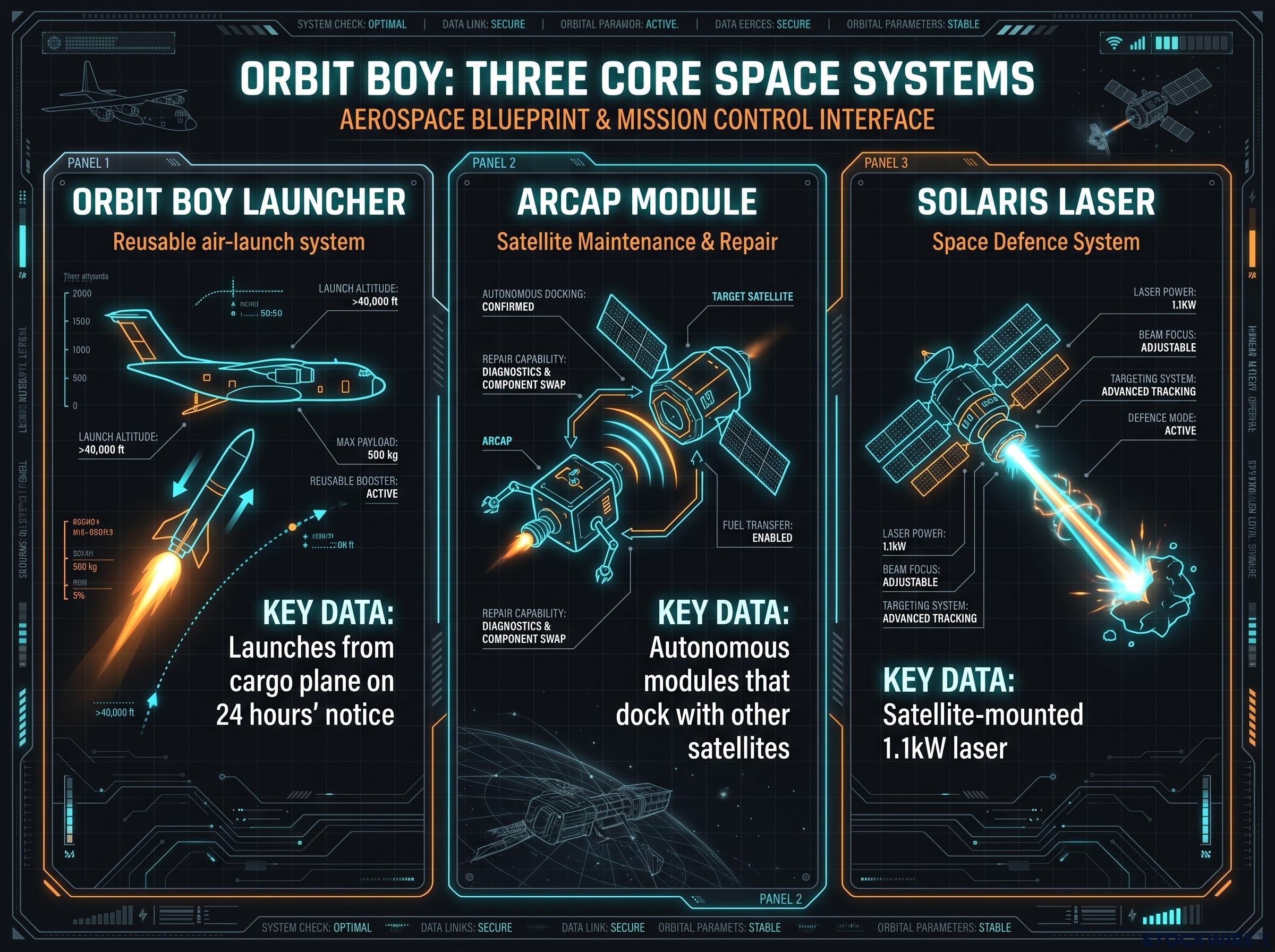
Orbit Boy is a UK-incorporated company operating from Turin, Italy, with rocket technology that has been proven across approximately 500 launches over the past 5 years. The company has developed three core space systems: the Orbit Boy Launcher (a reusable, on-demand air-launch system that can launch satellite-carrying rockets from a cargo plane on 24 hours’ notice), the ARCap Satellite Maintenance & Repair Module (autonomous satellite modules that dock with other satellites to perform repairs and maintenance), and the Solaris Space Defence Laser (a satellite-mounted 1.1kW laser that can track, intercept and neutralise threats to satellites). These three systems are designed to enable assembly, maintenance and protection of orbital space-based assets including data centres.
When big ASX news breaks, our subscribers know first
Why energy density matters for space batteries
Satellite batteries face unique constraints that make energy density paramount. Launch costs per kilogram are extremely high, and once a satellite is in orbit, its batteries cannot be replaced. If a satellite battery fails, it generally renders the entire satellite inoperable, meaning the entire satellite including launch could need replacement at significant expense.
SiNTL has demonstrated at least 50% greater energy density than traditional graphite anode batteries in testing, as announced on 29 May 2026. This performance characteristic directly addresses what SpaceX has identified as the binding constraint in satellite power systems: battery capacity is paramount for satellites where low weight and high energy density matter most.
The SiNTL scale-up program at George Washington University is targeting a near-term capacity of 600 mAh/g, which would represent more than 50% above conventional graphite anodes and approximately 20% above current commercial silicon-enhanced benchmarks, with manufacturer-relevant quantities now being produced to unlock formal OEM qualification.
Cells above 200 Wh/kg (the high-energy-density type SiNTL targets) represent the fastest-growing segment of the space battery market. SiNTL’s core value proposition — delivering at least 50% more battery capacity compared to traditional graphite anodes whilst fitting existing battery manufacturing without requiring significant changes to production processes — aligns directly with the technical requirements of satellite power systems.
The global space battery market
The global space battery market is worth approximately US$3.4 billion to US$4.6 billion in 2025. Forecasts project the market to roughly double to between US$5 billion and US$10 billion by the early 2030s.
Satellites make up about two-thirds of demand, with low Earth orbit representing the majority. More than 9,000 satellites now operate in low Earth orbit, about three-quarters of all active satellites. Most satellites last only five to seven years and require regular replacement, driving ongoing battery demand.
| Metric | Current | Forecast |
|---|---|---|
| Global space battery market | US$3.4B – US$4.6B (2025) | US$5B – US$10B (early 2030s) |
| Active low Earth orbit satellites | 9,000+ | Growing |
| Satellite share of battery demand | ~66% | – |
| Typical satellite lifespan | 5-7 years | – |
The market size quantifies the addressable opportunity for SiNTL in a rapidly expanding sector driven by satellite replacement cycles and emerging applications.
Orbit Boy’s space systems and partnership network
Three core platforms
Orbit Boy has developed three integrated systems designed to form the critical infrastructure required to enable assembly, maintenance and protection of orbital space-based assets:
-
Orbit Boy Launcher: Reusable, on-demand air-launch system that can launch satellite-carrying rockets from a cargo plane on 24 hours’ notice. The system enables satellite-carrying rockets to be launched into space from a cargo plane using a reusable, cost-effective platform.
-
ARCap Satellite Maintenance & Repair Module: Autonomous satellite modules that dock with other satellites to perform repairs and maintenance tasks (for example, on orbital data centre satellites). The system is designed to enable in-orbit servicing and assembly.
-
Solaris Space Defence Laser: Satellite-mounted 1.1kW laser that can track, intercept and neutralise threats to satellites from a large distance, removing potential threats to orbital data centres or any other satellites. Space laser defence systems are gaining interest from militaries worldwide as they offer high precision, low-cost and low-debris protection for space-based assets.
European space agency partnerships
Orbit Boy has established partnerships with major European and international space agencies and institutions:
- European Space Agency (ESA)
- Luxembourg Space Agency
- Korea AeroSpace Administration (KASA)
- ThalesAlenia Space (joint venture between Thales and Leonardo)
- Polish Space Agency (POLSA)
- Agenzia Spaziale Italiana
- German Space Agency (DLR)
- Ukrainian Space Agency
Orbit Boy was co-founded by the team of three former Chairmen of the State Space Agency of Ukraine, responsible for more than 150 successful rocket launches over the past three decades. The company’s rocket launch capability is built on space-proven heritage technology that has been tested across approximately 500 launches over the past 5 years.
Orbit Boy’s existing relationships with major European space agencies provide potential commercial pathways for SiNTL across multiple markets.
Testing programme structure and milestones
Phase 1 will test SiNTL batteries in European satellite design laboratories for readiness for deployment into rocket and spacecraft power systems. The primary application targets satellite bus and platform energy-storage systems designed to survive repeated charge and discharge cycling through orbital eclipse in low Earth orbit, where energy density, mass and cycle life are critical parameters.
Orbit Boy will assist in procuring a satellite manufacturer to conduct live space testing of SiNTL-based batteries aboard real satellites in Earth’s orbit to generate actual in-space performance validation. Subject to Phase 1 results, Phase 2 will evaluate SiNTL for the Solaris Space Defence Laser, which requires high peak-power, short-duration pulse discharge and demanding thermal management characteristics.
The work is supported by Orbit Boy’s facilities in Turin, Italy, and an independent contract manufacturer. The programme runs in six milestone-gated stages:
- SiNTL sample and cell validation
- Laboratory cycling and low-Earth-orbit eclipse testing
- Battery pack and module build with contract manufacturer
- Bench, battery-management and interface testing
- Environmental and space-representative qualification testing
- Final qualification report, including assessment of Solaris battery if stage one passes
The structured milestone approach provides multiple validation checkpoints before commercial deployment, limiting capital commitment whilst preserving upside from multiple potential revenue streams.
Orbital data centre expansion potential
Orbital data centre initiatives are being explored or developed by Tier 1 companies including Northrop Grumman, AirBus Defense & Space, ThalesAlenia and Axiom Space. Programmes announced in 2025 and 2026 point to a new class of power-hungry spacecraft. One orbital data-centre company achieved a US$1.1 billion valuation in 2025/2026, whilst SpaceX’s regulatory filing for up to one million compute satellites signals the scale of emerging demand.
Subject to favourable testing outcomes, Orbit Boy has indicated it would look to integrate SiNTL batteries into its core space systems, which are being developed to enable assembly, maintenance and protection of orbital gigawatt-scale AI data centres. These orbital computing initiatives represent an emerging application requiring high-capacity batteries, potentially expanding SiNTL’s addressable market beyond traditional satellites.
Commercial model and investment terms
Ownership of SiNTL and all related intellectual property remains with 14D and George Washington University at all times. Subject to successful testing and binding agreements, 14D expects revenue streams from:
- Anode material supply
- Battery technology licensing
- Royalties on approved packs or platforms
- Future supply to satellite, space, aerospace and defence customers
The A$500,000 equity subscription will be in two tranches: an initial A$250,000 for the Phase 1 programme, with a second A$250,000 upon the earlier of Orbit Boy delivering the Phase 1 testing pathway, commencing preliminary testing, or securing a testing partner. The Orbit Boy Group is exploring listing options in the US and Europe.
The milestone-linked payment structure limits 14D’s capital commitment whilst preserving upside from multiple potential revenue streams. Any future production or supply will be covered by separate binding agreements.
Executive commentary
Dr Kevin Moriarty, Executive Chairman
“Space stocks are commanding extraordinary valuations because the space economy is projected to be worth trillions of dollars, and the race to build, power and defend the next generation of satellites and orbital infrastructure is just beginning.
SiNTL™ has now well and truly entered that race – the Orbit Boy agreement gives 14D a direct technical and commercial pathway into satellite power systems as well as joining the space race.
If the program performs as we expect, we believe it could open the door to potential dealings with the world’s leading launch and satellite companies.
We are building a company whose technology belongs in space, on the battlefield and on the grid, powering the next generation of satellites, drones and data centres. These thematics are at the forefront of the global evolution, and we are excited to keep the market informed about ongoing developments.”
Want Space Battery News Before the Market Moves?
Join 20,000+ investors receiving FREE ASX space and industrial technology alerts delivered within minutes of release, complete with expert analysis. Click the “Free Alerts” button at Big News Blast to get breaking news the moment market-moving announcements drop across satellite, defence, battery and emerging technology sectors.