
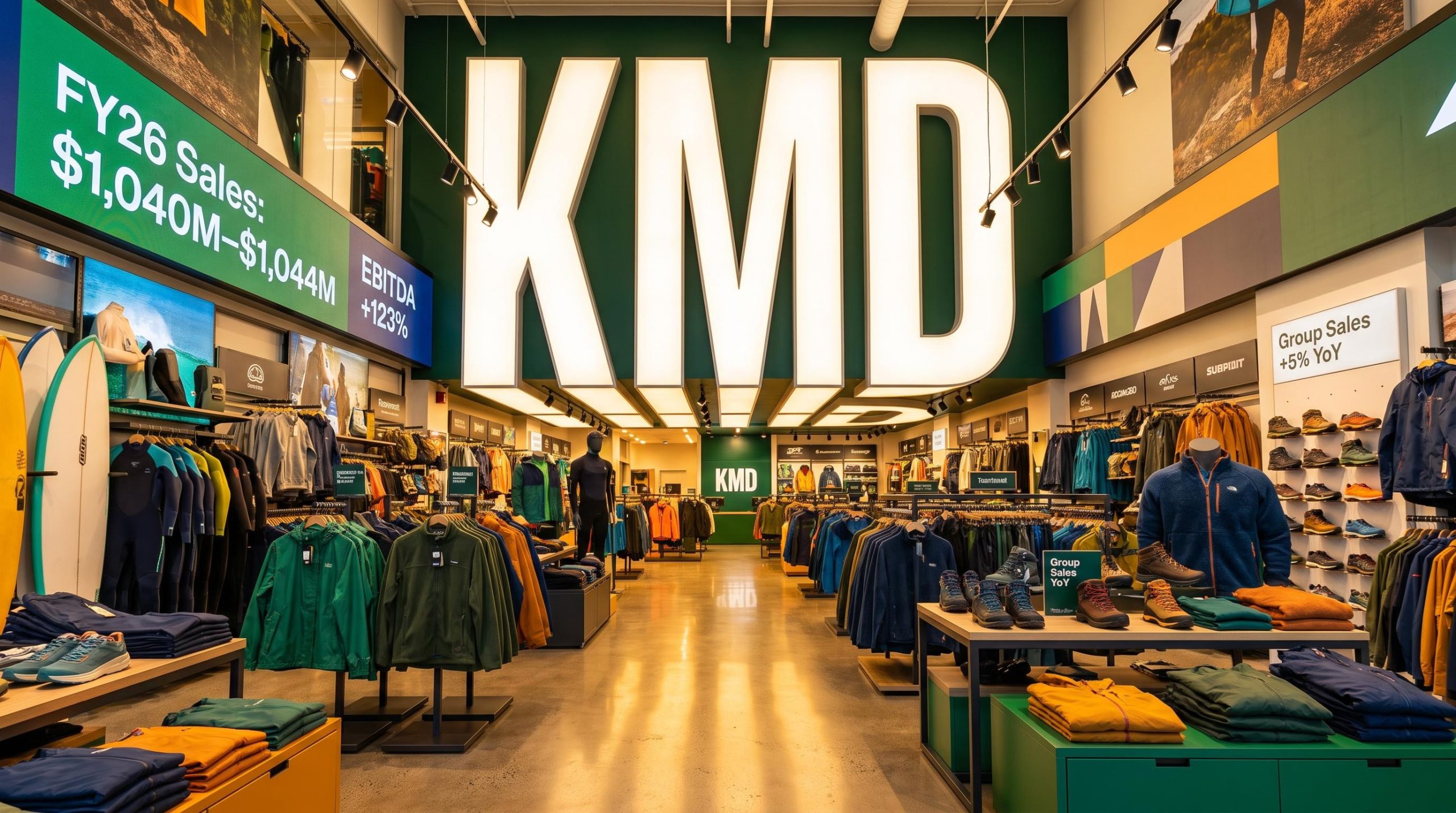
KMD Brands flags 123% EBITDA jump and $1.04bn sales as it moves to divest manufacturing facility
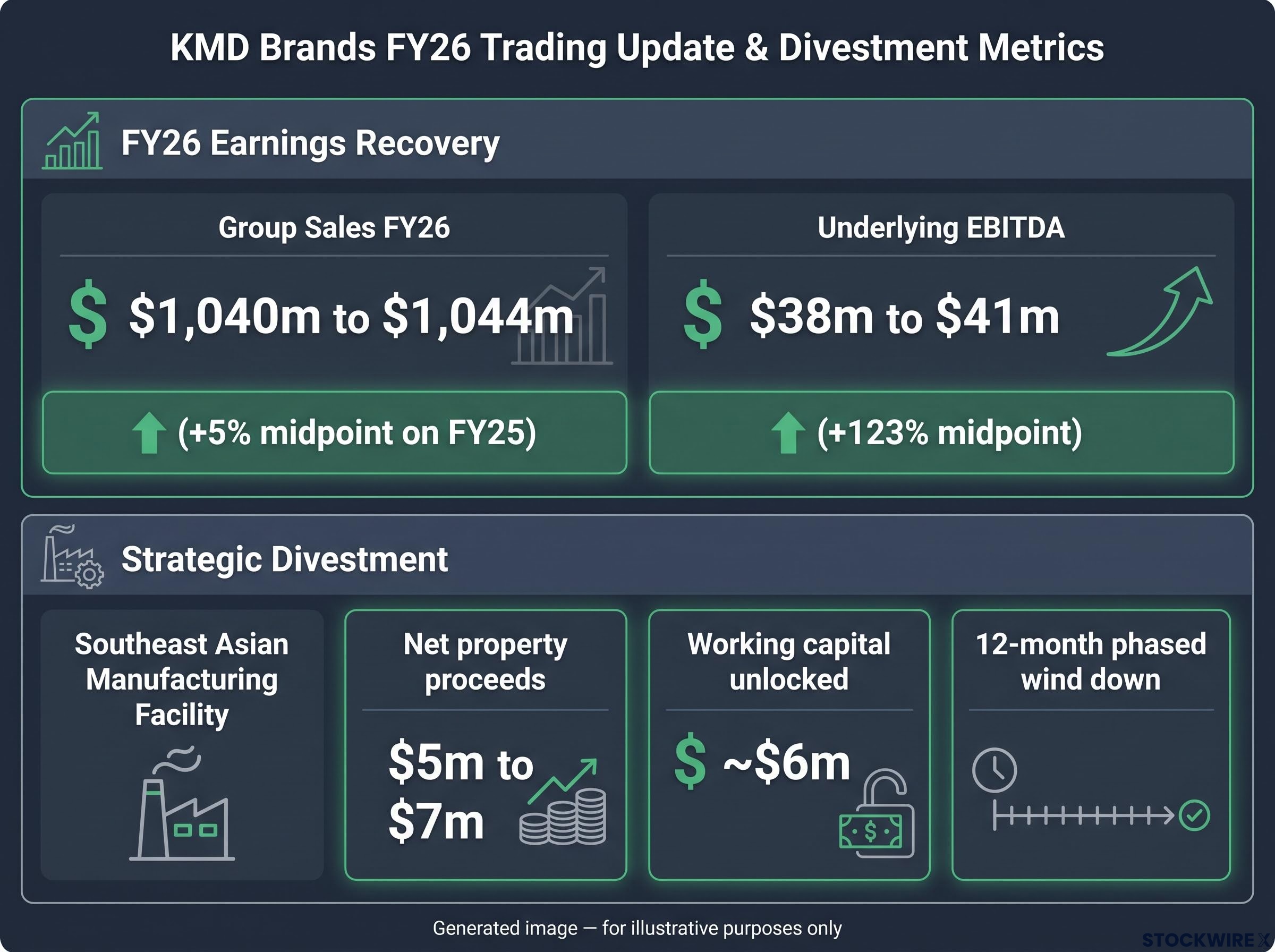
KMD Brands (NZX/ASX: KMD) has delivered a FY26 trading update on 22 July 2026, pairing a sharp earnings recovery with a decision to divest its Southeast Asian manufacturing facility. Group sales are expected to land between $1,040m and $1,044m, up +5% at the midpoint on FY25, while underlying EBITDA is expected in the range of $38m to $41m, up +123% at the midpoint.
All figures are stated in NZ$. The combination of a strong earnings rebound and a balance-sheet-strengthening divestment frames this KMD Brands trading update as a pivotal step in the Group’s Next Level strategy.
When big ASX news breaks, our subscribers know first
FY26 trading performance across the brand portfolio
Trading momentum varied across the three brands during the second half. The table below sets out direct-to-consumer (DTC) same-store sales, including online, for the first 24 full weeks of H2 (Monday 2 February to Sunday 19 July 2026) on a year-on-year, constant currency basis.
| Brand | H2 DTC Same-Store Sales (YoY, constant currency) | Trend commentary |
|---|---|---|
| Kathmandu | +4.8% | Improving versus Q4 FY25; strong rainwear, fleece and base layer |
| Rip Curl | -2.8% | Subdued Australian consumer sentiment, competitor promotions |
| Oboz | Not disclosed | Returned to growth YoY in Q4 FY26; strong online and new product launches |
Brand-level detail
Kathmandu sales continued to improve year on year relative to Q4 FY25, led by rainwear, fleece and base layer categories. The insulation category was impacted during the winter sale period by weaker demand associated with unseasonally warm weather on the east coast of Australia. Trading in New Zealand continues to outperform Australia.
Rip Curl sales remained affected by subdued consumer sentiment in Australia and competitor promotional activity. A reduction in the benefit of favourable foreign exchange rates adversely impacted Q4 FY26.
Oboz sales returned to growth YoY in Q4 FY26 as anticipated, driven by continued strong online performance and a flow of new product launches.
The manufacturing divestment and what it delivers
The Group has announced a decision to divest its Southeast Asian manufacturing facility, positioning the move as a strategic balance-sheet action under the Next Level strategy. Production is expected to be wound down in phases over the next 12 months.
Key facts from the announcement include:
-
Decision to divest its Southeast Asian manufacturing facility.
-
Phased production wind down over the next 12 months.
-
Expected net property proceeds in the range of $5m to $7m.
-
Unlocking of working capital of approximately $6m.
According to the announcement, the proceeds and working capital release will further strengthen the Group’s balance sheet. The broader business review is progressing well and is expected to be complete by the FY26 Annual Results on 23 September 2026.
Net debt and balance sheet position
Net debt is expected to be in the range of approximately $63m to $66m at the end of July 2026, elevated against $52.8m at July 2025. The Group has stated it will be compliant with all bank covenants under the new bank facility at 31 July 2026.
The new bank facility referenced here is the product of the NZ$208M debt refinance completed in June 2026, which extended KMD Brands’ funding runway to October 2028 and incorporated sustainability-linked terms tied to financial performance milestones.
The announcement attributes the higher net debt to three drivers:
-
A change in phasing of payment timing as part of overall trading terms with selected suppliers.
-
Investment in additional working capital to secure inventory ahead of potential global supply chain disruptions associated with current geo-political tensions.
-
Weakening of the NZ dollar year on year, with an impact of approximately $8 million.
For investors, covenant compliance under the new facility signals financial stability despite the elevated debt position, with the divestment proceeds and working capital release set to support the balance sheet.
What the underlying EBITDA figure actually measures
Underlying EBITDA is a profitability measure that helps investors gauge how a business performs from its core operations, stripped of accounting distortions and one-off events. In this update, KMD Brands defines it as earnings before interest, tax, depreciation and amortisation, excluding the impact of IFRS 16, software-as-a-service accounting, restructuring, and one-off items.
Why do these exclusions matter?
- They remove non-operational and non-recurring items, leaving a cleaner view of ongoing trading profitability. The +123% midpoint jump therefore points to a genuine operational recovery rather than accounting noise.
The investment case and the road to FY26 results
The standout signal in this update is the underlying EBITDA rebound of +123% at the midpoint. The decision to divest the Southeast Asian manufacturing facility adds a second layer to the story, pointing to active balance-sheet management through property proceeds and a working capital release.
The brand picture remains mixed. Kathmandu and Oboz are both improving, while Rip Curl continues to face a challenging Australian consumer backdrop and competitor promotional pressure.
KMD Brands announcement
“The transaction is expected to deliver net property proceeds in the range of $5m to $7m in addition to unlocking working capital of approximately $6m which will further strengthen the Group’s balance sheet.”
The next catalyst arrives on 23 September 2026, when KMD Brands is expected to release its FY26 Annual Results and complete the ongoing business review. Investors will be watching to see whether the earnings recovery signalled in this update translates into confirmed full-year figures and further clarity on the divestment.
Don’t Miss the Next Consumer Discretionary Mover
Big News Blast delivers FREE breaking ASX announcements straight to your inbox within minutes of release, complete with in-depth analysis so the work is already done. Join 20,000+ subscribers who stay ahead of the market the moment news breaks. Click the “Free Alerts” button at StockWire X to get started today.