
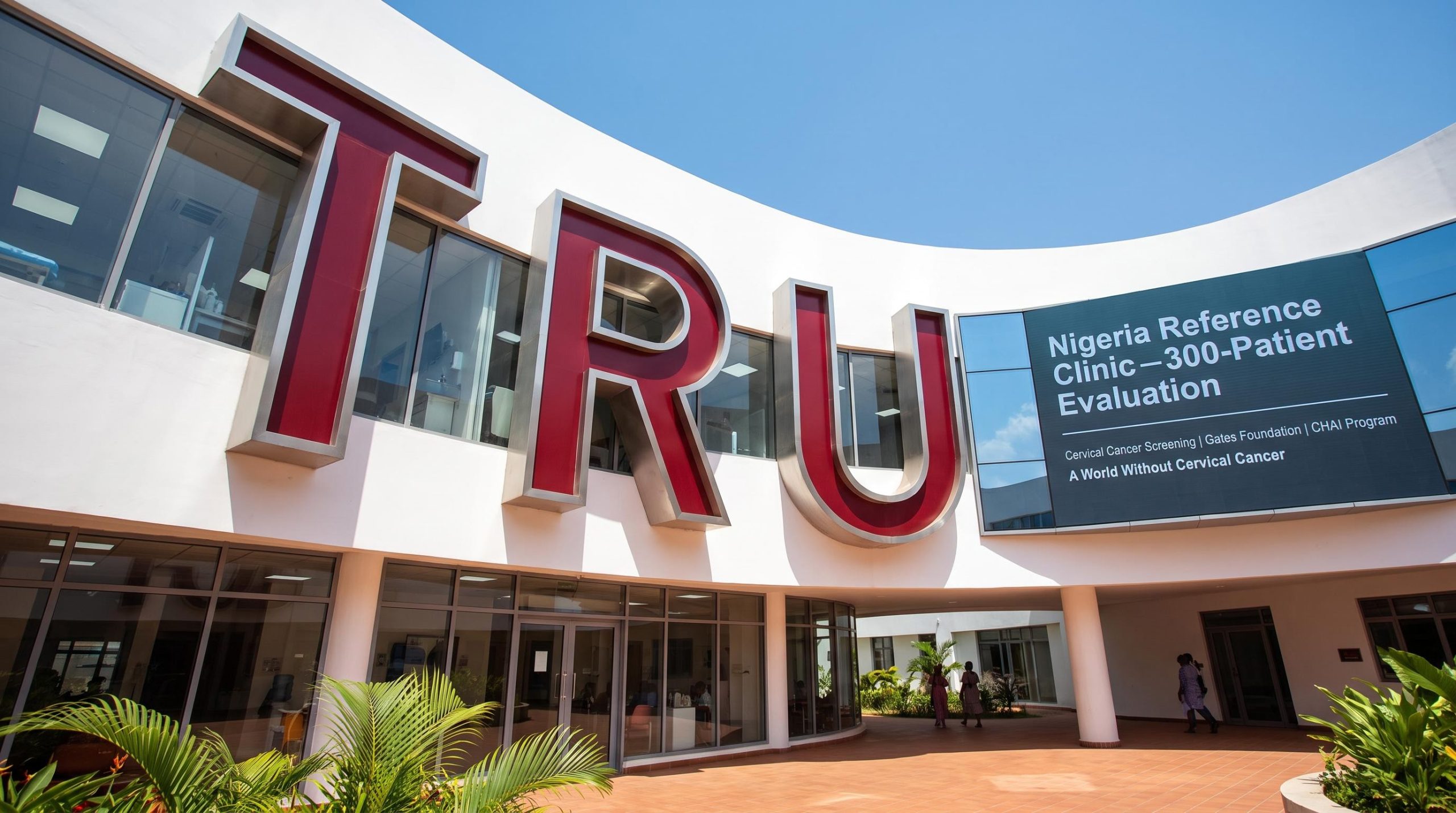
UNITAID outcome and what comes next for TruScreen
TruScreen Group Limited (NZX/ASX: TRU) has confirmed that three grant proposals submitted in April 2026 in response to UNITAID’s Call for Proposals on accelerating cervical cancer elimination were not selected for further development. The company was acknowledged for its efforts and encouraged to respond to future cervical cancer elimination Calls for Proposals from UNITAID.
The TruScreen UNITAID proposals submitted in April 2026 sought up to US$57.3 million across three programmes spanning 14 high-burden countries, with TruScreen positioned to receive up to US$18.4 million as consortium lead over a 36-month period had the bids been selected.
The three proposals that were not selected were:
- Proposal 1: Sub-Saharan Africa Scale-Up — a 36-month scale-up of TruScreen as a standalone AI-enabled screening tool across six African countries (Zimbabwe, South Africa, Eswatini, Rwanda, Nigeria, and Kenya)
- Proposal 2: African Screen-and-Treat Programme — a same-visit screen-and-treat model across the same six African countries
- Proposal 3: Asia-Pacific and Latin America Scale-Up — addressing the cervical cancer burden across China, India, Indonesia, Vietnam, Uzbekistan, Mexico, Malaysia, and Thailand
While the proposals would not proceed, TruScreen noted that their development strengthened relationships with a consortium of internationally recognised implementation NGO partners. The company stated its intention to continue partnering with these organisations going forward.
When big ASX news breaks, our subscribers know first
Four live grant applications expected by 31 December 2026
With UNITAID behind it, TruScreen’s near-term grant pipeline remains active. The company has four live grant applications with outcomes expected by 31 December 2026, representing a concentrated catalyst window for investors.
The four applications are:
- Collaboration with a global NGO for a UNITAID funding multi-country programme (TruScreen is the technology provider and the application remains under consideration)
- Clinton Health Access Initiative (CHAI) African programme
- Gates Foundation Grand Challenges: Innovations in Cost-Disruptive Tools for Diagnosis and Screening (OPP12345)
- Beginning Investigator Grant for Catalytic Research (BIG Cat), supported by the American Association for Cancer Research
The CHAI application includes a consortium of partners:
- National AIDS Council of Zimbabwe (NAC)
- PATH
- Solina Centre for International Development and Research (SCIDaR)
- RedAid Nigeria
- Baylor College of Medicine Children’s Foundation Eswatini
The Gates Foundation and BIG Cat applications are Nigeria-specific and are led by Dr Ayokunle Olumodeji from Lagos State University Teaching Hospital (LASUTH) and Lagos State University College of Medicine (LASUCOM).
| Grant Programme | Funder | Geography | TruScreen’s Role | Status |
|---|---|---|---|---|
| UNITAID multi-country programme (via global NGO) | UNITAID | Multi-country | Technology provider | Under consideration |
| Clinton Health Access Initiative African programme | CHAI | Africa | Consortium member | Under consideration |
| Gates Foundation Grand Challenges (OPP12345) | Bill & Melinda Gates Foundation | Nigeria | Selected screening technology | Pending final decision |
| BIG Cat (Beginning Investigator Grant for Catalytic Research) | American Association for Cancer Research | Nigeria | Selected screening technology | Pending final decision |
Nigeria expansion gathers momentum
Nigeria represents one of TruScreen’s most active expansion fronts. Nigeria will have TruScreen’s first African reference clinic, with training already completed for a 300-patient clinical evaluation. The reference clinic is intended to support TruScreen’s application for inclusion in Nigeria’s national screening guideline and government screening programmes.
Nigerian regulatory product approval is expected within 3 to 6 months. The urgency of expanding access in the country is underscored by its cervical cancer burden, as captured in WHO GLOBOCAN 2024 data:
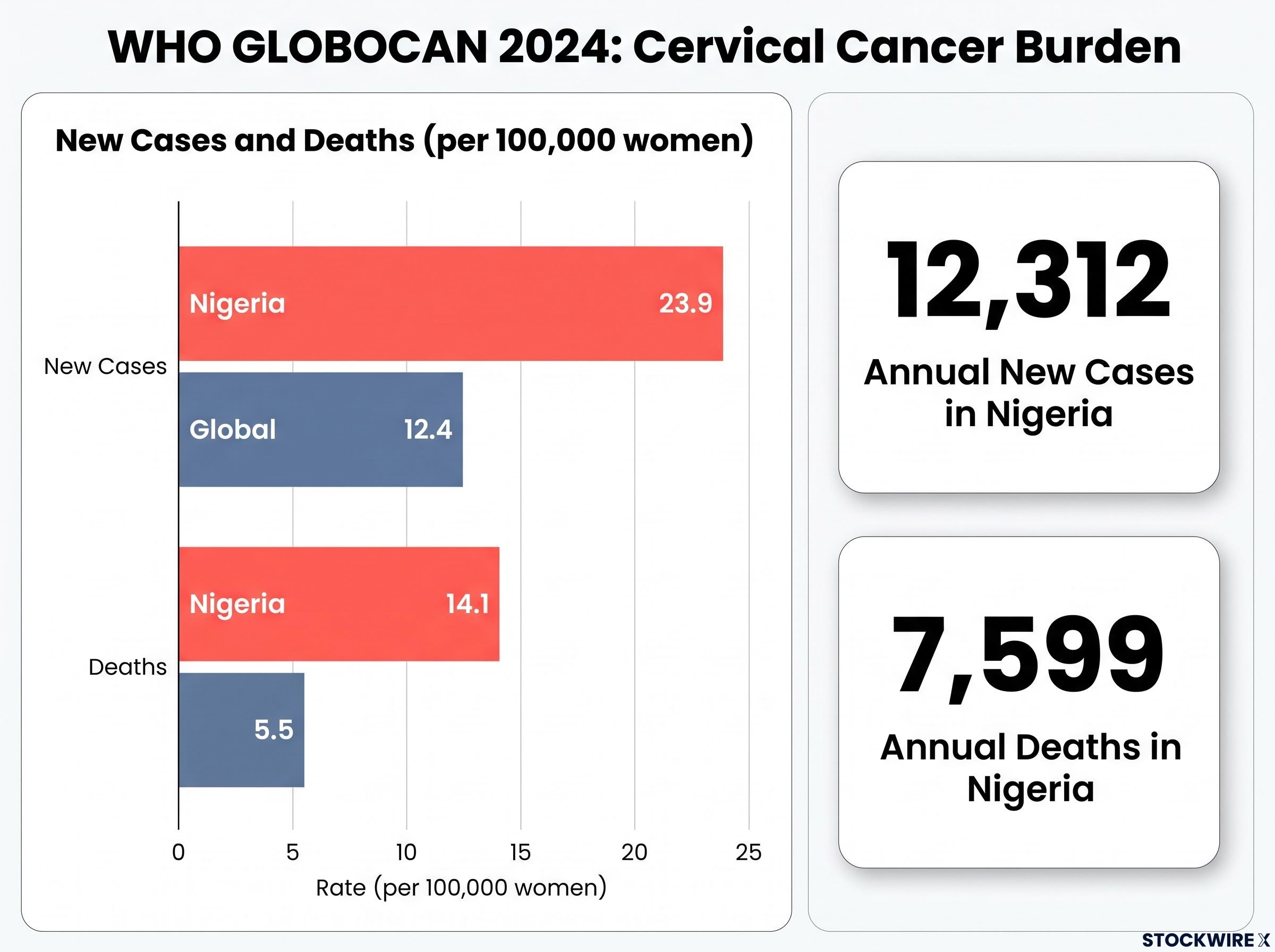
WHO GLOBOCAN 2024 — Nigeria cervical cancer burden
Nigeria’s estimated cervical cancer burden is approximately 23.9 new cases and 14.1 deaths per 100,000 women annually, versus global figures of 12.4 and 5.5, respectively. WHO estimates that 12,312 Nigerian women will contract cervical cancer and 7,599 Nigerian women will die from cervical cancer each year.
Zerocancer Professional Consult Limited (ZPC) has been appointed as TruScreen’s distributor for Nigeria, Ghana, and Côte d’Ivoire, extending the company’s commercial footprint across West Africa.
Understanding the global grant landscape for medical devices
Global health funders such as UNITAID, the Gates Foundation, and CHAI exist to accelerate the deployment of effective health technologies in low and middle income countries (LMICs), where health systems often lack the resources to procure and scale new tools independently. For medical device companies, grant funding from these organisations can be significant. It covers the cost of clinical validation, reduces the commercial risk of entering new markets, and can serve as a pathway to inclusion in national health guidelines.
Winning a grant from UNITAID or the Gates Foundation signals to governments and procurement bodies that a technology meets international standards of evidence and cost-effectiveness. For TruScreen, which markets the TruScreen Ultra® device as a primary cervical screening tool designed specifically for resource-constrained settings, alignment with these funders is a direct expression of its commercial strategy.
Peer-reviewed cervical screening validation across 14,982 women in China confirmed 90% sensitivity for severe pre-cancerous lesion detection, transforming TruScreen’s clinical positioning from manufacturer claims to independently verified evidence of the kind that procurement bodies and national guideline committees require.
The WHO’s 90-70-90 cervical cancer elimination targets — requiring 90% of girls vaccinated, 70% of women screened, and 90% of those with disease treated — place particular pressure on LMICs to adopt scalable, affordable screening tools. TruScreen’s technology, which operates without laboratory infrastructure or specialist personnel, is positioned to address that gap.
Investment considerations as the grant pipeline matures
The announcement does not contain a direct executive quote. The following forward catalysts are drawn from the announcement itself:
- Four grant decisions expected by 31 December 2026
- Nigerian regulatory product approval anticipated within 3 to 6 months
- Reference clinic evaluation in progress with a 300-patient cohort
- Continued commercial expansion across a 29-country distributor network
The concentration of expected outcomes before year-end gives investors a defined timeframe in which material news flow is anticipated. Each of the four grant applications, if successful, would represent a funded, multi-country deployment of TruScreen technology, with the associated clinical and commercial validation that follows.
TruScreen’s stated vision is “A world without cervical cancer.” The density of its current grant pipeline reflects the scale of ambition underpinning that goal, and the 31 December 2026 decision window will be a meaningful test of how that ambition translates into funded programme activity.
Don’t Miss the Next Healthcare Breakthrough in Your Inbox
Big News Blast delivers FREE breaking ASX healthcare news directly to your inbox within minutes of release, complete with in-depth analysis already done for you. Join 20,000+ investors who stay ahead of the market the moment announcements drop. Click the “Free Alerts” button at StockWire X to start receiving alerts today.