

HeraMED clears Phase 1 pilot with Lee Health, eyeing Phase 2 scale-up
HeraMED (ASX:HMD) has successfully completed Phase 1 of its Digital Pregnancy Journey pilot with Lee Health in the United States, evaluating the HeraCARE platform as part of a digital-first pregnancy care model. The announcement, dated 14 July 2026, marks a step forward in the company’s push to validate connected maternity care with a major US provider.
Lee Health is a non-profit health care provider offering the largest network of medical care facilities in Southwest Florida, delivering 8,000 babies annually. The six-month pilot assessed a hybrid obstetrics (OB) care pathway combining virtual visits, remote patient monitoring, fetal doppler and blood pressure monitoring.
Phase 1 results indicate strong patient adoption and engagement, with prenatal care delivered using fewer in-person visits at the same level of care as the current model. Attention now turns to a forward catalyst: HeraMED and Lee Health are progressing final internal sign-off for Phase 2, with a decision targeted in the coming weeks.
When big ASX news breaks, our subscribers know first
Phase 1 results: strong adoption, fewer visits, same standard of care
The headline takeaway from the pilot is that prenatal care can be delivered with fewer in-person visits while maintaining the same level of care. The pilot recorded 44 patients who completed virtual prenatal visits, supporting the potential to reduce reliance on in-person appointments and free clinic capacity.
Patient adoption and experience
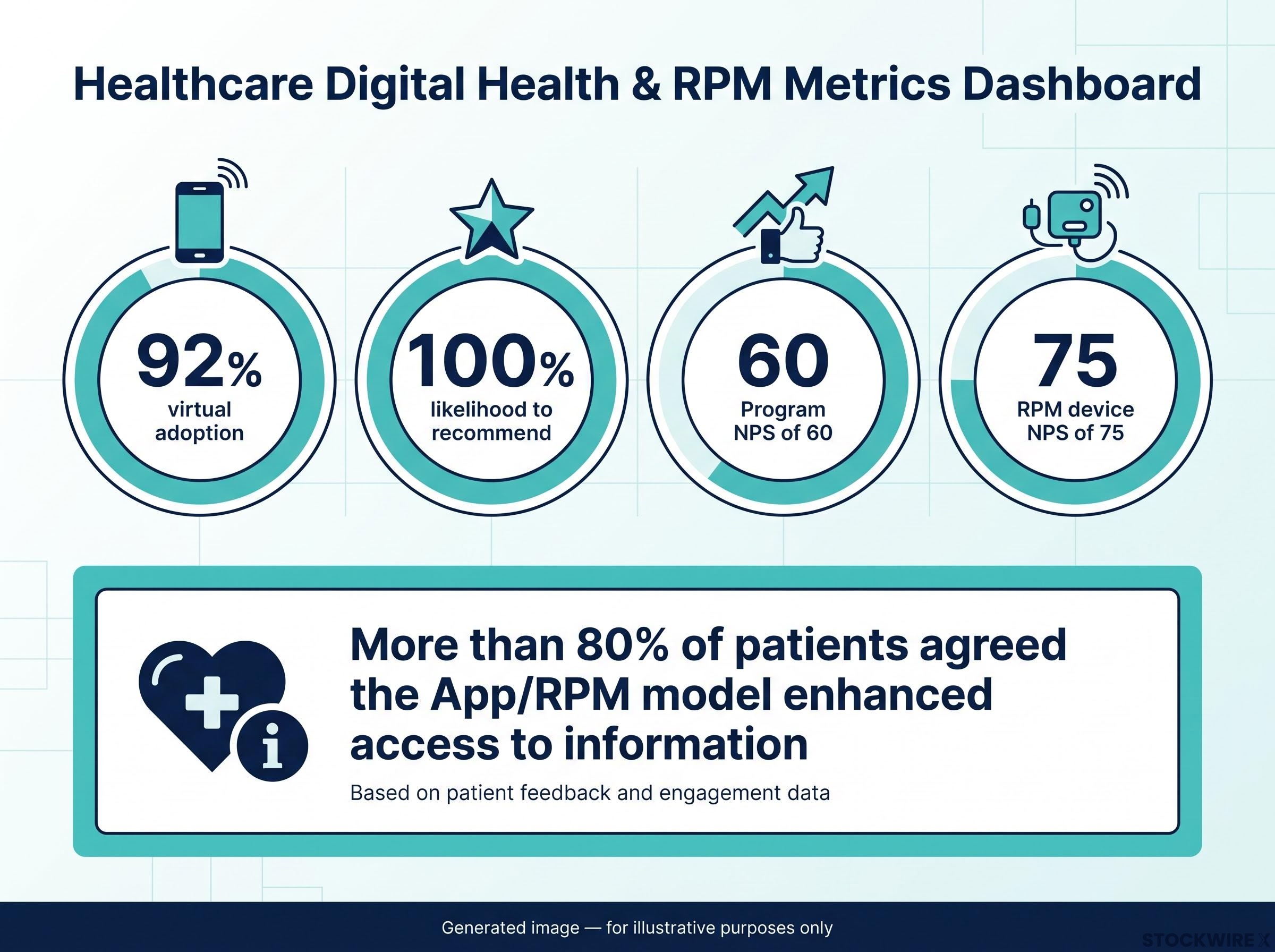
Patient feedback across the pilot was exceedingly positive. Key metrics included:
-
92% virtual adoption
-
100% likelihood to recommend
-
Program NPS of 60
-
RPM device NPS of 75
-
More than 80% of patients agreed the App/RPM model enhanced access to information
Beyond the numbers, patients highlighted qualitative benefits including convenience, time and cost savings, reduced travel burden and lower stress. These advantages were particularly relevant for working patients with children, many of whom faced practical barriers to in-person care such as time away from work, travel distance, wait times and childcare requirements.
Operational and modelled financial indicators
The pilot also generated operational and modelled financial indicators. The digital pathway was designed around 11 visits, compared with approximately 15 in-person visits in a traditional pregnancy care model.
| Metric | Traditional Model | Digital Pathway | Modelled Impact |
|---|---|---|---|
| In-person visits | ~15 | 11 | 3–5 slots freed per patient |
| Prenatal slots created | — | — | ~32 additional slots |
| Travel avoided | — | — | ~74 miles per patient |
Alongside the miles avoided, patient out-of-pocket travel costs were also reduced per patient. Together, these findings support the feasibility of the model and provide evidence of patient value, operational efficiency and potential healthcare economics.
What the HeraCARE model means and why it matters to investors
A hybrid OB care model, sometimes described as digital-first pregnancy care, blends virtual visits and remote patient monitoring (RPM) with traditional in-person appointments. The aim is to reduce unnecessary clinic visits while keeping patients engaged and connected to their care team.
One measure used throughout the pilot is the Net Promoter Score (NPS). As explained in the announcement, NPS is a widely used measure of patient and customer advocacy ranging from -100 to +100, with higher scores indicating stronger willingness to recommend a service, product or care model.
HeraMED’s proprietary HeraCARE offering has been engineered as a fully integrated maternal health ecosystem. It combines the clinically validated in-home foetal and maternal heart rate monitor HeraBEAT, personalised care plans, artificial intelligence and big data.
For investors, the significance lies in validation. Completing a pilot with a top-ranked US provider provides a reference case for future US deployments and offers evidence supporting the model’s feasibility.
Voices from the partnership
Dr Rachel Wykes, Lee Health
“The Digital Pregnancy Journey pilot was not simply a technology project, it was an opportunity to rethink how prenatal care can be delivered. The pilot showed that patients can become more active participants in their care, supported by stronger engagement, more meaningful clinical data and greater use of virtual care. Most importantly, it demonstrated that better care does not always require more in-person visits. By reducing unnecessary office visits while maintaining patient connection, this model has the potential to improve the pregnancy care experience and create meaningful additional capacity. The next step is to move from pilot to practice, not just to expand a program, but to redefine prenatal care at Lee Health.”
Anoushka Gungadin, Managing Director & CEO, HeraMED
“This is a significant milestone for HeraMED to partner with a nationally recognized major US healthcare provider. The pilot with Lee Health has been co-designed and engaged our teams across clinical, technical, research and executive leadership as a true partnership. It has been great to see the enthusiasm in this process with a mutual goal of validating HeraCARE’s capability to enhance patient engagement and connected digital maternity as a new model of care. Through this deployment, HeraMED included considerations across clinical outcomes, health economics and operational-workflow efficiencies, setting the stage for future scalability and expanded deployment.”
Pathway to Phase 2 and next steps for shareholders
HeraMED and Lee Health are now progressing to final internal sign-off for scale-up of the Digital Pregnancy Journey program. A decision is targeted in the coming weeks, with the company expecting to provide a further update to shareholders once the Phase 2 approval process has been finalised in the very near term. This represents the key near-term catalyst for the stock.
Phase 2 would mark the transition from feasibility validation to potential broader deployment, though it remains subject to internal sign-off and has not yet been confirmed. According to CEO Anoushka Gungadin, the Phase 1 deployment included considerations across clinical outcomes, health economics and operational-workflow efficiencies, setting the stage for future scalability and expanded deployment.
The Lee Health pilot sits within a broader commercial push backed by dedicated funding: the HeraMED US expansion capital raise of $3.2 million, completed earlier in 2026, was structured specifically to deploy capital into revenue-generating partnerships across the US, Australia, and Europe.
Investors monitoring the story may wish to watch:
-
The Phase 2 approval decision, targeted in the coming weeks
-
The scope and scale of any subsequent deployment
-
Broader US expansion potential built off the Lee Health reference case
Don’t Miss the Next Healthcare Breakout
Big News Blast delivers FREE breaking ASX healthcare news directly to your inbox within minutes of release, complete with in-depth analysis already done for you. Join 20,000+ subscribers who stay ahead of market-moving announcements. Click the “Free Alerts” button at StockWire X to make sure the next catalyst lands in your inbox the moment it breaks.