

EBR Systems takes WiSE System to APHRS 2026 with five scientific sessions
EBR Systems (ASX: EBR), developer of the world’s only wireless cardiac pacing device for heart failure, announced its participation in the 19th Asia Pacific Heart Rhythm Society Scientific Session (APHRS 2026). The event runs from 21 to 24 October 2026 in Busan, South Korea.
The WiSE System features in five scientific talks, according to the published conference program. Session details are subject to change.
Five WiSE sessions on the program
The schedule below is based on the published conference program, with all times in Korea Standard Time (KST).
| Date and time (KST) | Presenter | Topic |
|---|---|---|
| Thursday 22 October, 11:20 AM-11:25 AM | Dr Devi Nair | Mastering Leadless LV Endocardial Pacing: Expert Strategies for Procedural Success with the WiSE System |
| Thursday 22 October, 2:00 PM-5:00 PM | Dr Simon James | Pacing-Induced Severe Functional Mitral Regurgitation After “Ablate & Pace” with a Leadless Pacemaker: Reversal with Endocardial Resynchronisation |
| Friday 23 October, 9:30 AM-9:40 AM | Dr Niraj Varma | Leadless LV Endocardial Pacing Delivers Acute QRS Reduction Regardless of Electrode Location: Real-World Evidence from 100 US Implants |
| Friday 23 October, 2:00 PM-5:00 PM | Alphonsus Liew, MBBS, MRCP, PhD | A Mechanistic Haemodynamic and Electrical Study to Support the use of Leadless Left-sided Conduction System Pacing Delivered via the WISE-CRT System |
| Saturday 24 October, 8:30 AM-8:45 AM | Dr Nestor Lopez-Cabanillas | Is LV Endocardial Pacing an Alternative for CRT? |
Management commentary
John McCutcheon, President & Chief Executive Officer of EBR Systems, said the presentations reflect the company’s focus on clinical evidence and physician support.
John McCutcheon, President & Chief Executive Officer
“APHRS 2026 provides an important opportunity to share our growing commercial experience with the WiSE® System and explore its potential to expand pacing options for patients… These presentations reflect our focus on building clinical evidence and supporting physicians as they adopt WiSE.”
McCutcheon said the presentations will include:
- Data from the first 100 U.S. commercial patients
- Research exploring the use of WiSE to deliver leadless conduction system pacing
- Consensus strategies from six experienced implanters to optimise procedural success
The commercial experience feeding these presentations continues to build, with EBR completing 46 commercial implants in the second quarter of 2026 and lifting its cumulative total to 117 across 30 activated US hospitals.
When big ASX news breaks, our subscribers know first
What is leadless left ventricular endocardial pacing?
Cardiac Resynchronisation Therapy (CRT) treats heart failure patients who need coordinated pacing of the heart. Conventional approaches use a pacing wire on the outside of the heart’s left ventricle, and leads have historically been the major source of complications, effectiveness and reliability issues in cardiac rhythm disease management.
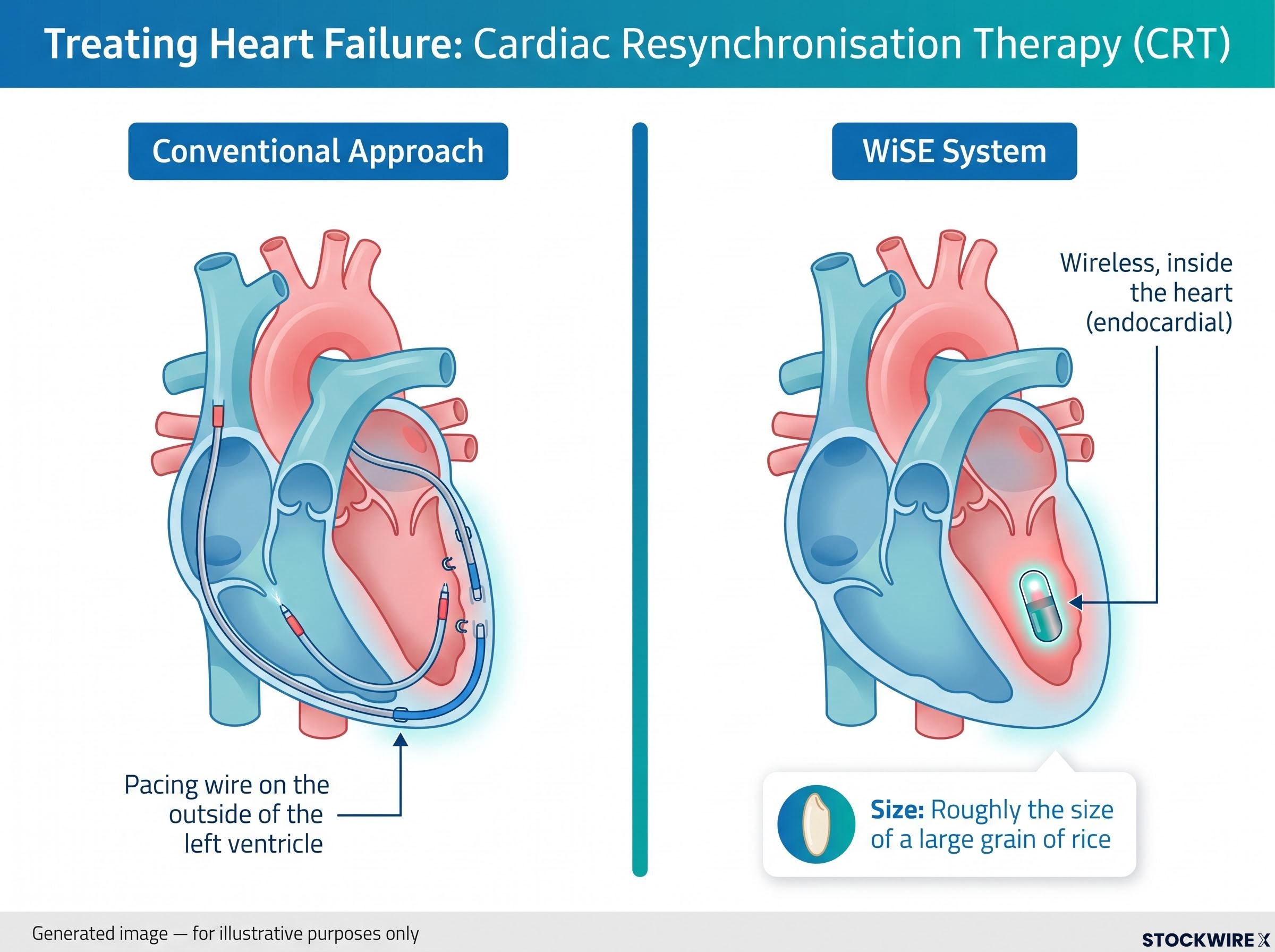
WiSE stimulates the left ventricle from inside the heart (endocardial) using a novel cardiac implant roughly the size of a large grain of rice. According to the company, WiSE is the world’s only wireless, endocardial pacing system in clinical use for stimulating the heart’s left ventricle, and internal stimulation is thought to be a potentially superior, more anatomically correct pacing location.
Why it matters for investors
The APHRS 2026 sessions align with the company’s stated focus on building clinical evidence and supporting physicians as they adopt WiSE. The announcement does not disclose financial data or address revenue or regulatory implications.
WiSE is an investigational device in most markets and is currently only available for sale in the US. More information is available on the EBR Systems website.
Outside the US, EBR has secured a TGA Priority Review Determination, cutting the Australian evaluation period from 225 to roughly 150 working days and positioning Australia as its second major market target.
Don’t Miss the Next Healthcare Breakthrough
Join 20,000+ investors getting FREE breaking ASX news delivered to their inbox within minutes of release, complete with in-depth analysis. Click the “Free Alerts” button at Big News Blast to receive healthcare and medtech alerts the moment market-moving announcements break.