

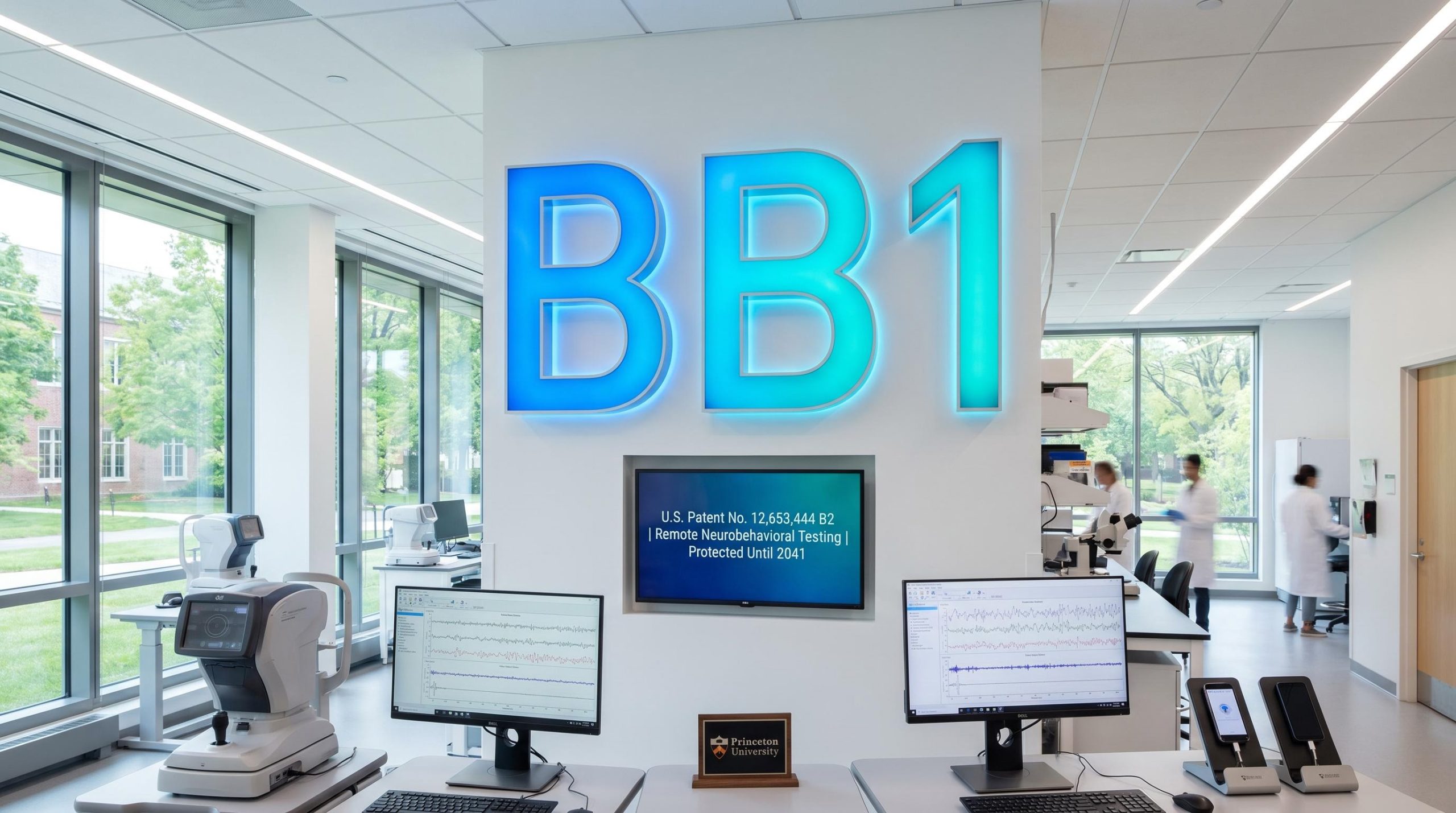
BlinkLab secures U.S. patent protection for core remote neurobehavioural testing technology until 2041
BlinkLab Limited has announced the United States Patent and Trademark Office (USPTO) has granted U.S. Patent No. 12,653,444 B2, protecting the company’s foundational remote neurobehavioural assessment technology. The patent, titled “System and Method for Remote Neurobehavioral Testing”, is expected to remain in force until November 2041, subject to maintenance fee payments and applicable patent term adjustments.
The patent protects core technology underpinning BlinkLab’s digital biomarker platform. The patent application was originally filed by The Trustees of Princeton University on 10 November 2021. BlinkLab holds an exclusive worldwide licence to this patented technology from Princeton University.
The grant provides intellectual property protection in the United States, the world’s largest healthcare market, and further strengthens BlinkLab’s growing portfolio of licensed and proprietary intellectual property.
When big ASX news breaks, our subscribers know first
What the patent covers and why it matters
The patent covers systems and methods for remote neurobehavioural assessment using audiovisual stimuli. Specifically, it protects two key measurement techniques: conditioned eyeblink responses and prepulse inhibition.
These techniques form a fundamental component of BlinkLab’s proprietary digital biomarker platform. Both measurement approaches have been incorporated into the company’s smartphone-based assessments for autism spectrum disorder and other neurodevelopmental conditions.
The patented technology was invented by Princeton University neuroscientists and BlinkLab co-founders Dr Henk-Jan Boele and Prof. Samuel S.-H. Wang. The patent protects the foundational measurement methodology itself, not merely a specific product application. This provides broader defensive coverage as the platform expands into additional neurological conditions beyond autism.
Understanding neurobehavioural digital biomarkers
Digital biomarkers in this context refer to objective, measurable biological responses captured through digital devices such as smartphones. Unlike traditional clinical assessments that rely on subjective observations, digital biomarkers provide quantifiable data points for medical evaluation.
Conditioned eyeblink responses and prepulse inhibition are involuntary reflex responses. These reflexes can indicate neurological function and processing capabilities. When measured systematically, variations in these responses may signal differences in brain development or neurological conditions.
The significance of smartphone-based measurement lies in accessibility. By eliminating the need for specialised clinical equipment, BlinkLab’s technology enables neurological testing anywhere a patient has access to a smartphone. This aligns with the company’s stated mission to make neurological assessment more accessible and affordable regardless of patient location, particularly in underserved or remote areas.
Digital biomarker platforms represent a shift from subjective clinical assessments to objective, data-driven diagnostics, a trend attracting significant healthcare investment globally as the sector seeks more standardised and scalable diagnostic tools.
Strengthening BlinkLab’s intellectual property portfolio
The USPTO patent grant forms part of a broader intellectual property strategy rather than an isolated event. BlinkLab continues to expand its IP portfolio through three distinct channels:
- Licensed patents (such as the Princeton University patent announced today)
- Internally developed technology created by the company’s research and development team
- Ongoing research collaborations with academic and clinical partners
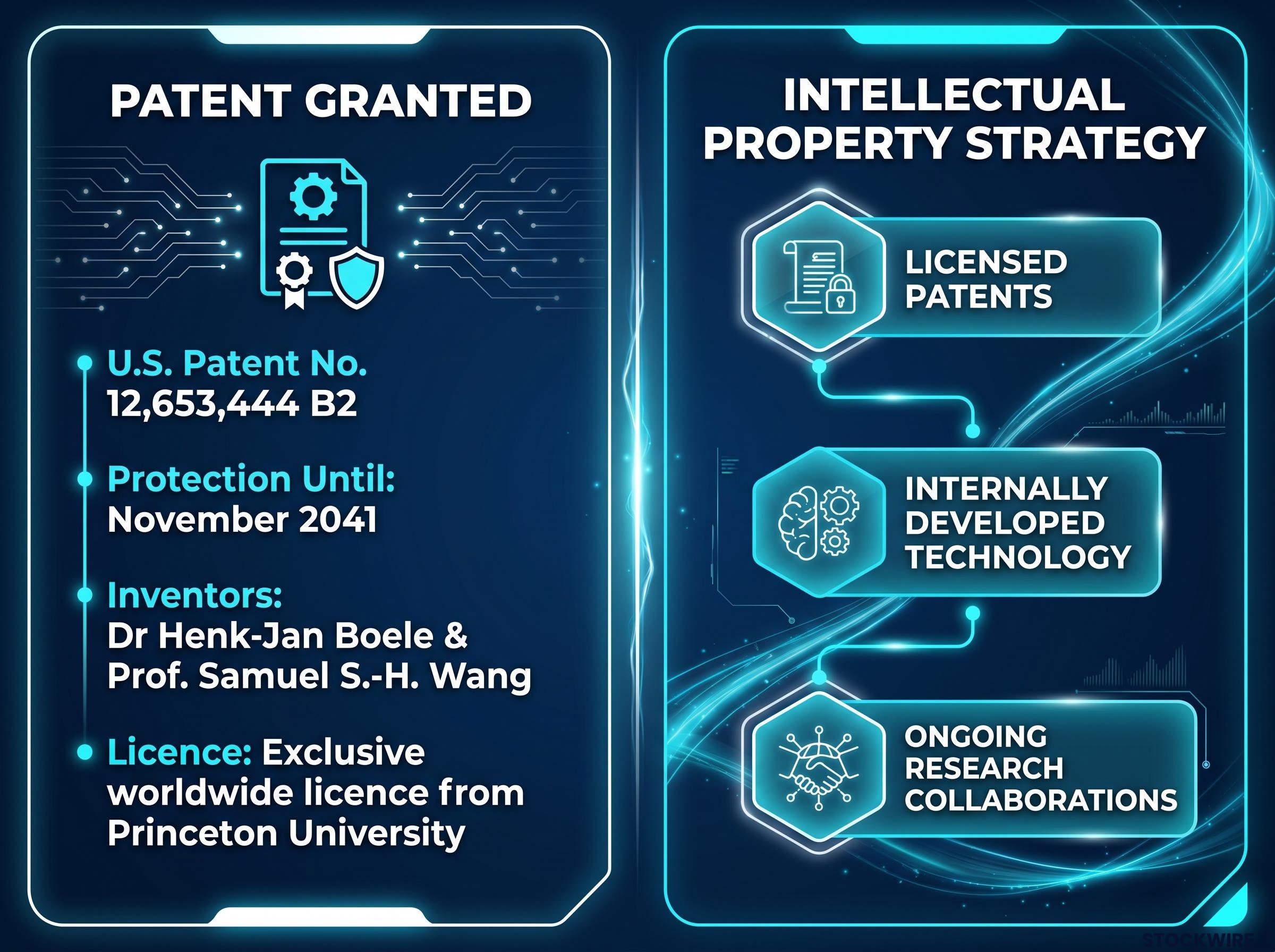
The company has emphasised the strategic importance of IP protection for future clinical, regulatory and commercial activities. A growing IP portfolio creates barriers to entry for competitors entering the digital neurobehavioural assessment market and enhances BlinkLab’s value in potential partnership or licensing discussions with larger healthcare organisations.
| Detail | Information |
|---|---|
| Patent Number | U.S. Patent No. 12,653,444 B2 |
| Patent Title | System and Method for Remote Neurobehavioral Testing |
| Protection Until | November 2041 |
| Original Filing Date | 10 November 2021 |
| Licence Holder | BlinkLab (exclusive worldwide licence from Princeton University) |
CEO perspective on U.S. market opportunity
Dr Henk-Jan Boele, Chief Executive Officer and Managing Director
“The grant of this U.S. patent of our invention is an important step for BlinkLab as we continue building a scalable platform for objective neurological assessment. It protects core technology that enables us to measure neurobehavioral responses remotely using everyday consumer devices such as smartphones. That capability sits at the heart of our mission to make neurological testing more accessible, affordable and available to people regardless of where they live. As we advance our autism diagnostic programmes and explore applications in other neurological and neurodevelopmental conditions, a strong intellectual property portfolio is an important part of creating long-term value. The U.S. is the world’s largest healthcare market, and securing protection for this technology supports our future clinical, regulatory and commercial plans.”
Dr Boele’s commentary positions the patent grant within the company’s broader strategy to advance autism diagnostic programmes whilst exploring applications in additional neurological and neurodevelopmental conditions. The emphasis on U.S. market access reflects the commercial significance of intellectual property protection in the world’s largest healthcare economy.
Strategic positioning and next steps
The patent grant is positioned to enhance BlinkLab’s ability to develop and commercialise objective digital biomarkers for neurological and neurodevelopmental disorders. The company’s most advanced product, BlinkLab Dx 1, is an autism diagnostic aid for clinicians that leverages smartphones, artificial intelligence and machine learning to capture objective, reflex-based measures.
BlinkLab is led by an experienced management team with expertise in digital healthcare, computer vision and AI. The company was founded by neuroscientists at Princeton University and is supported by a Scientific Advisory Board of experts in autism and brain development.
Beyond diagnostics, BlinkLab’s platform is already being extended into therapy evaluation and treatment monitoring through an academic research agreement with Erasmus MC, the Netherlands’ largest university medical centre, targeting neurodevelopmental conditions including rare immune disorders with autism-linked traits.
This intellectual property milestone supports the company’s future clinical, regulatory and commercial plans in the U.S. market. U.S. market access is critical for digital healthcare companies, as successful navigation of FDA regulatory pathways and establishment of commercial partnerships in the U.S. often validates technology platforms for broader international expansion.
Want the Next Healthcare Breakthrough in Your Inbox?
Join 20,000+ investors receiving FREE breaking ASX healthcare news delivered within minutes of release, complete with in-depth analysis. Click the “Free Alerts” button at Big News Blast to get market-moving announcements and expert coverage the moment news breaks across Tech, Finance, Consumer, and Healthcare sectors.