

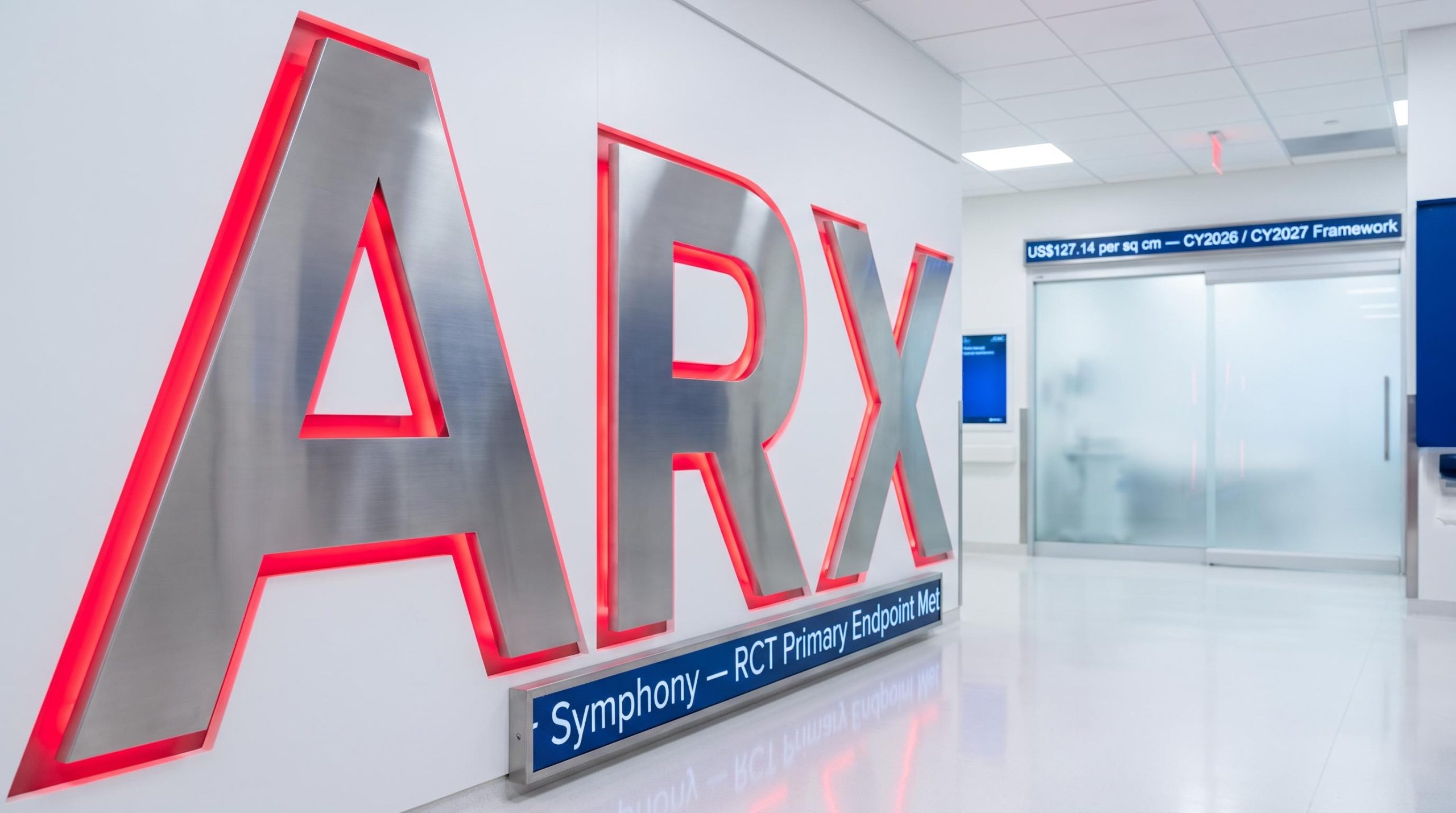
CMS moves to hold Symphony reimbursement rate steady into 2027
The United States Centers for Medicare & Medicaid Services (CMS) has proposed to maintain the CY 2026 payment framework for outpatient skin substitute products into CY 2027, including the current single payment rate of US$127.14 per square centimetre. For Aroa Biosurgery (ASX: ARX), the proposal reduces uncertainty around potentially less favourable reimbursement changes for products like Symphony.
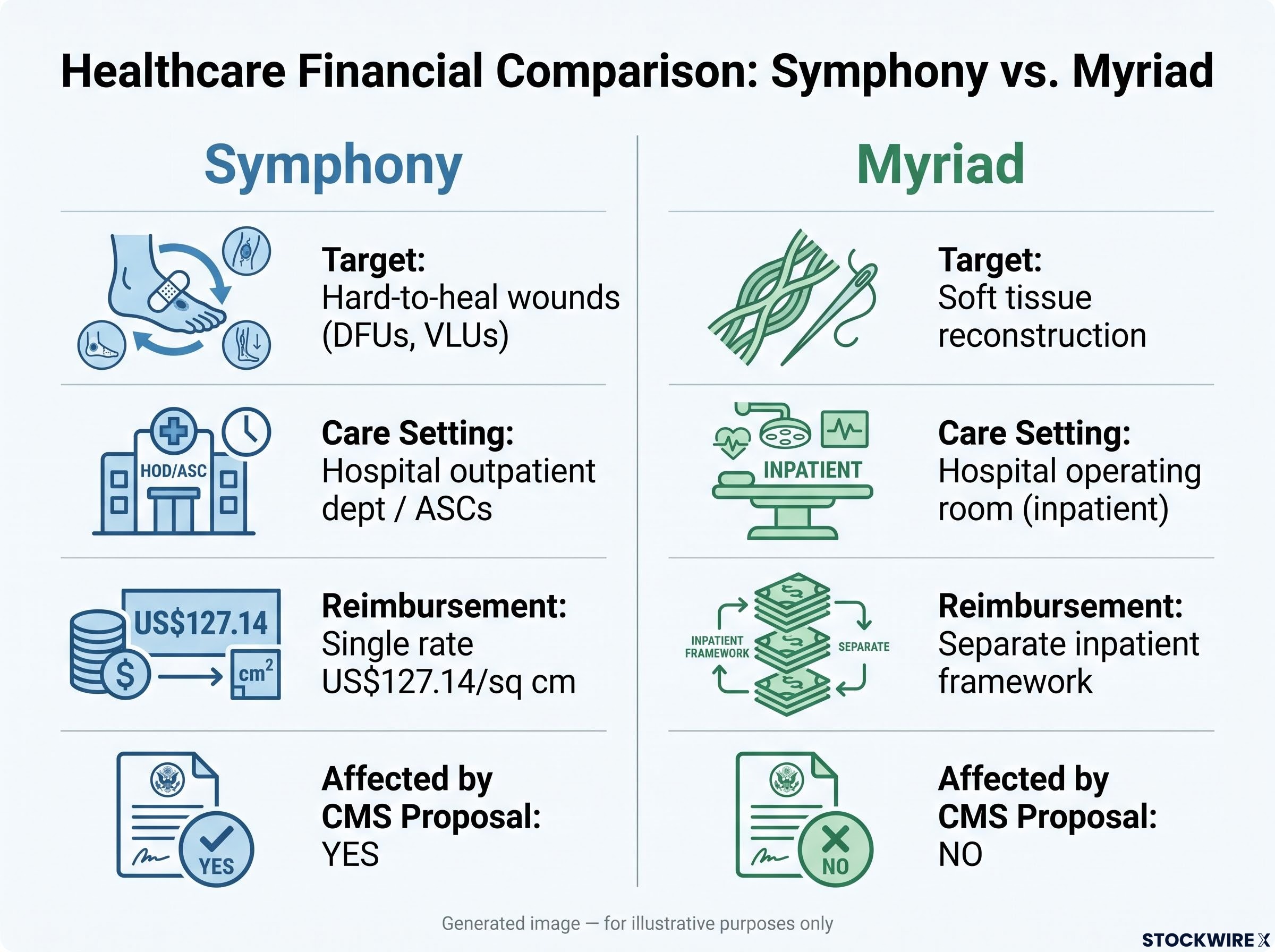
The proposed rule applies to hospital outpatient departments and ambulatory surgical centers. It does not impact reimbursement for Myriad, whose primary market is the hospital inpatient setting under a separate framework.
When big ASX news breaks, our subscribers know first
Why the reimbursement decision matters for AROA
Regulatory stability offers Symphony a runway during a disrupted market period. Healthcare providers and manufacturers had anticipated that further refinements could be made by CMS for calendar year 2027, but the agency has since indicated its intent to maintain the current single payment rate.
CMS noted that revising payment rates for CY 2027, before the impact of the CY 2026 rates is reflected in claims data, could create “payment disruption and unnecessary volatility.”
Despite disruption in the outpatient skin substitute market, AROA believes continuation of the current payment framework provides an important period of stability as the market re-establishes itself.
The January 2026 market disruption
On 1 January 2026, CMS made a significant change to outpatient skin substitute reimbursement, implementing the single payment rate of US$127.14 per square centimetre. This has led to major disruption in the market, with several notable effects:
-
Price compression across the outpatient skin substitute market
-
More patients being treated in the hospital outpatient department rather than other sites of care
-
Companies with business models “predicated on inflated pricing” may exit
According to AROA, the advantage is likely to shift to products that can demonstrate strong value and high-quality clinical evidence, a position the company argues Symphony holds.
Understanding skin substitutes and outpatient reimbursement
Symphony is designed for hard-to-heal wounds such as diabetic foot ulcers (DFUs) and venous leg ulcers (VLUs) treated in the hospital outpatient department.
CMS reimbursement for these products works through a set payment rate per square centimetre. That rate directly shapes product economics, influencing which products can be sold profitably and, ultimately, which win clinician adoption.
It is important to keep two distinct markets separate:
-
Symphony serves outpatient wound care, the market affected by this proposal.
-
Myriad serves soft tissue reconstruction in the hospital operating room (inpatient setting), which is unaffected.
Symphony’s positioning in the new environment
AROA believes Symphony is well placed as the market adjusts, supported by a combination of pricing discipline and clinical evidence:
-
Responsible pricing that fits the new single-rate framework
-
A hospital-based sales team and an existing surgical portfolio
-
A completed randomised controlled trial (RCT) for Symphony, which met its primary endpoint
-
The RCT is expected to be published by Q3 FY27
The company believes high-quality clinical evidence remains integral to supporting clinician adoption and is likely to become a future reimbursement requirement.
CEO Commentary
“CMS’s proposal to maintain the current payment framework for 2027 provides clarity for the outpatient skin substitute market during a period of significant change. We believe Symphony is well placed as the market re-establishes itself, supported by responsible pricing and an RCT that we expect to publish in the coming months. We are confident our investment in Symphony will deliver growth in the medium term,” said Brian Ward, Chief Executive Officer.
FY2026 momentum and the growth roadmap
AROA delivered strong growth in FY2026, primarily driven by increased adoption of Myriad for soft tissue reconstruction procedures within the hospital operating room. The company has now begun promoting Symphony to add to that momentum.
AROA’s FY26 full year results delivered total revenue of NZ$103.9m, up 23% on FY25, with normalised EBITDA surging 201% and the company closing the period debt-free, providing the financial foundation from which the Symphony commercial push is now being funded.
Symphony represents a distinctly different market with its own unique reimbursement settings, positioning it as the next potential growth leg. Ward expects the investment in Symphony to deliver growth in the medium term.
| Product | Target Application | Care Setting | Reimbursement Framework | Affected by This CMS Proposal? |
|---|---|---|---|---|
| Symphony | Hard-to-heal wounds (DFUs, VLUs) | Hospital outpatient dept / ASCs | Single rate US$127.14/sq cm | Yes |
| Myriad | Soft tissue reconstruction | Hospital operating room (inpatient) | Separate inpatient framework | No |
What comes next
Several near-term items will shape the outlook for Symphony:
-
The CMS proposed rule is yet to be finalised, meaning the CY 2027 rate is proposed rather than confirmed policy.
-
The Symphony RCT publication is expected by Q3 FY27.
-
Continued promotion of Symphony into the hospital outpatient department.
Myriad drove strong growth in FY2026, and the company expects its investment in Symphony to deliver growth in the medium term.
Don’t Miss the Next Healthcare Breakthrough on ASX
Big News Blast delivers FREE breaking ASX healthcare news directly to your inbox within minutes of release, complete with in-depth analysis already done for you. Join 20,000+ subscribers staying ahead of market-moving announcements. Click the “Free Alerts” button to start receiving real-time coverage the moment it drops.