
Mesoblast hits 300-patient target in pivotal back pain trial
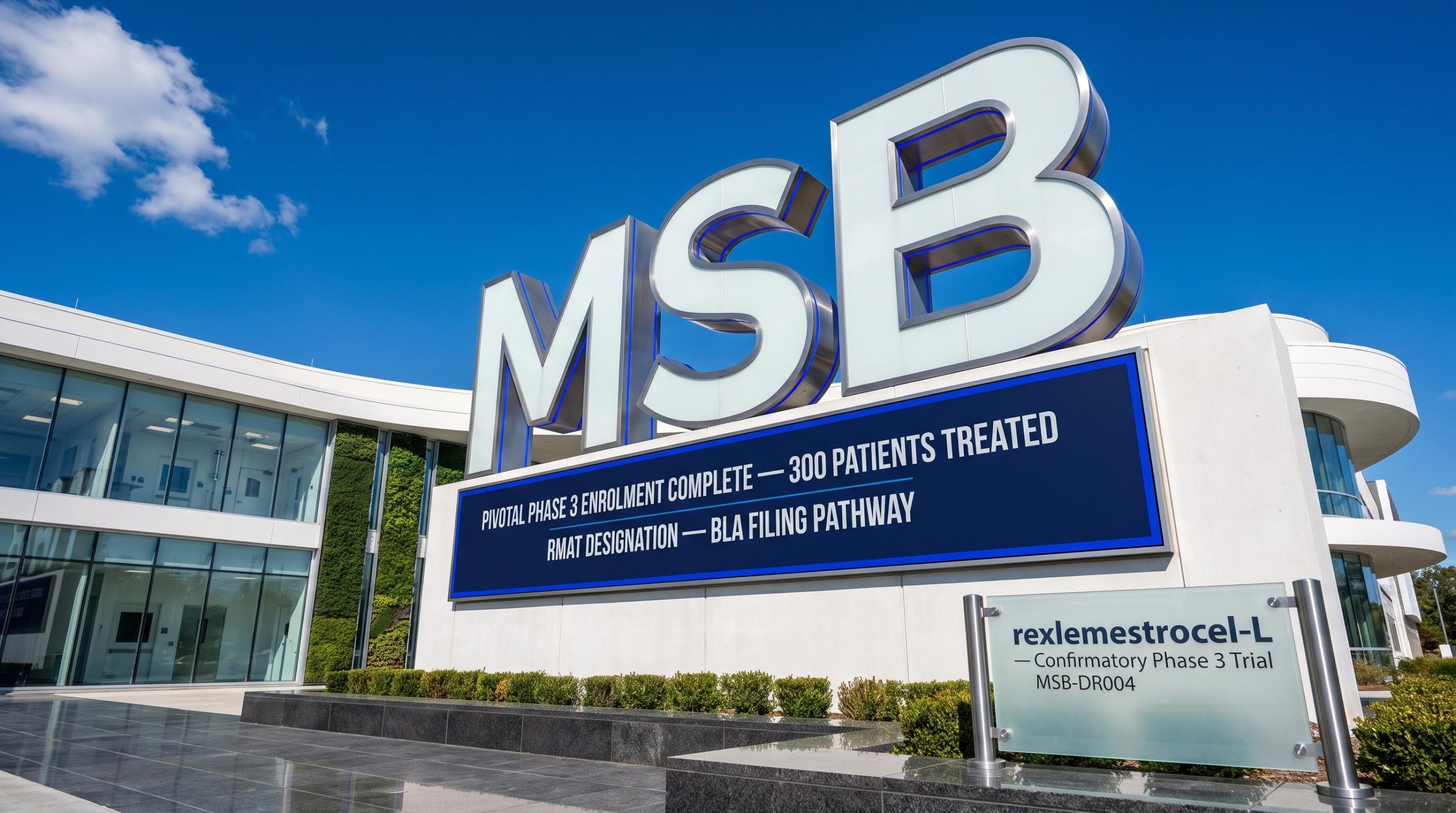
Mesoblast (ASX:MSB; Nasdaq:MESO) has achieved its target of treating at least 300 patients in the MSB-DR004 pivotal Phase 3 trial of rexlemestrocel-L for chronic low back pain (CLBP) associated with degenerative disc disease.
The milestone means the target of treating at least 300 patients has been achieved in a randomised, placebo-controlled trial the company describes as “well powered for success.” Reaching the target moves the study closer to a data readout.
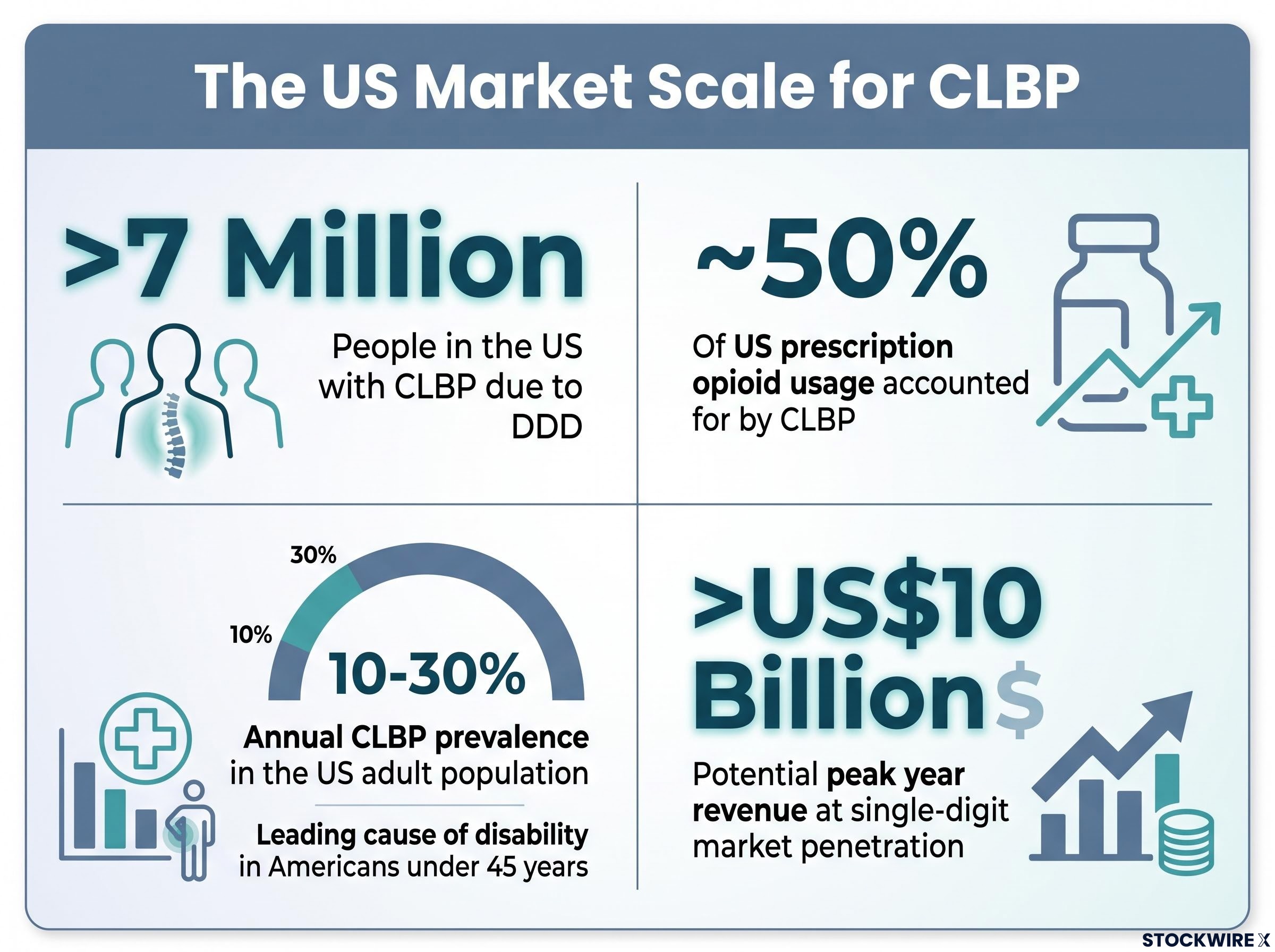
The commercial stakes are considerable. Mesoblast has flagged potential peak year revenue of >US$10 billion at single-digit market penetration. Topline results are expected in mid-CY2027, once the last treated patient completes 12 months of follow-up.
When big ASX news breaks, our subscribers know first
Why the enrolment milestone de-risks the investment case
Completing enrolment is a meaningful de-risking event. A trial that hits its target patient number is statistically better equipped to detect a treatment effect, lowering the probability of a failure driven by insufficient sample size rather than clinical performance.
Management has stressed that commercial manufacturing is proceeding alongside the trial. This parallel approach is intended to enable a regulatory filing “as soon as possible after trial results readout,” rather than waiting for data before scaling production.
Importantly, MSB-DR004 is a confirmatory Phase 3 trial. The primary 12-month pain reduction endpoint was already met in Mesoblast’s first Phase 3 trial, MSB-DR003. This study is designed to replicate that earlier positive signal, not to demonstrate efficacy for the first time.
Silviu Itescu, Chief Executive, Mesoblast
“Completing our target of treating at least 300 patients in the placebo-controlled pivotal back pain trial ensures the trial is well powered for success. Commercial manufacturing is proceeding in parallel so that we can file for approval as soon as possible after trial results readout.”
Understanding chronic low back pain and the opioid angle
Chronic low back pain caused by inflammatory degenerative disc disease (DDD) is a serious and often debilitating condition. Degenerative disc disease leads to persistent pain, reduced mobility, and impaired quality of life.
Rexlemestrocel-L is an allogeneic (off-the-shelf), industrially manufactured stromal cell product candidate. It is delivered via a single intra-discal injection combined with hyaluronic acid, which acts as the delivery agent for injection into the lumbar disc.
The opioid dimension is a particular focus of the treatment. A durable, single-injection therapy that reduces reliance on opioid painkillers could address both a major public health problem and a large commercial opportunity.
Key market and clinical facts include:
-
Back pain is the leading cause of disability in Americans under 45 years
-
Prevalence of over 7 million people in the US with CLBP due to DDD
-
CLBP accounts for approximately 50% of US prescription opioid usage
-
Annual CLBP prevalence of 10–30% of the US adult population
The scale of the addressable population, combined with the opioid connection, underpins Mesoblast’s characterisation of the indication as a potential blockbuster.
Trial design, endpoints and regulatory pathway
The MSB-DR004 study is enrolling patients with CLBP due to inflammatory DDD of less than five years’ duration across multiple sites in the US. The trial structure and its regulatory tailwinds are summarised below.
| Feature | Detail |
|---|---|
| Trial | MSB-DR004 pivotal confirmatory Phase 3, randomised, placebo-controlled |
| Patients treated | At least 300 (target achieved) |
| Primary endpoint | Significant reduction in low back pain at 12 months versus sham controls |
| Secondary endpoints | Function, quality of life, cessation of pain medication (including opioids) |
| Regulatory status | FDA RMAT designation, eligible for priority review on BLA filing |
Rexlemestrocel-L holds Regenerative Medicine Advanced Therapy (RMAT) designation from the United States Food and Drug Administration (FDA) for CLBP due to degenerative disc disease. RMAT designation provides all the benefits of Breakthrough and Fast Track designations, including rolling review and eligibility for priority review once a Biologics License Application (BLA) is filed.
The FDA has previously agreed on the design of the 300-patient trial and the 12-month primary endpoint of pain reduction as an approvable indication. Significant pain reduction and opioid cessation were observed in the company’s first Phase 3 trial.
What comes next and the broader Mesoblast platform
The path from reaching the 300-patient target to a potential regulatory filing follows a defined sequence:
-
The last treated patient completes 12-month follow-up
-
Topline results are expected in mid-CY2027
-
Commercial manufacturing scales in parallel
-
A BLA filing is targeted as soon as possible after readout, with priority review eligibility via RMAT
Rexlemestrocel-L sits within a broader Mesoblast pipeline built on its mesenchymal lineage cell therapy platform. The company’s Ryoncil® (remestemcel-L-rknd) for steroid-refractory acute graft versus host disease in paediatric patients is the first FDA-approved mesenchymal stromal cell therapy. Rexlemestrocel-L is also in development for heart failure.
The first FDA-approved mesenchymal stromal cell therapy, Ryoncil, has produced an 84% survival rate in real-world commercial use, with 45 transplant centres onboarded and reimbursement coverage extending to more than 260 million US lives, demonstrating the commercial infrastructure Mesoblast is now building behind.
Rexlemestrocel-L in heart failure is advancing through a separate regulatory track, with Mesoblast having secured a BLA filing number from the FDA and requested modular review for its end-stage heart failure indication targeting LVAD patients.
The company’s intellectual property position adds a layer of commercial protection. Mesoblast holds over 1,000 granted patents or patent applications, with protection extending through to at least 2044 in all major markets. It has also established commercial partnerships in Japan, Europe and China.
For investors, reaching the patient target moves a potential blockbuster indication one step closer to a data readout and regulatory filing. That progress is backed by prior positive Phase 3 data, a supportive FDA pathway through RMAT designation, and manufacturing readiness advancing in parallel with the trial.
Don’t Miss the Next ASX Healthcare Breakthrough
Big News Blast delivers FREE breaking ASX healthcare news directly to your inbox within minutes of release, complete with in-depth analysis already done for you. Join 20,000+ subscribers who stay ahead of the market on moves like this. Click the “Free Alerts” button at Big News Blast to get the next major announcement the moment it drops.