
Recce secures eighth Family 4 patent with Vietnamese approval for anti-infectives platform
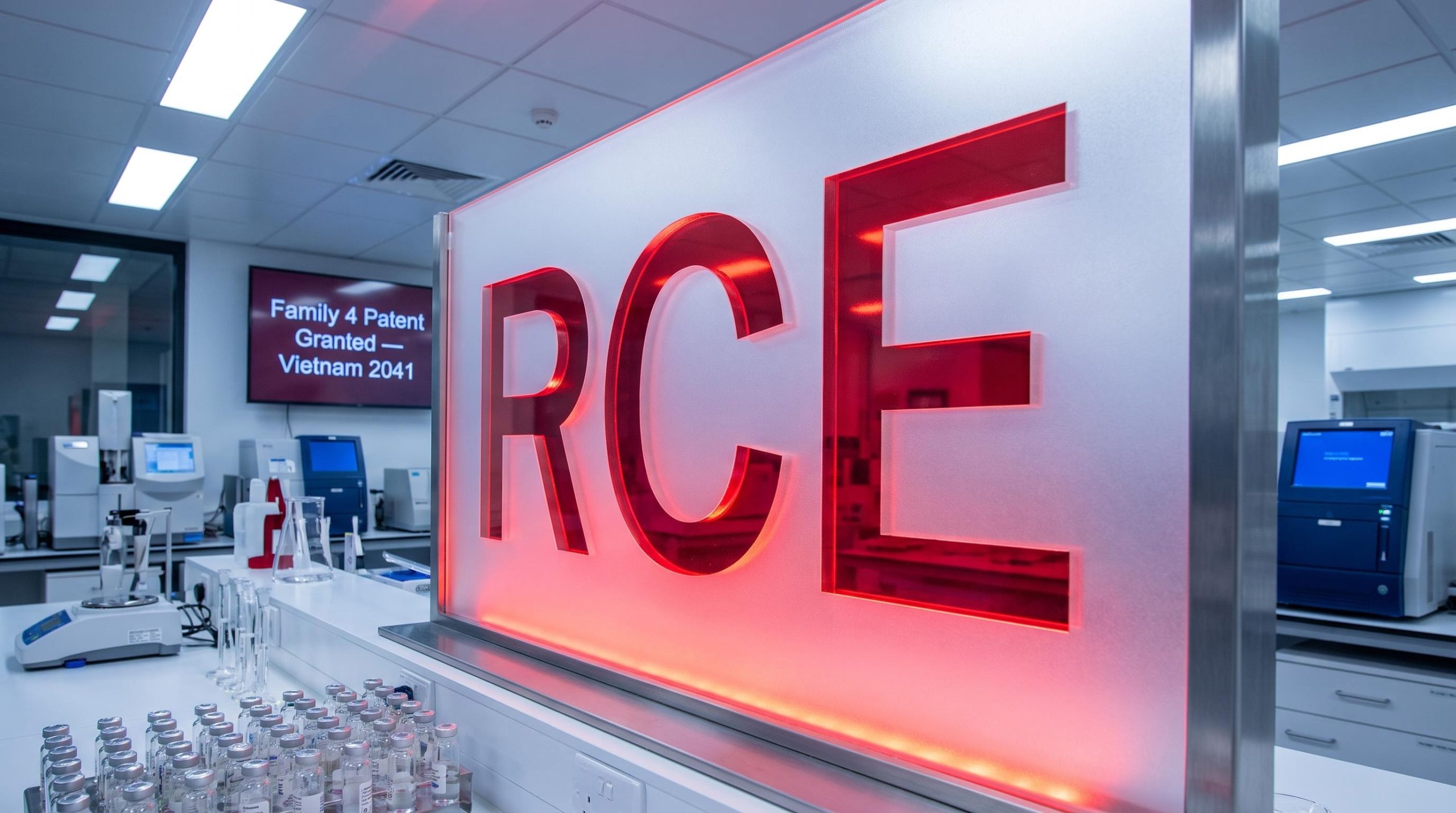
Recce Pharmaceuticals (ASX:RCE, FSE:R9Q) has been granted a Family 4 patent by the Intellectual Property Office of Vietnam (IP Viet Nam) covering its RECCE® anti-infectives, with protection running to 2041.
The grant marks the Company’s eighth Family 4 patent globally. It extends Recce’s intellectual property footprint into one of Southeast Asia’s fastest-growing pharmaceutical markets, a region where antimicrobial resistance is acute. For a clinical-stage developer, securing patent coverage in high-need markets underpins the long-term commercial potential of its platform.
When big ASX news breaks, our subscribers know first
What the Vietnamese patent covers
The granted claims relate to RECCE® 327 (R327) and RECCE® 529 (R529), spanning the preparation, use, administration, and formulation of the anti-infectives. The claims cover:
-
Process for the preparation of RECCE® anti-infectives
-
Use of R327/R529 for the treatment of disease, particularly bacterial infections, viral infections and more
-
Validation drawn from studies across Acute Bacterial Skin and Skin Structure Infections (ABSSSI), Diabetic Foot Infections, Burn Wounds, Lung Infections (including Ventilator-Associated Pneumonia/Hospital-Acquired Pneumonia), Urinary Tract Infections, Gonorrhoea, Influenza and SARS-CoV-2
-
Administration by oral, inhalation, transdermal delivery or by injection (into the bloodstream, intramuscular and/or intravenous)
-
Supply as an aerosol, gel, topical foam or ointment, or impregnation into a dressing for transdermal or transmucosal delivery
Broad claim coverage of this kind strengthens the defensibility of the platform, protecting multiple potential indications and delivery methods under a single patent family in the market.
Why Vietnam matters: a market facing an antimicrobial resistance crisis
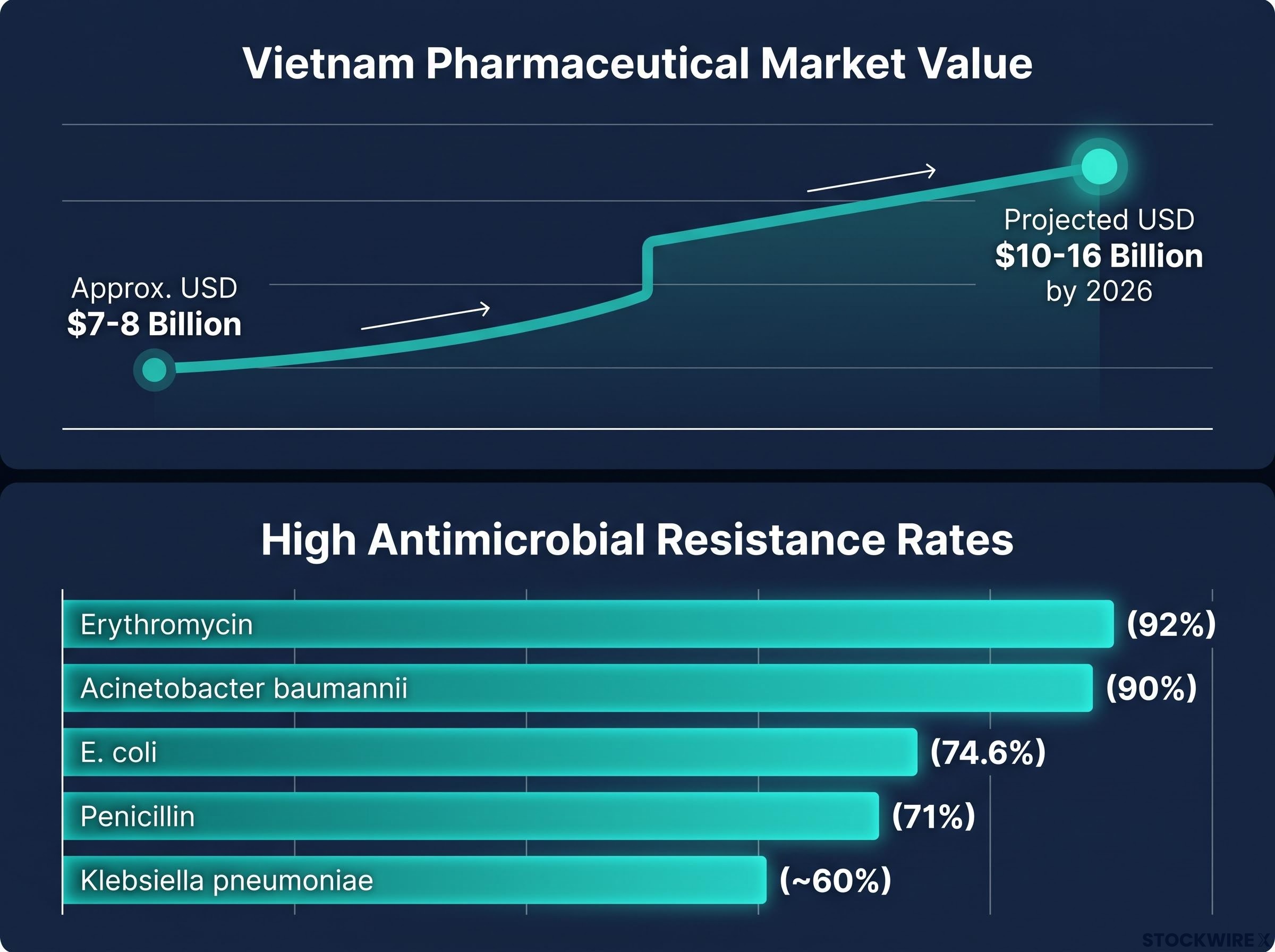
Recce’s intellectual property strategy is focused on protection in strategically important antibiotic markets. Vietnam represents one of Southeast Asia’s fastest-growing pharmaceutical sectors, currently valued at approximately USD $7–8 billion and projected to surpass USD $10 to $16 billion by 2026, according to the announcement.
The market also faces one of the region’s most pressing antimicrobial resistance challenges. The country reports some of the highest antibiotic resistance rates in Asia, reinforcing demand for novel anti-infective therapies.
| Metric | Figure |
|---|---|
| Vietnamese pharmaceutical market value | Approx. USD $7–8 billion, projected to surpass USD $10–16 billion by 2026 |
| Penicillin resistance | 71% |
| Erythromycin resistance | 92% |
| Multidrug resistance (southern hospitals) – E. coli | 74.6% |
| Multidrug resistance – Klebsiella pneumoniae / Acinetobacter baumannii | ~60% / 90% |
These resistance rates, cited in the announcement, underscore the urgent need for therapies capable of addressing multidrug-resistant pathogens, aligning the patent with a genuine and growing market need.
Understanding antimicrobial resistance and Recce’s approach
Antimicrobial resistance (AMR) occurs when bacteria, viruses and other pathogens evolve to withstand the medicines designed to kill them. This renders standard treatments less effective and is recognised as a serious global health threat, as common infections become harder to treat.
Recce describes its pipeline as a New Class of Synthetic Anti-Infectives. Through what the Company terms multi-layered mechanisms of action, its anti-infectives are designed with the potential to overcome the processes bacteria and viruses use to develop resistance, a current challenge facing existing antibiotics.
For investors, patents matter because they protect the commercial value of the underlying platform. Securing coverage across multiple jurisdictions supports future licensing and commercialisation opportunities and helps preserve the exclusivity that gives a drug candidate its market value.
Recce’s growing global IP portfolio
The Vietnamese grant sits within a wider international patent footprint. Recce holds Family 4 patents across several of the world’s largest pharmaceutical markets:
-
Australia
-
Canada
-
China
-
Hong Kong
-
Israel
-
Japan
-
Brazil
Further Patent Cooperation Treaty (PCT) submissions remain in respective stages of review or allowed. Cumulative protection across these markets strengthens the commercialisation case by safeguarding the platform in regions representing substantial addressable demand.
The Hong Kong patent grant extended Family 4 coverage into a key Asian gateway market on the same 2041 timeline, reinforcing the pattern of Recce systematically closing jurisdictional gaps across the Asia-Pacific region ahead of commercialisation.
CEO perspective
James Graham, Chief Executive Officer, Recce Pharmaceuticals
“We welcome the grant of this patent by the Intellectual Property Office of Vietnam, which further strengthens Recce’s global intellectual property portfolio and expands our intellectual property footprint across Southeast Asia. This represents another important milestone in safeguarding our platform technology across strategically important markets in the region. As antibiotic resistance continues to pose a significant global health challenge, expanding our patent coverage supports our strategy to advance and commercialise our novel anti-infective platform worldwide.”
Investment thesis and what comes next
The patent grant adds to a body of platform validation credentials. The World Health Organization (WHO) has added R327, R435 and R529 to its list of antibacterial products in clinical development for priority pathogens. The FDA granted R327 Qualified Infectious Disease Product designation under the Generating Antibiotic Initiatives Now (GAIN) Act, providing Fast Track Designation and 10 years of market exclusivity post approval.
R327 is also included on The Pew Charitable Trusts’ Global New Antibiotics in Development Pipeline as the sole synthetic polymer and sepsis drug candidate in development. Recce wholly owns its automated manufacturing, which supports its current clinical trials.
Recce’s dual Phase 3 programs in Australia and Indonesia are now running concurrently, with the Australian R327G trial recently elevated to pivotal registrational status after Phase 2 results showed 93% primary efficacy at Day 14 across Diabetic Foot Infection patients.
Looking ahead, further PCT submissions remain in progress, with the Company’s strategy focused on protecting and commercialising its anti-infective platform globally. Expanding patent coverage in markets facing acute resistance challenges supports the long-term commercial optionality of Recce’s platform, even where an individual grant carries no immediate financial impact.
Don’t Miss the Next Healthcare Breakthrough
Get breaking ASX healthcare news delivered to your inbox within minutes of release, complete with in-depth analysis already done for you. Join 20,000+ investors who rely on Big News Blast for FREE real-time alerts the moment market-moving announcements drop. Click the “Free Alerts” button to stay ahead of the market.