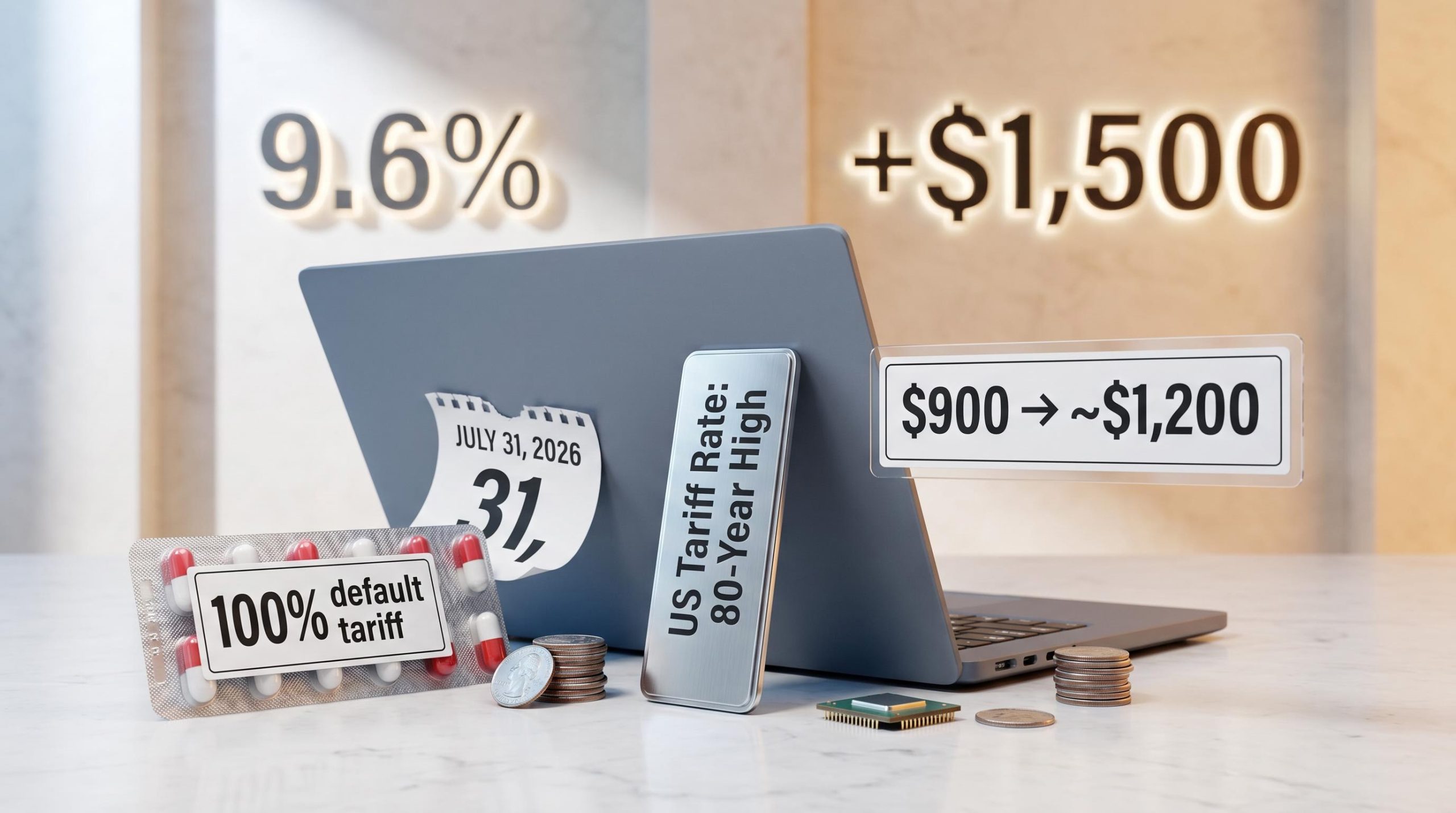
American households face an estimated $600 to $1,500 in added annual costs from the current tariff environment in 2026, and the two categories absorbing the steepest forward pressure are the ones most embedded in daily life: the devices people use to work and communicate, and the medications they take to stay healthy. The April 2, 2026 Section 232 pharmaceutical tariff proclamation and a concurrent AI-driven memory shortage compounding semiconductor cost pressures have created a convergence point where consumer wallets face simultaneous hits from policy and market forces. Implementation dates for pharmaceutical tariffs are set for July and September 2026, and the largest PC manufacturers have already flagged price increases for the second half of this year. What follows maps the specific mechanics driving price increases in electronics and pharmaceuticals, explains who bears the cost and who is temporarily shielded, and identifies practical steps consumers can take before the most significant price movements arrive.
The policy architecture driving prices higher in 2026
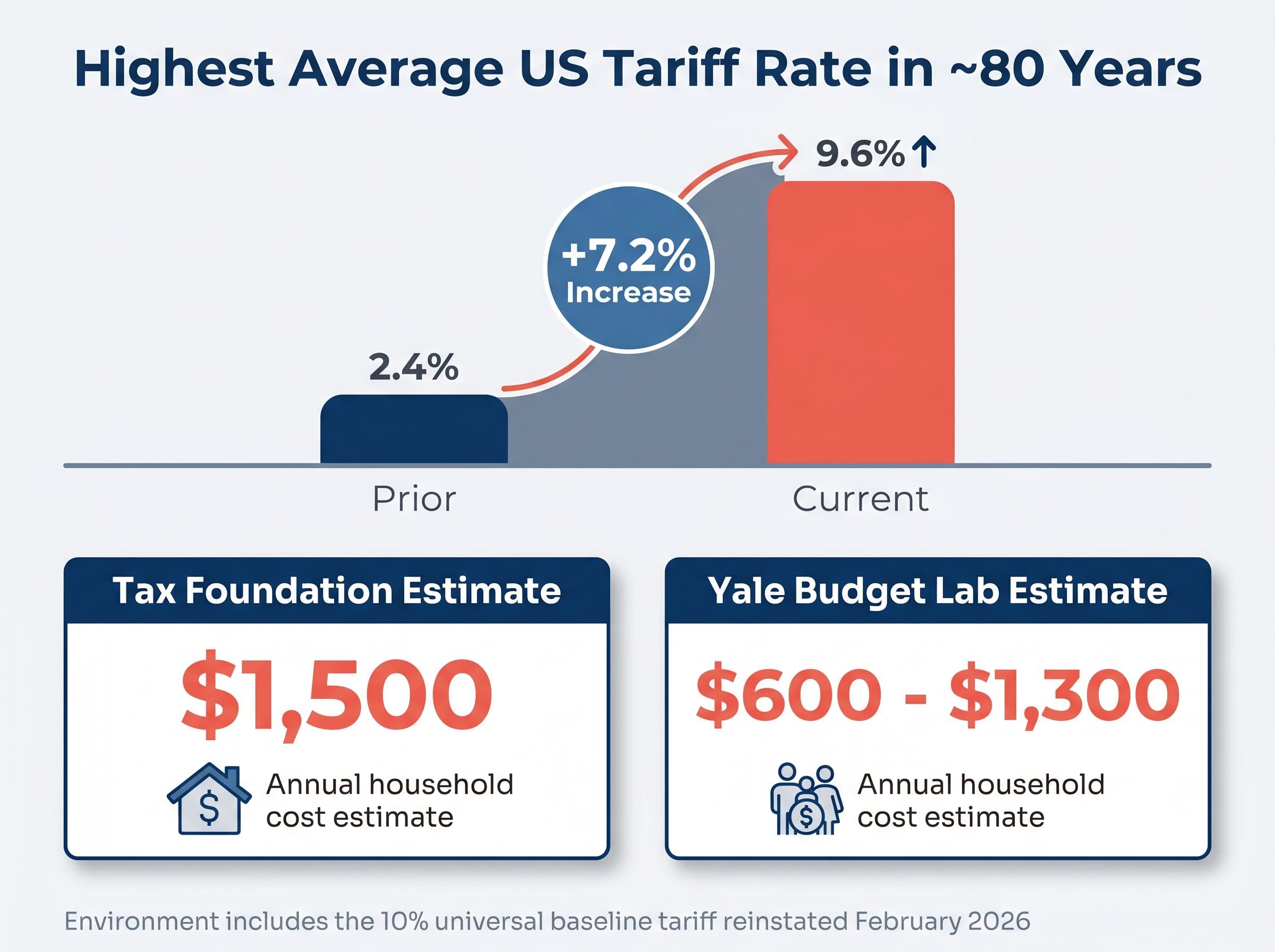
Average US tariff rates have climbed from 2.4% to 9.6%, reaching their highest level in approximately 80 years. This is not a routine adjustment. It represents a structural shift in trade policy with measurable household consequences already visible in the data.
The current environment is a convergence of three distinct mechanisms operating simultaneously:
- A 10% universal baseline tariff, reinstated following the February 2026 Supreme Court ruling
- Sector-specific levies on steel, aluminium, and semiconductors that compound costs across manufacturing supply chains
- The newly signed Section 232 pharmaceutical proclamation, which introduces tariffs on patented drugs and their ingredients for the first time under national security authority
The Tax Foundation estimates the active tariff regime adds approximately $1,500 in costs per US household in 2026. The Yale Budget Lab places the figure at $600 to $1,300 over the same period.
The Yale Budget Lab tariff cost analysis published in April 2026 projects permanent household losses in the $760 to $1,500 range depending on which tariff provisions are made permanent, situating the current policy regime as one of the most consequential trade shifts in decades for American family budgets.
Tariffs function economically as consumption taxes. The cost burden falls on importing companies and passes downstream to consumers rather than being absorbed by foreign exporters. That transmission mechanism is what connects the policy architecture above to the specific price pressures in the two categories examined below.
The full household tariff cost picture extends well beyond electronics and pharmaceuticals: vehicle buyers face confirmed price increases of $2,100 to $3,500 from Ford and GM, and the Yale Budget Lab’s most recently revised estimate places total added household costs at up to $2,600 for 2026, materially above the figures cited in narrower sectoral analyses.
When big ASX news breaks, our subscribers know first
Why your next laptop or console will cost significantly more
The price pressure on consumer electronics is not a single-cause story. Two forces are compounding: tariffs on semiconductor imports are stacking on top of an AI-driven supply squeeze that was already tightening the market before the policy layer arrived.
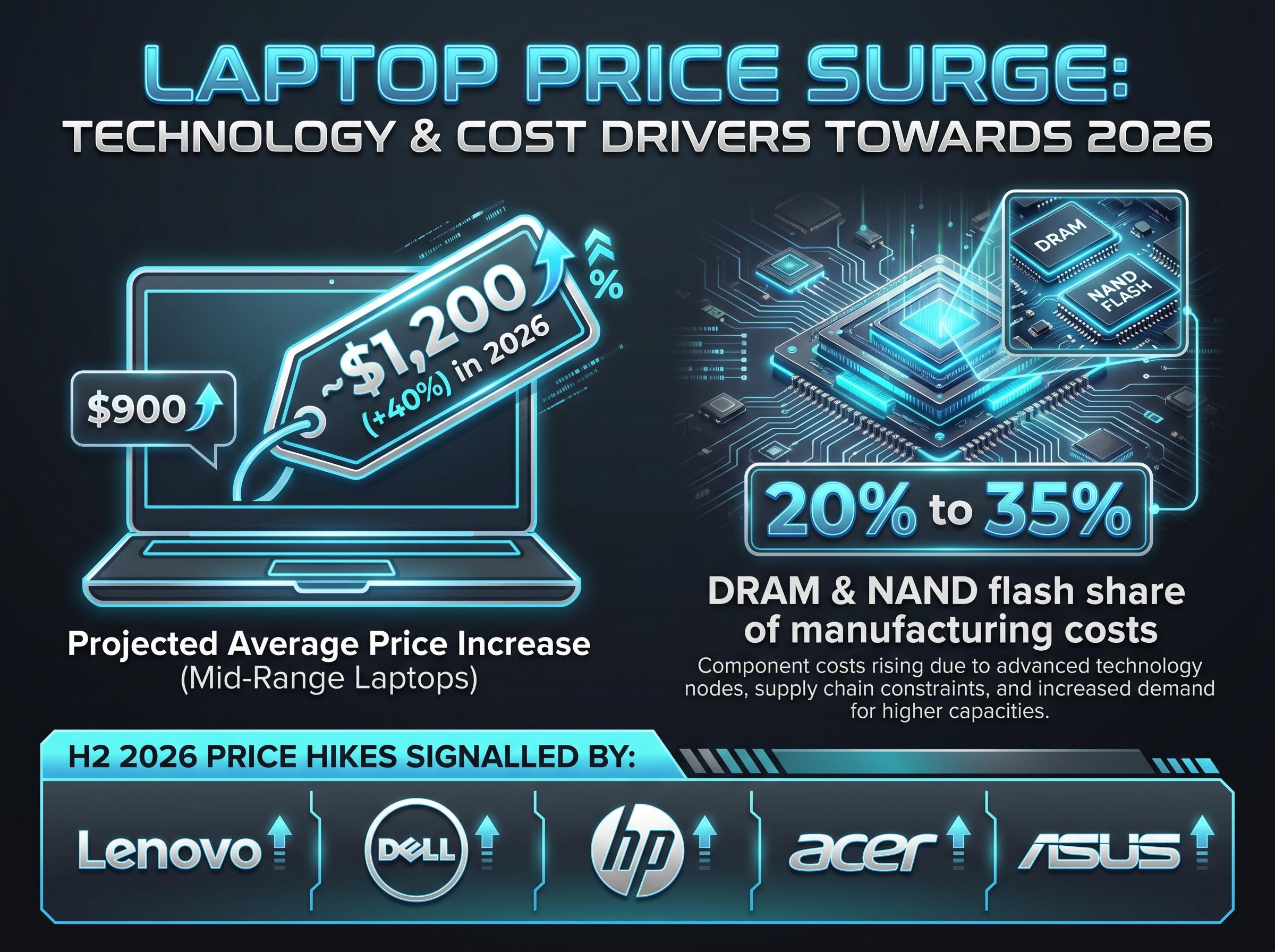
Memory components, specifically DRAM and NAND flash, account for 20% to 35% of manufacturing costs for most consumer electronics. When AI data centre demand diverts chip and memory production away from consumer device supply chains, a shortage dynamic emerges that is entirely independent of trade policy. US tariffs on semiconductors from Chinese suppliers then add a compounding cost layer on top of that existing squeeze. The result is a double-pressure dynamic where neither force alone explains the full price movement.
TrendForce has documented sequential contract-price increases in DRAM and NAND components driven in part by AI-related demand, creating upward pressure on PC bill-of-materials costs and implying end-product price pressure, but has not published a specific retail-dollar forecast for a standard consumer laptop. The five largest PC manufacturers have confirmed warnings of price increases in the second half of this year:
Semiconductor supply chain geopolitics adds a layer of uncertainty that sits above the memory price dynamics: the direction of US-China chip export policy, determined in part by summit-level diplomatic outcomes, can shift component cost trajectories faster than the underlying AI demand story, creating a scenario where tariff-driven price pressure either compounds or partially offsets depending on trade negotiation outcomes.
- Lenovo, Dell, HP, Acer, and Asus have each signalled price hikes in H2 2026
Durable goods prices, including electronics, are projected to rise in 2026. Console pricing has already begun to reflect the broader cost environment.
| Device Category | Current Price Reference | Projected 2026 Price Impact | Primary Driver |
|---|---|---|---|
| Standard Laptop | $900 | Up to ~$1,200 (+40%) | Tariffs + AI memory squeeze |
| PlayStation 5 | Price raised August 2022 (non-US markets) | Further increases possible | Component costs + tariffs |
| Xbox Series X | Price raised 2023 (various markets) | Further increases possible | Component costs + tariffs |
| Nintendo Switch 2 | Launch pricing announced | Further increases possible | Component costs + tariffs |
Waiting for lower prices is unlikely to be rewarded. The supply-side squeeze and the tariff layer are both intensifying into the second half of the year, not easing.
Breaking down the pharmaceutical tariff structure tier by tier
The pharmaceutical tariff signed on April 2, 2026 is not a flat 100% levy on all drugs. The proclamation establishes a tiered rate system with specific carve-outs, and understanding the structure determines whether a given consumer faces significant new costs or remains largely shielded.
Three implementation dates define the rollout:
- April 2, 2026: Section 232 proclamation signed into effect
- July 31, 2026: Tariffs take effect for large pharmaceutical companies
- September 29, 2026: Tariffs take effect for all other covered companies
The rate structure works as follows:
| Company Status | Applicable Tariff Rate | Timeline to Full Rate |
|---|---|---|
| Approved onshoring plan or MFN pricing agreement | 0-20% | Reduced rate maintained while agreement holds |
| Trade-deal country qualification | 15% | Country-specific terms apply |
| No qualifying agreement (default) | 100% | Progressive phase-in, full rate by April 2, 2030 |
According to Reuters reporting, a number of the largest pharmaceutical companies had already signed agreements qualifying them for reduced rates at the time of the announcement. This means the 100% default rate applies primarily to companies that have not engaged in onshoring or pricing negotiations.
Generic drugs and biosimilars are explicitly exempted from the tariffs. For millions of Americans relying on generic medications, this exemption provides meaningful near-term protection. It is not permanent, however. The proclamation includes a one-year reassessment clause, meaning the exemption status will be formally reviewed by approximately April 2027.
Foreign API dependence and the fragility of the generic drug shield
The generic exemption offers real protection today. The question is how durable that protection proves to be, given what sits underneath it.
According to FDA data, more than 80% of active pharmaceutical ingredient (API) manufacturing sites are located outside the United States.
FDA congressional testimony on API supply chains established that the majority of active pharmaceutical ingredient manufacturers supplying the US market operate outside American borders, a structural vulnerability that predates the current tariff regime and makes the generic exemption more fragile than its face value suggests.
That figure alone reframes the generic exemption from comfortable shield to temporary reprieve. The concentration risk sharpens the picture further: China and India together supply more than 70% of the APIs used in US drug manufacturing. The supply chain is not merely foreign; it is geographically concentrated in two countries already subject to elevated trade tensions.
The one-year reassessment, scheduled for approximately April 2027, creates a defined decision window. The outcome could extend the exemption, modify its scope, or subject generics to tariff rates for the first time.
Medication categories facing cost exposure if the exemption lapses
If the exemption is removed or narrowed, the drug categories most dependent on foreign-sourced APIs face the steepest cost exposure. These include antibiotics, blood pressure medications, cancer treatments, and arthritis drugs, all categories where generic formulations account for a significant share of US prescriptions.
The practical implication is straightforward. Consumers relying on generic medications in these categories have a defined window to monitor the reassessment timeline and, if warranted, consult healthcare providers about therapeutic alternatives should specific medications face new tariff-driven cost pressures after April 2027.
Timing your purchases around the tariff calendar
The policy timelines established above translate into a specific action framework for consumers in both categories.
Electronics purchasing: Manufacturer warnings point to H2 2026 as the window when price increases take hold. For consumers with planned device upgrades, three steps merit consideration before that window opens:
- Assess whether a planned purchase can be moved forward before July 2026, when the bulk of manufacturer price adjustments are expected to arrive
- Consider previous-generation or refurbished models at current pricing, which are insulated from forward cost pressures on new manufacturing runs
- Compare retailer inventory now, before manufacturer price adjustments flow through to shelf pricing
Pharmaceutical cost management: The current generic exemption and the two implementation dates (July 31 and September 29, 2026) create a practical decision calendar. Options available now include:
- Requesting generic substitution from prescribing physicians while the exemption remains in place
- Comparing pricing through GoodRx or similar discount platforms
- Inquiring about patient assistance programmes offered by branded drug manufacturers
- Checking mail-order pharmacy pricing, which often undercuts retail for maintenance medications
GLP-1 medications (Ozempic, Wegovy, Zepbound) have been reduced to approximately $300-$350 per month following manufacturer pricing agreements with the administration. Insulin from Novo Nordisk is capped at $35 per month. These negotiated prices represent outcomes of the same onshoring and pricing framework that underpins the broader pharmaceutical tariff structure.
Holding cash during an inflationary period erodes real purchasing power. Considered near-term purchases in affected categories represent a rational financial response to known price trajectories, not panic buying.
The window to act is defined, not indefinite
The most significant price movements in both electronics and pharmaceuticals are concentrated in a defined forward window, not already past. Four dates anchor the timeline:
- April 2, 2026: Section 232 pharmaceutical tariff proclamation signed
- July 31, 2026: Large pharmaceutical company tariffs take effect
- September 29, 2026: All other covered companies face tariffs
- April 2027 (approximate): Generic drug exemption reassessment
The broader tariff environment, with the average US tariff rate at a near-80-year high, represents a structural shift unlikely to reverse quickly. Household cost management in this environment requires ongoing attention rather than a one-time adjustment.
US consumer demand contraction is already appearing in corporate earnings data, with Whirlpool’s North American operating profit collapsing 96% to $6 million in Q1 2026, a datapoint that illustrates how simultaneously rising input costs from tariffs and softening household budgets are creating a margin compression dynamic that will shape how aggressively manufacturers pass through further cost increases.
Individual exposure depends on specifics: which devices are due for replacement, which medications are prescribed, and whether those medications are branded or generic. Targeted action in both categories, informed by the timelines above, is more effective than general concern.
This article is for informational purposes only and should not be considered financial advice. Investors should conduct their own research and consult with financial professionals before making investment decisions. These forward-looking price projections are subject to change based on market developments and policy adjustments.