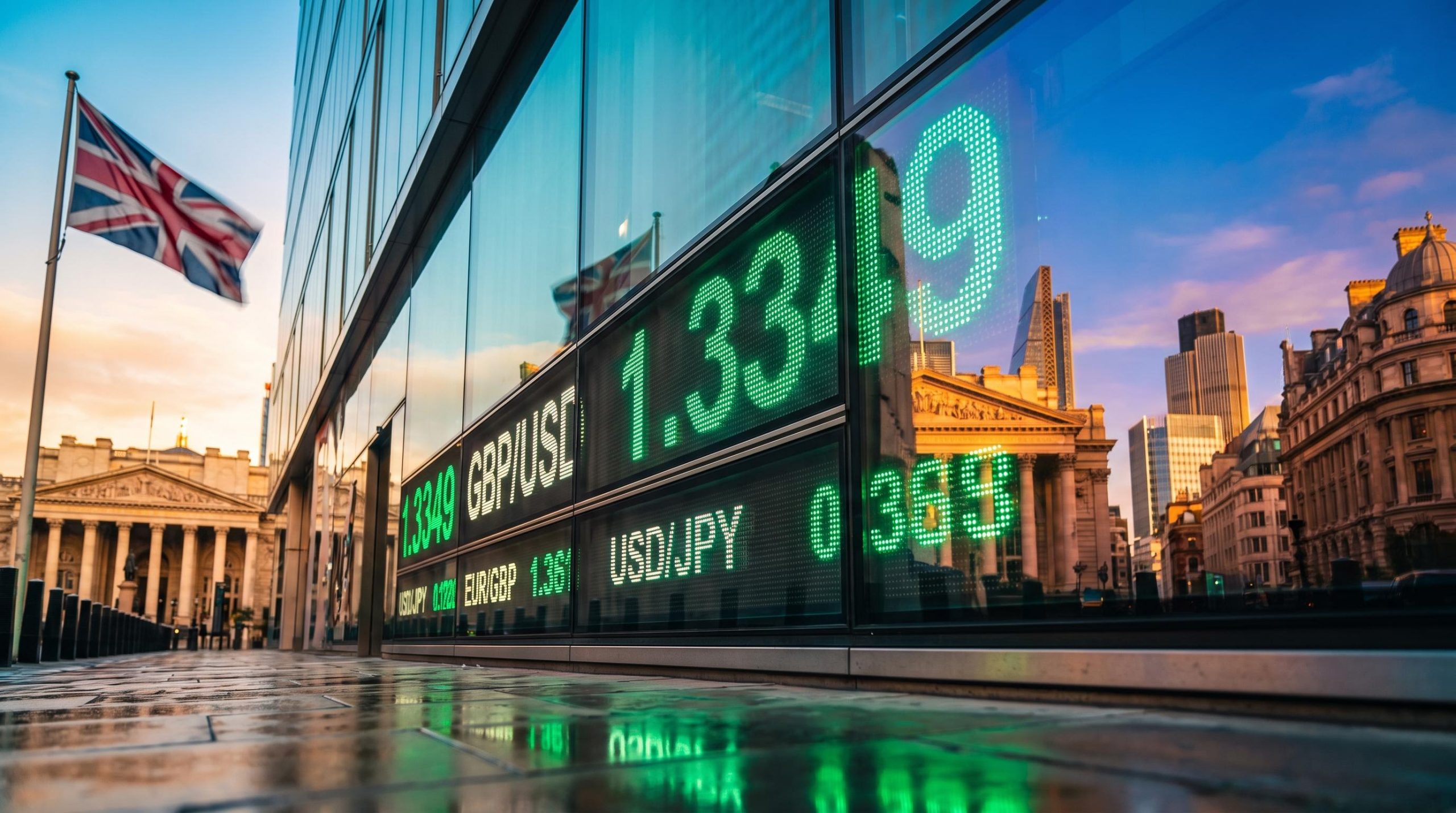
Sterling is not supposed to rally when US inflation runs hot. Yet on Friday, 16 October 2026, GBP/USD pushed through the top of its three-week range to a session high of 1.3349, days after a US consumer price index (CPI) reading that beat expectations.
The explanation lies in rate expectations rather than economic data. Traders have scaled back bets on another Federal Reserve (Fed) hike this month, while a Bank of England (BoE) rate rise in November looks close to fully priced.
That shift in expectations is now the main force behind sterling against the dollar. Any near-term GBP/USD forecast that ignores it will misread the move.
This piece covers three things: which signals are driving the pair right now, how to read the language central bankers use, and which risks could undo the rally before the end of October.
Why did GBP/USD break above its three-week range?
The breakout came in layers. Sterling had been stuck in a band of roughly 1.3180-1.3349, and Reuters had the pound at 1.3177 on 14 October. Two sessions later, the pair had gained more than 1% and cleared the ceiling.
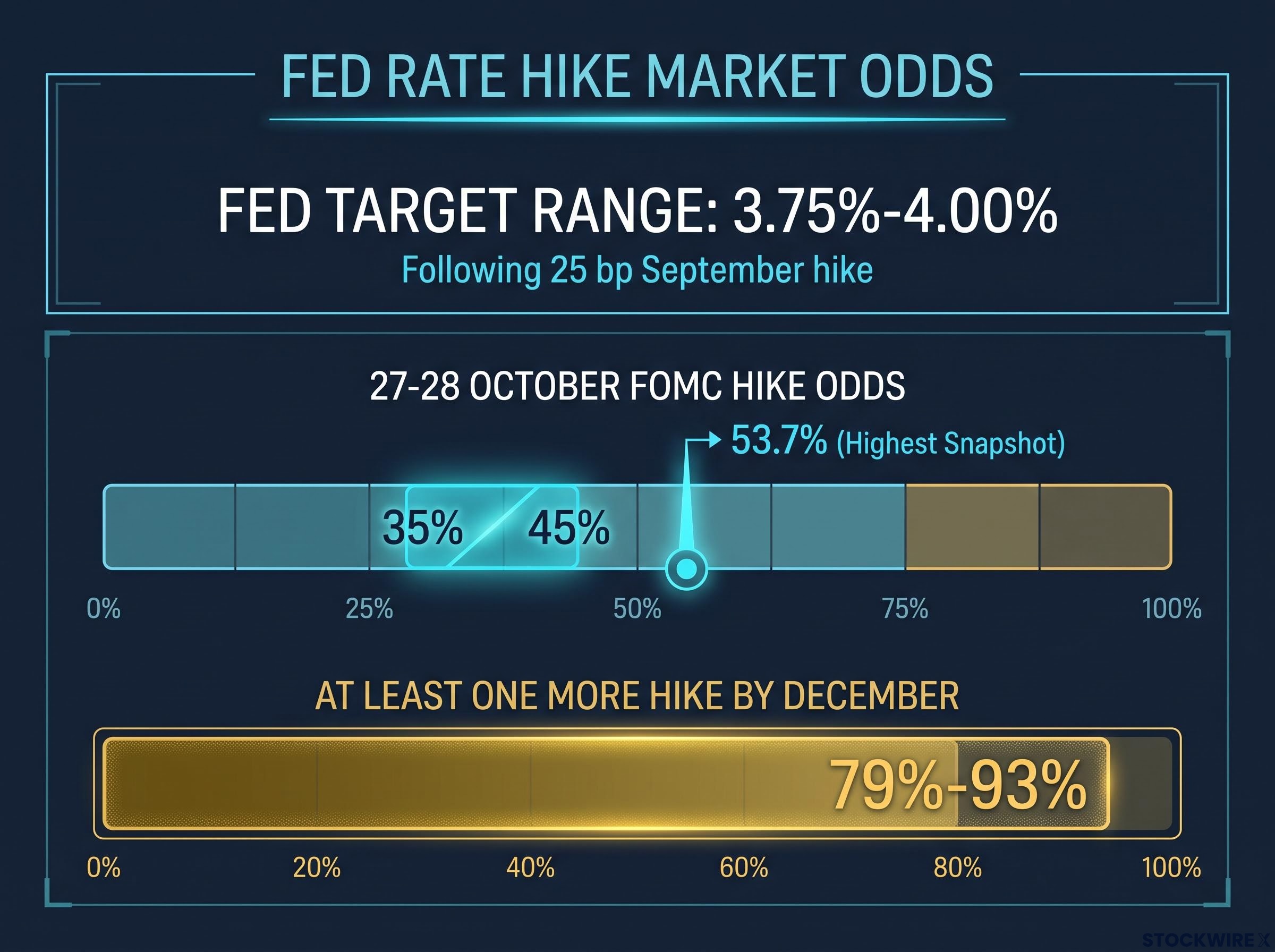
The first push came from Treasury yields. They fell after hotter US CPI data rather than rising, because Fed officials Michelle Bowman and Mary Daly signalled the central bank could wait for more evidence before tightening again. The Fed lifted its target range by 25 basis points to 3.75%-4.00% in September. A basis point is one hundredth of a percentage point.
Fed Chair Kevin Warsh added the next layer at an International Monetary Fund (IMF) forum in Bangkok. He sounded upbeat on the economy and restated his commitment to the inflation target. He gave no hint of further tightening and declined to prejudge the October and December meetings.
| Event | Latest reported position | Note |
|---|---|---|
| Fed target range | 3.75%-4.00% | After the 25 bp September hike |
| 27-28 October FOMC hike odds | About 35%-45% | Other snapshots reached about 53.7% |
| At least one more hike by December | About 79%-93% | Varies by snapshot |
The spread in October odds reflects futures prices measured at different times. It does not reflect different readings of the Fed’s decision.
Futures pricing can swing sharply on a single central bank speech, which helps explain why October hike odds range from roughly 35% to 54% depending on when the snapshot was taken.
What stands out is that the dollar weakened despite the inflation surprise. DBS put the significance this way:
DBS on the dollar The dollar’s inability to hold gains after an upside CPI surprise casts doubt on how durable its rally can be.
BNP Paribas reached a similar view, arguing that yield-driven dollar strength had probably peaked. The message for you is that the market now prices the Fed’s willingness to act, not the data on its own. Fed communication can matter more than any single inflation print.
When big ASX news breaks, our subscribers know first
How do hawks, doves and bond yields move a currency?
A non-committal speech can still move a currency because traders react to expectations about future rates. To see why Warsh’s restraint mattered, it helps to start with the vocabulary.
Hawks, doves and the 2% target
The Fed, the European Central Bank and the BoE all aim to keep inflation near 2%, mainly by adjusting their policy interest rates. Raising rates is called tightening. Cutting them is called easing.
Hawks are policymakers who favour higher rates and strict inflation control. Doves favour lower rates and will tolerate inflation running slightly above 2%.
Policymakers face a blackout on public comments for a few days before each meeting. That is why traders scrutinise every remark from a chair for tone in the days before the blackout begins.
Currencies respond to the gap between the expected rate paths of two central banks, known as the rate differential. If the Fed is expected to pause while the BoE hikes, that gap moves in sterling’s favour, even if neither bank has done anything yet.
Why falling yields can cut either way
Global bond yields are falling for five reasons:
- Reduced expectations of an imminent Fed hike are pulling short-dated Treasury yields lower.
- Investors are buying bonds after a sharp global selloff, and the US 10-year yield hit a three-week low of 5.1267% on 15 October.
- Growth worries are rising as energy costs and expensive borrowing weigh on activity.
- A lower expected US policy path is eroding the dollar’s yield advantage.
- Firmer equities are reducing demand for the dollar as a defensive asset.
The type of decline matters. An orderly fall driven by softer Fed expectations tends to weaken the dollar. A disorderly fall driven by recession fears or financial stress can lift it, as investors seek a safe haven.
The bond-to-currency pipeline normally runs one way, with higher Treasury yields attracting capital into the dollar, which is why falling yields after a hot CPI print look so unusual.
History shows how domestic factors shape the sterling side of this trade.
January 2019 After the Fed signalled patience, the dollar fell, yet sterling held near $1.3071 because Brexit risk capped its gains.
You can apply a simple test the next time a central banker speaks: a pause weakens the dollar only when yields fall in an orderly way.
Is the Bank of England about to hike while the Fed pauses?
The case for a November BoE hike looks strong on paper. Bank Rate sits at 3.75%, and the September vote was 6-3 to hold, with three members wanting an immediate increase. A Reuters poll found 54 of 63 economists expect a 25 bp rise to 4.00%.
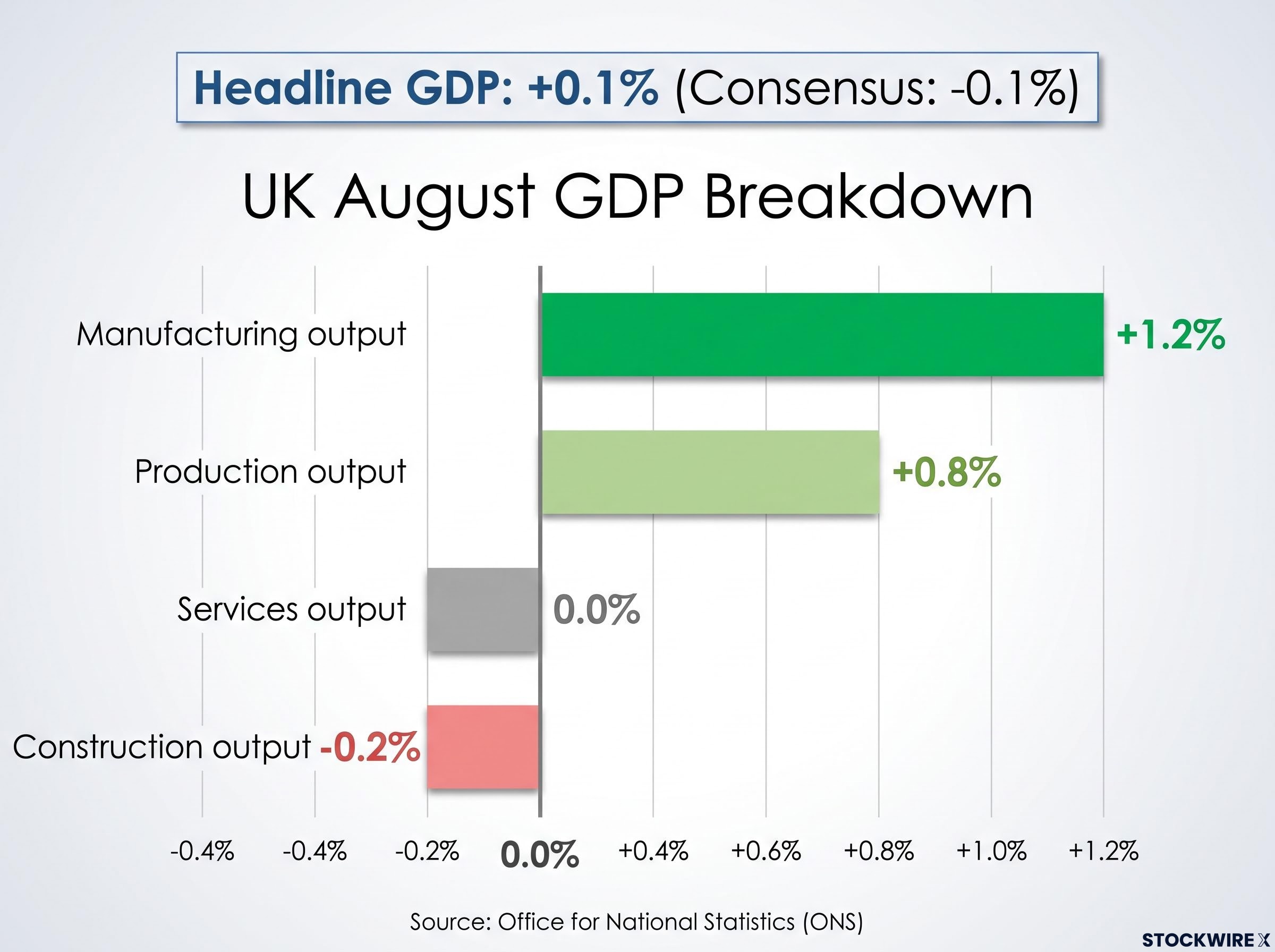
UK August GDP added support by beating forecasts.
| Measure | Latest figure | Consensus |
|---|---|---|
| Monthly GDP, August | +0.1% | -0.1% |
| Production output | +0.8% | Not reported |
| Manufacturing output | +1.2% | Not reported |
| Services output | 0.0% | Not reported |
| Construction output | -0.2% | Not reported |
Governor Andrew Bailey then complicated the picture. Speaking in Bangkok, he said it was too early to form firm views on second-round inflation effects, meaning energy costs spreading into wages and other prices, and described the signs so far as “quite subdued”. The pound barely moved. FXStreet’s Speechtracker scored the speech 6.2/10, below his 6.4 average.
Analysts disagree mainly about whether inflation will persist:
The hawkish reading
- Energy prices could feed into wages and services inflation.
- Three Monetary Policy Committee members already voted to hike.
- Most economists polled expect a November move.
The cautious reading
- Bailey sees second-round effects as subdued so far.
- ING‘s Francesco Pesole judges pricing of about 100 bp of hikes by July 2027 as too aggressive, with one or two hikes more likely.
- HSBC warns weak labour demand and sluggish private-sector momentum could weigh on sterling.
The GDP beat was just 0.2 percentage points, with flat services. For you, that means the data supports a hike but does not force one, so sterling’s gains rest more on policy expectations than on UK economic strength.
What could reverse the sterling rally?
The consensus currently looks settled: the Fed pauses and the BoE hikes. That leaves very little room for surprises, and four risks sit within the next few weeks:
- US inflation data. A hot print could push the Fed into an October hike. Goldman Sachs already expects one, and BofA Global Research expected hikes in both October and December.
- The 27-28 October FOMC meeting. Futures still imply a substantial chance of a hike by December, which could cap any upside.
- The 28 October UK Budget. Currency Solutions estimates a fiscal gap of roughly £20 billion, and Reuters reports UK borrowing costs as the highest in the G7.
- A risk-off shock. Safe-haven demand could lift the dollar even as yields fall.
Gilt yields carry particular risk. High yields support sterling when they reflect credible BoE tightening, but they hurt it when they carry a fiscal risk premium, meaning the extra return investors demand to hold the debt of a government whose finances they doubt.
HSBC’s warning Sterling could struggle if the US economy proves more resilient than the UK’s.
Warsh’s refusal to give guidance adds volatility. Positioning is another constraint: with so much already priced, further gains need a stronger UK signal or softer US data. Treat any outlook for the pair as conditional on the Fed decision and the Budget.
Reading the next move in GBP/USD: what to watch and what to discount
The break above 1.3349 reflects changing expectations for the rate differential: bets on a Fed pause against a likely BoE hike in November. It does not show a clear change in either economy.
That gives you a short watchlist:
- The 27-28 October FOMC decision
- The 28 October UK Budget
- The next US and UK inflation prints
- The tone of Warsh and Bailey commentary
A Fed pause weakens the dollar only for as long as markets believe in it. Sterling’s ability to benefit depends on risks at home, much as Brexit limited the pound’s gains in 2019.
Investors exploring why the dollar fails to rally on yields can read our deep-dive into the dollar’s yield paradox, which covers the fiscal risk premium reading.
Past performance does not guarantee future results. Financial projections are subject to market conditions and various risk factors. These statements are speculative and subject to change based on market developments.
This article is for informational purposes only and should not be considered financial advice. Investors should conduct their own research and consult with financial professionals before making investment decisions.