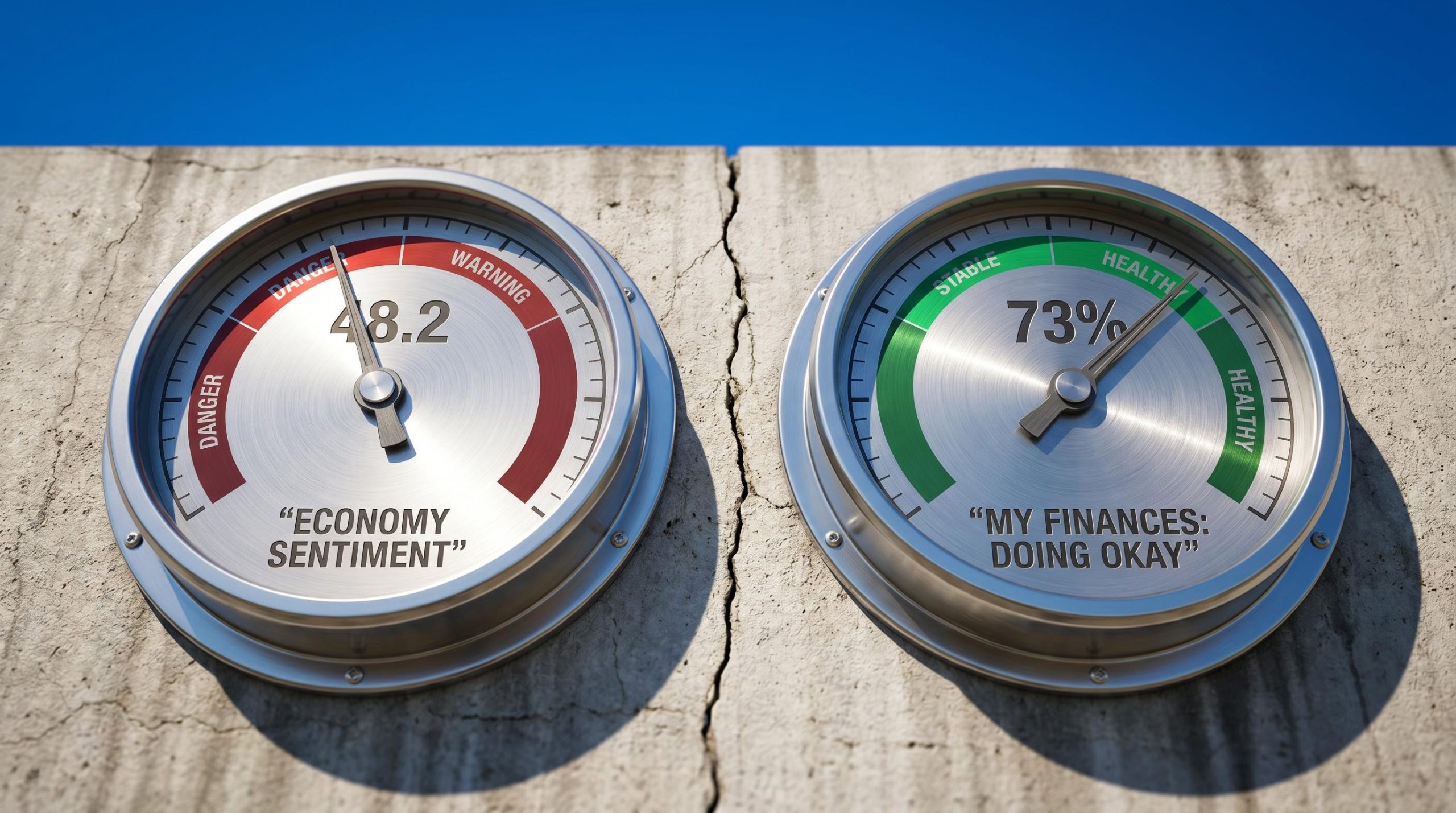
Why the Record-Low Consumer Sentiment Reading May Not Mean Recession
34 mins ago

Goldman Sachs projects that Microsoft, Alphabet, Amazon, and Meta alone will direct nearly US$500 billion toward AI infrastructure in 2026. Four of those companies sit inside a single ASX-listed ETF that any Australian investor can buy before lunch.
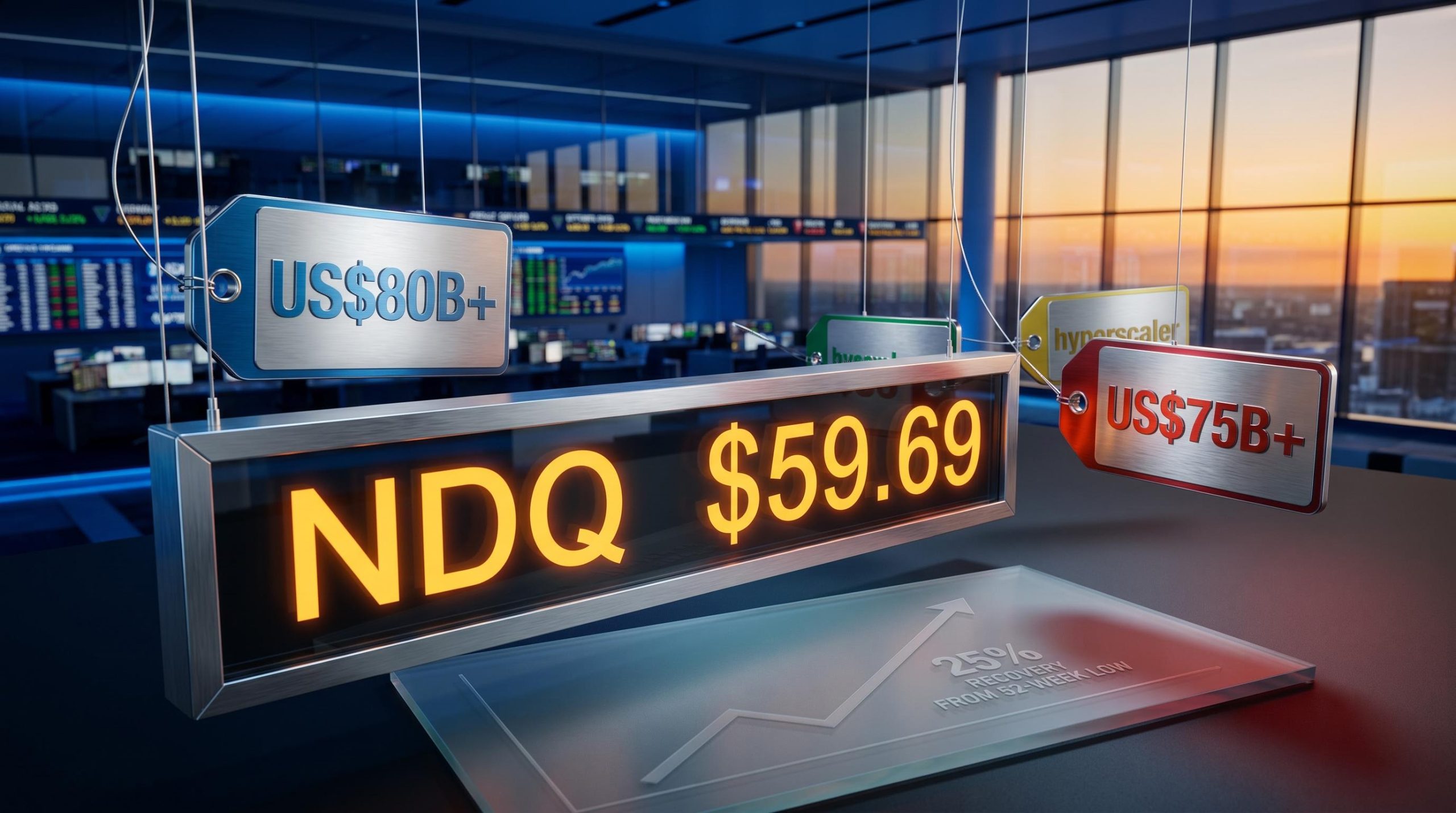
The BetaShares Nasdaq 100 ETF (ASX: NDQ) has climbed roughly 25% from its 52-week low and is trading near record highs as of May 2026, while the companies it holds are simultaneously reporting the largest corporate capital expenditure programmes in history. For Australian investors, the question is not whether the AI build-out is real. It is whether the fund’s current price already reflects it.
What follows is an examination of how NDQ is structured, why its top holdings are central to the AI infrastructure cycle, what the valuation and risk picture looks like at current levels, and what investors need to weigh before deciding whether to add exposure today.
The numbers are no longer projections buried in analyst models. They are line items in quarterly earnings releases, confirmed by the chief financial officers who approved them.
Goldman Sachs estimates nearly US$500 billion in AI infrastructure spending for 2026 across the broader industry, with these four hyperscalers accounting for the largest individual commitments.
The scale of hyperscaler capex commitments extends beyond the Goldman Sachs US$500 billion estimate cited in early 2026 projections; Q1 2026 alone saw Amazon, Microsoft, Alphabet, and Meta collectively spend $130 billion, with full-year 2026 combined guidance now tracking toward approximately $725 billion and a $1 trillion annual run rate emerging as a credible 2027 trajectory.
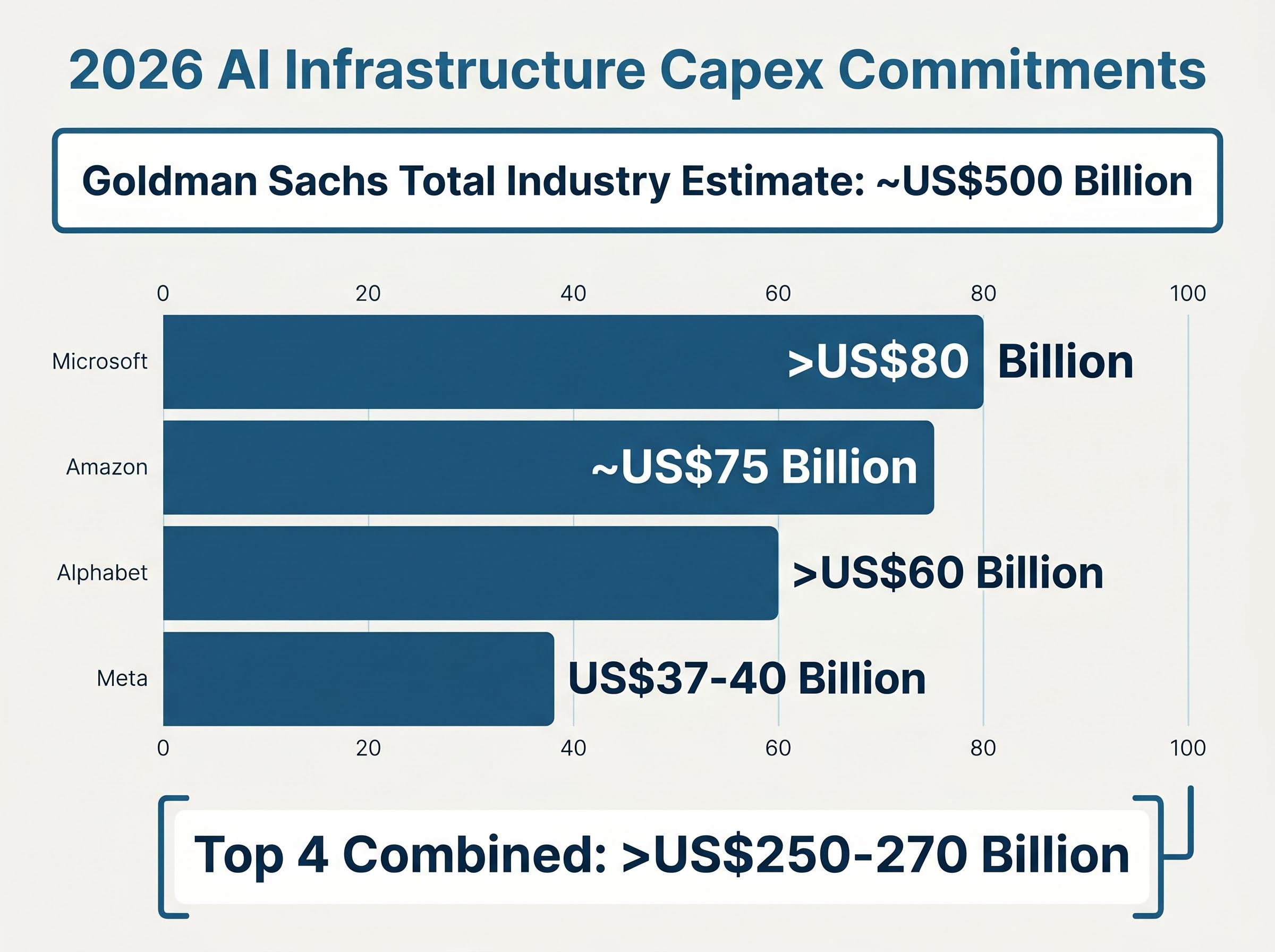
Combined, these four companies are tracking well north of US$250-270 billion in 2026 capex alone. Every one of them is a top holding inside NDQ, which held $8.59 billion in funds under management as at 18 May 2026. BetaShares notes that AI-related stocks now comprise well over half of the Nasdaq 100’s index weight.
The spending is real. The access is straightforward. The question that shapes the rest of this analysis is whether the growth trajectory justifies the price investors are being asked to pay today.
The Nasdaq 100 index holds the 100 largest non-financial companies listed on the Nasdaq exchange, weighted by market capitalisation and rebalanced annually. NDQ passively replicates that index, giving ASX investors exposure to the full basket through a single trade.
The companies driving the AI thematic weight are concentrated at the top:
The top 10 holdings represent approximately 50% of the index weighting. That concentration is both the feature and the risk: it delivers outsized exposure to the AI cycle’s primary beneficiaries, but it also means a single-company shock ripples through half the fund.
| Feature | Detail | Investor implication |
|---|---|---|
| Management fee | 0.48% per annum | Cost-efficient for passive exposure to 100 stocks |
| Currency | Unhedged to AUD/USD | AUD appreciation reduces AUD-denominated returns |
| Distributions | Semi-annual (January and July) | Income is periodic, not monthly |
| Sector exclusion | No financial sector companies | No bank or insurance exposure from this vehicle |
The fund trades on the ASX with intraday pricing and exchange liquidity, eliminating the need for a US brokerage account, foreign currency conversion, or individual position management across dozens of holdings.
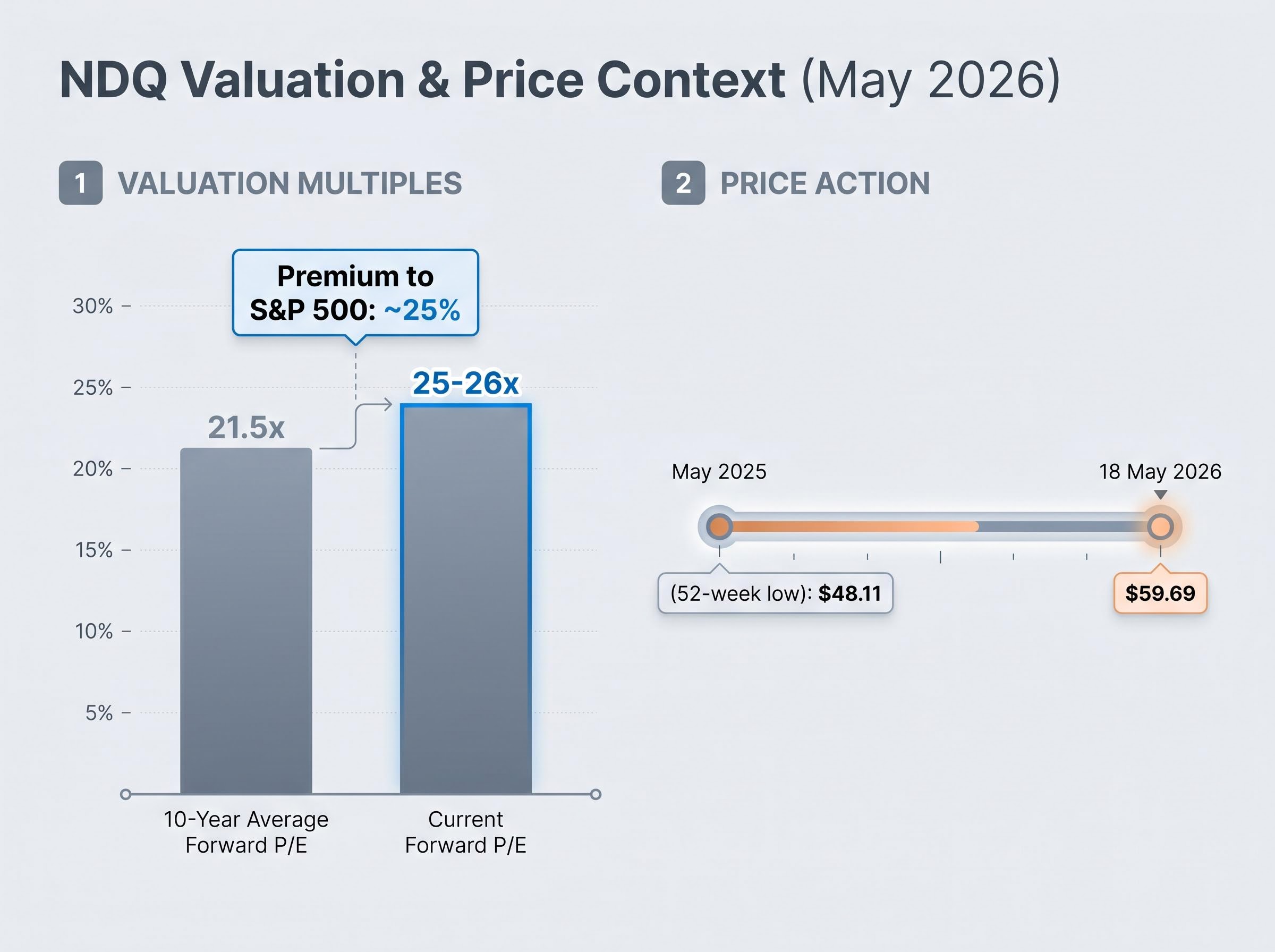
NDQ’s unit price has more than doubled over five years. As at 18 May 2026, it stood at $59.69, approximately 25% above its 52-week low of $48.11 recorded in May 2025. The recovery tracked the acceleration of AI capex announcements through late 2025 and into 2026.
The performance is genuine. So is the price at which new investors are being asked to participate.
A Livewire Markets strategist stated in March 2026 that the AI data centre build-out will “anchor earnings growth for the Nasdaq 100 through at least 2027.”
The valuation context matters:
| Metric | Current level | Historical context |
|---|---|---|
| Forward P/E | 25-26x | 10-year average: 21.5x |
| 52-week range | $48.11-$59.69 | Trading near all-time high |
| Premium to S&P 500 | ~25% | Consistent with historical average premium |
Exceptional past performance arriving at elevated starting valuations creates a more complex outlook. The next five years begin from a different price than the last five.
Nasdaq 100 valuation risk deepens when momentum indicators are examined alongside fundamental multiples, with the index having surged approximately 18% from its April lows to a defined resistance zone where technical overbought signals coincide with earnings expectations that must be validated by Magnificent Seven results rather than guided forecasts alone.
The same structural features that drive NDQ’s outperformance in favourable conditions are the features that amplify losses when conditions change. Four distinct risk categories warrant attention.
NDQ is unhedged. Every movement in the AUD/USD exchange rate flows directly through to Australian investors’ returns.
The AFR (5 March 2026) illustrates the mechanics: if the AUD rises from 0.70 to 0.75 while the Nasdaq 100 is flat in USD terms, an Australian NDQ investor would see approximately a 7% fall in AUD-denominated returns.
The AUD traded near US$0.69-0.70 in early 2026, up from approximately US$0.65 in mid-2025. The RBA’s February 2026 Statement on Monetary Policy noted the AUD had “strengthened modestly against the US dollar since mid-2025.” That appreciation has already partially dampened NDQ’s USD-driven gains for Australian holders over recent quarters.
With the top 10 holdings accounting for roughly 50% of the index, NDQ behaves more like a focused portfolio than a broad diversifier. A regulatory action, earnings miss, or supply chain disruption at a single company can move the entire fund. The Bloomberg report (7 February 2026) on new US export controls restricting certain Nvidia AI accelerators to China illustrates this dynamic, although analysts noted limited impact on global dominance given non-China demand.
Index-level concentration risk in AI-heavy benchmarks is compounding in a less visible way than headline volatility suggests, with large opposing moves by individual winners and losers cancelling each other out at the index level while leaving investors exposed to single-stock drawdowns that diversification metrics do not capture.
The valuation premium adds a separate layer of risk. Entering at 25-26x forward earnings, when the 10-year average sits at 21.5x, reduces the margin of safety. If earnings growth slows or multiples compress, investors who bought near the top of the range absorb the contraction first.
The fund also excludes all financial sector companies, meaning it provides no exposure to US banks, insurers, or payment networks, a consideration for investors who expect NDQ to serve as broad US equity exposure.
An exchange-traded fund is a listed investment vehicle that holds a basket of securities and trades on the stock exchange like an ordinary share. For NDQ, understanding the structure clarifies why it behaves differently from a managed fund or a direct shareholding.
How an NDQ trade works on the ASX:
The 0.48% annual management fee covers passive replication of 100 stocks with intraday ASX liquidity. BetaShares describes NDQ as “a convenient way for Australian investors to gain exposure to the mega-cap leaders of the AI revolution” (BetaShares, 11 February 2026).
ASIC’s Regulatory Guide 282 on Exchange Traded Products establishes the disclosure and conduct obligations that ETF issuers like BetaShares must meet, covering how product issuers are required to communicate risks including concentration, currency exposure, and pricing mechanics to Australian retail investors.
“Unhedged” means the fund does not use financial instruments to offset AUD/USD currency movements. A hedged alternative would aim to neutralise currency impact, delivering returns closer to the USD performance of the underlying index. NDQ’s unhedged structure means Australian investors are making a dual bet: on the Nasdaq 100’s performance in USD, and on the AUD/USD exchange rate.
Key differences from direct US equity ownership:
The bull case rests on verifiable commitments, not speculation. Nvidia management indicated demand visibility extending “well into calendar 2027” (CNBC, 22 February 2026), with GPU supply for data centre customers expected to grow more than 50% year on year in 2026 (Reuters, 14 March 2026). The hyperscalers’ combined capex programmes are the largest in corporate history, and they are accelerating.
Positioning the AI investment cycle in historical context reveals that US IT hardware and software spending reached a record 4.9% of GDP in Q1 2026, surpassing both the dot-com era peak of approximately 4.2% and the cloud buildout peak of approximately 3.8%, a comparison that sharpens the question of whether current Nasdaq 100 valuations reflect a durable productivity shift or a capital cycle at its upper bound.
Bull case:
Caution case:
Motley Fool Australia (8 April 2026) argues that “earnings growth in cloud and AI services keeps the Nasdaq 100’s forward P/E around its 10-year average premium to the S&P 500,” framing current valuations as historically consistent rather than anomalous.
Livewire Markets (18 March 2026) describes the Nasdaq 100 as “the de facto AI infrastructure index” for Australian ETF investors. The $8.59 billion in funds under management reflects the scale of Australian investor conviction already embedded.
NDQ is not a diversified all-weather holding. It is a concentrated position on a specific technology cycle, and the appropriate sizing depends on an investor’s existing portfolio composition, time horizon, and view on the AUD/USD trajectory.
The AI infrastructure spending cycle is substantiated by company-level data, not narrative alone. NDQ gives Australian investors genuine, low-friction access to its primary beneficiaries through a single ASX-listed trade.
Elevated valuations, unhedged currency exposure, and top-10 concentration mean the fund carries risks that require active awareness rather than passive assumption. A 25-30% premium to long-term average valuations and a strengthening AUD are headwinds that five-year performance charts do not reveal.
Investors who understand what they own, size the position appropriately within a diversified portfolio, and hold across a full cycle are better positioned than those who buy on the headline and sell on the correction. Reviewing the BetaShares official NDQ fund page for current NAV, holdings, and the latest factsheet is a practical first step before making any investment decision.
This article is for informational purposes only and should not be considered financial advice. Investors should conduct their own research and consult with financial professionals before making investment decisions. Past performance does not guarantee future results. Financial projections are subject to market conditions and various risk factors.
The BetaShares Nasdaq 100 ETF (ASX: NDQ) is a passively managed ASX-listed fund that replicates the Nasdaq 100 index, giving Australian investors exposure to the 100 largest non-financial companies on the Nasdaq exchange, including major AI and technology firms like Nvidia, Microsoft, Amazon, and Alphabet, through a single trade.
Because NDQ is unhedged, movements in the AUD/USD exchange rate flow directly through to Australian investors' returns; if the AUD rises while the Nasdaq 100 is flat in USD terms, Australian holders see their AUD-denominated returns fall, as illustrated by the AUD strengthening from approximately US$0.65 to US$0.70 between mid-2025 and early 2026.
The key risks include a forward P/E of approximately 25-26x, which sits well above the 10-year average of 21.5x; unhedged AUD/USD currency exposure that can dampen returns if the Australian dollar strengthens; and top-10 holding concentration at roughly 50% of the index, meaning a single-company shock can ripple through a large portion of the fund.
Microsoft, Alphabet, Amazon, and Meta are collectively tracking well above US$250 billion in 2026 capex alone, with Goldman Sachs estimating nearly US$500 billion in AI infrastructure spending across the broader industry for 2026, and Q1 2026 alone seeing these four companies spend a combined US$130 billion.
NDQ charges a management fee of 0.48% per annum, which covers passive replication of 100 stocks with intraday ASX liquidity, eliminating the need for a US brokerage account, foreign currency conversion, or individual position management across dozens of holdings.