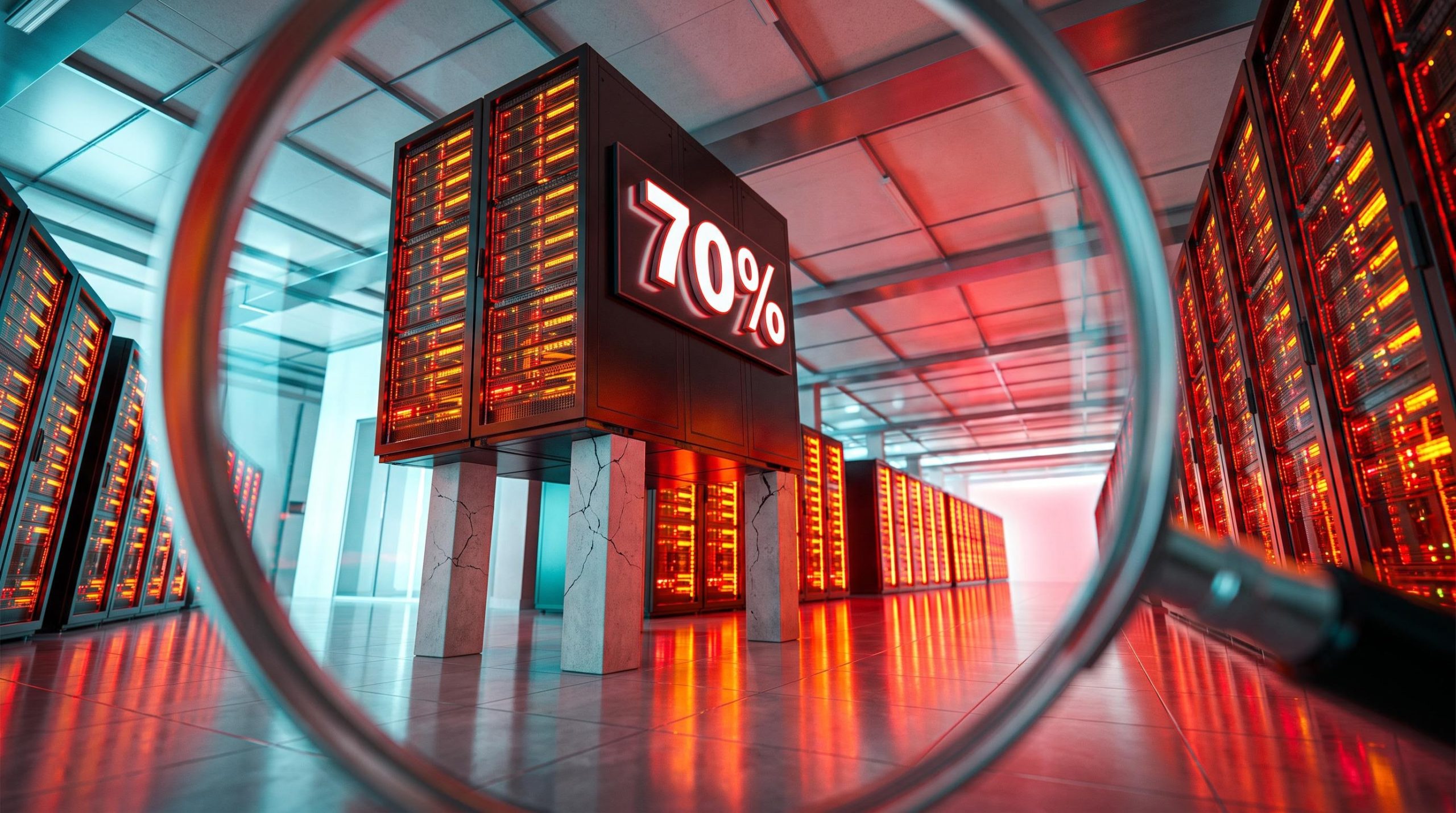
Roughly $720-$745 billion of AI spending is planned for 2026 by Microsoft, Alphabet, Amazon and Meta. According to one of Wall Street’s best-known sceptics, most of the AI revenue that justifies it comes from just two customers, and neither one makes a profit. The spenders look strong. The question is whether they are standing on a weak base.
The AI bubble risk debate has moved on from whether the technology is real. The questions now are who pays for it, and with what money.
Hyperscalers (the giant cloud companies that rent out computing power) have issued more than $180 billion of US dollar bonds so far this year. As of October 2026, their spending guidance is still rising.
Here is a map of the bear case and the bull case. You will also see why timing, more than direction, may be the risk that matters most to your portfolio.
How much of the AI boom rests on two unprofitable customers?
Steve Eisman, the Neuberger Berman investor made famous by The Big Short, has spent the past few months making a blunt argument in podcasts and media appearances.
Steve Eisman, Neuberger Berman “70 per cent of [the hyperscalers’] AI revenue is from OpenAI and Anthropic.”
By his account, that equals roughly 25-35% of the hyperscalers’ total cloud revenue. Eisman calls OpenAI a “single point of failure.” AI itself would not need to fail to cause damage. One customer failing would be enough.
The financials give that claim some weight. One analysis put OpenAI’s Q2 2026 revenue at $6.7 billion against costs of $12.3 billion, although these figures vary depending on how revenue and costs are defined. Comparable Anthropic figures, and full funding data for either lab, are not publicly available.
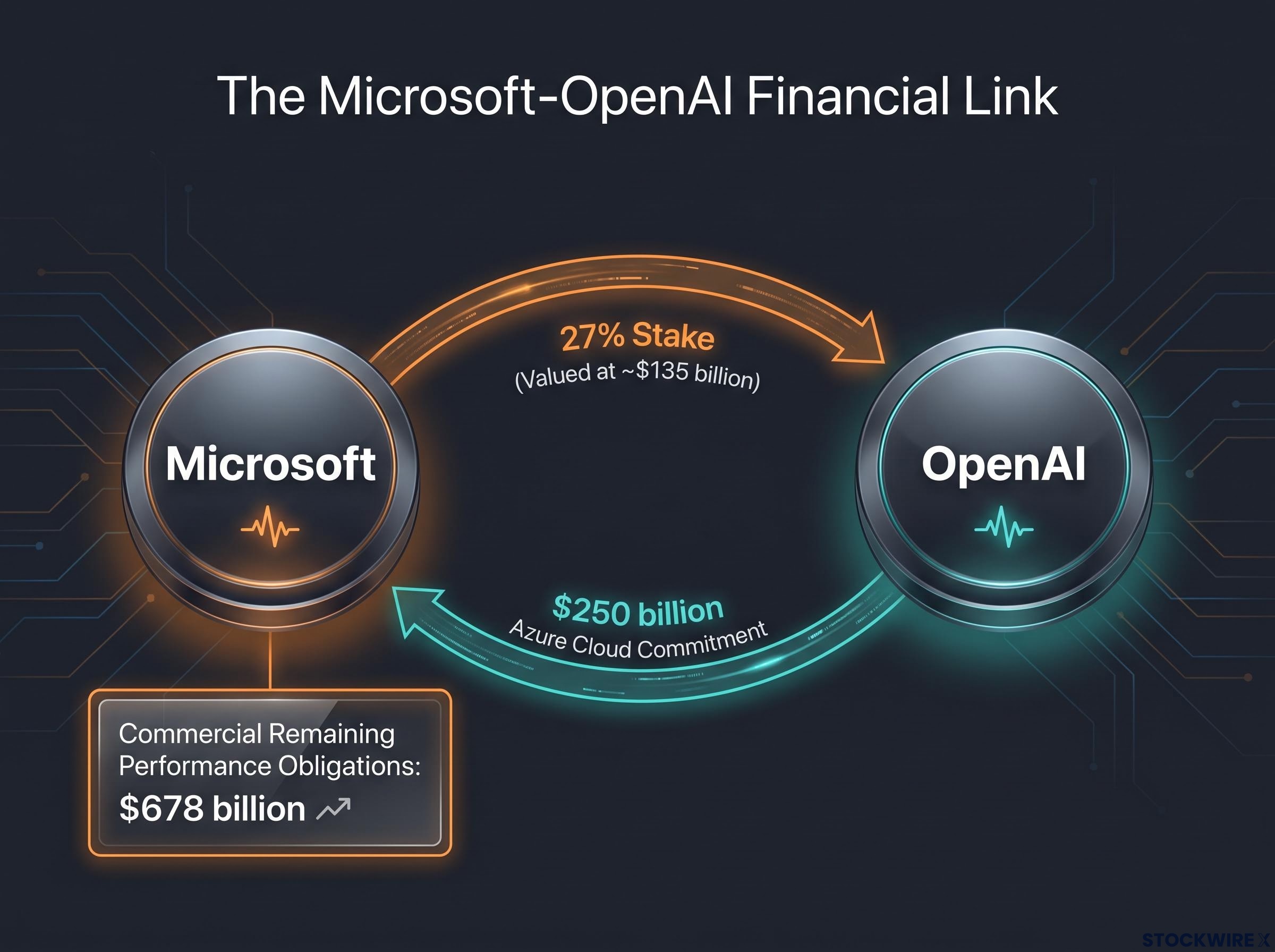
The Microsoft-OpenAI relationship shows how tightly these companies are now linked:
- Microsoft holds a stake of about 27% in OpenAI, valued at around $135 billion
- In return, OpenAI has committed to $250 billion of additional Azure cloud services
- Microsoft’s commercial remaining performance obligations (contracted revenue not yet recognised) reached $678 billion
How circular is the financing?
FactSet has flagged that hyperscalers are relying more on customer prepayments, finance leases and long-term contracts. A prepayment is cash a customer pays upfront for future services. A finance lease lets a company use an asset while paying for it over time, much like a loan. In practice, AI customers are helping to fund the infrastructure they depend on.
No source frames this as a formal vendor-financing scheme, where a seller lends its customer the money to buy from it. Still, if the concentration claim holds, owning hyperscalers through an index fund is partly a bet on how long two private labs can keep raising money, however diversified the parent companies look.
Owning hyperscalers through an index fund is only one channel; hidden AI portfolio concentration can also run through data-centre REITs, infrastructure holdings and investment-grade bond sleeves, so the same bet may sit in every part of a multi-asset portfolio.
When big ASX news breaks, our subscribers know first
Why are hyperscalers borrowing so much, and what are credit markets saying?
Start with the spending. Capital expenditure (capex) is money spent on long-lived physical assets such as data centres and chips. The guidance below is calendar-year, except Microsoft (financial year ending June) and Oracle (financial year ending May).
| Company | 2026 capex guidance | Note |
|---|---|---|
| Microsoft | ~$175B | Lowered by reclassifying some finance leases; underlying investment unchanged |
| Alphabet | $195B-$205B | Raised from earlier guidance |
| Amazon | ~$220B | Cash capex |
| Meta | $130B-$145B | Includes finance-lease principal payments |
| Oracle | ~$70B | FY2027, overlapping much of calendar 2026 |
The core four total roughly $720-$745 billion, depending on how leases are counted. Broader trackers, including Goldman Sachs estimates, put the figure near $800 billion.
Cash flow tells the harder story. Free cash flow is the cash left after running the business and paying for capex. Alphabet’s was about -$5.9 billion in Q2 2026. Meta’s cash balance fell 91% year-on-year to $784 million.
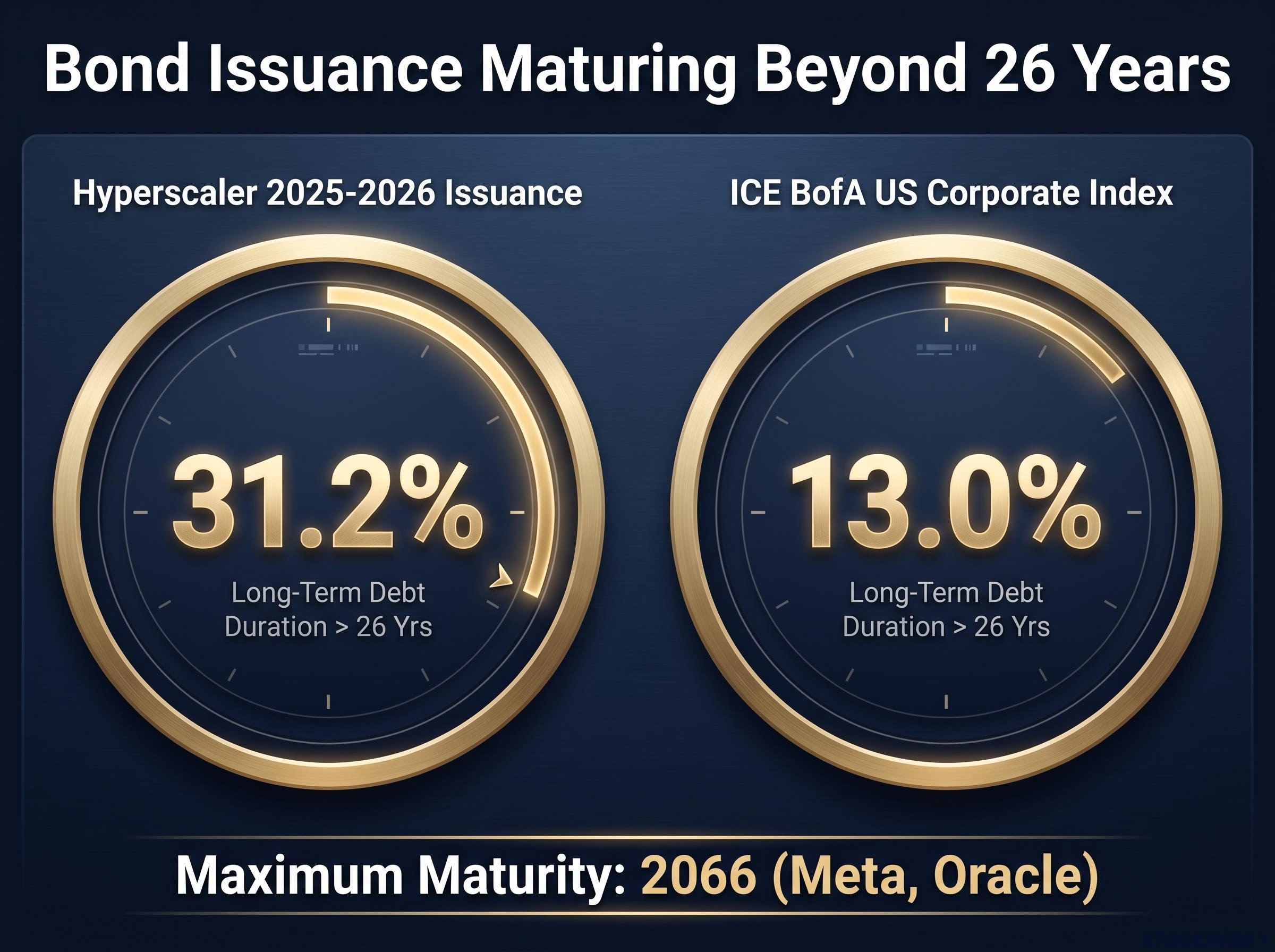
When internal cash runs short, bonds fill the gap. Vontobel Asset Management counts more than $180 billion of USD bonds issued year-to-date, with about $250 billion expected by year-end and around $400 billion once wider tech and AI borrowing is included. The maturities stand out:
- 41% of 2025-2026 hyperscaler issuance matures beyond 15 years
- 31.2% sits beyond 26 years, compared with 13.0% for the ICE BofA US Corporate Index
- Meta and Oracle have sold bonds maturing as late as 2066
Goldman Sachs estimates an “AI gap” of about $230 billion a year between infrastructure spending and the cash flows needed to break even.
Commentators in the original panel discussion said credit default swaps on hyperscalers are widening. A credit default swap (CDS) is a contract that pays out if a borrower defaults, so its price rises when investors see more risk. That widening has not been quantified in the available data. Even so, bondholders are being asked to underwrite AI returns decades into the future, which makes credit spreads an early-warning gauge worth watching before equity prices react.
Credit markets are already signalling caution, with some long-dated hyperscaler bonds trading well below par, a divergence that Big Tech credit risk analysis suggests equity multiples have not begun to reflect.
Is hyperscaler debt pushing up long-term Treasury yields?
That long-dated supply does not stay inside the tech sector. Vontobel describes a mechanism that runs through the wider bond market:
- Hyperscalers issue large volumes of long-maturity bonds
- This adds supply of duration (long-term interest-rate exposure) that investors must absorb
- Fund managers who measure risk against benchmarks shift their holdings, and swap-spread dynamics feed through, putting pressure on the long end of the Treasury curve
- Higher long-term yields raise the discount rates used to value every asset
Panellists in the source discussion went further. They argued that this borrowing, together with refinancing of 2021-era debt, is crowding out the long end and helping keep 10-year yields elevated. Microsoft has not yet termed out its 2026-27 capex in the bond market, so more long-dated supply may still be coming.
What remains unproven
No study in the research measures this effect, and no specific Treasury yield levels are cited here because none were verified.
That is a plausible channel, not a proven one. For you, it means the AI funding story could reach mortgage rates, bond portfolios and equity valuations even if you own no AI stocks.
The capex catch-22: can spending slow without breaking earnings?
Follow the loop around once:
- Capex rises, to $720-$745 billion for the core four
- Free cash flow compresses, as Alphabet and Meta show
- External financing fills the gap through leases, prepayments and bonds
- Interest costs and leverage climb, while earnings growth depends on still more capex
Cutting spending risks falling behind rivals and slowing earnings. Continuing deepens the reliance on debt. There is no clean exit.
S&P Global Ratings research projects combined AI infrastructure spending above $1.3 trillion by 2027, with negative free operating cash flow and rising reliance on debt and leases, which suggests the funding loop described here could deepen before it eases.
The bull case
The other side has real substance. Investing.com notes that Microsoft is the only US hyperscaler still generating positive free cash flow, despite $115.95 billion of fiscal 2026 capex. Futurum Group describes the spending as an “infrastructure sprint” and compares it to railway and fibre build-outs. Bulls present Alphabet’s negative cash flow as the temporary cost of investing early, and point to market projections of about $2 trillion in annual AI-related cash flow by 2030. That figure is a market narrative, not a forecast.
| Argument | Bear view | Bull view |
|---|---|---|
| Cash flow | Negative FCF at Alphabet; Meta’s cash down 91% | Spending comes from profitable incumbents; Microsoft remains FCF-positive |
| Assets | Long-dated debt funds uncertain returns | Data centres are tangible assets with current uses |
| Customers | 70% of AI revenue tied to two loss-making labs | Much of the capex serves general cloud and enterprise demand |
What the maxim means for timing
Panellists in the source discussion reached for an old warning. It is often credited to Keynes, but that attribution is weak.
A. Gary Shilling, financial analyst (1980s-1990s) Markets can remain irrational a lot longer than you can remain solvent.
Bubbles can last for years. Shorting too early can be as costly as buying in at the top. The commentary favours position sizing, diversification and selective exposure to stronger cash generators. Treat AI bubble risk as a question of how much you hold and how resilient the funding is, not as a bet on a date.
Past performance does not guarantee future results. Projections cited here are subject to market conditions and may change.
What the concentration risk changes, and what it does not
The bear case rests on concentrated, loss-making demand and spending funded by debt. The bull case rests on cash-rich incumbents and tangible assets. Neither has been settled.
The claims about CDS widening and Treasury yield pressure remain unquantified. Treat them as hypotheses until harder data arrives.
Three signals deserve your attention:
- The funding health of OpenAI and Anthropic
- Free cash flow trends at Alphabet and Meta
- Long-dated bond issuance and credit spreads
The decision in front of you is not when the cycle turns. It is how much exposure you can hold if the turn comes later, or sooner, than expected.
This article is for informational purposes only and should not be considered financial advice. Investors should conduct their own research and consult with financial professionals before making investment decisions.