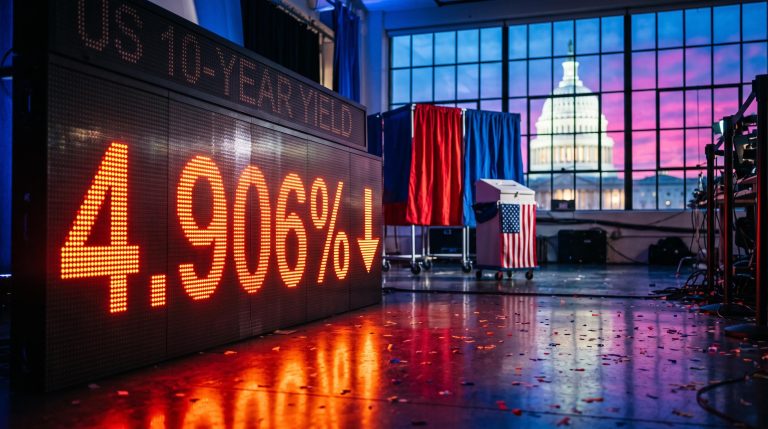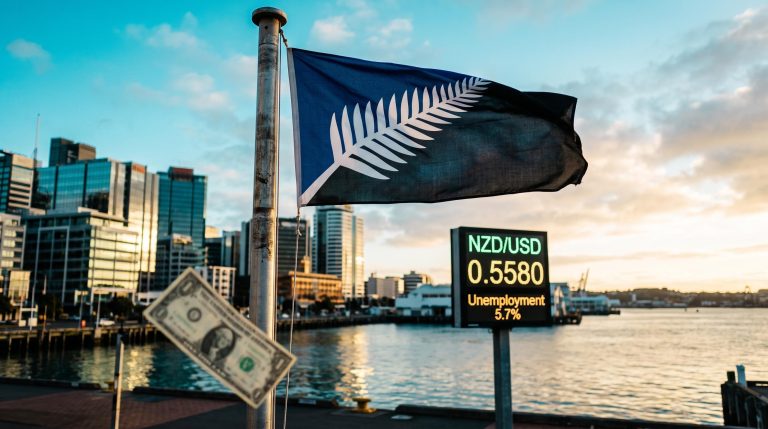
The S&P/ASX 200 closed down 52.3 points, or 0.59%, at 8,834.5 on Wednesday 4 November 2026. It was a day of cross-currents rather than a single-theme sell-off. At its intraday low the benchmark was down about 1%, heading for its weakest session in roughly five weeks, before buyers recovered part of the loss late in trade.
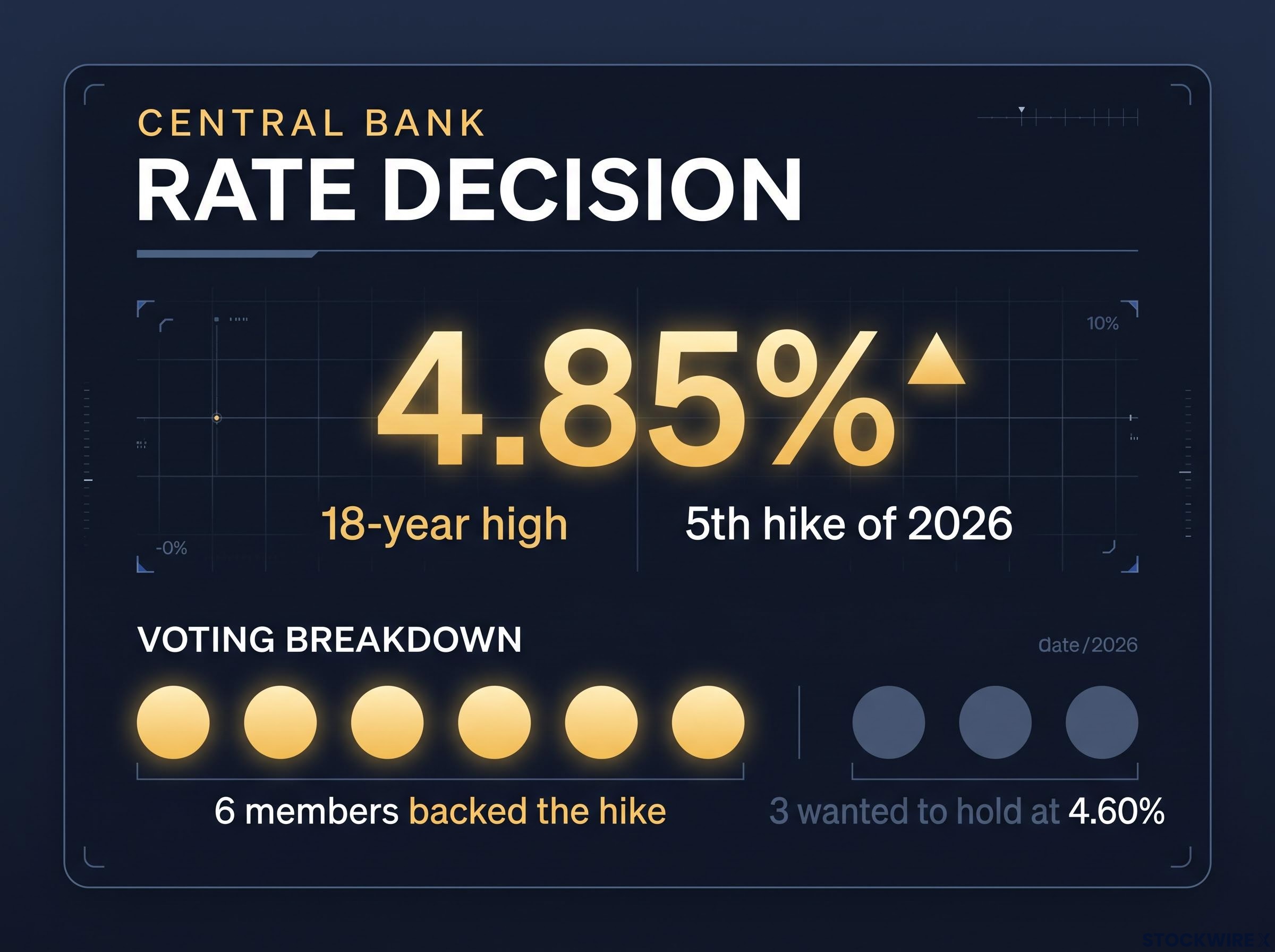
The pressure came from two directions. The Reserve Bank of Australia (RBA) lifted the cash rate a day earlier to 4.85%, its fifth hike of 2026. Then US midterm results arrived during the Australian session and raised fears of tighter rules on artificial intelligence (AI) and data centres.
Company news pulled the other way, and several stocks finished well clear of the index.
Here is what the ASX 200 today tells you about how rates, politics and company results interact, and which events on Thursday and Friday may set the next direction.
What pulled the ASX 200 lower, and what held it up?
Investors did not run for the exits. They moved into defensive sectors. Seven of 11 sectors fell, and the All Ordinaries slipped 0.60% to 8,954.9. Money flowed toward energy, consumer staples and utilities, the parts of the market that tend to hold up when the outlook clouds over.
| Sector | Direction | Approximate move |
|---|---|---|
| Utilities | Up | 1.2% |
| Energy | Up | Almost 1% |
| Financials | Down | 0.2% |
| Industrials | Down | Over 1% |
| Real estate | Down | 1.1% |
| Materials | Down | 1.5% |
Energy was up 0.6% at midday and extended that to almost 1% by the close, helped by higher oil prices. The Australian dollar slipped to about 69.7 US cents, below the 70-cent mark, and also weakened against the euro and the yen.
The miners took the hardest hit, and that was a copper story. BHP fell 1.52% to $55.56 and Rio Tinto lost 1.69% to $143.05, with copper down about 4% over the week.
The sharp weekly drop sits against copper’s record run in September, when tariff front-running and Chilean supply losses pushed prices to an all-time high.
The US midterm and AI regulation channel
The selling was driven by expectations rather than any new law. Markets saw a Democratic Congress as more likely to tighten oversight of AI, Big Tech and data centres. The worry runs in five steps: more oversight, then permit delays and power limits, then slower data-centre construction, then weaker demand for grid capacity and materials, and finally a softer case for copper.
Nasdaq futures initially fell 2% or more, then trimmed the loss to about 0.8%. The timing of each report mattered. Early coverage pointed to Democratic gains and an uncertain Senate, while later Reuters reporting described a “blue sweep” that gave Democrats control of both chambers.
There is also a case for calm. Lower US Treasury yields could eventually support tech valuations, and the first sell-off may not last. The defensive tilt suggests investors were hedging against rate, currency and election risk rather than cutting their earnings expectations. One session of rotation should not be read as a lasting shift.
Why did the RBA’s 6-3 vote matter more than the hike itself?
The hike surprised almost no one. Reuters reported that 30 of 32 economists expected it, and market pricing put the odds at about 88%. The move to 4.85% took rates to an 18-year high.
The vote was the real news. Six members backed the hike, and three wanted to hold at 4.60%.
RBA Board statement: “a further tightening in financial conditions is warranted”
The Board dropped its earlier explicit wording that rates could rise further, although it did not rule out another increase. Governor Michele Bullock was candid: “I don’t know what the next move will be.”
Economists and strategists read the split in similar ways:
- Ivan Colhoun, CreditorWatch chief economist: expects rates to stay unchanged for several months, at least until February.
- Westpac economists: see December as more likely a pause, with February the likelier timing if another hike is needed.
- Sean Callow, ITC Markets senior currency strategist: said the split vote may have triggered the Australian dollar’s weakness.
The fairest reading is that a pause looks likely but the cycle is not clearly over, because six members still voted to tighten. If you hold a mortgage or rate-sensitive stocks, the split suggests the pace of hikes is more likely to slow than to speed up. Inflation risks still keep another rise on the table.
The risk of overshooting into recession is what dissenting members appear to weigh most, particularly as household spending and consumer sentiment weakened through the year.
Which stocks moved on their own news, and what comes next?
For most of the day’s biggest movers, company news mattered more than Washington or Martin Place.
| Company | Move | Driver |
|---|---|---|
| City Chic Collective | +13.88% to 4.1c | 18-week update; positive first-half EBIT expected, subject to Black Friday and Christmas trading |
| Block | +6.06% to $116.31 | Q3 gross profit of about US$3.2bn, ahead of expectations |
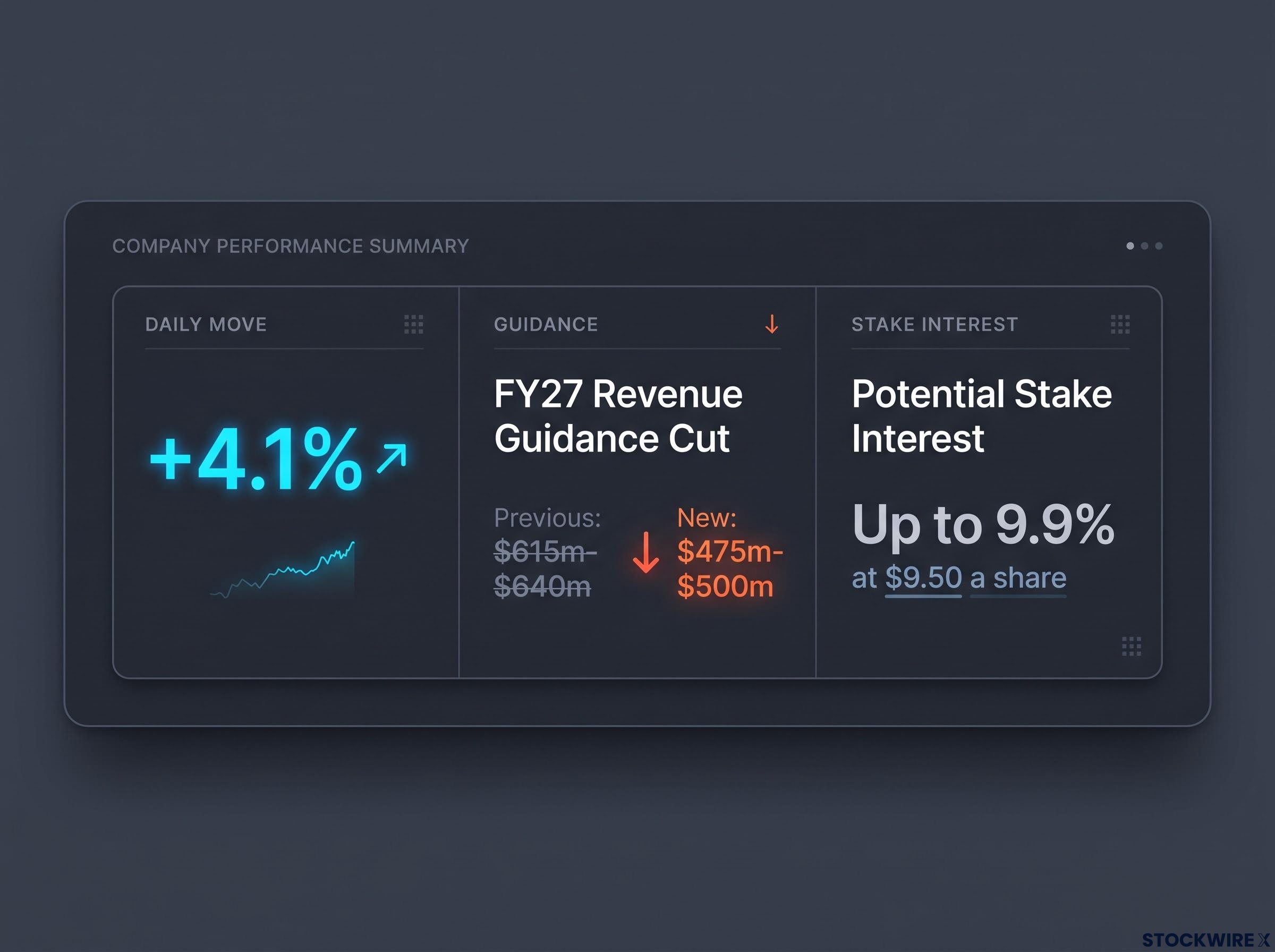
| NextDC | About +4.1% | Rebound after October fall; AFR report of potential stake purchases |
| Telix Pharmaceuticals | About +2.5% | Capital Markets Day; 2026 revenue guidance US$950m-US$970m |
| Goodman Group | -1.6% | Targets reaffirmed amid data-centre power constraints |
| Insignia Financial | About -3.8% | Rejected an amended takeover offer |
| Qantas | About -5% | Gave back a roughly 6.5% gain from the day before |
City Chic Collective is still down 62% this year, so its rebound depends on how holiday trading turns out. Virgin and Flight Centre also fell with Qantas.
NextDC shows how politics sits on top of company facts. The power delay at its M3 Melbourne site led it to cut FY27 revenue guidance to $475m-$500m, from $615m-$640m, on 21 October. Reports put the October share price fall at between about 42% and 45%. The AFR reported that Goodman Group and Digital Realty had each engaged JPMorgan to buy up to 9.9% of NextDC at $9.50 a share, a potential investment rather than a takeover.
Goodman reaffirmed its 9% FY27 operating EPS growth target. EPS, or earnings per share, is profit divided by the number of shares. Data centres make up 79% of its $19.7bn work-in-progress pipeline, so data-centre power constraints weigh directly on the stock.
Beyond power delays, data-centre oversupply risk is a separate concern for listed operators, because a roughly $150 billion construction wave could close the forecast supply gap faster than expected.
What to watch on Thursday and Friday
- NAB full-year result: Thursday 5 November, 10:30am AEDT, days after Westpac’s result
- Deputy Governor Andrew Hauser: speaks in Canberra on the afternoon of 5 November
- AGMs: Whitehaven, Breville and Alkane Resources on 5 November
- Macquarie half-year result: Friday 6 November
The NAB result and Hauser’s speech will be your next read on how higher rates are flowing through to borrowers and the wider economy.
What this session shows about reading a cross-current market
Rates, US politics, copper and company results all pushed in different directions on Wednesday. Blaming the whole session on the RBA, or on Washington, would miss most of what happened.
The defensive rotation may prove temporary. The midterm effects are expected to unfold over a couple of years, and the next rate decision depends on incoming data. Before you act on one session, check whether your holdings moved because of macro noise or because of their own news. The answer should shape whether you respond at all.
This article is for informational purposes only and should not be considered financial advice. Investors should conduct their own research and consult with financial professionals before making investment decisions.