Chip stocks bounced overnight, with the Nasdaq up 0.8% and AMD up 3.7%. On the same day, Apple warned that memory costs are eating into its margins. The semiconductor dip now has a split personality: the chip scarcity that lifts one winner is a cost for another.
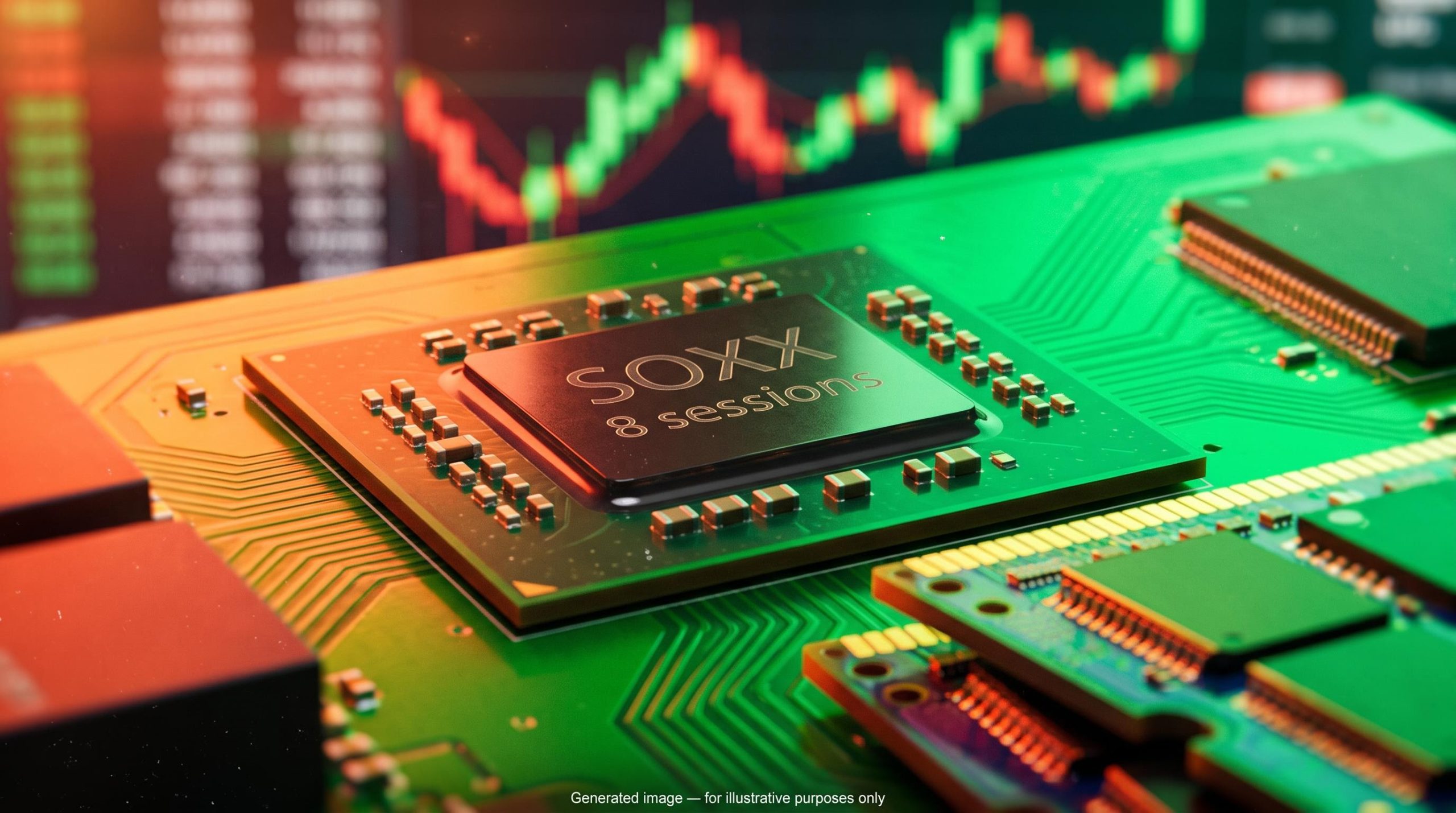
The rebound follows a rough stretch. The iShares Semiconductor ETF (SOXX) has just come through an eight-session losing streak, its longest since September 2015. AMD and Super Micro Computer then posted strong results after the close on 3 November 2026, and both stocks jumped in after-hours trade.
Strong earnings do not make every chip stock a bargain. This piece sorts which parts of the pullback look buyable, which carry risks that earnings cannot fix, and how to frame your own exposure.
Is the semiconductor dip a buying opportunity after AMD and Super Micro’s results?
Start with the relief. AMD reported Q3 2026 revenue of $13.38B, up 45% year on year. Data centre revenue hit a record $8.55B, up 97%, and now makes up about 64% of sales, compared with 47% a year earlier.
Super Micro’s numbers were larger still. Fiscal Q1 2027 revenue reached about $19.9B, up roughly 298%, according to Reuters. Its fiscal Q2 guidance of $19.5B-$21.5B cleared the analyst estimate of about $17.14B.
| Company | Latest revenue | Growth and guidance | After-hours move |
|---|---|---|---|
| AMD (Q3 2026) | $13.38B | +45% YoY; Q4 guide about $17B ±3% | Up about 7-8% |
| Super Micro (fiscal Q1 2027) | About $19.9B | +298% YoY; Q2 guide $19.5B-$21.5B | Up about 8-10% |
The broader market followed. The tech sector rose 1.3%, Nvidia gained 2.3% and Oracle jumped 5.9%, while defensive sectors lagged.
Chart watchers have focused on key SMH levels, with resistance near $563 and support at $536 and $520, and semiconductors now make up about 19.7% of the S&P 500, so a failed rally reaches broad index holders.
There is a catch even in strength. AMD guided Q4 non-GAAP gross margin, the share of revenue left after direct production costs, to about 55%, down from about 56% in Q3. The AI ramp is bringing cost pressure along with the revenue. Super Micro’s non-GAAP gross margin sits at just 12.8%.
How big was the sell-off?
That depends on where you start measuring. One source puts the decline at 19.7% since early October. Seeking Alpha measured SOXX down 12.6% from its 2 October close to 16 October, and another tracker put the worst point near 25%.
The gap comes from different start dates, end dates and whether the index or the ETF is used. The results tell you AI demand has not broken, but before you treat any “down X%” figure as a discount, check the date it is measured from.
What could stall the rebound: memory costs, financing and politics?
Memory costs and the Apple warning
Apple’s fiscal Q4 looked solid: revenue of about $114.5B and net income of about $30.7B. Its 47.9% gross margin, though, was helped by about one percentage point from tariff refunds, and Greater China revenue of $17.5B fell short of expectations despite 21% growth.
The bigger signal was guidance. Apple expects December-quarter gross margin of just 45%-46%, and management pinned most of the pressure on sharply higher memory costs, Reuters reported.
This is “chipflation”. AI data centres are absorbing DRAM and HBM (high-bandwidth memory, a fast memory type built for AI chips), so suppliers favour higher-margin server products over PC and phone memory. Morgan Stanley said in June 2026 that memory prices had risen sixfold over the prior year. Chinese producer CXMT may eventually ease conventional DRAM shortages, but that is a longer-term supply response.
S&P Global Ratings has extended its memory chip price forecast through at least 2028, and memory now accounts for roughly 35% of laptop bill-of-materials costs, which explains why hardware makers face margin pressure.
Politics and the Anthropic IPO
Policy risk is slower-burning but harder to price. Bloomberg reported on 3 November that Texas Governor Greg Abbott ordered new data centre permits withheld pending a grid-risk audit. Georgia’s outcome is also being watched, though no definitive result had been confirmed in available reporting.
Resistance is widespread. Reuters reported in July that about 70% of data centre projects faced local pushback, and New York imposed a one-year halt on large new builds.
Capex growth is slowing UBS estimates hyperscaler capital spending rises 76% to about $673B in 2026, then just 25% in 2027 and 6% in 2028.
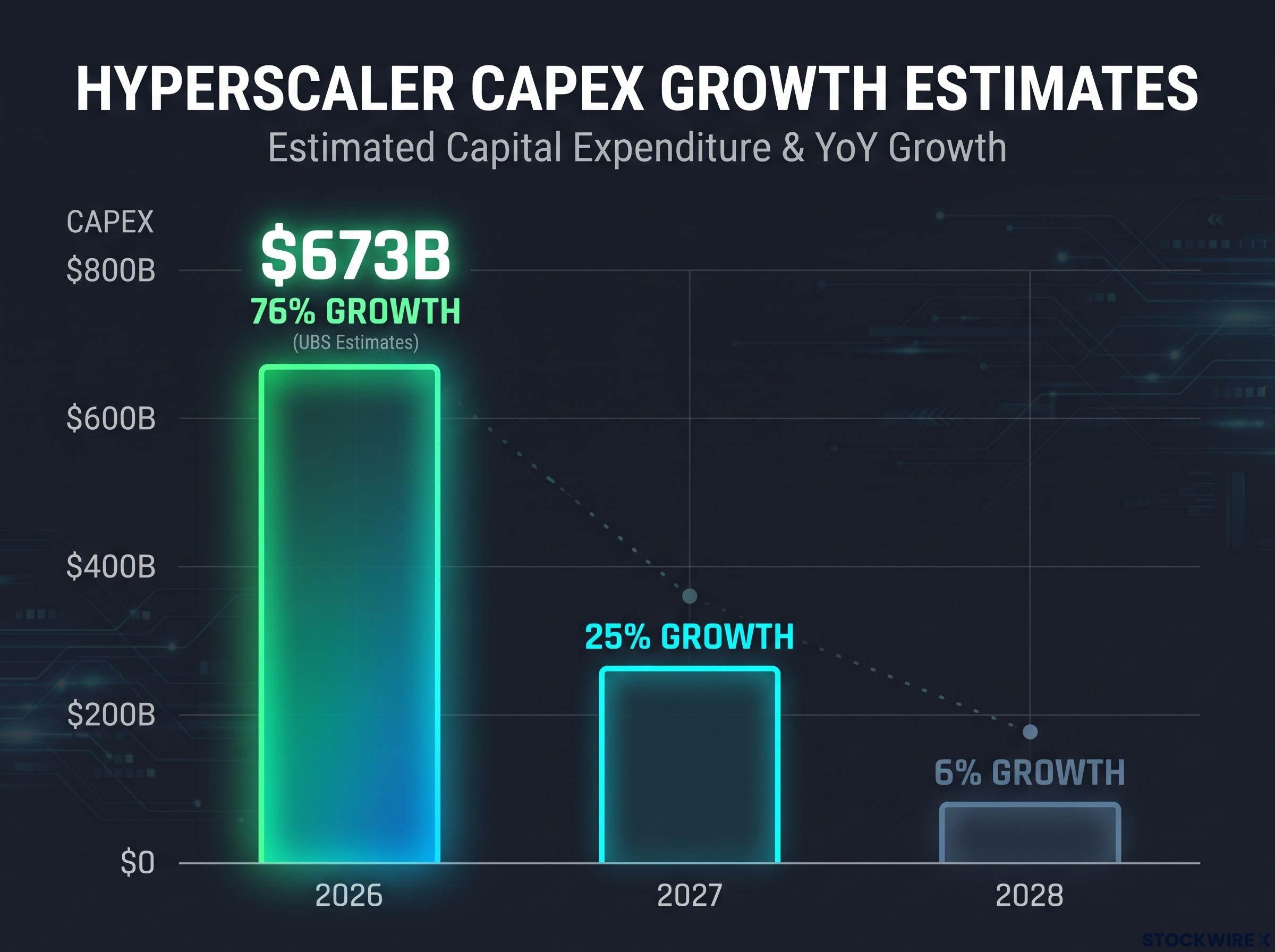
Economist Ed Yardeni has flagged financing, power and political constraints, and Anthropic’s amended S-1 warned of political scrutiny tied to AI expansion. Three dated catalysts stand out:
- Texas and Georgia outcomes: signals on permitting, power and incentives for the data centre build-out.
- ARM earnings (after Wednesday’s close): a read on whether agentic AI is lifting server CPU demand.
- Anthropic IPO (ticker ANT, possibly mid-November): a strong debut could validate AI valuations, while a weak one could weigh on the whole complex.
These risks tell you the next move in chips may be driven by policy and IPO sentiment as much as earnings. Expect volatility around these dates even if fundamentals hold. These outlooks are speculative and subject to change based on market developments and company performance.
How can investors get chip exposure, and which firms look better placed?
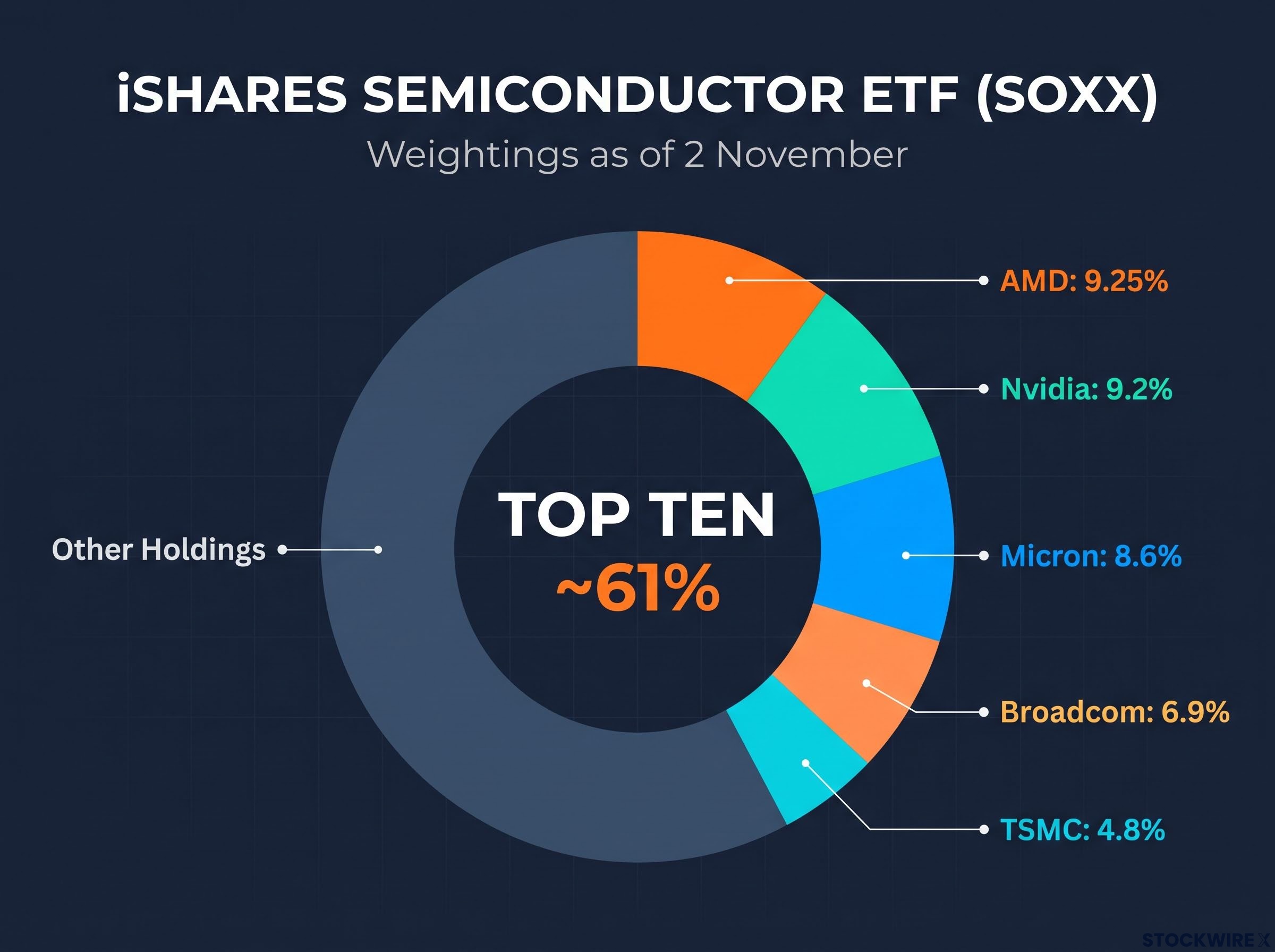
The choice runs along a spectrum. SOXX spreads exposure across processors, memory, foundry and equipment, but it is concentrated: as of 2 November, AMD weighs 9.25%, Nvidia 9.2%, Micron 8.6%, Broadcom 6.9% and TSMC 4.8%, with the top ten at about 61%. It is not immune to an AI-led correction.
A semiconductor ETF comparison shows how SOXX’s capped weights differ from SMH, where Nvidia and TSMC together take nearly a third of assets, a structural difference that changes how each fund behaves in a correction.
Arm Holdings is the concentrated alternative. Its 30 October filing showed more than $2B of AGI CPU demand across fiscal 2027-2028, over twice its earlier $1B target. The share price is far more volatile; sources disagree on its year-to-date gain but agree it sits roughly 50-55% below its peak.
| Option | Diversification | Key driver | Main risk |
|---|---|---|---|
| SOXX | Broad, but top ten about 61% | Sector-wide AI spending | AI-led correction across top holdings |
| ARM | Single stock | Over $2B AGI CPU demand | Sharp price swings; results after Wednesday’s close |
Mumu chief market strategist Tapper Strickland sees selective opportunities and favours free-cash-flow-positive firms, which can fund growth internally. Debt-heavy neoclouds, smaller cloud providers that borrow to buy GPUs, carry fixed debt repayments if rental prices disappoint. For now rentals are rising: a BofA-referenced tracker puts the median H100 at about $3.83 an hour, up 12%.
Before you consider any chip name, check:
- Free cash flow: is the business funding itself?
- Debt load: how exposed is it to higher borrowing costs?
- Customer concentration: does revenue rely on a handful of buyers?
Choosing between SOXX and ARM tells you how much single-name volatility you can tolerate.
What the rebound settles, and what the next two weeks will test
AMD and Super Micro have answered whether AI demand is real: it is converting into revenue at scale. Apple’s memory warning, financing costs and political resistance leave a different question open, which is how evenly those gains will spread.
The next tests arrive quickly. ARM reports after Wednesday’s close, the Texas and Georgia outcomes will shape permitting, and Anthropic’s IPO could land as soon as mid-November.
The evidence favours selective exposure over blanket buying: cash-generative chip leaders or a diversified fund look better placed than leveraged infrastructure plays.
This article is for informational purposes only and should not be considered financial advice. Investors should conduct their own research and consult with financial professionals before making investment decisions.