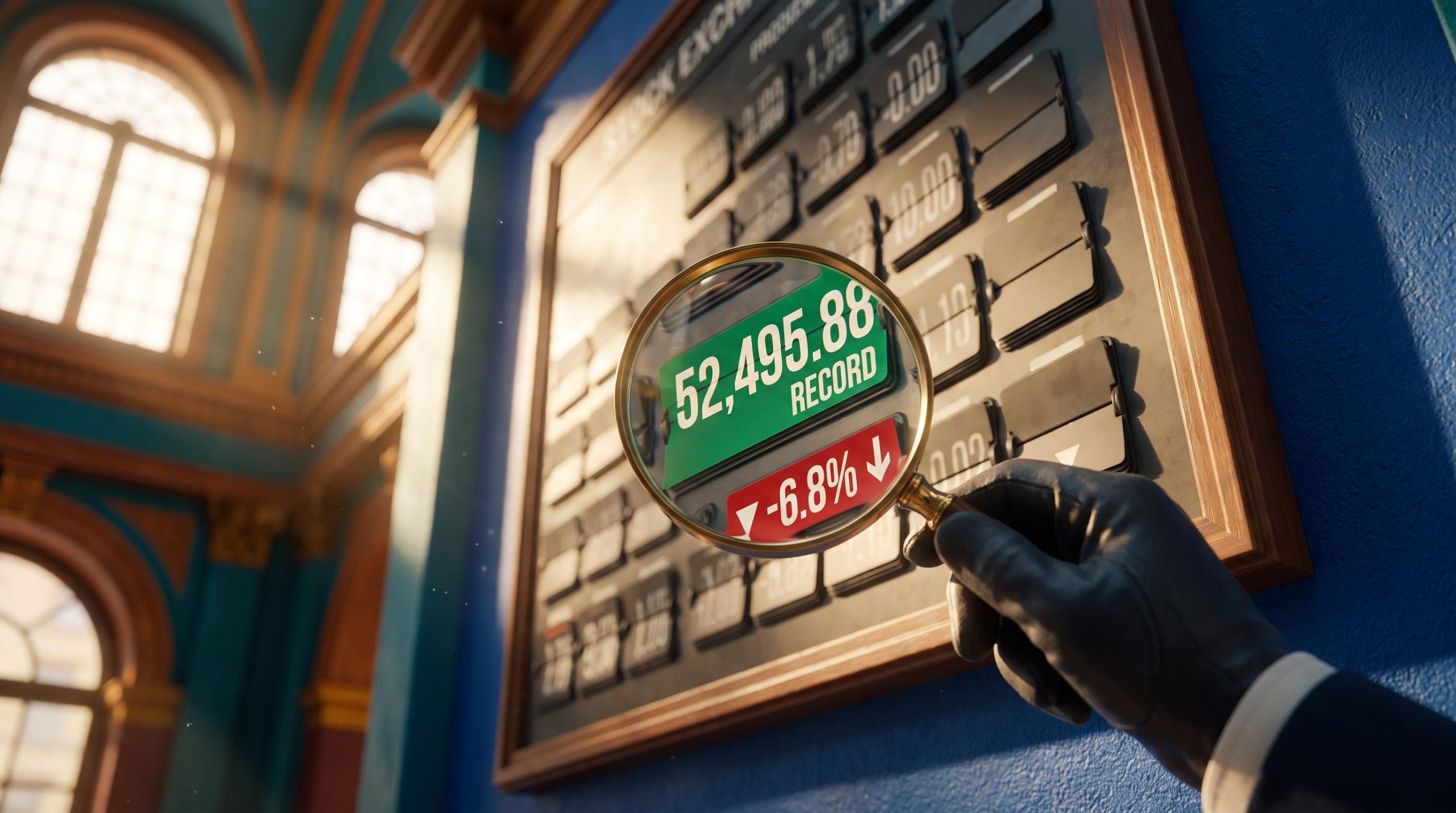
The Dow closed at a record on 20 October 2026, and on the surface the session looked calm. Underneath, the market was sorting this earnings season’s winners from its doubters.
The Dow Jones Industrial Average rose 1.02% to 52,495.88. The S&P 500 added 0.28%, while the Nasdaq Composite slipped 0.02%. Healthcare led all 11 S&P 500 sectors to a record high, a strange leader for a market that has spent two years chasing artificial intelligence (AI).
The test this time runs on several fronts at once. General Motors, Netflix and Intuitive Surgical each showed slowing growth and were sold. SpaceX beat on AI and Starlink. Anthropic’s draft S-1 prospectus put hard numbers on the risks behind AI revenue. Tesla and Meta report next.
The lens that ties these stories together is simple: each earnings reaction is a verdict on growth expectations, not a score on the quarter. Once you can read results that way, the next round of reports becomes far easier to interpret.
Is the healthcare rally a real rotation or a defensive pause?
No single strategist has declared a new market leader. The case for a rotation comes from several voices pointing roughly the same way, each for a slightly different reason.
The sector moves themselves carry caveats. The figures below come from a mix of the original source and reporting that has not been independently confirmed.
| Sector | Reported move | Likely driver |
|---|---|---|
| Healthcare | About +2.5% (original source only) | Defensive flows away from AI |
| Financial services | +1.0% to +1.1% (sources conflict) | Second-largest sector contribution |
| Technology | -0.3% (unverified) | Doubts over AI cash flows |
| Communication services | -0.9% (unverified) | Pressure on growth platforms |
The iShares US Health ETF is up about 10% since July. Reported commentary from mid-October helps explain why:
- Sam Stovall (CFRA) reportedly described the move as a “defensive rotation” linked to concern about a possible credit problem.
- Jordan Rizzuto (GammaRoad Capital Partners) reportedly pointed to growing doubt about the cash flows behind the AI narrative as rate volatility rose.
- Garrett Melson (Natixis) reportedly argued that a strong AI trade absorbs capital and attention, so flows return quickly to sectors such as healthcare when it weakens.
- Lori Calvasina (RBC) reportedly upgraded healthcare to overweight and cut technology to market weight, citing stretched valuations and slowing semiconductor earnings revisions.
- Ryan Detrick (Carson Group) reportedly called the shift potentially healthy rather than a sign of a broken market.
The on-off switch view The counter-argument holds that this is a temporary rotation, not a structural reallocation. If AI earnings and sentiment improve, the flows could reverse just as quickly.
That is the unresolved question. A rotation driven by valuation and sentiment can unwind as fast as it arrived, so you should read healthcare’s strength as a gauge of AI nerves rather than as a settled new leadership group.
Whether healthcare’s lead is durable depends on how a sector rotation strategy reads business cycle phase, relative strength and fund flows together; defensive leadership alone rarely confirms a lasting change in market direction.
When big ASX news breaks, our subscribers know first
GM, Netflix and Intuitive: cyclical wobble or structural slowdown?
None of these three posted weak headline numbers. Each beat or met revenue expectations, and each still met a market unwilling to pay for slower growth.
GM: inflation costs and a hybrid gap
GM was the session’s worst S&P 500 performer, falling 6.8% at the close. It reportedly delivered Q3 revenue of $50.02B against $48.77B expected, yet narrowed 2026 adjusted EBIT guidance (earnings before interest and tax, a measure of operating profit) to $14.5-15.5B. These figures are not independently confirmed.
The cost problem looks cyclical. Commodity, logistics and chip inflation is reportedly expected to cost about $2B in 2026, with roughly $400M landing late in the year. The hybrid problem is different: CFRA’s Nelson reportedly said GM is essentially absent from hybrids while rivals expand them. Cost pressure can ease, but a missing product line will not fix itself next quarter.
Netflix and Intuitive: growth normalising
Netflix reportedly grew Q3 revenue 11.8% to $12.87B, in line with estimates. The concern is the trend: this was a fourth straight quarter of slowing sales growth, and the 2026 advertising target was reportedly cut to $2.7B from about $3B. Shares fell 1.7% in the session and about 5-6% after hours.
Intuitive reportedly grew revenue 22% to $3.05B, yet the original source reported an 11% post-market drop. Full-year da Vinci procedure growth guidance of about 14-15% suggests the robot is maturing.
| Company | Cyclical factors | Structural factors | Reaction |
|---|---|---|---|
| GM | Commodity, logistics and chip inflation | Weak hybrid lineup, market share loss | -6.8% at close |
| Netflix | Expense timing, lower ad target | Competition from user-generated video | -5% to -6% after hours |
| Intuitive | Tougher comparison base | Procedure growth normalising | About -11% post-market |
When a company meets estimates and still falls, the message is that guidance and trajectory now outweigh the headline beat. That gives you a repeatable test: ask whether the cause of the drop can fade, or whether it changes the growth path.
SpaceX’s beat: what the AI and Starlink numbers do and do not prove
SpaceX supplied the counterpoint. Q3 revenue reportedly jumped 161% to $14.58B, well above the roughly $12.7-12.9B expected, and net income reached $4.4B against a $1.1B loss a year earlier. Shares rose about 4-4.8% after hours.
The mix is the story. AI revenue reportedly grew ninefold to $7.56B, while connectivity, mainly Starlink, rose 69% to $5.25B with 13.6 million subscribers.
The new centre of gravity AI revenue of $7.56B now exceeds connectivity revenue of $5.25B, according to reported figures.
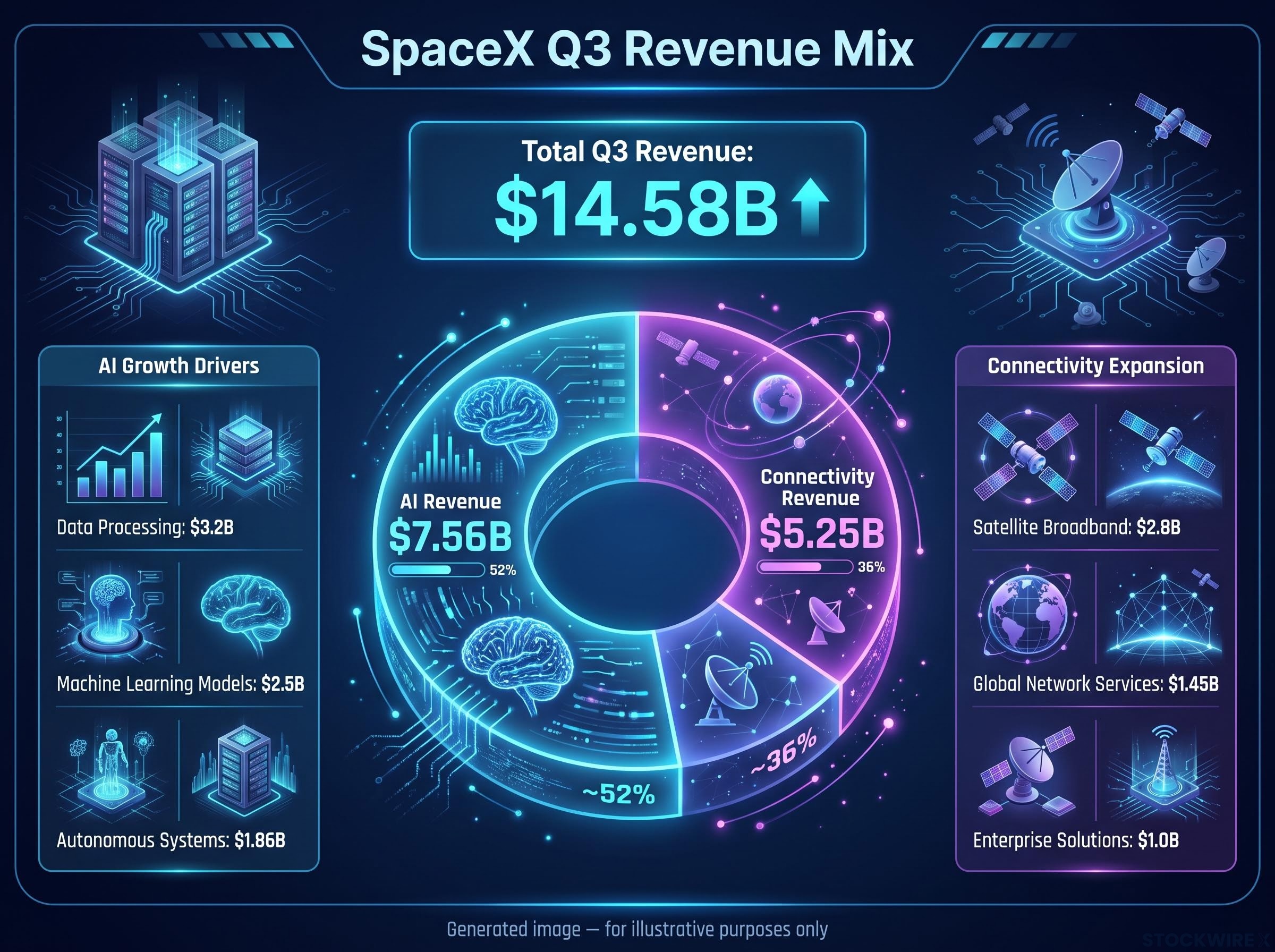
That beat deserves scrutiny rather than dismissal. Five reported caveats, none independently confirmed, raise questions about the quality of the growth:
- Subscriber additions of 1.6 million against 2.29 million expected.
- Consumer ARPU (average revenue per user) of about $69, down from $99 in 2023.
- About $16.4B of $19.6B in capital expenditure directed to AI.
- Named AI customers include Anthropic, Google, Grok and X, so some revenue may come from affiliated or strategically connected parties.
- Subscriber growth does not automatically deliver matching revenue or margin growth.
The read for you is that SpaceX is now partly an AI infrastructure business, renting compute capacity. That brings demand and financing risks with it, so customer mix and capital intensity matter as much as the growth rate.
SpaceX business segments sit at very different maturity stages, with launch and broadband operating at scale while AI compute is the earliest, which is why the quality of that newest revenue deserves separate scrutiny.
What Anthropic’s draft S-1 reveals about the risks behind AI growth
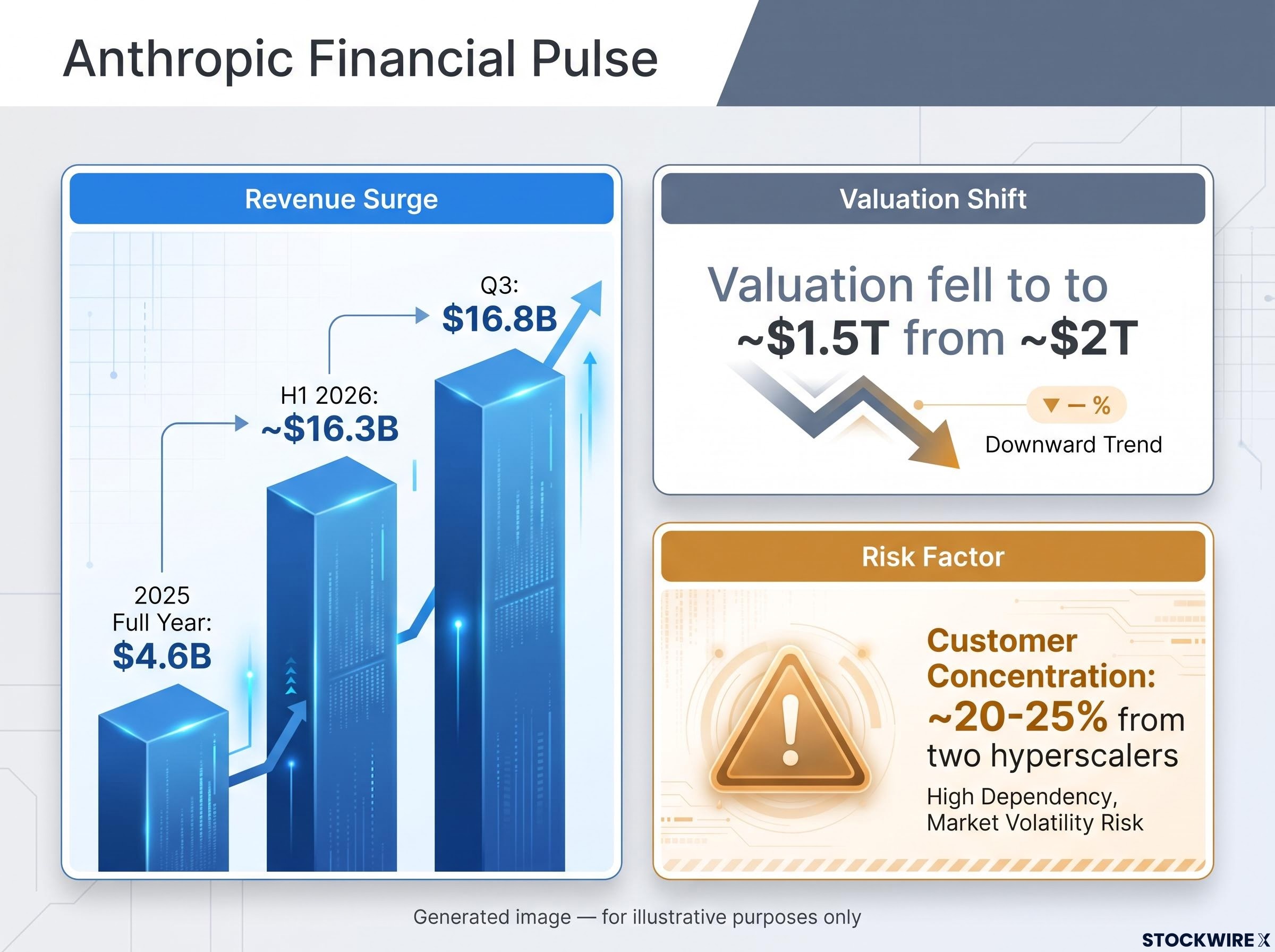
One of SpaceX’s AI customers has just filed its own numbers, and they are striking. Anthropic’s draft S-1 reportedly shows about $16.3B of first-half 2026 revenue against $4.6B for all of 2025. The company reportedly told investors Q3 revenue reached $16.8B and that it was adjusted-profitable in the quarter.
Concentration and commoditisation
The weak point is who pays. About one-fifth of revenue reportedly comes from two hyperscalers (the giant cloud providers), according to TechCrunch and the original source, while AI Weekly reports about 25%. Those customers reportedly lack long-term contracts and are building their own models.
| Risk | What the filing or reporting says | Why it matters |
|---|---|---|
| Customer concentration | Two hyperscalers, about 20-25% of revenue | Losing one could cut revenue quickly |
| Commoditisation | Models may become interchangeable | Customers could switch on price |
| Fixed compute bills | Large, largely non-cancellable commitments | Costs stay if revenue falls |
| Reported losses | First-half net loss about $80.7B, largely non-cash | Driven by convertible instrument values |
These two risks are linked. A customer that is also a competitor can switch to its own model, and fixed capacity bills remain either way. As analytical inference rather than a disclosed comparison, concentrated high-growth issuers usually need falling concentration and long-term contracts to reassure buyers.
Valuation and the IPO window
The bull case still has weight:
- Rapid revenue scaling and reported adjusted profitability.
- Strategic cloud relationships.
- Possible differentiation through model quality, enterprise integration and safety.
Even so, Reuters reported on 15 October that the discussed valuation had fallen to about $1.5T from about $2T. With marketing set for the week of 9 November, you should treat the headline growth as less secure than it looks and watch how the IPO is priced.
How to read earnings reactions as shifts in growth expectations
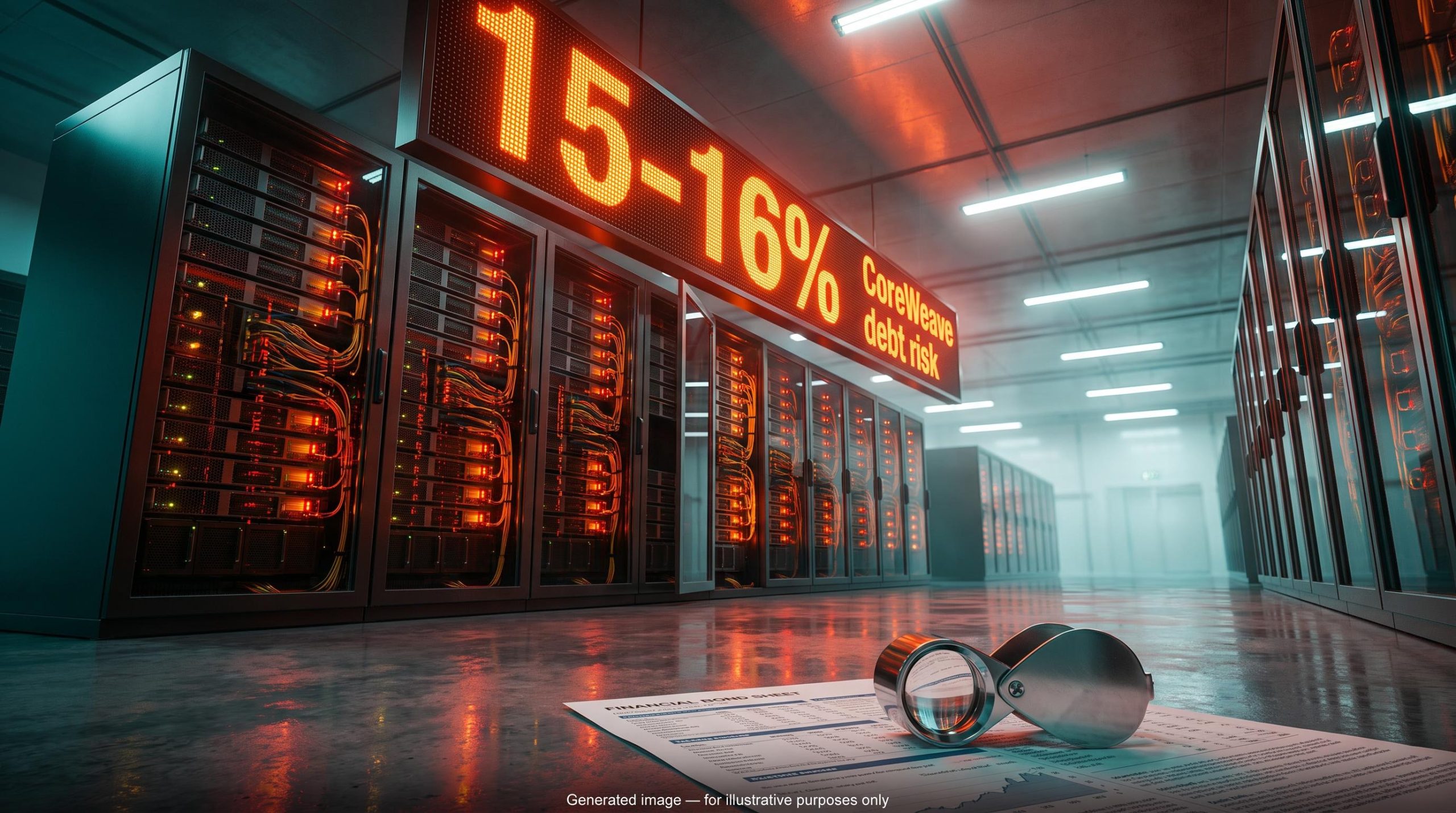
Five stories, one pattern. A share price reflects the growth investors expect, so a stock can fall on a beat if the outlook shrinks.
A similar pattern hit AI hardware names in August, when a repricing of the momentum premium sent stocks lower despite above-consensus guidance, showing that consensus is often the floor rather than the target.
GM showed it through guidance and structure. Netflix showed it through a slowing rate, Intuitive through normalising procedures, SpaceX through the quality of its growth and Anthropic through risk pricing. The jitters are also global: the Kospi reportedly fell about 5% on 20 October, with its 2026 gain shrinking to about 30% from roughly 116% at the June record, while Elice Inc. reportedly fell as much as 32% in its Seoul debut.
Before Tesla and Meta report, run each result through four checks:
- Expectations: what growth was already priced in?
- Guidance: did the forward outlook rise, narrow or fall?
- Revenue quality: is growth coming from durable customers and healthy margins?
- Concentration or competition: could one customer or rival change the picture?
The key takeaway The market is repricing how much growth it will pay for. Guidance and revenue quality deserve more of your attention than the headline beat or miss.
What this earnings season changes, and what it does not
The healthcare rally looks more like a reading of AI nerves than a confirmed change in market leadership. The company reactions point the same way: growth expectations are resetting, and the market is rewarding visibility over raw speed.
The next tests are close. Tesla and Meta report next, and Anthropic begins IPO marketing the week of 9 November. Strong AI guidance and a well-received IPO would argue for the rotation reversing. Further guidance cuts and a soft IPO reception would suggest the defensive shift has further to run.
Historical comparisons are useful here: the AI stock bubble debate leans on dot-com parallels such as Cisco’s multi-decade recovery and a CAPE ratio above 40, which frame what a soft IPO reception might signal.
Many figures here are reported but unverified, so check them against company filings before acting.
This article is for informational purposes only and should not be considered financial advice. Investors should conduct their own research and consult with financial professionals before making investment decisions. Past performance does not guarantee future results, and forward-looking statements are speculative and subject to change.