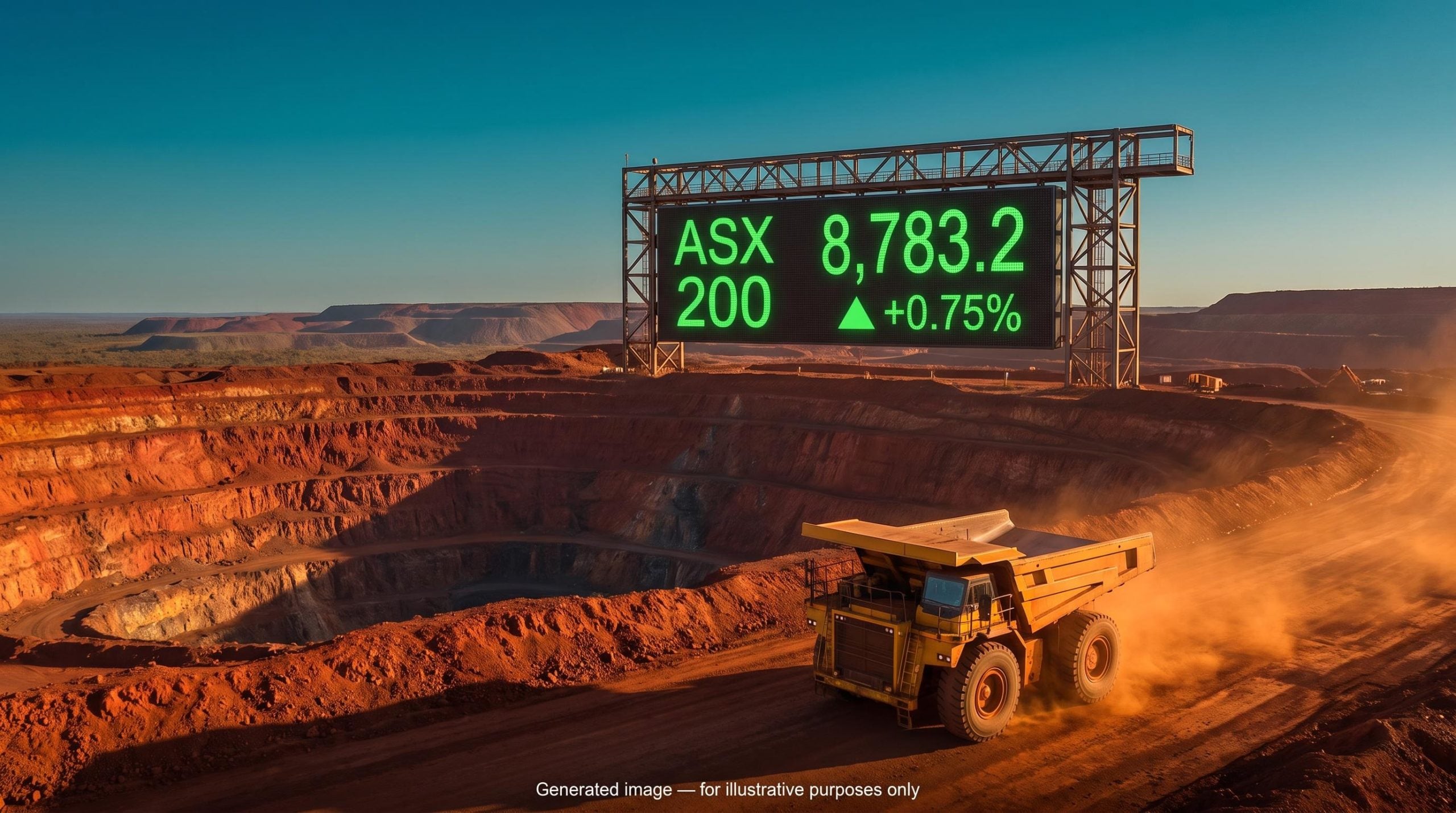
The S&P/ASX 200 rose 0.75% today, adding 66.6 points to close at 8,783.2 on Monday 12 October. It was the benchmark’s strongest session in more than a week. BHP alone supplied roughly a third of the lift.
That concentration matters because of what came before. The index fell 7.3% from its early August peak to its September trough. Two weekly gains since then added only about 0.5% in total, while Wall Street set a record the previous week.
So the real question is whether Monday marks a recovery or just a bounce.
This piece separates the session’s real drivers from the noise. It also sets out the handful of events this week that could decide whether the rebound holds: Reserve Bank minutes, local jobs data, US inflation and the start of US bank earnings.
Why did the ASX 200 rise on Monday, and how solid was the rebound?
On the surface, the session looked convincing. The index climbed from 8,716.6 to 8,783.2, led by materials and financials, which each gained about 1.5%.
Look beneath the headline and the support thins quickly. Real estate fell about 1.4%, communication services also lost ground, and the heavy lifting came from a few large miners and banks.
The BHP effect BHP contributed about 22 points, roughly a third of the day’s gain.
| Sector | Move on 12 October | Driver or note |
|---|---|---|
| Materials | +1.5% (approx.) | Broker upgrades lifted Fortescue and Sandfire |
| Financials | +1.5% (approx.) | Recovered Thursday’s bank losses |
| Technology | +0.9% (approx.) | Modest gain |
| Healthcare | +0.8% (approx.) | Modest gain |
| Real estate | -1.4% (approx.) | Rate-sensitive sector under pressure |
| Communication services | Down | Telcos hit by SpaceX spectrum news |
The gains mostly repaired recent damage. The index finished flat at 8,727.7 on Wednesday, then fell 0.77% to 8,660.9 on Thursday. Miners dropped about 2% and each of the big four banks lost about 1.5% as the US Dollar Index climbed to its highest level since April 2025.
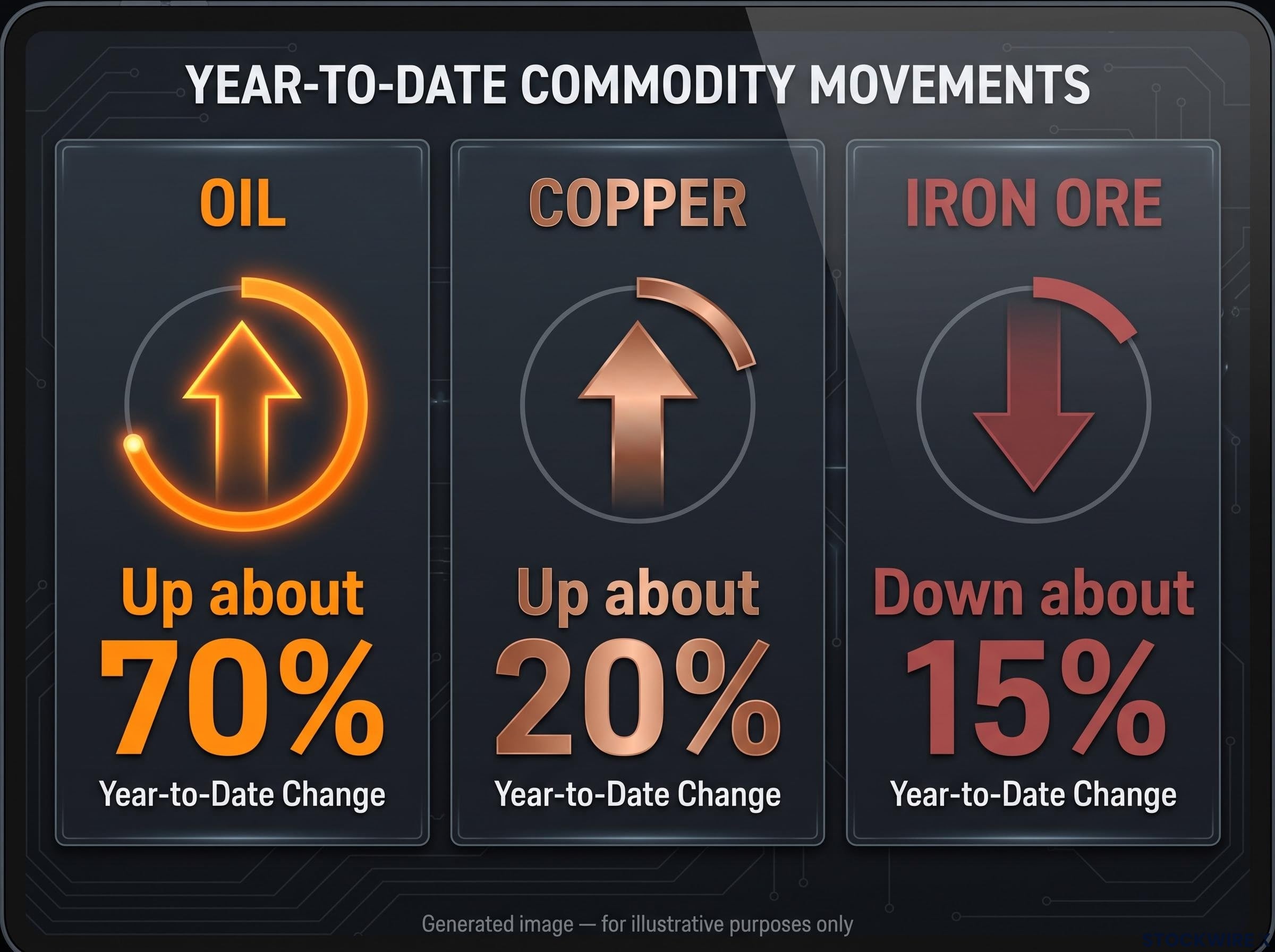
A stronger US dollar tends to weigh on commodity prices and investors’ appetite for risk. The Australian dollar sat around 69.7 US cents today and is up close to 10% against the euro this year. Across commodities, iron ore is down about 15% year to date, copper is up about 20% at record highs, and oil is up about 70% on the Middle East conflict.
Copper’s record run is part of why BHP carries so much index weight, and BHP’s copper growth targets, including a push toward 2 million tonnes a year by 2035, give investors a structural reason to look past single-session moves.
When two sectors and one stock carry the index, you are looking at a repair job, not proof that buyers are returning across the market. If you hold an index fund, read today’s result with that caution in mind.
Fortescue, BHP, TPG and Mass Group: what drove the biggest stock moves?
The winners and losers moved for very different reasons. Brokers lifted the miners, while offshore news dragged down several local names.
Miners and Treasury Wine lift
- Fortescue gained almost 3% after a broker raised its 12-month price target. It remains down almost 30% this year after five straight monthly falls.
- BHP rose about 2.5%.
- Sandfire Resources climbed about 3.5% on a raised target and is almost 30% higher this year, helped by copper’s strength.
- Treasury Wine Estates added 0.7% after the Financial Review reported it had sold three labels, including Rosemount, as it cuts its brands from 76 to fewer than 30.
The research did not identify which brokers made the calls or their price targets. That gap matters. An upgrade on a stock down almost 30% is a call on valuation, not a change in iron ore prices, so treat Fortescue’s bounce as fragile.
Telcos, Mass Group and EOS fall
- TPG Telecom sank 4.9%, the ASX 200’s worst result, and Telstra dropped 2.5%. Both fell after SpaceX announced plans to buy US spectrum worth about $8 billion in cash and assets, a deal that could help Starlink compete with mobile carriers.
- Mass Group (ASX: MGH) slid 15% and has lost about 40% over five days following a broker downgrade. The data centre builder had entered a trading halt after Fermi withdrew its planned ASX float, and Mass holds about 3% of Fermi.
- Electro Optic Systems fell about 4%, even after naming Q8 as the customer for last week’s Middle East contract. The contract’s value has not been disclosed.
The telco selloff was global, hitting T-Mobile, Verizon and AT&T as well. The general market reading is that satellite services could eventually pressure carrier pricing in regional areas, though no Australian analyst view was identified. The lesson for your portfolio is that offshore headlines can reprice local holdings within a single session.
Which events this week could move the ASX 200 next?
The pressure builds day by day, with Thursday as the main test.
| Day | Event | Why it matters |
|---|---|---|
| Tuesday, 11:30am Sydney | RBA September minutes | Shows whether the board seriously considered holding rates |
| Tuesday | Telstra and Baby Bunting AGMs | Telstra may face questions on the SpaceX threat |
| Tuesday | BlueScope, Ramelius, Hub24 dividends | Income payments to shareholders |
| Tuesday evening (US time) | US bank earnings begin | High AI-driven profit expectations raise the risk of a pullback |
| Midweek | US inflation data | Markets see a chance of one more US hike this year |
| Thursday, 11:30am AEDT | Australian September jobs report | Likely to shape the RBA’s November decision |
Qantas, Ingham’s and Virgin also pay dividends during the week.
RBA minutes and jobs data: the economists disagree
On 29 September, the RBA voted unanimously to lift the cash rate by 25 basis points to 4.60%, the highest level since 2011. A basis point is one hundredth of a percentage point.
Governor Michele Bullock said the move took policy “more clearly into restrictive territory”, describing the labour market as “a little tight”.
Unemployment rose to 4.6% in August, its highest since November 2021, with participation at 67.1%. Consensus expects about 20,000 new jobs in September, unemployment steady at 4.6% and participation easing to about 67.0%.
- Westpac forecasts +20,000 jobs and flags a possible November follow-up hike.
- CBA forecasts +10,000 and sees a “higher bar” for further rises.
- NAB expects unemployment to reach about 4.8% by the end of 2027 and near 5% by 2028, suggesting rates are close to their peak.
- MacroBusiness forecasts +10,000 and warns further tightening risks slower growth.
The same report could support either camp, so watch the unemployment rate and participation, not just headline employment. Hawkish minutes or strong jobs data could weigh on banks, real estate and consumer stocks, while weak US bank earnings could rattle a stretched Wall Street.
Recent history shows how far jobs data can shift rate expectations: a large employment miss earlier this year removed a hike from the RBA’s agenda and hit financials, even though the weakness was concentrated in part-time work.
What Monday’s rebound proves, and what Thursday has to confirm
Monday’s 0.75% gain was real, but narrow. Miners and banks drove it, and those are the sectors most exposed to this week’s rate and inflation signals.
Narrow rebounds have precedent this year: an earlier Iran-driven rally was largely a defensive rotation into staples and financials, and the index still sat below key trend resistance afterwards.
Three things will show whether the rebound has legs: Tuesday’s RBA minutes, midweek US inflation and Thursday’s jobs report. Weigh your exposure against those outcomes rather than against a single strong session.
This article is for informational purposes only and should not be considered financial advice. Investors should conduct their own research and consult with financial professionals before making investment decisions. Forecasts cited are subject to market conditions and may change.