The Australian dollar’s push to a multi-month high looks like a local success story. It is not. The real driver sits thousands of miles from Sydney, in policy rooms in Washington and Tokyo.
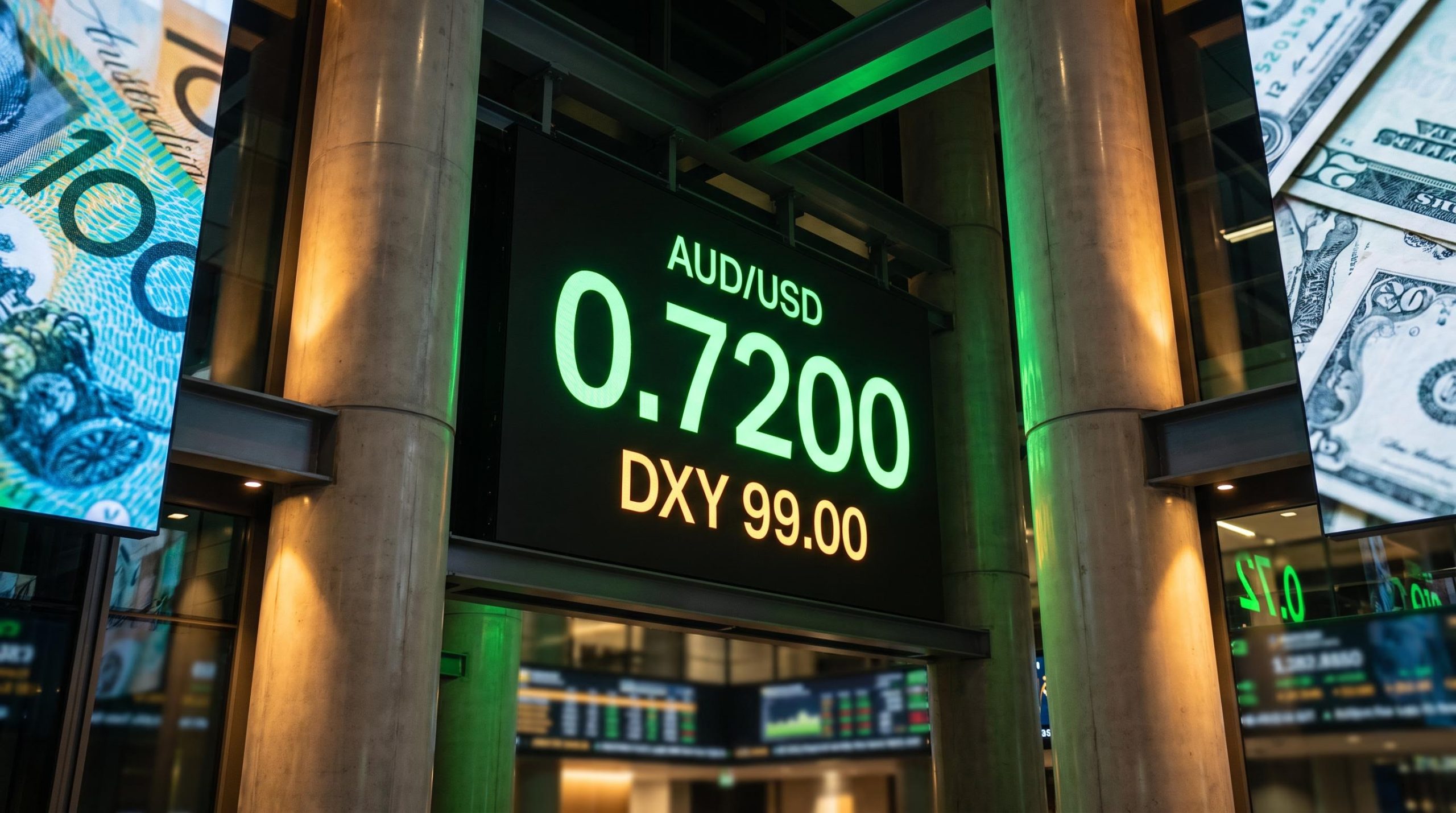
The AUD/USD exchange rate has punched through the 0.7200 ceiling this week, extending a run that began mid-week and accelerated on Thursday. The move coincides with a broad retreat in the greenback, with the US Dollar Index (DXY) slipping back to the 99.00 mark.
That combination is telling. When a currency rises while the dollar falls across the board, the story is rarely about one economy. It is about a shift in how global capital is positioning itself.
What follows here maps the central bank crosscurrents pushing the Aussie higher, and pinpoints exactly what could stall or reverse the rally before the week is out.
Australian dollar clears major resistance amid broad greenback retreat
The Aussie did not drift toward 0.7200. It climbed there with intent, adding 0.44% on Thursday alone and building directly on gains logged the day before. Positive risk sentiment carried the pair to its highest level in months.
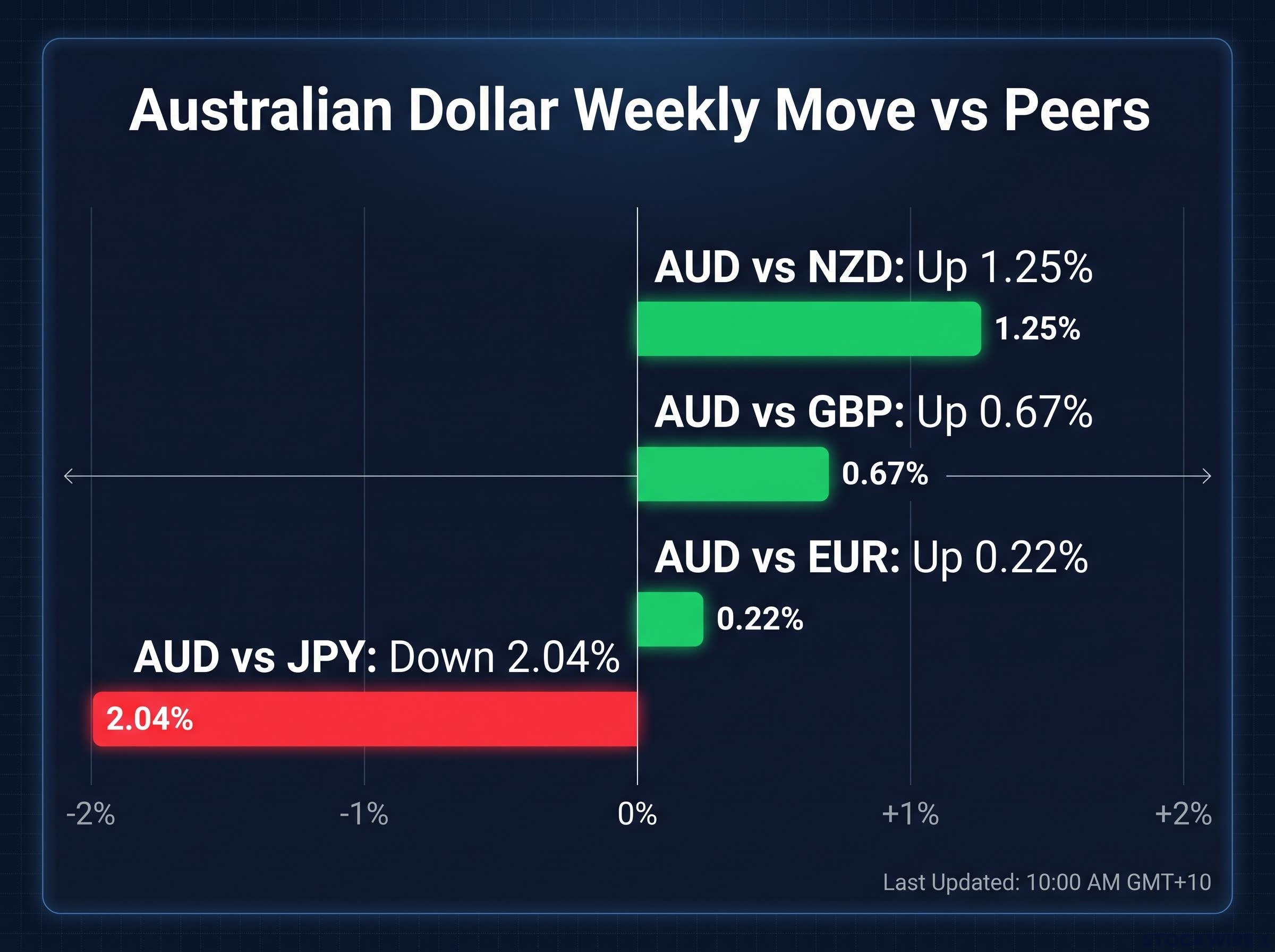
Strip away the headline pairing and the picture gets more interesting. The Australian dollar has not just been beating the US dollar this week. It has been outperforming almost every major peer on the board.
| Currency Pair | Weekly Move | Relative Trend |
|---|---|---|
| AUD vs NZD | Up 1.25% | Strongest gain of the week |
| AUD vs GBP | Up 0.67% | Firm outperformance |
| AUD vs EUR | Up 0.22% | Modest gain |
| AUD vs JPY | Down 2.04% | The lone laggard |
The mechanics behind this are straightforward. When global investors trim their US dollar holdings, that capital has to go somewhere, and risk-sensitive currencies like the Aussie tend to be the natural landing spot.
Institutional positioning on non-dollar currencies has shifted materially in 2026, with UBS formally backing the Australian dollar alongside the pound, krone, and krona as preferred holdings ahead of what major banks describe as the dollar’s next cyclical decline.
The one exception, the yen, matters. The Australian dollar shed 2.04% against the Japanese currency over the week, and that single divergence is a clue to what is actually driving this move.
For you as an investor, the read here is important. This broad outperformance tells you the rally is not an isolated wobble against the US dollar. You are looking at a wider pro-cyclical rotation, and your currency exposure needs to be weighed against that momentum rather than against a single pair.
A two-front policy squeeze forces the US dollar lower
The greenback did not fall on its own accord. It was pushed, and from two directions at once.
The first pressure came from the Federal Reserve. The second came out of Tokyo. Together they explain why the DXY dropped 0.58% to 99.00 in a single session, a sharp move for a broad currency index.
Federal Reserve repricing
Fed Governor Christopher Waller reset the tone. In a speech published on 3 September 2026, he signalled that if incoming data over the following two weeks held to current trends, he would be inclined to support keeping the federal funds rate at its current setting.
Waller’s September 2026 Fed speech set out a conditional hold bias, signalling comfort with the current rate setting provided incoming data over the following two weeks did not deliver an upside inflation surprise.
That is a conditional hold bias, not an outright pivot. Waller kept the door open to tightening should an upside inflation surprise arrive, but the market heard the caution loudest.
The repricing was immediate. According to Prime Terminal data, the market-implied probability of a September rate hike fell from 64% to 54%, while the odds of a hold climbed toward 46%.
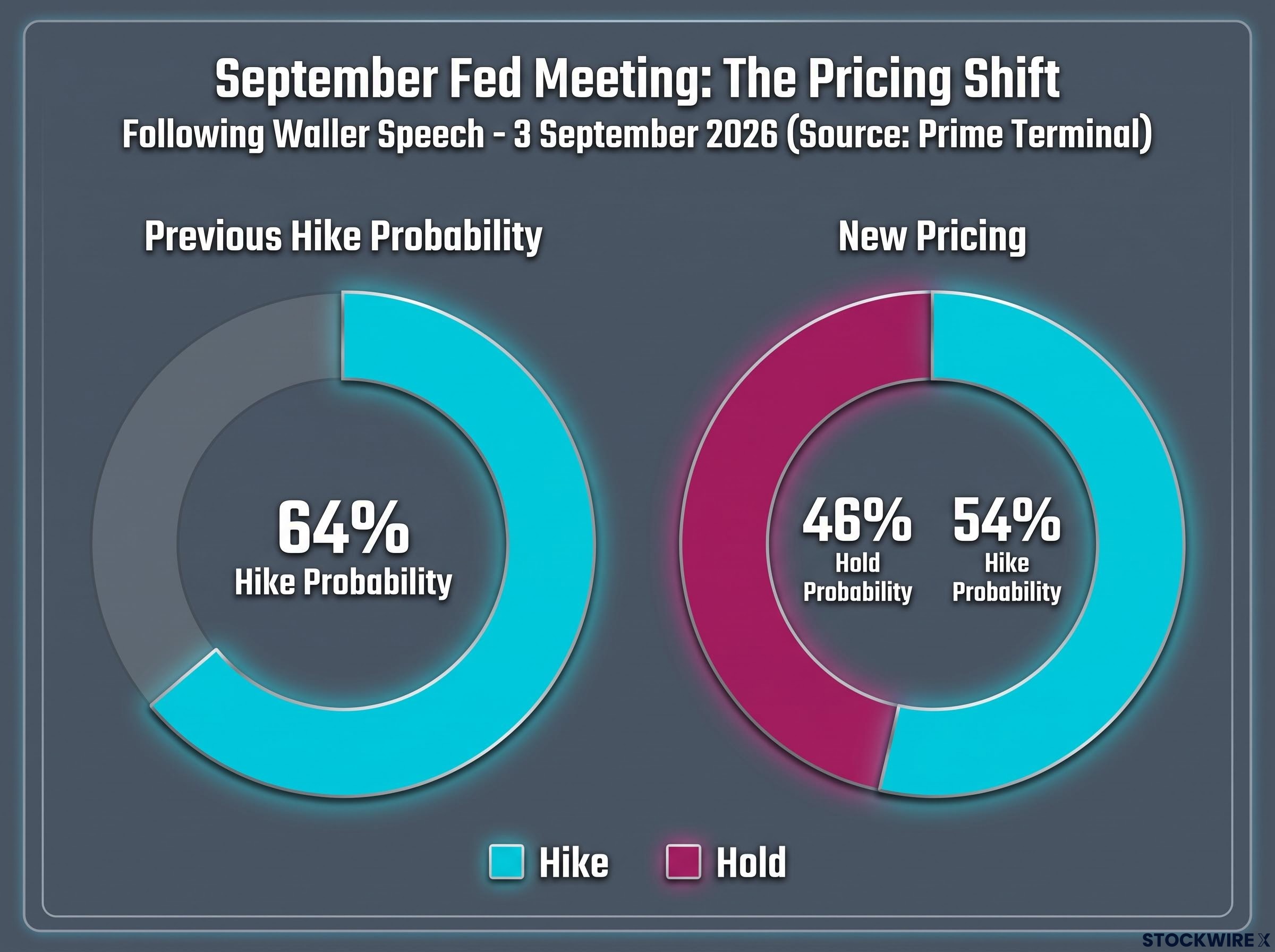
September Fed meeting: the pricing shift Hike probability: down from 64% to 54% Hold probability: up to 46% Source: Prime Terminal
A hold bias caps US yield expectations, and capped yields undercut the dollar’s carry appeal. That is the transmission line from a single speech to a falling currency index.
Bank of Japan dynamics
The second front opened in Tokyo. A reported rate check, official soundings that often precede intervention, put an immediate ceiling on USD/JPY and dragged the pair sharply lower.
Here is the mechanical chain. A stronger yen forces global investors to unwind USD-funded carry trades, the strategy of borrowing cheaply in yen to buy higher-yielding dollars. As those positions close, dollars are sold, and the selling spills across the whole index.
The yen carry trade sits at the centre of this transmission mechanism: when the BoJ signals tighter policy or intervenes to support the yen, leveraged investors who borrowed cheap yen to buy higher-yielding assets are forced to sell those assets and repatriate funds, flooding the market with dollars in the process.
For you, the takeaway runs deeper than a one-day headline. When two major central bank narratives align against the US dollar at the same time, you are watching a structural repricing of yield differentials, not a temporary reaction that fades by the next session.
Sustaining the momentum depends on imminent US payroll data
The optimism is real, but it rests on a fragile foundation. This rally was built on expectations of what the Fed will not do, and a single strong data print could rewrite that assumption overnight.
That test arrives with August Nonfarm Payrolls and the US Unemployment Rate, the primary scheduled releases on the calendar. A hot payrolls figure would push US yields higher, hand the dollar a reason to rebound, and cap the Aussie’s advance in short order.
FX desks are watching three structural factors to judge how the pair holds up:
- Rate-differential sensitivity: Strong US data that lifts yields tends to support the dollar and pressure AUD/USD. Softer data reinforces the current strength.
- Domestic Australian backdrop: With Australia’s economic calendar effectively empty, there is no local catalyst to offset a US surprise. Direction is being outsourced to Washington.
- Commodity pulse: Firm bulk commodity prices and steady Chinese demand expectations provide a baseline of support that can cushion the Aussie against negative shocks.
There is also the question of positioning. FX strategists note that if speculative long-AUD bets are already stretched, even a mildly stronger US print could trigger an outsized reversal as traders unwind.
For you, the practical implication is stark. A quiet Australian data week means your Aussie positions are entirely at the mercy of US employment figures, so the payroll prints deserve your full attention this week rather than any local release.
For investors wanting to position ahead of Friday’s release, our dedicated guide to reading the NFP report covers the specific internal components, wages, revisions, and sector composition, that move markets beyond the headline number.
This article is for informational purposes only and should not be considered financial advice. Investors should conduct their own research and consult with financial professionals before making investment decisions. Past performance does not guarantee future results, and these forward-looking assessments are speculative and subject to change based on market developments.
Navigating the next phase of currency volatility
The Aussie’s climb above 0.7200 is holding for now, but the level is best understood as a delicate equilibrium rather than a firm floor. It sits balanced between a Federal Reserve leaning dovish and a global risk mood still comfortable enough to reward pro-cyclical currencies.
Both of those supports are conditional. A shift in Waller’s data-dependent stance or a sudden souring of risk appetite could pull the ground out from under the pair quickly.
Geopolitical risk in currency markets no longer flows through the dollar as reliably as it once did; ING strategists argue that AUD/NZD has become a cleaner read on energy-driven risk appetite than EUR/USD, given America’s shift to net energy exporter status.
The next decision point is not far off. US employment data will either validate the current setup or expose it, and that print is the pivot on which your near-term currency exposure now turns. Watch the payrolls, watch the yield reaction, and size your positions for a market that has handed the steering wheel to Washington.