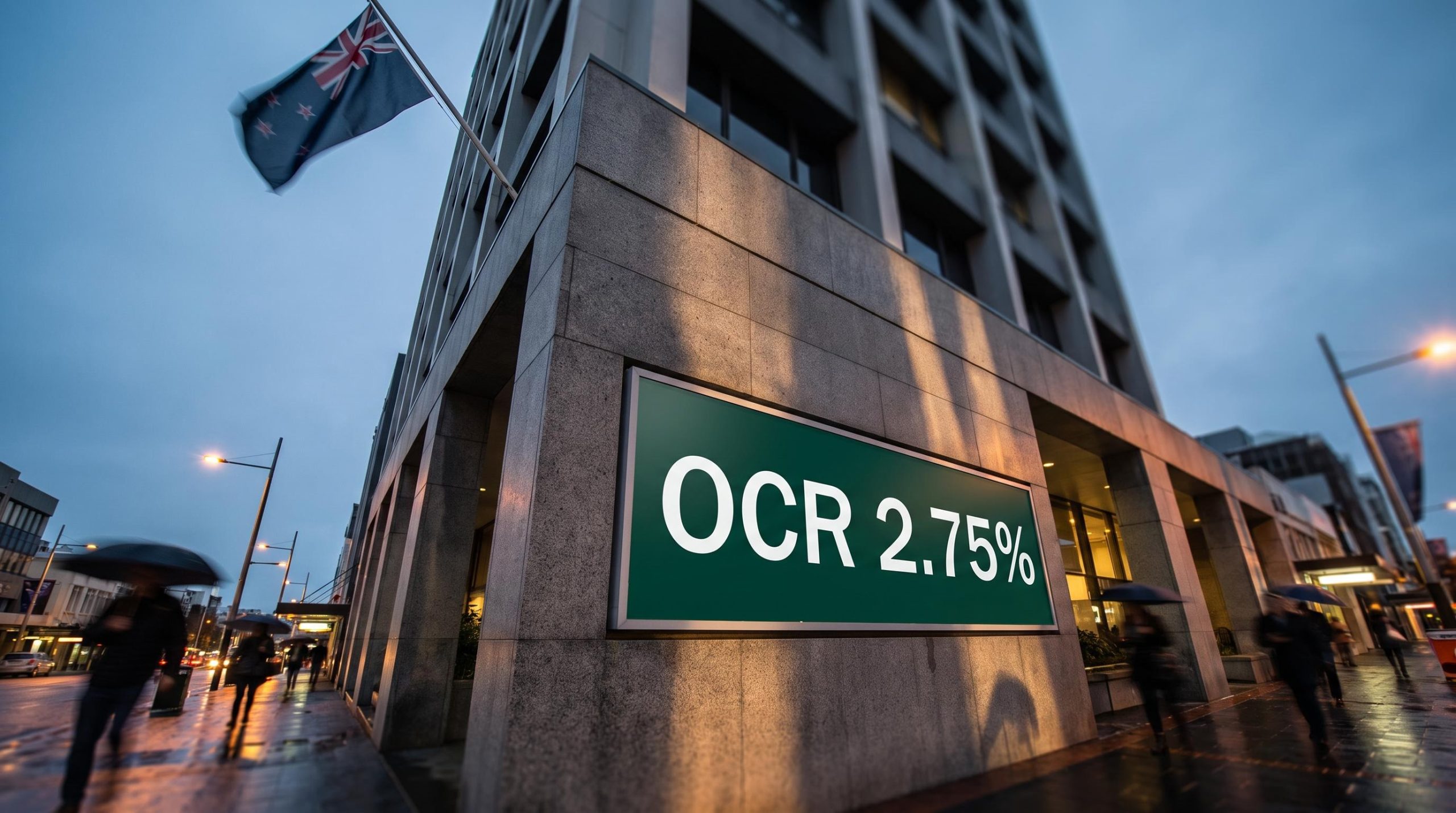
Markets have priced a 25bp hike to 2.75% at above 90% probability, with some assessments placing it closer to 100%. When the outcome is that settled before the meeting even begins, the September decision itself is not where the information sits.
The Reserve Bank of New Zealand (RBNZ) signalled this step explicitly in its May Monetary Policy Statement (MPS) and executed the preceding 25bp move to 2.50% on 8 July 2026. September is the middle chapter of a tightening cycle, not a turning point.
Here is what the September decision actually tells you about where New Zealand rates are heading, which meetings carry genuine repricing risk, and what an inflation surprise could change about the path to a 3.30% peak.
Why the September hike is effectively a formality
A pause at the 2 September meeting would require the RBNZ to contradict its own published guidance, undermine the logic of the July hike it delivered less than two months ago, and damage the communications credibility it has spent the cycle building. That combination makes a hold effectively impossible.
Three conditions explain why:
- The May MPS revised the September 2026 OCR projection from 2.28% to 2.51%, mapping this step months in advance
- Incoming data have broadly matched the RBNZ’s projections, removing the data-shock justification a pause would need
- The communications cost of stopping now, after telegraphing the move this clearly, would raise questions about every future signal the bank sends
The May 2026 hawkish pivot established the foundation for the current rate sequence, with the RBNZ projecting New Zealand inflation peaking at 4.3% and explicitly warning that hikes would arrive sooner and hit harder than previously signalled.
Both TD Securities and Westpac independently forecast the same 25bp move to 2.75%. According to analysts Prashant Newnaha and Howard Du at TD Securities, all six Monetary Policy Committee (MPC) members are expected to arrive at this outcome by consensus.
TD Securities forecasts a unanimous six-member MPC decision, reinforcing that internal dissent is not the story at this meeting.
That near-unanimous pricing tells you something practical: trading the September decision itself carries minimal edge. The information value of this meeting lies entirely in the statement tone and any OCR track revisions that follow the rate announcement.
When big ASX news breaks, our subscribers know first
The rate path to 2027: slow, steady, and conditional
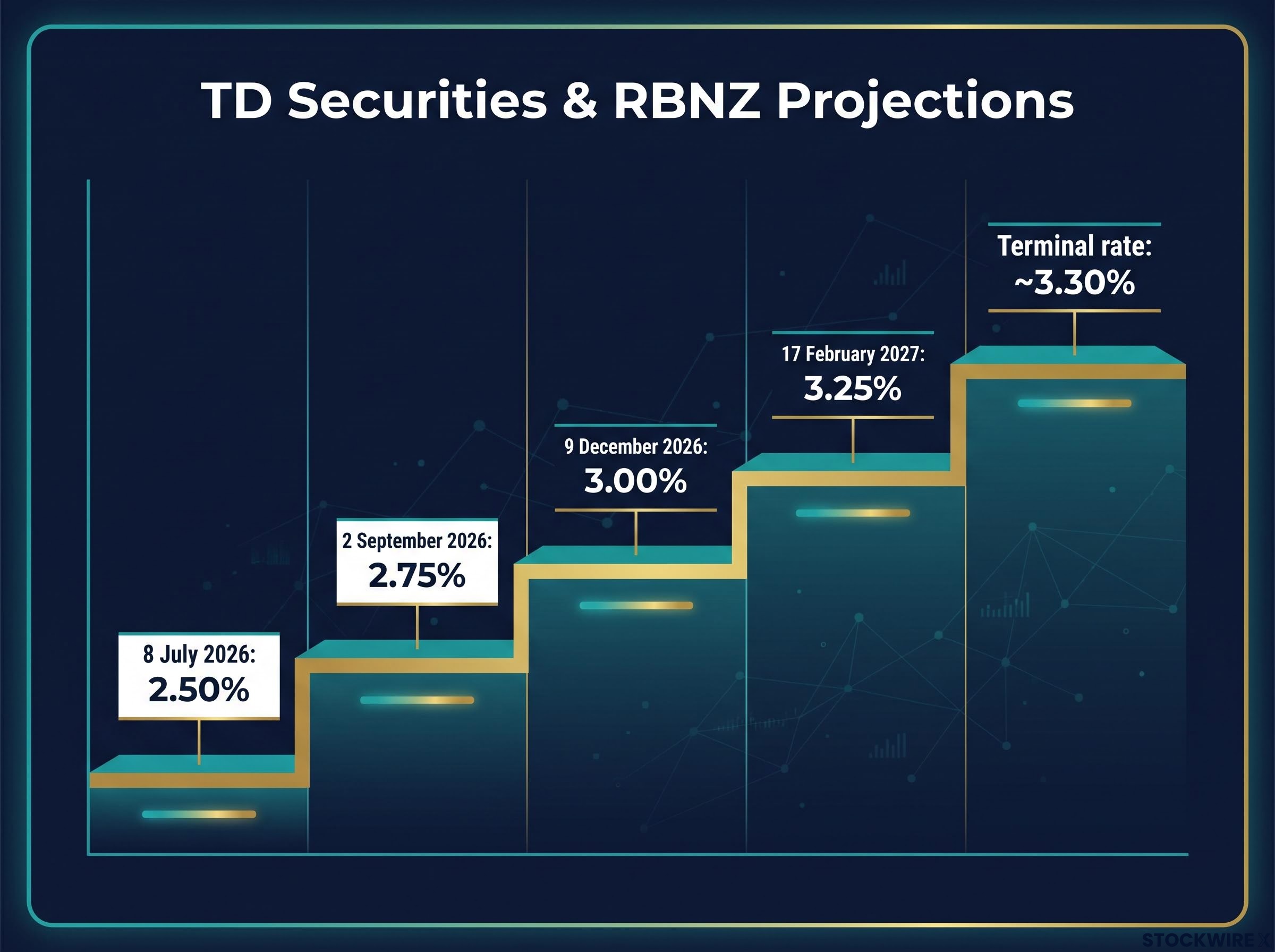
September is the first of three projected 25bp steps that would take the Official Cash Rate (OCR) from 2.50% to a terminal rate near 3.30% by early 2027. The sequence, meeting by meeting, builds a picture of where rates are heading and how quickly they get there.
| Meeting date | Move | Resulting OCR | Source |
|---|---|---|---|
| 2 September 2026 | +25bp | 2.75% | TD Securities; Westpac |
| 9 December 2026 | +25bp | 3.00% | TD Securities |
| 17 February 2027 | +25bp | 3.25% | TD Securities |
| Terminal rate | Hold | ~3.30% | TD Securities; RBNZ May MPS (~3.28%) |
The logic behind describing this as a “slow and steady” cycle comes back to the output gap, which is the difference between what the economy is producing and what it could produce at full capacity. The RBNZ’s assessment is that the gap remains negative, meaning the economy is still operating below its potential. That limits the case for aggressive tightening and keeps the terminal rate around 3.25-3.30% rather than pushing meaningfully higher.
Terminal rate plateau dynamics differ meaningfully across the Tasman: while Australian banks projected a cash rate path toward 4.85% with a prolonged hold, the RBNZ’s lower output-gap-constrained ceiling near 3.30% reflects a structurally different capacity constraint on how far tightening can run.
What makes this path unusually predictable is the convergence between forecasters and the central bank itself. TD Securities projects a terminal rate of approximately 3.30%. The RBNZ’s own May MPS projected approximately 3.28%. The May MPS also revised its June 2027 OCR path from 2.62% to 3.07%, showing the upward adjustment has already been made. Barring a data shock, the rate path through early 2027 is more legible than most tightening cycles, which reduces, but does not eliminate, repricing risk at upcoming meetings.
Inflation is the variable that rewrites this story
The orderly three-step path to 3.30% holds only if inflation tracks the RBNZ’s projections. If price pressures prove stickier than the May MPS assumed, the terminal rate moves higher, arrives earlier, or stays in place longer.
There is already evidence the committee’s tolerance for persistent inflation is not unlimited. The May MPC vote on whether to hike immediately was a 3-3 split, resolved by the governor’s casting vote to hold at 2.25%. The committee opted not to move, but simultaneously revised the OCR track sharply higher. That combination, holding while signalling more tightening ahead, tells you the internal appetite for action is real even when the vote is tight.
Regional CPI trends provide important context for the RBNZ’s inflation risk assessment: Australia’s June 2026 trimmed mean of 3.6% came in below both market consensus and RBA forecasts, a modest positive signal for the broader Asia-Pacific disinflation narrative that the RBNZ is watching across the Tasman.
TD Securities identifies upside inflation as the principal risk capable of shifting the terminal rate above approximately 3.30%, whether by accelerating the pace of hikes or raising the eventual peak. The three forms that risk could take at future meetings:
- An earlier hike than currently projected at the December or February meetings
- An additional hike beyond the current three-step path, pushing the peak above 3.30%
- A longer hold at the terminal rate before any easing begins
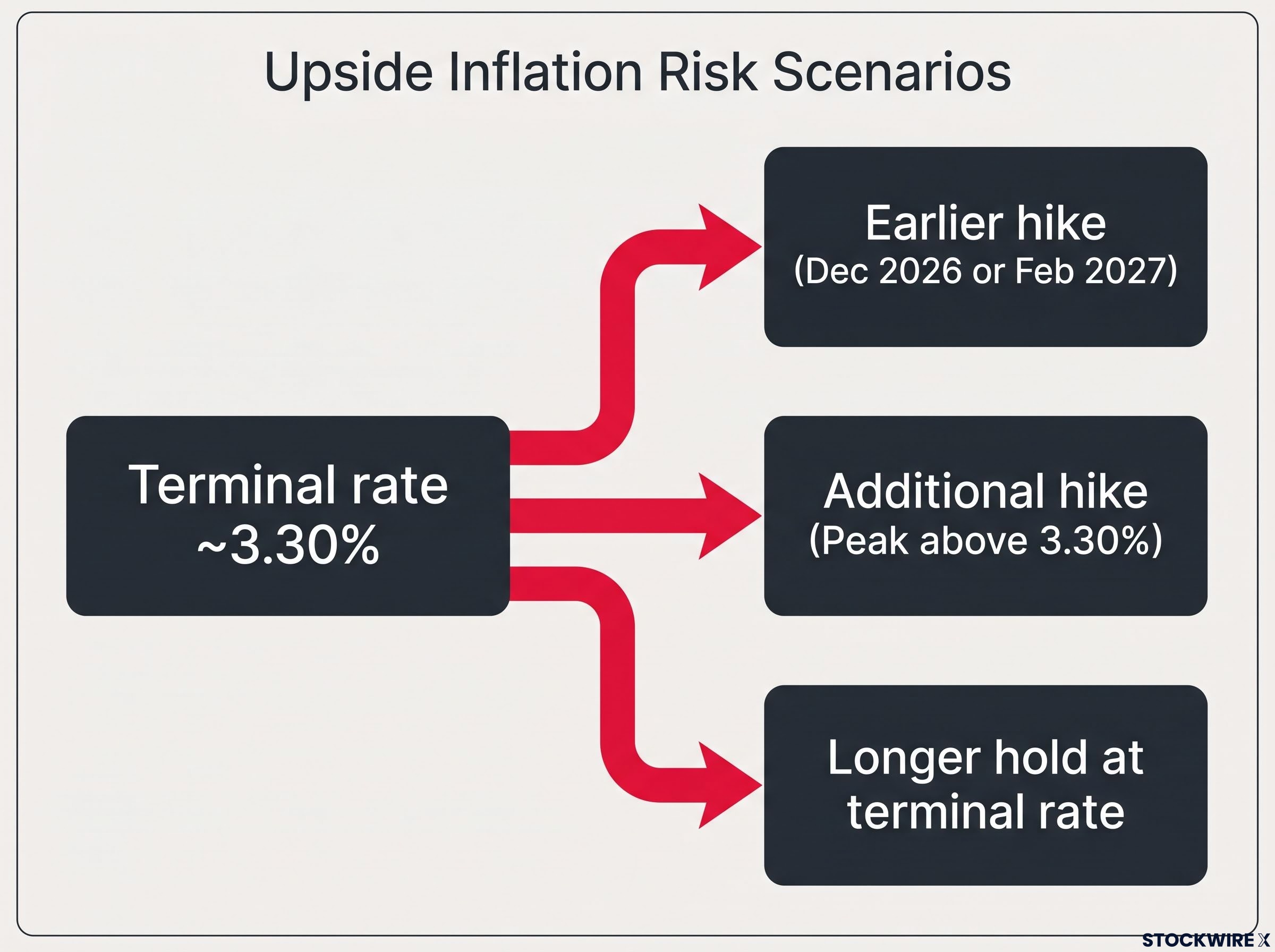
TD Securities identifies upside inflation risk as the single factor most likely to push the terminal rate above approximately 3.30%, with December 2026 and February 2027 as the meetings where that risk would materialise in policy.
Analysts do not expect the September meeting itself to reprice the terminal rate. December 2026 and February 2027, when updated projections and additional inflation data are available, are the meetings where upside inflation risk translates into a higher or earlier peak.
What to listen for in the September statement
The practical implication is that the September statement’s inflation language matters more than the rate move. Any shift toward “upside risks are materialising” would itself be an early signal, pushing swap rates and front-end yields before December even arrives. The next two meetings carry the real repricing risk; September opens the surveillance window on inflation rather than closing it.
What the September decision actually signals for NZD and rate markets
A straightforward 25bp hike matching expectations limits immediate NZD upside because the move is already embedded in positioning. Historical patterns from this cycle show that when RBNZ hikes match expectations, the currency reaction tends to be modest and driven by guidance rather than the move itself.
What markets will actually trade on, in descending order of likely impact:
- OCR track revisions: Any change to the projected path, particularly the level and timing of the peak, feeds directly into swap rates and bond yields
- Inflation risk language: Stronger-than-expected framing of price pressures would push markets to price a higher or earlier terminal rate, supporting NZD
- Tone on December 2026: Whether the statement reinforces or softens expectations for the next 25bp step sets the positioning for the quarter ahead
New Zealand’s transparent, data-anchored hiking narrative positions the country as offering a relatively legible rate cycle compared to peers. For anyone with NZD exposure or positions in New Zealand rate markets, September is a positioning checkpoint rather than a catalyst. The decision confirms the path, but December is where the path could change. Understanding that distinction prevents you from misreading a muted post-decision NZD move as a signal that the cycle is softening.
Comparable tightening cycles in the region illustrate how central bank optionality language can evolve across consecutive hikes: the RBA’s May 2026 decision to raise to 4.35% preserved full flexibility without committing to a pause or a fourth hike, a communications posture that contrasts with the RBNZ’s more explicit forward path.
September locks in the path; the real verdict arrives in December
The 25bp hike to 2.75% is confirmed by the data, the guidance, and the pricing. September delivers the expected step, and the MPC is forecast to do so unanimously.
The meeting that matters is 9 December 2026, when updated inflation data and revised projections will determine whether the path to 3.30% holds or steepens. 17 February 2027 is where the terminal rate question gets answered definitively.
The 3.30% peak is conditional. It holds if inflation tracks as the RBNZ projected in May. It rises if price pressures prove stickier than those projections assumed. That is the binary to watch.
This article is for informational purposes only and should not be considered financial advice. Investors should conduct their own research and consult with financial professionals before making investment decisions. These statements are speculative and subject to change based on market developments and economic conditions.