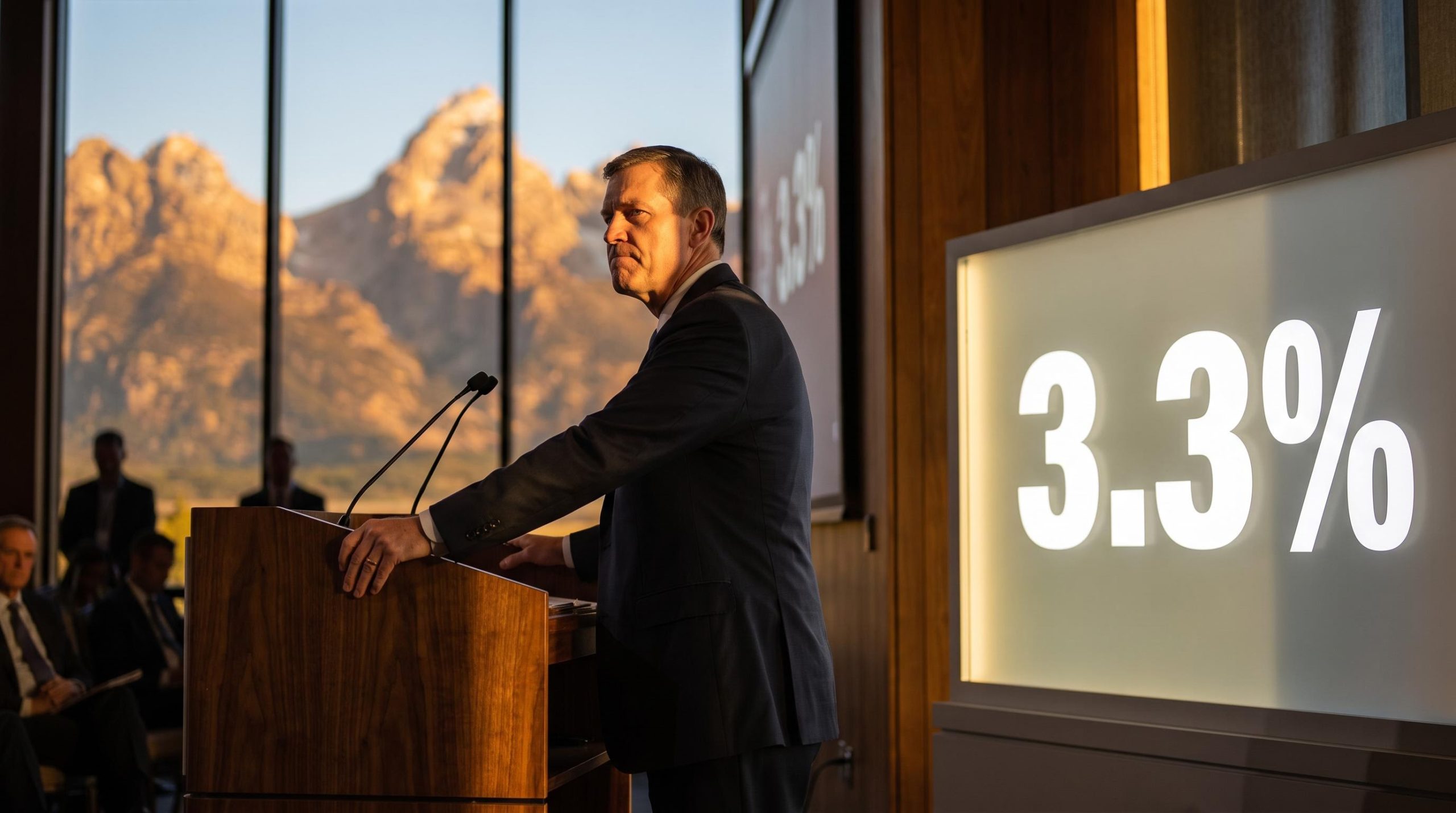
Kansas City Federal Reserve President Jeffrey Schmid used the Jackson Hole Economic Symposium on 27 August 2026 to deliver a blunt message to markets still pricing in rate cuts before the end of the year: do not count on them. With core inflation stuck near 3.3%, well above the Fed’s 2% target, Schmid argued that current policy may not be restrictive enough, and that the real debate inside the Federal Reserve is between holding steady and hiking further.
His remarks land less than three weeks before the 16 September Federal Open Market Committee (FOMC) meeting, the first major rate decision under new Chair Kevin Warsh. Markets had been drifting toward expectations of at least one cut by year-end. Schmid’s intervention complicates that bet considerably.
Here is what his positioning tells you about the near-term rate path, why energy prices are the specific threat that could keep policy tight into the fourth quarter, and which corners of your portfolio face the most pressure if borrowing costs stay elevated.
Why current rate levels may not be restrictive enough
Schmid’s core argument is straightforward and uncomfortable for anyone positioned for cheaper money. The federal funds rate sits at 3.5% to 3.75%. Core inflation is running at roughly 3.3% year-on-year. That gap, in Schmid’s view, is too narrow to bring prices back to the 2% target with any urgency.
The BEA’s core PCE price index, the Federal Reserve’s preferred inflation gauge, recorded a 3.3% year-on-year increase through July 2026, confirming that price pressures remain well above the Fed’s 2% target and giving Schmid’s hawkish framing a direct empirical foundation.
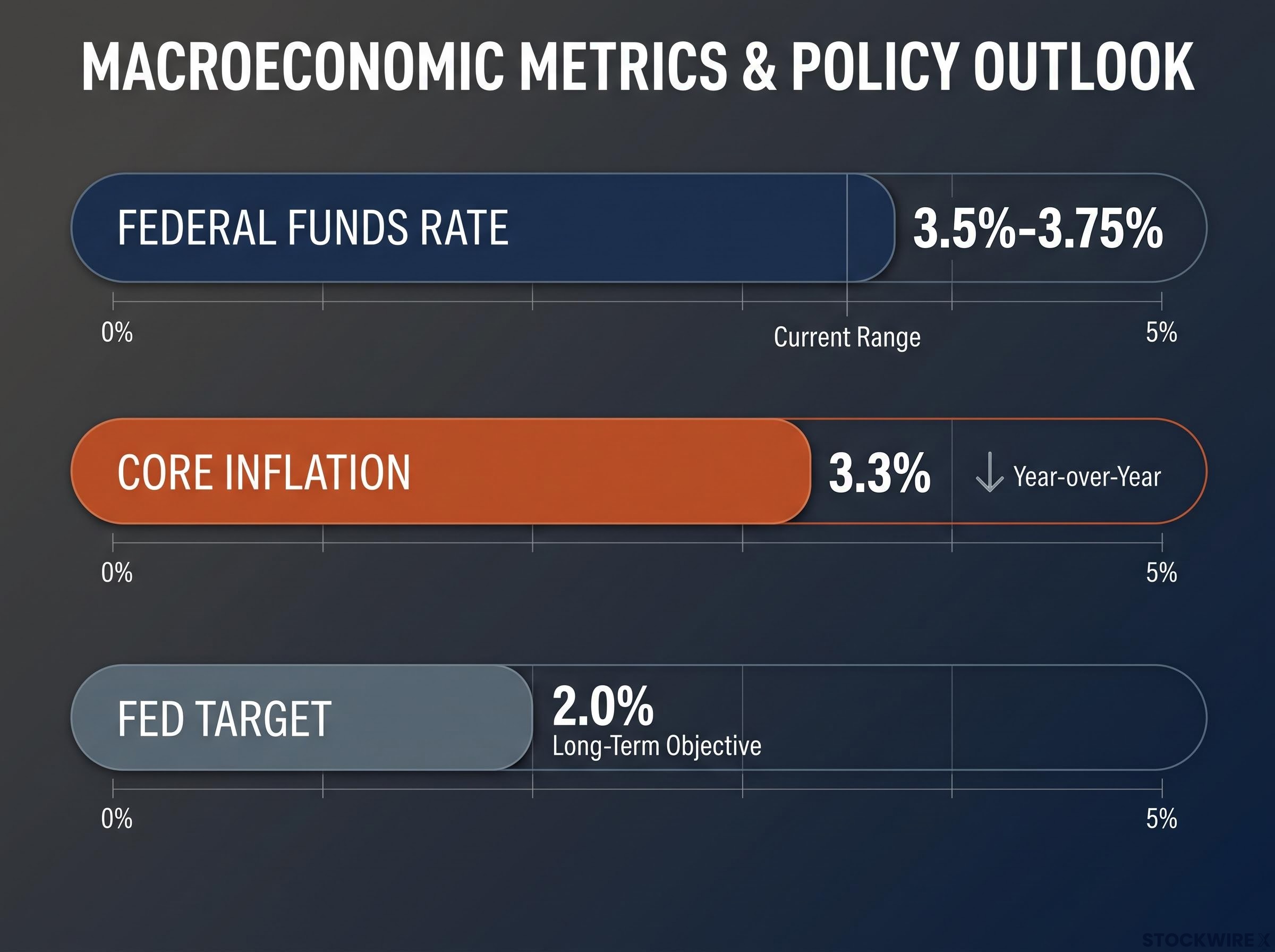
He framed the Fed’s options in binary terms: hold patient at current levels, or hike further. Rate cuts were not part of the conversation. That framing matters because it shifts the entire distribution of possible outcomes. The best case for rate-sensitive assets is no change; the worst case is an additional tightening.
Warsh’s July testimony before the House Financial Services Committee established the same binary that Schmid is now reinforcing at Jackson Hole: the June hold was not a softening of resolve, and the asymmetric risk on rates remains to the upside.
Schmid described inflation as “stubborn” and above target “for too long,” reinforcing that the Fed’s inflation fight remains unfinished heading into the September meeting.
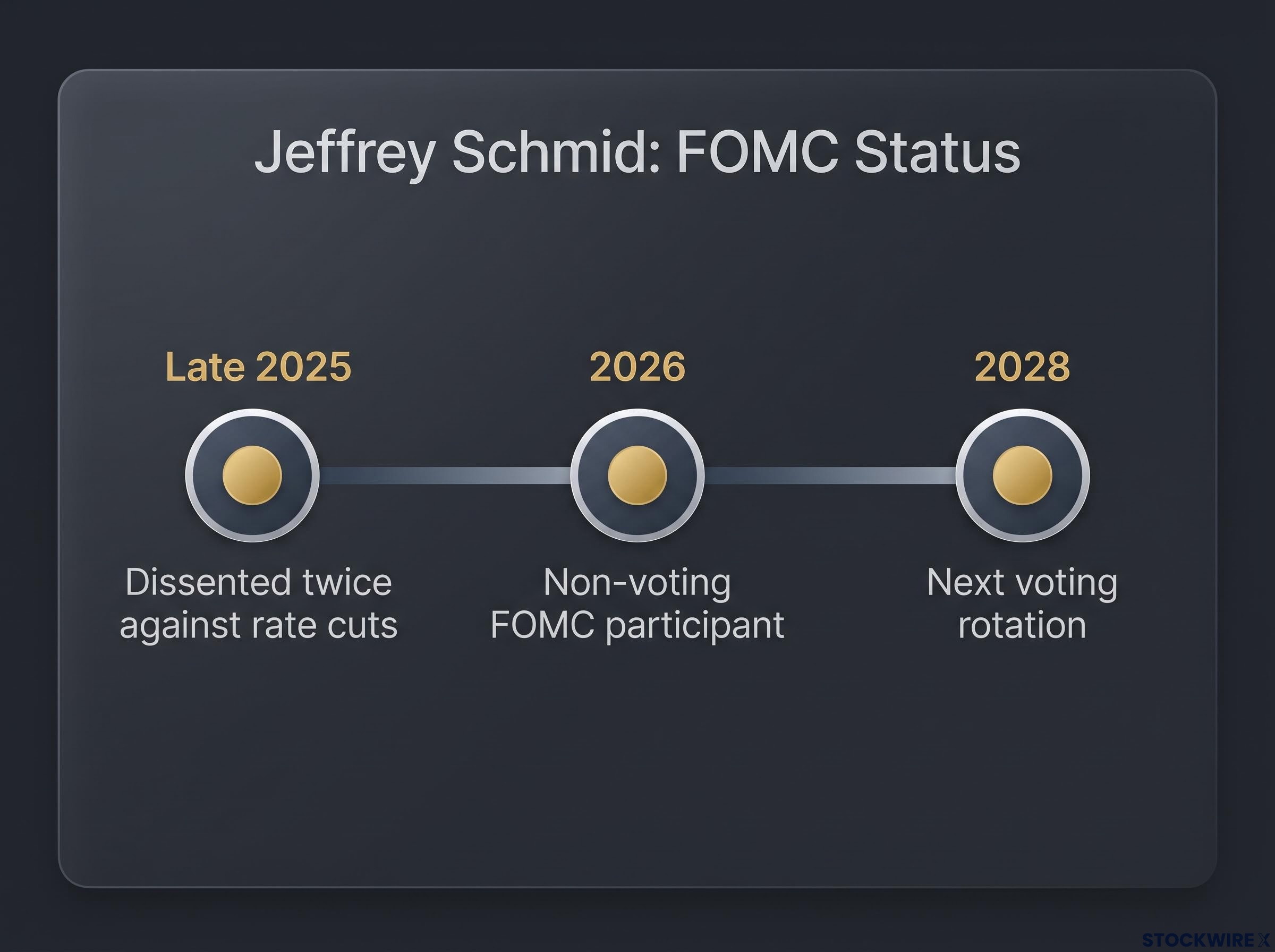
Schmid is a non-voting FOMC participant in 2026, with his next voting rotation not until 2028. That limits his direct policy influence. But his willingness to dissent twice against rate cuts in late 2025 signals where the hawkish wing of the committee sits, and vocal hawks shape the debate even without a vote. The practical read here is clear: stop waiting for a dovish pivot. The floor under borrowing costs heading into the fourth quarter is higher than consensus had assumed just a week ago.
Energy spillovers threaten the September policy timeline
The inflation story has a specific villain, and Schmid named it directly. He rejected the idea that recent energy-driven price pressures are temporary, warning that he is “uncomfortable ever assuming that a burst of inflation is likely to be temporary” and that inflation shocks “are not intrinsically transitory.”
That language deliberately echoes the lesson of 2021-2022, when the Fed’s initial characterisation of inflation as transitory proved catastrophically wrong. Schmid is signalling that the committee will not make the same mistake twice. Rising oil prices do not stay contained at the petrol pump. They feed into transport costs, production costs, and eventually wages, creating a second-round effect that embeds itself in core inflation readings.
The scale of energy cost pass-through into core goods is larger than headline CPI captures, with Dallas Fed modelling placing the 2026 Iran conflict’s contribution to PCE between 0.35 and 1.47 percentage points above a no-war baseline, a range that directly informs why Schmid refuses to treat current energy pressures as transitory.
For the Fed, that transmission mechanism is the specific risk that could delay any easing well beyond the September meeting. If energy prices remain elevated or accelerate into the northern autumn, the data arriving at the FOMC table on 16 September will argue for caution, not relief. Rising prices at the pump are no longer just a consumer headache; they are the exact data point that could keep rate-sensitive assets in your portfolio under sustained pressure.
| Metric | Current level | Fed objective |
|---|---|---|
| Federal funds rate | 3.5%-3.75% | Restrictive enough to return inflation to target |
| Core inflation (year-on-year) | ~3.3% | 2.0% |
| Energy price trajectory | Rising, with spillover into core goods | Contained, non-persistent |
Portfolio rotation in a higher-for-longer regime
Schmid’s remarks translate into a specific set of pressures across asset classes. If the Fed holds at 3.5% to 3.75% or moves higher, the cost of capital stays expensive, and the sectors most dependent on cheap debt face the sharpest repricing risk.
Fixed income: Keep duration moderate. Long-dated bonds carry the most downside if markets reprice toward a prolonged plateau or an additional hike. Favour high-quality government bonds and Treasury Inflation-Protected Securities (TIPS), which are bonds whose principal adjusts with inflation, to hedge against a persistent 3%-range inflation environment.
Real assets: A stronger US dollar, supported by the Fed remaining more hawkish than its global peers (several of whom have already begun easing), creates a headwind for international exposure. Select energy and infrastructure holdings may offer partial inflation protection, though sizing should reflect the volatility inherent in commodity-linked positions.
Equity sectors positioned for sticky inflation
The equity calculus shifts toward companies that can pass costs through to customers. Businesses with demonstrated pricing power, strong free cash flow, and manageable debt loads are better positioned than those reliant on multiple expansion or cheap refinancing.
- Rate-sensitive sectors under pressure: Real estate investment trusts, utilities, and highly leveraged equities face the most direct headwind from sustained restrictive policy
- Pricing power as a filter: Companies generating strong free cash flow and maintaining margins through cost pass-through offer more defensible positioning
- Energy and infrastructure: Select names in these sectors serve a dual role as both inflation hedges and beneficiaries of the structural demand Schmid flagged
A delayed easing cycle requires you to stress-test holdings against a prolonged period of expensive capital. The shift is away from companies that need cheap debt to grow and toward those already generating the cash to fund themselves.
Navigating the final data releases before the September FOMC
The three weeks between Schmid’s Jackson Hole remarks and the 16 September FOMC meeting will be shaped by incoming inflation prints, energy price movements, and wage data. Each release either reinforces Schmid’s hawkish baseline or gives Chair Warsh room to signal a more measured tone.
Watch Warsh’s own communications closely. If his language aligns with Schmid’s framing, the market’s remaining rate-cut expectations for 2026 will compress further. If he tempers the message, the September meeting may pass without action but with the door left open for later in the year.
The FOMC meeting calendar itself may be subject to structural change under Warsh, who has raised the possibility of reducing annual sessions from eight to six, a shift that would concentrate rate decisions into fewer windows and amplify the market impact of each remaining data release.
Either way, this is a period for defensive patience rather than aggressive directional positioning. The pricing of sustained restrictive policy is still catching up to what the Fed’s hawkish wing has been saying out loud.
Schmid’s non-voting status in 2026 does not neutralise his influence, and the FOMC vote split from July, which recorded three hawkish dissents in favour of an immediate hike, already illustrates how vocal minority positions shape the committee’s signalling even before a rate decision formally changes.
This article is for informational purposes only and should not be considered financial advice. Investors should conduct their own research and consult with financial professionals before making investment decisions. Forward-looking statements regarding Fed policy are speculative and subject to change based on incoming economic data and committee deliberations.