
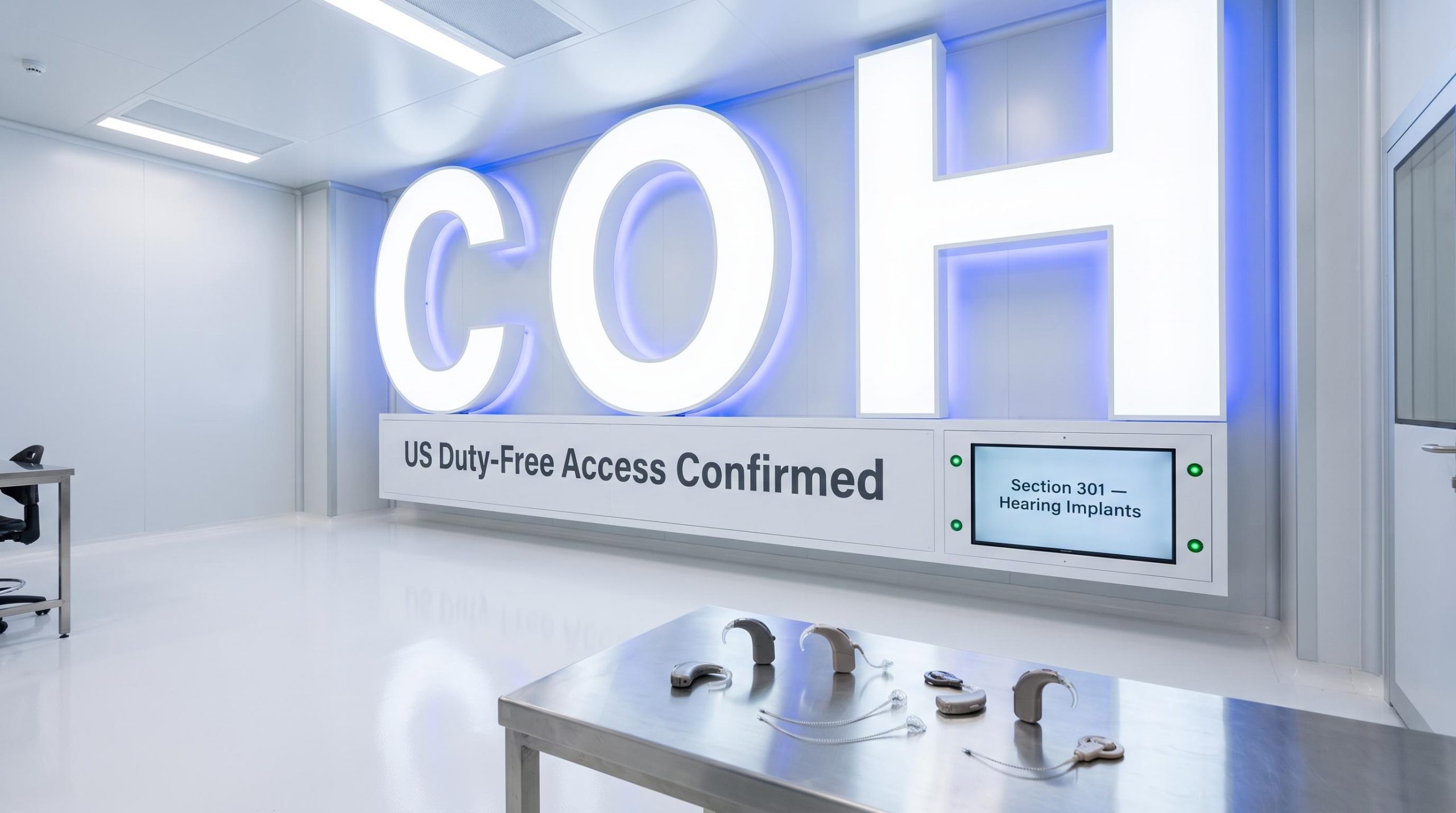
Cochlear confirms US duty-free access retained after Section 301 tariff ruling
Cochlear Limited (ASX:COH) has confirmed it will continue to import its hearing implant systems into the United States duty-free, following the release of the US Government’s Section 301 Investigations findings on 24 July 2026.
The confirmation preserves existing tariff-free access into the US. Critically, this is a continuation of Cochlear’s current status rather than a new benefit.
When big ASX news breaks, our subscribers know first
What the Section 301 ruling means for Cochlear
The US Government’s findings relate to the Section 301 Investigations of Acts, Policies, and Practices concerning “the Failure to Impose and Effectively Enforce a Prohibition on the Importation of Goods Produced with Forced Labor.”
The final determination included the chapter of the Harmonized Tariff Schedule of the United States that provides for the duty-free importation of a range of products into the US, including hearing implants. In practical terms, no import duty applies to Cochlear’s hearing implant systems entering the US market.
Dig Howitt, CEO and President of Cochlear
“We’re pleased that the US Government has recognised the importance of continued access for Americans who rely on the medical technology of cochlear implants to hear clearly, participate fully in life and deliver a substantial social and economic contribution to the US.”

Why tariff exposure matters for medical device exporters
For Cochlear, confirmation of continued duty-free access removes a cost-side risk in the US. Key investor takeaways include:
-
Duty-free status preserved on US imports
-
No new cost burden on hearing implant systems
The growth runway: medicalisation of hearing loss
Beyond the tariff clarity, the announcement reiterated a structural growth story. According to Cochlear, the clinical need for cochlear implants is “large and growing,” with only around 5% of people who could benefit from an implant currently accessing one.
Cochlear described itself as “the leader in the sector,” and noted it is actively working with key stakeholders to progress the “medicalisation of hearing loss.” This includes supporting the understanding of the social and economic benefits of intervention, alongside the adoption of appropriate policy frameworks across markets.
A large untapped addressable market underpins the long-term thesis, and protected US access supports the company’s ability to capture that demand over time.
| Fact | Detail | Investor Impact |
|---|---|---|
| US duty-free access | Confirmed retained under Section 301 finding | Removes tariff cost risk in key market |
| Market penetration | ~5% of eligible patients accessing implants | Large untapped growth runway |
| Market position | Sector leader | Positioned to capture demand |
What’s next for Cochlear
Looking ahead, Cochlear stated it will “actively monitor and engage in the global trade environment involving tariffs” so it can continue to provide implantable hearing solutions to as many people as possible and service existing recipients over their lifetime.
The company also indicated it will continue working with key stakeholders to support policy frameworks that recognise the social and economic benefits of intervention “in all markets.”
For investors, the combination of regulatory clarity in the US and a low-penetration global market supports Cochlear’s long-term structural growth story, with a material cost-side uncertainty now resolved favourably.
Stay Ahead on ASX Healthcare News
Big News Blast delivers FREE breaking ASX healthcare announcements directly to your inbox within minutes of release, complete with in-depth analysis already done. Over 20,000+ subscribers rely on it to stay ahead of the market. Click the “Free Alerts” button at StockWire X to start receiving alerts the moment news breaks.