

BlinkLab expands global autism research footprint with Ecuador collaboration
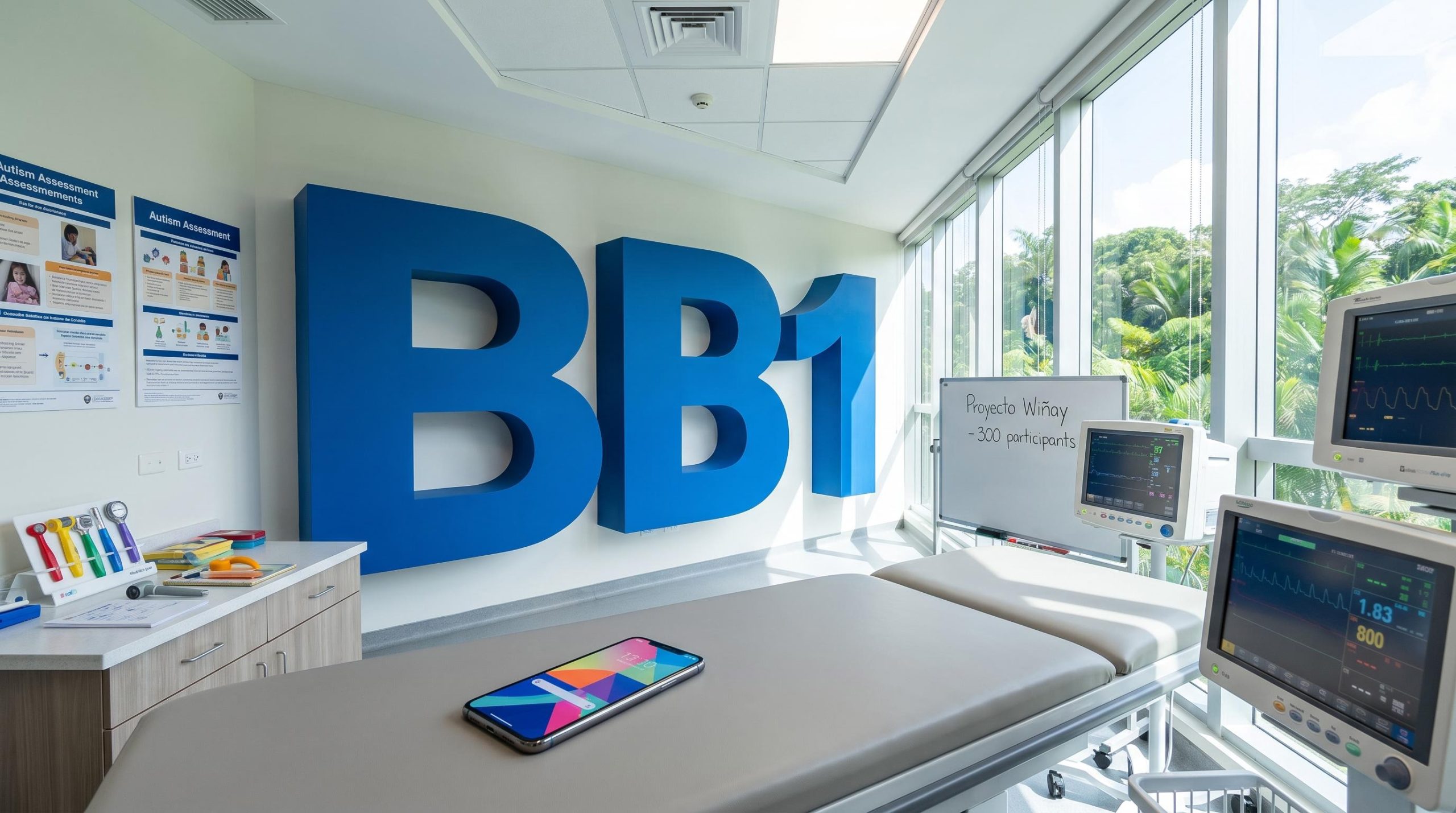
BlinkLab Limited has partnered with Escuela Superior Politécnica de Chimborazo (ESPOCH) to support Proyecto Wiñay, a large-scale study programme investigating autism, sensorimotor function and nutrition in Ecuadorian children and adolescents. ESPOCH is funding the programme through its state budget, whilst BlinkLab is providing its smartphone-based neurobehavioural assessment technology at no cost.
This marks BlinkLab’s second major regional collaboration following Morocco’s nationwide autism screening initiative, positioning the Company as a developer of scalable diagnostic tools across diverse healthcare systems. The study is expected to assess approximately 300 children within weeks, demonstrating the rapid deployment capability of BlinkLab’s technology in real-world settings.
For investors, the collaboration validates BlinkLab’s technology relevance across diverse healthcare systems and creates pathways for future commercial adoption in underserved markets where traditional diagnostic infrastructure remains limited.
When big ASX news breaks, our subscribers know first
Ecuador’s autism assessment gap presents strategic opportunity
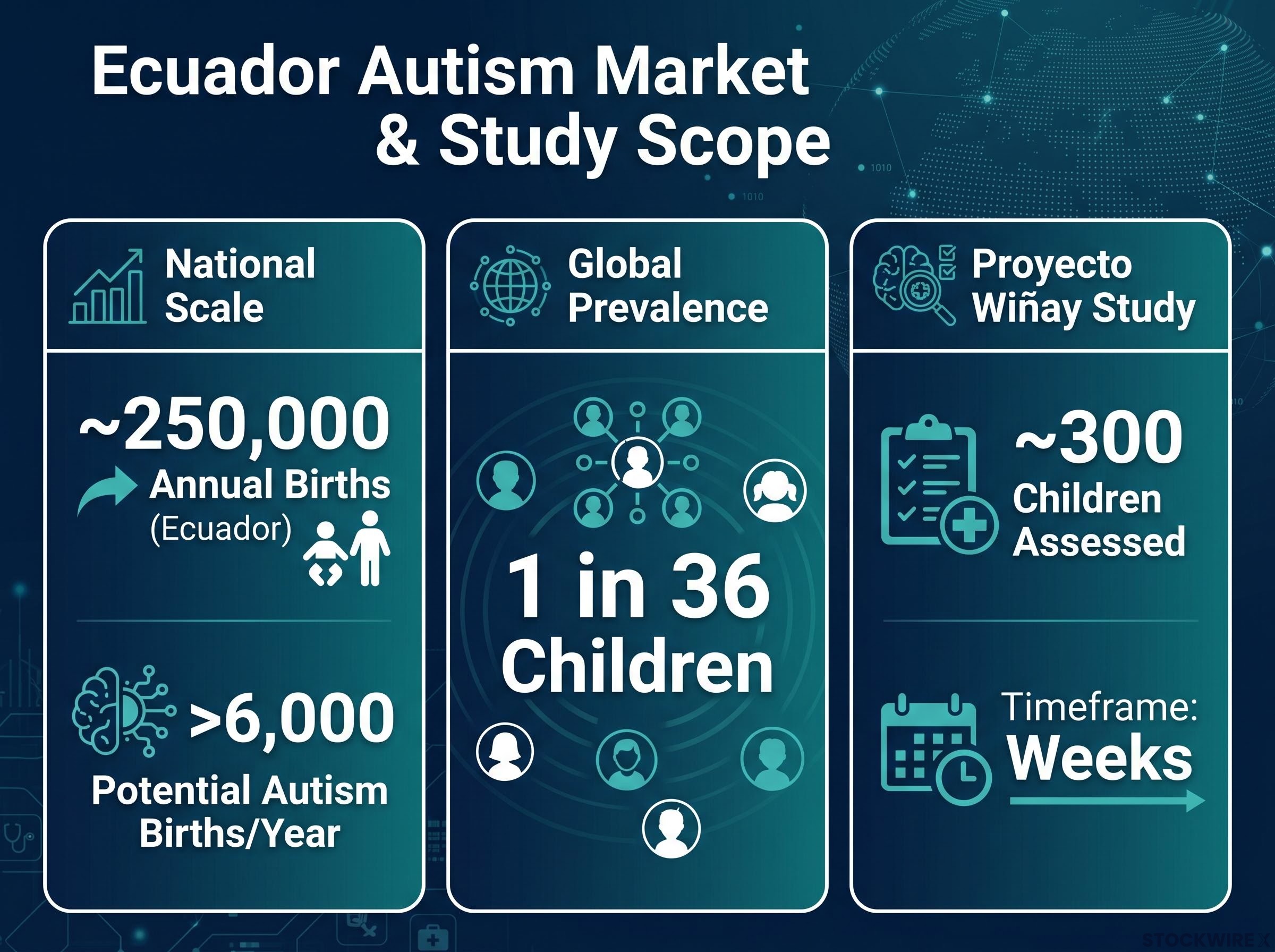
Ecuador records approximately 250,000 births annually. Based on current global autism prevalence estimates of approximately 1 in 36 children, more than 6,000 children may be born with autism in Ecuador each year.
South America faces significant shortages of specialist clinicians capable of assessing neurodevelopmental conditions, long diagnostic waitlists, and limited access to specialist services outside major urban centres. These structural healthcare challenges create demand for scalable assessment solutions that can support earlier identification and intervention.
BlinkLab’s smartphone-based platform is positioned to address these gaps by enabling standardised, accessible assessment without requiring specialist infrastructure or extensive clinical resources.
| Metric | Figure |
|---|---|
| Annual births (Ecuador) | ~250,000 |
| Autism prevalence estimate | 1 in 36 |
| Potential autism births per year | >6,000 |
| Study recruitment target | ~300 children |
| Expected recruitment timeframe | Weeks |
What is sensorimotor assessment and why it matters for autism detection
Sensorimotor assessment measures how the brain processes and responds to sensory information through objective, reflex-based measures. BlinkLab’s technology captures these responses via smartphone, providing standardised, non-invasive data that can be collected in diverse clinical and research settings.
This objective approach complements traditional caregiver-reported measures, which can be affected by cultural, socioeconomic and subjective factors. By capturing reflex-based responses, the technology provides consistent data regardless of reporting biases or regional differences in how autism symptoms are perceived and described.
Autistic children experience disproportionately high rates of feeding and nutritional challenges compared to their non-autistic peers. Sensorimotor integration differences, including altered responses to sensory stimuli, are understood to play an important role in food selectivity, nutritional imbalance and broader health outcomes.
For investors, objective smartphone-based assessment addresses a key limitation of current diagnostic pathways, supporting scalability across diverse populations and healthcare systems where specialist resources are constrained.
Proyecto Wiñay study design and BlinkLab’s role
Proyecto Wiñay is a comparative cross-sectional study involving autistic children and adolescents aged 3 to 17 years and matched non-autistic peers. The programme investigates relationships between sensorimotor integration, dietary patterns, nutritional status and gut microbiota composition.
The study protocol has been published in Frontiers in Psychiatry, a peer-reviewed open access journal focused on innovation in psychiatry. BlinkLab will provide scientific and technical assistance whilst making its technology available at no cost for use in the programme.
This generates real-world evidence and supports external validation of BlinkLab’s autism model in a non-US population, broadening the geographic and demographic range of the Company’s clinical data.
The study scope includes:
- Age range: 3-17 years
- Includes autistic children, non-autistic peers, and children with other developmental conditions
- Published protocol in peer-reviewed journal
- Examines sensorimotor function, nutrition and gut microbiota relationships
Building a global network of regional reference sites
The Ecuador collaboration complements Morocco’s government-supported autism screening initiative, forming part of BlinkLab’s broader strategy to establish regional reference sites through partnerships with academic institutions, healthcare providers and public health programmes.
BlinkLab now has studies underway across Europe, Australia, the United States, Africa and South America. The agreement terms include a two-year project agreement term and a five-year broader cooperation framework covering academic, clinical, research and technological initiatives of mutual interest.
BlinkLab’s therapy evaluation partnerships extend the platform’s utility beyond screening and into treatment monitoring, with the Erasmus MC collaboration in Rotterdam targeting objective digital endpoints for pharmaceutical and interventional studies in neurodevelopmental conditions.
No immediate revenue is expected from the collaboration. The programme is intended to support research, real-world evidence generation and broader international engagement with the Company’s technology.
For investors, regional reference sites generate clinical evidence, strengthen clinician relationships, and create adoption pathways as governments seek cost-effective autism screening solutions. These partnerships position BlinkLab to respond to future government tenders or commercial opportunities as awareness of smartphone-based assessment grows across underserved healthcare markets.
Leadership commentary on international expansion
Management emphasised the strategic importance of expanding BlinkLab’s global research footprint across multiple continents and healthcare settings.
Dr Henk-Jan Boele, Managing Director and CEO
“Proyecto Wiñay is an important program because it examines how sensorimotor function may relate to nutrition, gut microbiota and broader health outcomes in children with autism. BlinkLab is pleased to support ESPOCH through the provision of objective smartphone-based neurobehavioural technology. With studies now underway across Europe, Australia, the United States, Africa and South America, this collaboration further expands our global research footprint and demonstrates the broad applicability of our platform across diverse populations and healthcare settings. Importantly, we expect to complete the full recruitment and assessment of approximately 300 children within a matter of weeks.”
Brian Leedman, Non-Executive Chairman, highlighted that Ecuador represents another important example of the global need for accessible and scalable autism assessment technology, noting that following BlinkLab’s national program in Morocco, this collaboration with ESPOCH further demonstrates the international relevance of BlinkLab’s smartphone-based platform, and that healthcare systems are looking for practical tools that can support earlier identification, better research and more equitable access to care.
Key agreement terms and IP protections
The material terms of the collaboration include:
- Proyecto Wiñay is funded by ESPOCH through its state budget
- BlinkLab provides technology at no cost
- Two-year project agreement term; five-year cooperation framework
- BlinkLab retains ownership of background technology and platform
- BlinkLab owns all right, title and interest in data obtained through use of the application
- Enhancements to BlinkLab intellectual property by the collaborating party transfer to BlinkLab where permitted by law, or otherwise are subject to an exclusive, unconditional, perpetual, irrevocable, assignable and unrestricted right in favour of BlinkLab
- No immediate revenue expected from collaboration
For investors, IP and data ownership protections ensure BlinkLab retains commercial value from evidence generated through collaborative programmes. All data collected during the study becomes a Company asset, supporting future model refinement, regulatory submissions and commercial partnerships without reliance on third-party data access agreements.
Want the Next Healthcare Breakthrough in Your Inbox?
Join 20,000+ investors getting FREE breaking ASX healthcare news delivered within minutes of release, complete with in-depth analysis. Click the “Free Alerts” button at Big News Blast to start receiving alerts the moment market-moving announcements drop.