
Virtu Financial delivered a first-quarter earnings report on April 29, 2026, that fundamentally challenges how Wall Street values automated market-making. The firm reported net income of $346.6 million, generating an adjusted EPS of $2.24 to outpace analyst consensus estimates of $1.50.
This gap between expectation and reality reveals a deliberate corporate strategy designed to capture market volatility through aggressive resource expansion rather than passive execution. While the broader financial sector attributes recent trading success to transient market conditions, the underlying financial data points to distinct operational advantages.
The quarterly outcome demonstrates how precise capital allocation and a strictly controlled technology framework shield core operations from macroeconomic stagflation. Investors parsing this outperformance must evaluate the internal levers that converted volatile trading environments into sustained corporate growth.
The Quantitative Reality Behind the Q1 2026 Surge
The magnitude of the Q1 2026 performance forced immediate recalibrations across trading desks. According to company data, Virtu Financial posted total revenue generation of $1.1 billion, nearly doubling the projected $615 million consensus estimate. According to company data, this top-line variance directly translated into operating leverage, pushing modified EBITDA to $521 million for the three-month period.
Institutional desks increasingly rely on options market signals to front-run these post-earnings recalibrations, quantifying expected volatility before the underlying equity actually moves.
| Financial Metric | Consensus Estimate | Actual Reported | Percentage Variance |
|---|---|---|---|
| Total Revenue | $593.11 million | $1.1 billion | Positive 85.4% |
| Adjusted EPS | $1.51 | $2.24 | Positive 48.34% |
| Modified EBITDA | N/A | $521 million | 66% Margin |
Early session trading reflected this recalibration, with the stock advancing 2.67% to $51.75 on the morning of the release. This daily movement extended the year-to-date appreciation to 48%, prompting analysts at firms like Zacks to upgrade their forward profitability consensus per share for the full 2026 timeline. The firm did not simply absorb market volume; it processed order flow with exceptional cost efficiency.
Profitability Metric The quarterly modified EBITDA of $521 million yielded a 66% profitability margin, indicating that top-line revenue expansion efficiently bypassed rising operational costs to reach the bottom line.
This margin expansion isolates the actual driver of the quarterly success. The variance between the projected estimate and the actual adjusted EPS resulted from deliberate structural positioning rather than mere chance. Analyst assessments show that these liquidity improvements form the foundation for the operational strategies management deployed over the preceding two quarters.
When big ASX news breaks, our subscribers know first
Aggressive Capital Allocation and Talent Density as Structural Moats
Market volume provides the raw material for trading revenue, but structural capacity determines how much of that volume a firm can capture. Over the preceding seven months, management initiated a $500 million active trading capital expansion to widen the firm’s execution capacity. This aggressive capital deployment positioned the trading desks to intercept order flow before competitors could adjust their own liquidity models.
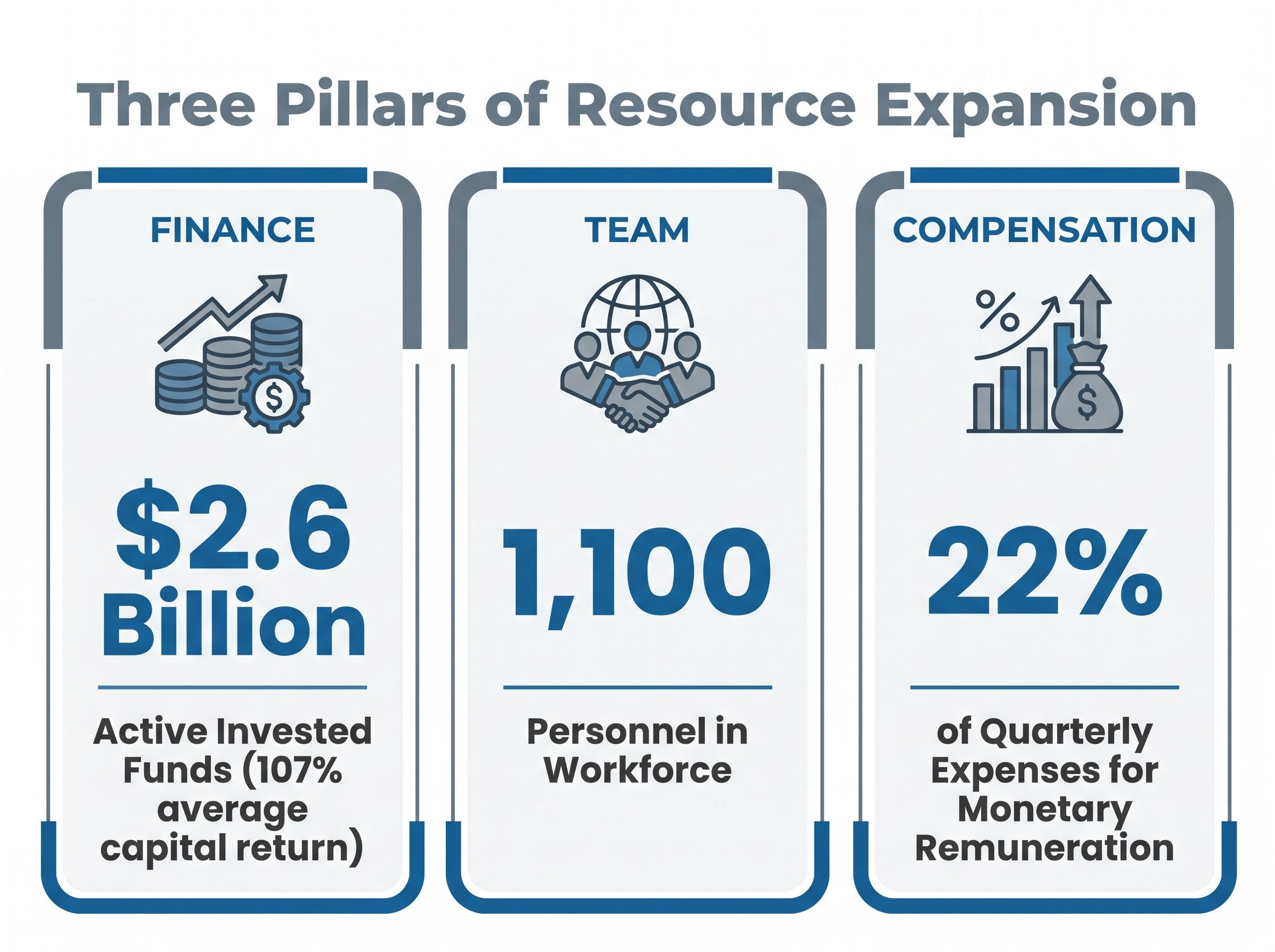
The internal resource expansion strategy operates across three distinct pillars:
According to company data, a total of $2.6 billion in active invested funds, which generated a 107% average capital return over the trailing year. A targeted workforce expansion reaching 1,100 personnel for the current calendar cycle to build an engineering talent moat against industry rivals. * According to company data, calculated monetary remuneration ratios accounting for 22% of quarterly expenses to secure and retain specialised quantitative developers.
This talent density ensures that the expanded capital base is deployed through highly optimised trading infrastructure. Sustaining these elevated remuneration ratios represents a calculated investment in human capital rather than a passive corporate expense.
While other technology firms sink billions into physical hardware and data center construction to support artificial intelligence, Virtu directs its capital purely toward human talent and low-latency execution advantages.
Despite these significant internal investments, the firm maintained its regular shareholder payout per share. The strategy secures operational dominance while continuing to deliver reliable baseline returns to equity investors.
Educational Breakdown: Why High-Frequency Trading Resists Generative AI
The aggressive recruitment of engineering talent coincides with a highly conservative stance on artificial intelligence deployment. To evaluate this technological strategy, investors must understand the concept of systemic vulnerability in automated execution. Traditional machine learning operates safely within back-office software engineering processes, where code can be verified manually before deployment.
Applying probabilistic generative models to live market decisions introduces unacceptable risks. A generative model evaluates probabilities and creates outputs based on broad data patterns rather than fixed rules. When executing thousands of orders per second, these unpredictable outputs can trigger cascading financial losses before human oversight can intervene.
Deterministic Execution vs Probabilistic Generation
Predictive market-making logic differs fundamentally from the large language models currently dominating the broader technology sector. Core execution services depend entirely on predictability and minimal processing latency.
- Rule-Based Logic: Market-making algorithms rely on strict deterministic rule sets that produce identical, predictable outputs when presented with identical market data.
- Latency Constraints: Generative processing requires computational time that exceeds the microsecond latency thresholds required for competitive trade execution.
- Systemic Vulnerability: Unpredictable generative outputs in live environments create algorithmic errors, potentially executing erratic trades that compound rapidly across interconnected financial networks.
Management purposely restricts machine learning to internal operations and software engineering efficiency. This separation ensures the firm benefits from advanced processing speeds in development while protecting live capital from probabilistic errors. Understanding this mechanical difference explains why avoiding artificial intelligence in core execution serves as a protective moat rather than a technological deficit.
Investors exploring how generative models are impacting different sectors can read our full explainer on AI market disruption, which details how autonomous agents are dismantling traditional software business models.
Regulatory Validation of a Nuanced Technological Stance
The theoretical dangers of probabilistic trading algorithms have now materialised as concrete compliance risks across the financial sector. Competitors such as Jane Street continue to integrate artificial intelligence directly into their core quantitative strategies, accepting the inherent execution risks to pursue marginal speed advantages. This divergent approach to technological integration creates distinct risk profiles for top market makers navigating an increasingly complex regulatory environment.
The US regulatory framework tightened significantly in early 2026, validating conservative technology adoption models. On February 19, 2026, the Treasury Department deployed new guidelines focused specifically on mitigating artificial intelligence risks within financial services. This regulatory action was rapidly followed by comprehensive federal directives establishing strict oversight standards for automated deployment.
The official Treasury artificial intelligence guidance introduced formal risk management frameworks and operational guardrails, immediately forcing many aggressive quantitative funds to audit their live compliance models.
Regulatory Directive The March 20, 2026 White House National Policy Framework mandates strict transparency and risk mitigation protocols for all high-impact artificial intelligence systems operating within critical financial infrastructure.
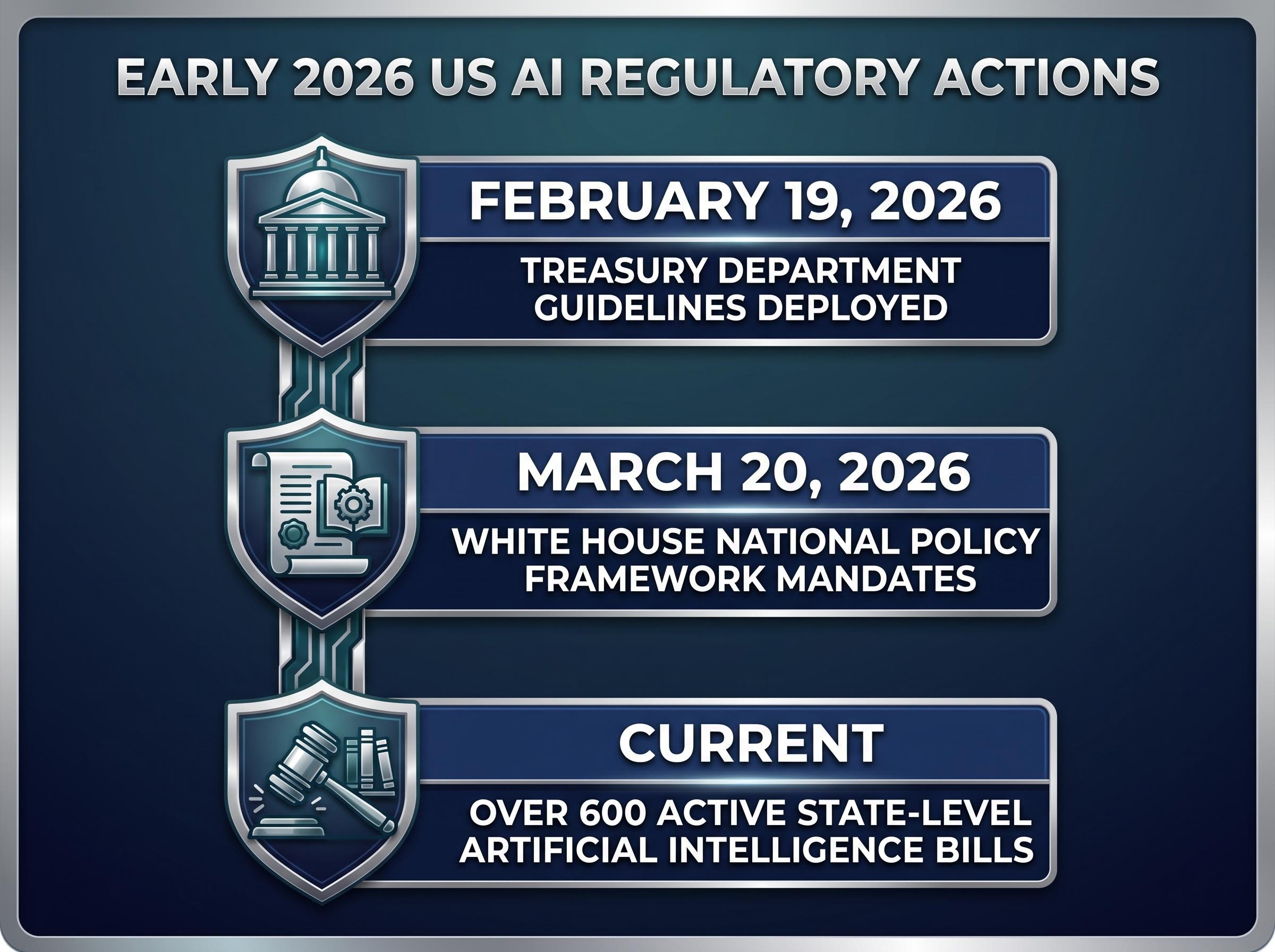
Simultaneously, over 600 active state-level artificial intelligence bills are currently navigating legislatures across the country. Firms deploying generative algorithms in live trading environments now face severe compliance bottlenecks and mandatory system audits.
By restricting machine learning to software engineering and back-office operations, management effectively bypasses this regulatory friction. This calculated restraint shields the firm from sudden policy shifts, transforming a seemingly conservative technological stance into a distinct tactical advantage.
Sequential Expansion and Macroeconomic Resilience
The intersection of strict technological discipline and precise capital allocation directly supports consistent client growth. This corporate strategy translates directly into reliable revenue streams that resist broader market anxieties. The firm recently recorded its eighth consecutive sequential three-month span of expanding net commercial income within the core segment.
This sustained momentum occurred despite a challenging 2026 macroeconomic environment characterised by rising labour costs and early-stage stagflation. According to company data, the execution services division generated approximately $2.5 million daily during the first quarter. This represents a marked expansion from the $2.1 million daily average recorded during the prior year, demonstrating clear operational resilience.
The overarching corporate strategy navigates several distinct external pressures:
Persistent stagflation environments that typically compress trading margins across the broader financial sector. Intensifying sector rivalry as quantitative firms compete for a shrinking pool of specialised engineering talent. * Rising operational baseline costs associated with maintaining ultra-low latency trading infrastructure.
Despite these identified corporate risk factors, the daily revenue averages confirm the underlying business model remains structurally sound. The firm’s ability to extract increased daily value from volatile markets proves that its operational framework functions exactly as designed during periods of economic uncertainty.
Strategic Durability in a Shifting Environment
The impressive Q1 2026 financial beat represents the intended outcome of a highly coordinated corporate strategy. By combining an aggressive talent acquisition programme with a deliberately cautious artificial intelligence integration model, management constructed a resilient operational framework.
The true value of the firm lies in maintaining strict discipline while competitors take on unquantifiable technological and regulatory risks. Securing a 107% average capital return fully justifies the executive team’s current strategic playbook. As market conditions remain volatile, this structural durability offers a distinct advantage over peers reliant on untested generative execution models.
Many of these competitors are already grappling with escalating inference costs that threaten the basic profitability of their experimental automated trading applications.
This article is for informational purposes only and should not be considered financial advice. Investors should conduct their own research and consult with financial professionals before making investment decisions. Past performance does not guarantee future results. Financial projections are subject to market conditions and various risk factors. These statements are speculative and subject to change based on market developments and company performance.