South Korea has officially dismantled a major regulatory exemption for one of the world’s largest e-commerce platforms, citing extensive back-channel management by family members. On April 29, 2026, the Korea Fair Trade Commission released its business group list, officially designating founder Bom Kim as the ultimate controlling entity of the conglomerate. This decision ends previous corporate exemptions and places the U.S.-listed giant under strict domestic antitrust frameworks, triggering immediate Coupang regulatory scrutiny over its executive operations.
This analysis unpacks the immediate legal implications of the ruling, details the impending administrative battle over international trade agreements, and clarifies why Wall Street analysts believe the true risk lies in compliance overhead rather than operational disruption.
Uncovering the Trigger for Regulatory Intervention
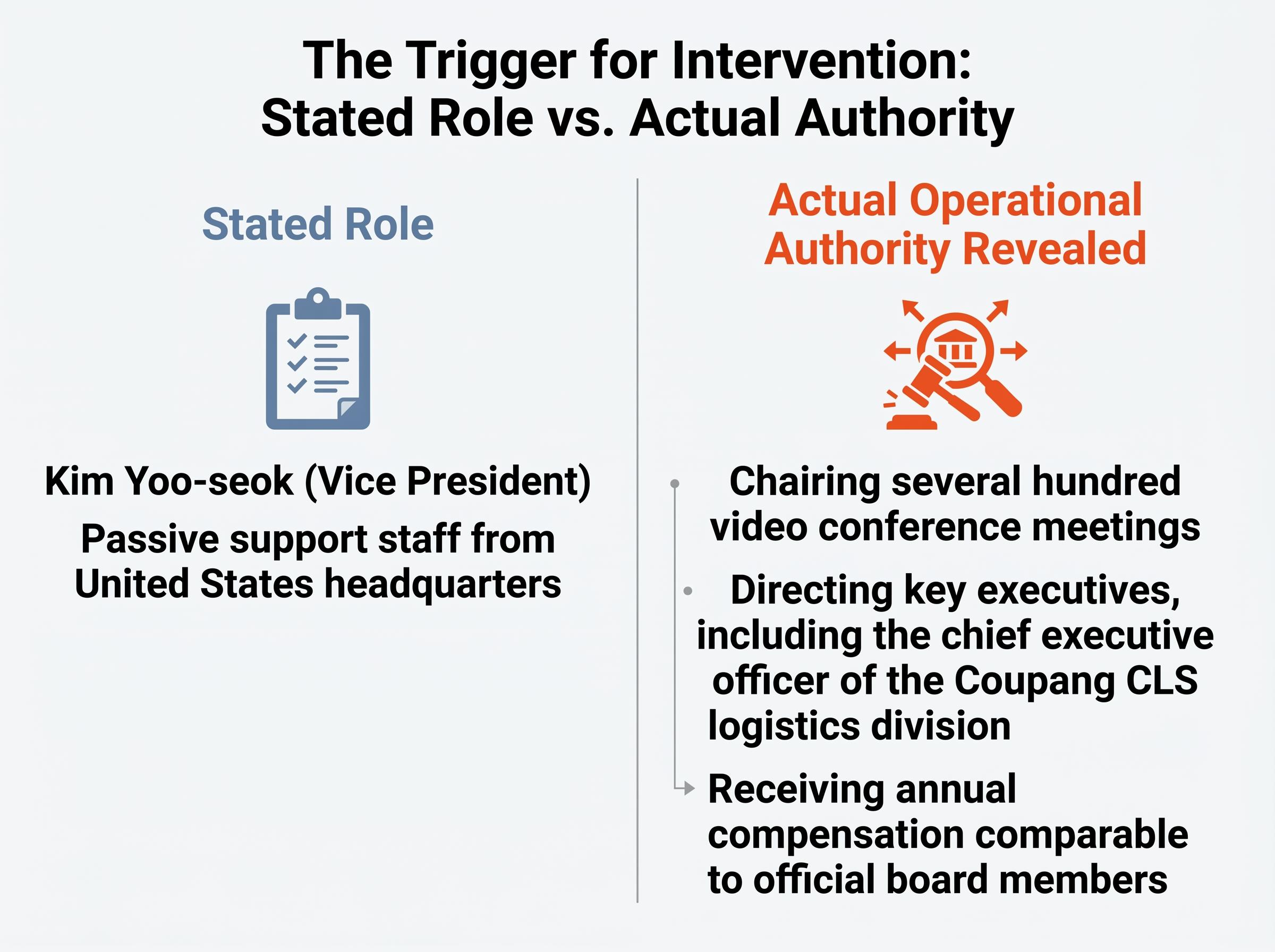
The Korea Fair Trade Commission revoked the corporate group chief exception after workplace inspections revealed the hidden operational influence of Kim Yoo-seok. The younger brother of founder Bom Kim held the title of vice president and was positioned as passive support staff from United States headquarters.
Regulators uncovered a stark discrepancy between this stated role and his actual daily authority. Evidence showed he functioned as the definitive secondary executive within the Korean operations.
The scale of his management participation justified the sudden regulatory pivot and invalidated the prior exemption conditions. Investors must understand that this action stems from specific, documented operational behaviours rather than arbitrary oversight shifts.
The official findings detailed the exact scope of his management activities to support the ruling:
Chairing several hundred video conference meetings to receive direct business reports from regional leaders. Directing key executives, including the chief executive officer of the Coupang CLS logistics division. * Receiving annual compensation comparable to official board members despite lacking a formal board seat.
When big ASX news breaks, our subscribers know first
Decoding South Korea’s Conglomerate Designations
The South Korean Monopoly Regulation and Fair Trade Act utilises a unique “same person” designation to establish the ultimate controlling entity of a massive commercial organisation. According to regulatory data, this intense level of governmental oversight triggers when total corporate holdings exceed 5 trillion won.
The KFTC’s strict disclosure rules activate once this threshold is crossed, fundamentally shifting how regulators monitor the holding company structures of large business groups.
A “same person” designation fundamentally alters the compliance environment for foreign entities accustomed to standard corporate reporting. The expanded duties now extend beyond the corporation itself to include the founder, his relatives, and related entities.
The new compliance frameworks mandate strict restrictions on cross-shareholding and debt guarantees. Regulators will now enforce heavy scrutiny of related-party transactions to ensure no undue private benefits occur under overly favourable terms.
Understanding this threshold helps global stakeholders gauge the severity of the compliance burden now facing the company.
| Regulatory Area | Previous Status | New Compliance Mandates |
|---|---|---|
| Corporate Structure | Standard U.S. SEC reporting | Annual business group designation filings detailing all affiliates and shareholding status. |
| Financial Transactions | Standard corporate governance | Strict prohibitions on cross-shareholding and inter-affiliate debt guarantees. |
| Executive Scrutiny | Internal board oversight | Joint reporting by multiple persons and heavy scrutiny of related-party transactions. |
Mounting an International Trade Defense
Corporate leadership immediately signalled aggressive pushback on April 29, 2026, committing to an administrative lawsuit against the Fair Trade Commission. The core legal argument frames the local regulations as inappropriately duplicative for an entity already governed by strict foreign securities laws.
The company maintains that its structure leaves no concern for improper private interest.
“As a U.S.-listed entity, Coupang, Inc. is subject to rigorous oversight, including related-party disclosure obligations required by the U.S. Securities and Exchange Commission (SEC). The chairman’s brother is not an executive under the Fair Trade Act and holds no stake in Korean affiliates.”
The legal positioning suggests potential violations of the Korea-U.S. Free Trade Agreement. The corporation will argue that the designation breaches most favoured nation treatment obligations by discriminating against United States investors.
Chapter 11 of the Korea-U.S. Free Trade Agreement outlines specific investor protections that grant foreign entities the right to challenge domestic regulations that disproportionately target international capital.
International Arbitration Risks
The heavy concentration of global financial investors opens the door for significant international trade disputes. Approximately 70 to 80% of the parent company’s shareholders are global financial entities.
This ownership structure introduces the looming threat of investor-state litigation at the International Centre for Settlement of Investment Disputes. This mechanism allows foreign investors to seek international arbitration when local regulatory actions fundamentally undermine their operational agreements.
Wall Street Consensus and Operational Realities
While the legal friction dominates headlines, financial analysts urge investors to separate the administrative burden from daily retail operations. The likelihood of supply chain or consumer delivery disruptions remains exceptionally low.
According to Bank of America analysts, the designation “should not impact the company’s core operations in Korea, although the headline may remind investors” of ongoing regional compliance risks.
This analysis directly addresses the core investor question of whether to panic. The daily revenue-generating operations are highly insulated from the boardroom compliance mandates.
Baseline market data from April 28, 2026, contextualises investor positioning directly ahead of the finalised KFTC announcement. The stock closed at $20.34, which represented a decline of 0.73%, with a heavy trading volume of 18,407,791 shares. Market watchers will use this baseline to quantify the financial friction of the new regulatory reality in upcoming sessions.
Personal Liability and the Governance Horizon
While the operational impact appears minimal, the unquantifiable risks live within executive distraction and personal legal jeopardy. The Fair Trade Commission is currently reviewing prior filings for false materials.
This secondary investigation focuses on whether previous confirmations of non-involvement by relatives were deliberately falsified. This review carries the possibility of a direct criminal referral.
The founder’s new legal status carries symbolic weight and practical danger during legislative sessions. The designated controlling entity faces three distinct areas of escalating personal liability:
- Criminal referrals stemming from false administrative filings regarding relative participation.
- Mandatory in-person appearances at hostile parliamentary audits to answer for the conglomerate.
- Expanded personal accountability under separate domestic laws, including the Serious Accidents Punishment Act.
These personal accountability measures equip readers to monitor the long-term governance stability of the firm as leadership attention fractures.
Assessing the Final Balance of Power
The current standoff highlights the escalating tension between South Korea’s desire for strict domestic oversight and the realities of modern multinational corporate structures. Daily retail operations remain fully insulated, but the administrative overhead and legal friction will dominate executive attention in the coming months.
This case serves as a major bellwether for other foreign-listed entities operating heavily in restricted Asian markets. The aggressive use of the “same person” designation proves that local regulators will pierce corporate exemptions if operational reality contradicts boardroom titles.
This article is for informational purposes only and should not be considered financial advice. Investors should conduct their own research and consult with financial professionals before making investment decisions. Past performance does not guarantee future results, and ongoing legal disputes are subject to unpredictable market and regulatory developments.