The Chancellor delivers the UK autumn budget 2026 tomorrow, 28 October, with the pre-Budget consensus putting her fiscal headroom at roughly £10-12bn. That sits below the more than £15bn buffer she is reported to prefer, and one forecast assumption, wage growth, could move the figure by about £10bn either way.
Fiscal headroom is the margin by which the government is forecast to meet its own borrowing rules. The smaller it is, the less room the Treasury has to absorb bad news without raising taxes or cutting spending.
Higher debt interest costs, driven by elevated gilt yields and Bank Rate, have eaten into that margin since March. Meanwhile, the Bank of England is widely expected to raise Bank Rate from 3.75% to 4.00% on 5 November.
For anyone with a mortgage, savings or exposure to UK government bonds, the useful skill tomorrow is telling noise from signal. Here is what to watch on the day, and which signals would change the picture for gilts and rates.
Why a £10bn gap could swing on one forecast line
The buffer is uncomfortably thin. Even March’s headroom of £23.6bn was only about 1.6% of government receipts, according to EY, so small forecast errors can consume much of it.
Since then, debt interest has done the damage. The Institute for Fiscal Studies (IFS) estimates about £11bn more in interest costs by 2029-30, while the Resolution Foundation puts the figure roughly £14bn above the Office for Budget Responsibility’s (OBR) forecast. The OBR is the independent body that produces the official economic and fiscal forecasts the Chancellor is judged against.
Gilt yields feed directly into government borrowing costs, and the gap between what the Treasury pays on debt and what the economy grows by determines whether the debt ratio drifts higher, which is why interest-cost revisions weigh so heavily on headroom.
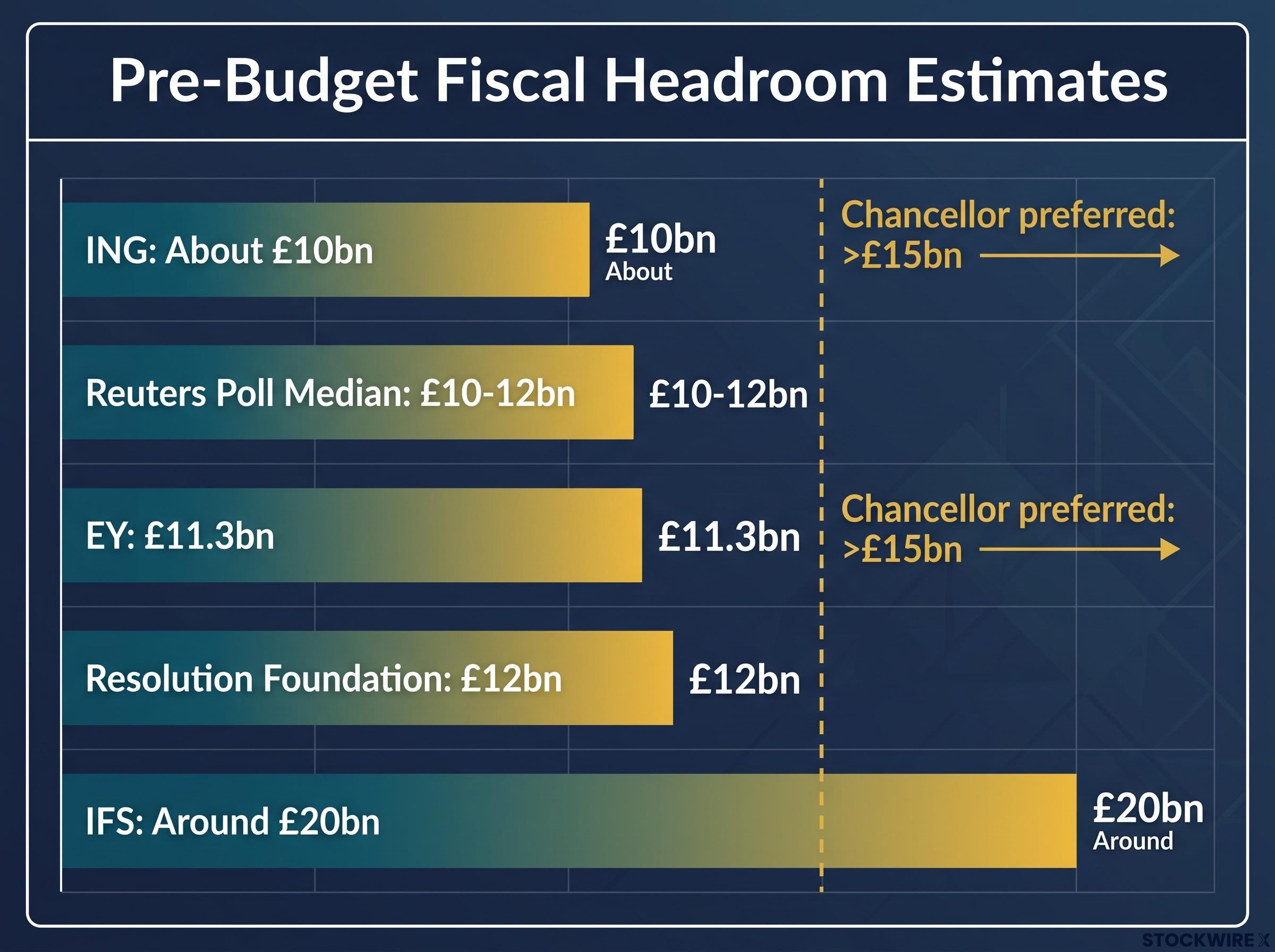
Estimates of where headroom now stands vary widely.
| Source | Headroom estimate | Preferred buffer | Date |
|---|---|---|---|
| ING | About £10bn | Chancellor thought to prefer more than £15bn | 16 Oct 2026 |
| EY (reported) | £11.3bn, down from £23.6bn | Not specified | 12 Oct 2026 |
| Reuters economist poll (reported) | £10-12bn median | £15-16bn | 15 Oct 2026 |
| Resolution Foundation (reported) | £12bn | At least £20bn | 12 Oct 2026 |
| IFS (reported) | Around £20bn (illustrative) | Not specified | 12 Oct 2026 |
The spread comes down to assumptions about earnings, inflation and welfare spending. Wages are the lever that matters most, because higher pay lifts income tax and National Insurance receipts.
The wage lever ING’s James Smith estimates that raising wage growth by 0.6 percentage points in each of the next two years would add about £10bn to headroom, nearly offsetting the hit from higher interest costs.
That is not a large revision by OBR standards. Since 2010, the OBR has revised its five-year earnings forecasts by an average of 1.3 percentage points in absolute terms.
The headline headroom figure is only as reliable as the earnings judgement behind it, so treat any single number you see tomorrow with caution until you know what wage path produced it.
What the Chancellor is likely to announce, and what she is not
If headroom is the question, the expected answer is notably quiet. ING expects roughly £5-6bn of tax rises in total, assembled from narrow bases rather than headline rates.
Expected tax measures
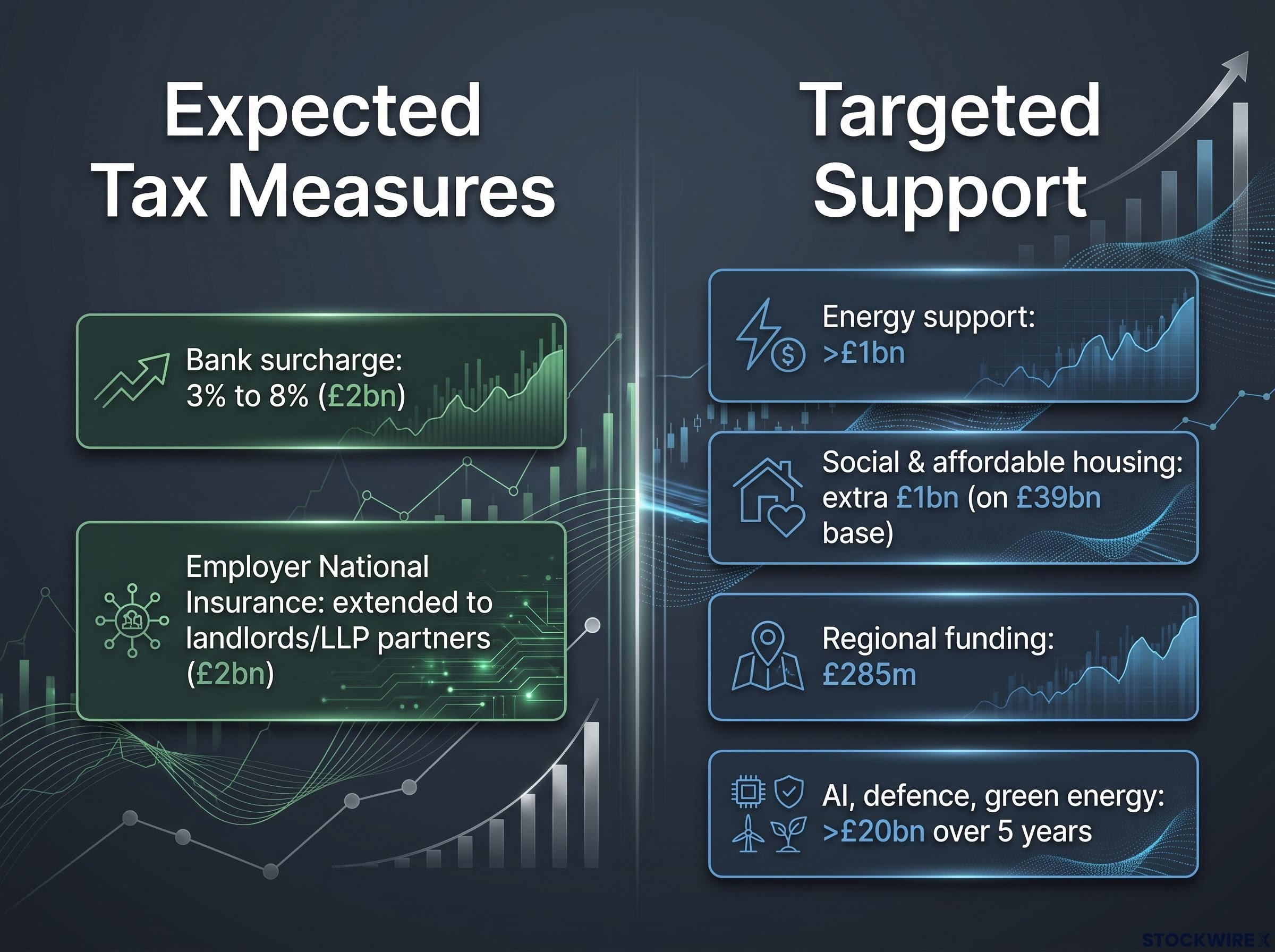
All of the following are pre-Budget expectations, not confirmed policy:
- Bank surcharge: raising it from 3% to 8% could bring in about £2bn a year, according to ING
- Employer National Insurance: extending it to landlords and LLP partners could raise roughly £2bn a year (ING)
- Property charge: market reports have speculated about a levy on homes worth more than £1.5m, which remains unconfirmed
The House of Commons Library has suggested the Chancellor may need to lean on smaller taxes rather than main rates. Income tax, VAT and National Insurance rates are not expected to rise.
Targeted support, not stimulus
On spending, the expected pattern is narrow and specific. Reuters has reported energy support worth more than £1bn, aimed mainly at lower-income households, while the BBC has reported a possible extra £1bn on top of £39bn for social and affordable housing, plus £285m of regional funding next year.
More than £20bn of support for AI, defence and green energy over about five years has already been announced. Targeted help like this tends to add less to overall demand than broad tax cuts, which is why it is unlikely to stoke inflation.
The absence of a big headline is the story. A package this size should leave household finances largely untouched in aggregate, unless the Chancellor surprises on tax thresholds or main rates.
Will the Budget change the Bank of England’s November call or gilt supply?
The base case is calm. Markets have priced a rise to 4.00% on 5 November at between roughly 81% and 95% in October, and ING expects the Budget to have only a marginal effect on that decision.
The Bank of England’s September hold came on a 6-3 vote, with three members already pressing for a rise to 4.00%, which helps explain why markets treat a November hike as the base case.
Bond markets are less relaxed. Between 20 and 26 October, the 10-year gilt yield traded around 5.35-5.43% and the 30-year around 5.72-5.89%.
Two readings compete. A credible tightening could lower borrowing and yields, while a stimulus surprise would strengthen bets on further hikes.
A possible virtuous circle The National Institute of Economic and Social Research (NIESR) has described how a credible consolidation could feed lower yields and cheaper financing. It also argues much of the yield rise reflects global real rates, and that markets already price at least 100 basis points of rate rises over the following year.
| Scenario | Fiscal signal | Likely effect on BoE and gilts |
|---|---|---|
| Tightening | Larger buffer, credible tax rises | Lower issuance and yields; possibly fewer hikes after November |
| Neutral | Modest taxes, targeted support | November hike stays on track; gilts largely unmoved |
| Stimulus | Unfunded support or spending | Stronger hike bets; higher yields |
Gilt supply matters too. A Reuters poll of 15 primary dealers on 23 October expects Debt Management Office (DMO) issuance of £249.6bn, £3.4bn above the £246.2bn plan, with more short-dated supply and long-dated issuance below 7% of the total.
The 2022 mini-budget remains the warning: an unfunded package triggered a severe gilt sell-off and a rapid reversal.
Three signals to watch on the day:
- The OBR’s assessment of growth and borrowing, including any reported shift in 2026 GDP growth from 1.1% to 1.4% and 2027 from 1.6% to 1.2% (economists’ expectations, not a published forecast)
- Revisions to wage growth
- Changes to the gilt remit
If the November hike stays intact and gilts stay calm, that is the base case playing out. Only a surprise on stimulus, wages or issuance should change how you think about mortgage rates and borrowing costs.
What to take from the Budget once the numbers land
Tomorrow’s headroom figure will reflect forecast judgements as much as policy choices, and the Bank of England’s November path looks largely set unless the Chancellor surprises.
Read the day in sequence. First, compare the actual headroom with the reported £15bn target. Second, check the OBR’s earnings and growth revisions to see how much of any change came from assumptions rather than measures. Third, watch the gilt reaction, particularly at the long end.
Every estimate here is a pre-Budget expectation. The OBR’s published forecast supersedes all of them.
Past performance does not guarantee future results. Financial projections are subject to market conditions and various risk factors. These statements are speculative and subject to change based on market developments.
This article is for informational purposes only and should not be considered financial advice. Investors should conduct their own research and consult with financial professionals before making investment decisions.