Nasdaq Winning Streak Hits 13 Days, Longest Since 1992

Key Takeaways
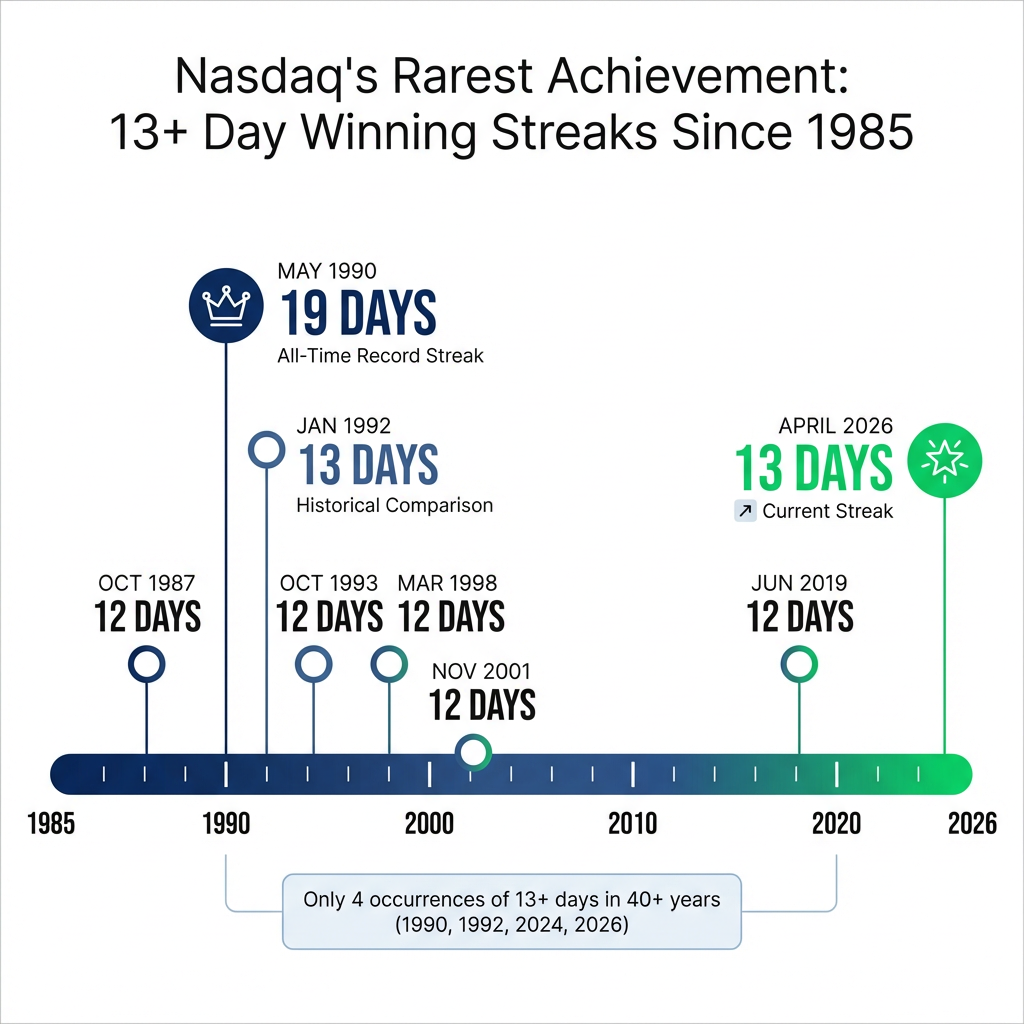
- The Nasdaq Composite posted 13 consecutive positive sessions as of April 17, 2026, its longest winning streak since January 1992 and only the fourth such occurrence since 1985.
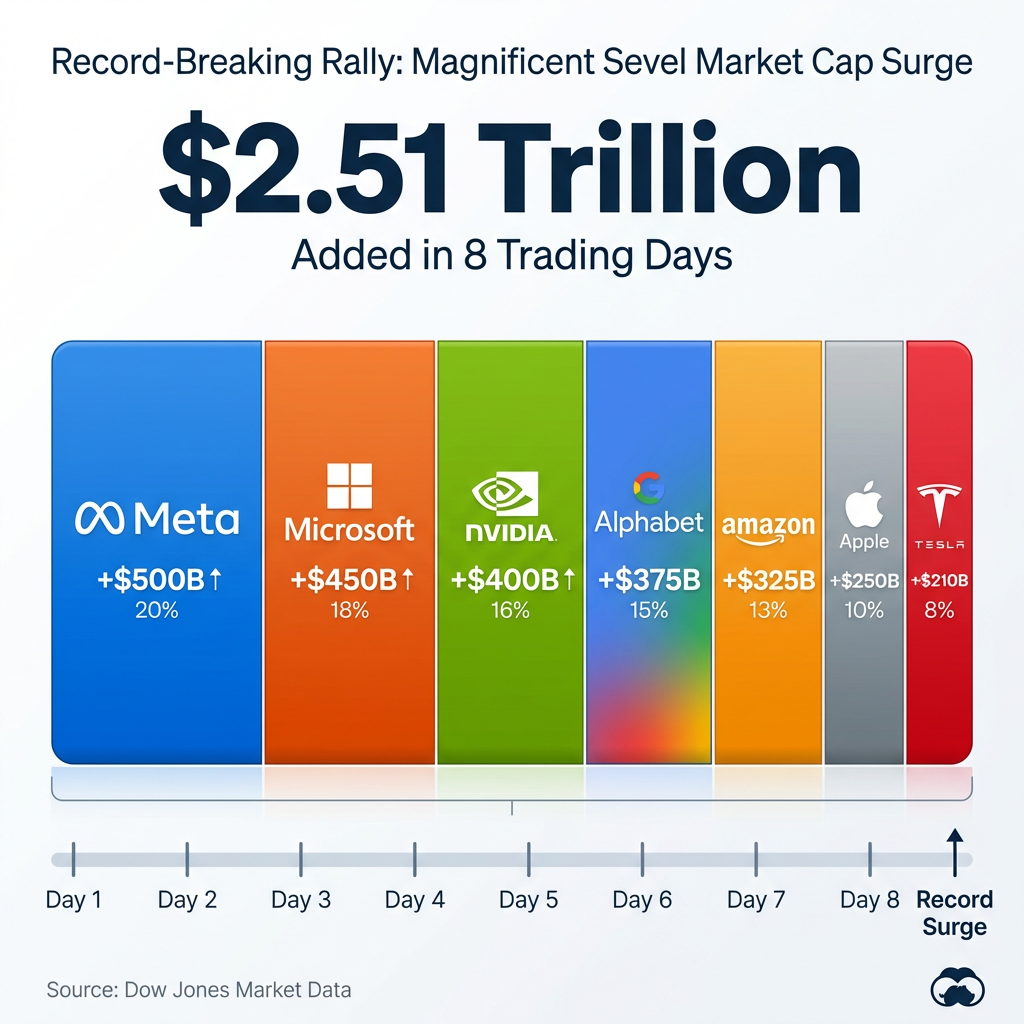
- The Magnificent Seven stocks added a record $2.51 trillion in combined market capitalisation over just eight trading sessions, marking an all-time high for that timeframe.
- The SOXX semiconductor ETF surged 23.5% in April alone, with the iShares Expanded Tech-Software Sector ETF gaining roughly 14% in a single week, reflecting broad technology sector strength.
- Easing Iran-related geopolitical tensions drove U.S. oil prices down to approximately $80 per barrel, removing a key uncertainty that had weighed on markets earlier in 2026.
- Institutional conviction was confirmed by approximately $3 billion in single-day net inflows into the Invesco QQQ Trust, its largest single-day intake since December 19.
The Nasdaq Composite extended its winning streak to 13 consecutive sessions on Friday, marking the index’s longest unbroken advance since January 1992 (13 days). The tech-heavy benchmark rose approximately 1.31% on April 17, 2026, capping its largest three-week percentage gain since April 2020. Broader market strength accompanied the milestone, with the Dow Jones Industrial Average surging roughly 1,000 points (+1.74%) and the S&P 500 gaining around 1.08%.
The rally represented broad-based participation across large-cap, technology, and small-cap segments. The Russell 2000 climbed roughly 1.95%, whilst major indices posted their strongest weekly performance since May. According to Dow Jones Market Data, the Nasdaq’s current streak ranks as only the fourth occurrence of 13+ consecutive positive days in the index’s history since 1985.
What Is a Winning Streak and Why Does 13 Days Matter?
A winning streak occurs when an index closes higher than the previous day’s close for consecutive trading sessions. Extended streaks are statistically rare, as market volatility, news events, and profit-taking typically interrupt momentum. A 13-day run requires consistent buyer conviction across nearly three weeks of trading.
The statistical rarity of such streaks is well-documented in National Bureau of Economic Research time series momentum analysis, which examines the probability and persistence of consecutive positive sessions across major equity indices.
Since 1985, the Nasdaq 100 has achieved 12+ consecutive positive days only eight times. The all-time record stands at 19 days from May 1990. The current 13-day streak represents just the fourth occurrence of 13+ days, per Carson Group analysis.
When big ASX news breaks, our subscribers know first
Magnificent Seven Stocks Add Record $2.51 Trillion in Eight Days
The Magnificent Seven stocks, Meta Platforms, Microsoft, Nvidia, Alphabet, Amazon, Apple, and Tesla, collectively added $2.51 trillion in market capitalisation across eight trading sessions. This represents an all-time record for that timeframe, according to Dow Jones Market Data.
These stocks had experienced notable declines earlier in 2026, with selling pressure emerging prior to Iran-related geopolitical tensions. The current rally represents a sharp turnaround, with the Roundhill Magnificent Seven ETF reversing year-to-date outflows starting April 1, per Dave Mazza, CEO of Roundhill Investments and portfolio manager of the fund.
Investor flows provided concrete evidence of conviction. The Invesco QQQ Trust received approximately $3 billion in net inflows on Thursday, its biggest single-day intake since a $3.1 billion inflow on December 19. Retail investors specifically returned to popular names including Tesla, per Vanda Research data.
These institutional flows are tracked in the Invesco QQQ Trust official fund documentation, which provides regulatory-level transparency on daily net asset values and investor participation patterns.
Technology Sector Drives Rally With Semiconductors and Software
Semiconductor strength emerged as the primary catalyst. The SOXX ETF surged +23.5% in April alone, with memory-related chip stocks identified as primary drivers of momentum factor performance. This contrasts sharply with earlier 2026 struggles in the tech sector.
The semiconductor rally reflects broader AI infrastructure spending driving semiconductor momentum, with institutional capital flows into AI-related technology creating sustained demand for memory-related chip stocks.
> Sector Dynamics
> “Software is the value play and semiconductors are the momentum trade,” said Stephanie Link, Chief Investment Strategist at Hightower Advisors.
Software stocks, which had been deeply discounted, staged a sharp weekly rebound. The iShares Expanded Tech-Software Sector ETF (IGV) gained roughly 14% during the week, reaching $84.94. Dave Mazza assessed that Big Tech had become substantially oversold. The Information Technology sector now comprises 34.7% of the S&P 500, versus just 5.5% in 1992.
While the rally has sparked enthusiasm, investors may benefit from exploring contrarian analysis of technology sector valuations, particularly as the Information Technology sector now comprises a historically unprecedented 34.7% of the S&P 500.
Experts Say Rally Shows Improved Market Health
Ryan Detrick, Chief Market Strategist at Carson Group, notes this represents only the eighth occurrence of 12+ consecutive positive days since 1985. The statistical rarity positions this as a significant market event.
Adam Turnquist, Chief Technical Strategist at LPL Financial, emphasises standout technology strength. The current rally shows healthier market advances with broader participation compared to earlier 2026, when mega-caps showed weakness during S&P 500 retests of 7,000.
The rally pattern proved unusual. Typically, stocks rise gradually and fall sharply, but this rebound reversed that pattern with gains occurring at an unusually rapid pace. The Nasdaq had moved largely sideways since October before this breakout, amid earlier concerns about AI’s impact on software firms.
The next major ASX story will hit our subscribers first
Geopolitical Backdrop: Iran Tensions Ease as Markets Surge
Iran’s declaration that the Strait of Hormuz is open contributed to declining crude oil volatility, with U.S. oil prices falling to approximately $80 per barrel. This removed a key uncertainty that had caused periodic market dips.
The easing tensions represent a significant shift from the broader energy security crisis that emerged when the conflict initially disrupted global oil markets and contributed to the equity market volatility that preceded this rally.
The Nasdaq’s momentum aligns with the broader S&P 500 recovery from geopolitical pressures, which saw the index rebound to within 0.2% of its all-time high despite an 8% decline triggered by Iran-related tensions earlier this year.
Leaders estimate a potential six-month U.S.-Iran peace deal may be achievable. Despite earlier geopolitical uncertainties, technology sector resilience persisted throughout, demonstrating the sector’s ability to maintain momentum even during periods of elevated global tension.
Conclusion
The Nasdaq winning streak to 13 consecutive sessions marks a historic milestone, achieved only four times since 1985 and unmatched since January 1992. The rally reflects renewed conviction in technology stocks, particularly semiconductors and the Magnificent Seven, following earlier 2026 weakness. Broad market participation, easing geopolitical tensions, and substantial investor inflows suggest improved market health. Whilst past performance does not guarantee future results, the technical and fundamental dynamics underpinning this advance represent a notable shift in market sentiment.
This article is for informational purposes only and should not be considered financial advice. Investors should conduct their own research and consult with financial professionals before making investment decisions.
Frequently Asked Questions
What is the Nasdaq winning streak record?
The all-time Nasdaq winning streak record stands at 19 consecutive positive days, set in May 1990. The current 13-day streak in April 2026 ranks as only the fourth occurrence of 13 or more consecutive positive days since 1985.
How long is the current Nasdaq winning streak?
The Nasdaq Composite extended its winning streak to 13 consecutive sessions as of April 17, 2026, marking its longest unbroken advance since January 1992 and its largest three-week percentage gain since April 2020.
Which stocks drove the Nasdaq rally in April 2026?
The Magnificent Seven — Meta Platforms, Microsoft, Nvidia, Alphabet, Amazon, Apple, and Tesla — collectively added a record $2.51 trillion in market capitalisation over eight trading sessions, with semiconductor stocks via the SOXX ETF surging 23.5% in April alone.
What does a 13-day Nasdaq winning streak mean for investors?
A 13-day winning streak is statistically rare, having occurred only four times since 1985, and signals unusually sustained buyer conviction. Analysts note the current rally also features broader market participation and record institutional inflows into tech ETFs like the Invesco QQQ Trust.
What caused the Nasdaq rally in April 2026?
The rally was driven by a combination of factors including a sharp rebound in Magnificent Seven stocks, record semiconductor strength, easing Iran-related geopolitical tensions that pushed oil prices lower, and approximately $3 billion in single-day net inflows into the Invesco QQQ Trust.