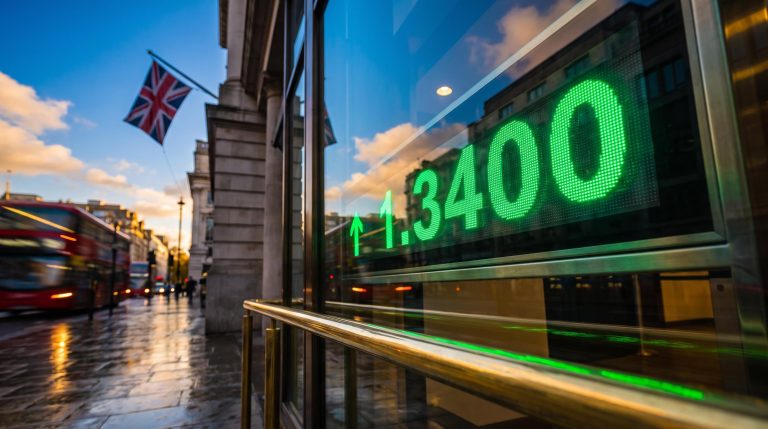
Market-implied odds of a 25-basis-point Bank of Canada rate hike on 28 October jumped from roughly 36% to above 75% on Monday 19 October, and the Canadian dollar firmed to about C$1.4095 per US dollar. A basis point is one hundredth of a percentage point, so 25 basis points equals a quarter-point move.
No decision triggered the move. Governor Tiff Macklem told reporters in Bangkok over the weekend that the Bank’s new inflation forecast would be “quite a bit higher” than its July projection. Traders then pushed rate expectations sharply higher.
The gap between what Macklem said and what markets priced matters if you carry a variable-rate mortgage, hold savings tied to short-term rates or have exposure to the loonie. One sentence from a governor has turned a meeting most people expected to pass quietly into a live event.
Here is why those remarks moved pricing so sharply, where Canada’s bank economists part ways with the market, and what each outcome could mean for the currency.
What did markets do after Macklem’s Bangkok remarks, and how did the loonie react?
The repricing was fast. By Monday morning, odds of an October hike had more than doubled, according to Commerzbank‘s Norman Liebke (via FXStreet) and Bloomberg data cited by The Globe and Mail. Canadian Mortgage Trends put the figure as high as 87% by 2:45 p.m. Ottawa time.
Scotiabank reported that tightening priced for October rose from about 9 basis points on Friday to roughly 18 basis points.
The source was a media roundtable on Saturday 17 October, held during the IMF/World Bank annual meetings.
Tiff Macklem, Governor, Bank of Canada The Bank’s new inflation forecast will be “quite a bit higher” than July’s projection.
July’s forecast had inflation at about 2.5% in the second half of 2026. With oil near US$100 a barrel, Macklem said inflation could “gradually drift up from where it is today: 3 percent.” He described the 2% target as the Bank’s guiding reference and said policy would adjust as needed.
The Bank of Canada July Monetary Policy Report set the inflation projection that Macklem now says will be revised sharply higher, making the end-of-month update the key benchmark for markets.
He did not say a hike had been decided. This was conditional forward guidance, meaning a signal about how the Bank might act if conditions unfold a certain way, not a commitment.
| Measure | Before | After | Source |
|---|---|---|---|
| Odds of October hike | ~36% | 75%+ (up to 87%) | Commerzbank; Bloomberg; Canadian Mortgage Trends |
| October tightening priced | ~9 bp | ~18 bp | Scotiabank |
| USD/CAD | ~1.4256 (9 October) | ~1.4084 | Market analysis |
| Loonie on 19 October | n/a | C$1.4095 (70.95 US cents) | Reuters |
Reuters reported the loonie up about 0.3%, touching C$1.4071, its strongest since 23 September. USD/CAD has fallen roughly 1.2% since 9 October while the US Dollar Index slipped only about 0.4%. Most of the Canadian dollar’s gain came from Canada-specific rate bets, not broad US dollar weakness.
If you hold floating-rate debt or Canadian dollar exposure, treat 28 October as a genuine decision date.
When big ASX news breaks, our subscribers know first
Should the Bank of Canada hike now or wait? Where economists split
The market has sprinted ahead of the economists. Most bank forecasters remain cautious, and Macklem himself stopped short of endorsing an immediate move.
Nobody disputes that energy inflation matters. The disagreement is over timing: the Bank could act now to guard against second-round effects, where fuel costs spread into wages, services and other goods, or it could hold off until tariff fallout appears in core inflation readings.
| Institution | Position |
|---|---|
| Commerzbank | An end-of-October hike may be premature |
| BMO | Against near-term tightening; core is well behaved and the output gap is disinflationary |
| TD Economics | September core readings (averaging about 1.9%) support caution |
| Scotiabank | Genuine tightening risk if high oil passes into non-energy prices |
| RBC | Previously expected hikes in 2027; higher oil tilts risk toward an earlier move |
| National Bank | Late-2026 hike plausible but complicated by trade conflict and the output gap |
An output gap is the shortfall between what the economy is producing and what it could produce at full capacity. A negative gap tends to hold prices down.
How a Bank of Canada rate hike could change the rate gap with the Fed
The Bank’s overnight target sits at 2.25%, unchanged on 2 September. The US Federal Reserve’s range is 3.75%-4.00% after a 25 bp hike on 15-16 September, and futures put the chance of another October Fed hike at about 17%.
In Liebke’s view, a Bank that also judges a hike premature would delay the policy support the Canadian dollar is waiting for, leaving the differential with the Fed to keep growing. A hike would lift Canadian yields relative to US yields, which normally supports the loonie. If markets doubt the move will last, or growth cracks, the currency could weaken instead.
The currency effect depends on whether markets judge the hike credible, not on the hike alone.
Why the Bank worries about energy: three channels from oil to core inflation
Soft core data and a worried central bank can both be true. Oil reaches broader inflation through three routes:
- Energy pass-through. Higher crude lifts gasoline, heating and freight costs, which can feed into business input costs and then consumer prices.
- Trade-conflict effects. Tariffs weigh on activity and jobs while potentially raising import prices. Tariffs argue for easier policy; energy and import prices argue for restraint.
- Inflation expectations. If households and firms expect lasting inflation, they adjust wages and prices accordingly.
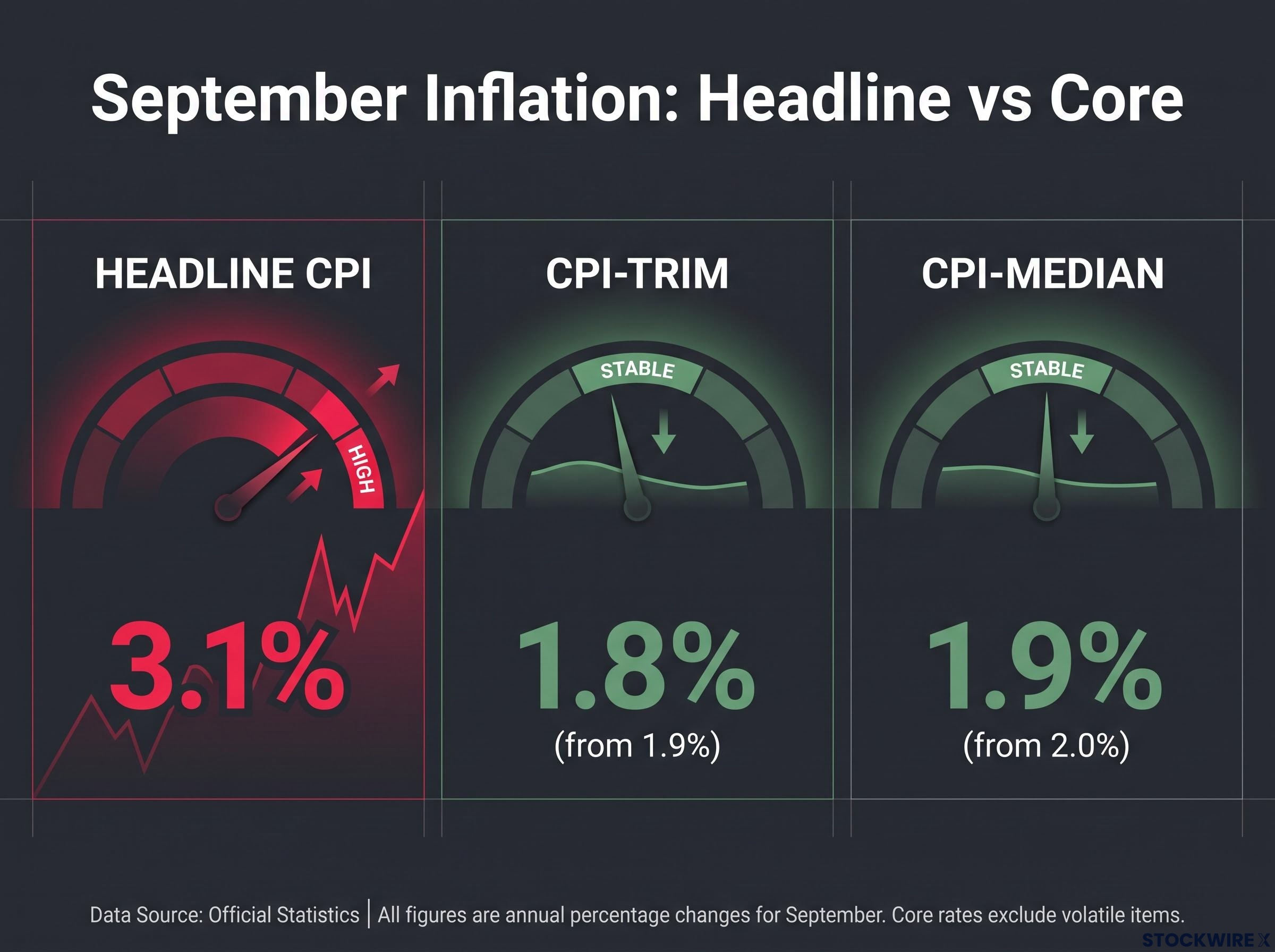
Statistics Canada data show where things stand. CPI-trim and CPI-median strip out the most extreme price moves to show underlying inflation.
September inflation, year on year Headline CPI rose 3.1%, while CPI-trim eased to 1.8% (from 1.9%) and CPI-median to 1.9% (from 2.0%).
The Bank must judge whether the shock is temporary or lasting:
- Cyclical: gasoline spikes from a geopolitical shock that fade if oil retreats
- Structural: broad price-setting changes, rising longer-term expectations, wage-price effects and sustained services inflation
September favoured the temporary reading. Yet Reuters reported five-year consumer inflation expectations rose even as core eased, though National Bank notes gasoline-sensitive expectations can climb without signalling persistent inflation.
With headline and core pointing in opposite directions, watch the Bank’s updated projection and core measures rather than headline CPI.
Forecasters had flagged the gap between headline and core as a sign of energy-led inflation, with weak September employment further limiting the Bank’s appetite to respond.
What could go wrong: household debt, policy lags and the cost of moving early
The case for acting is easy to state. The cost is harder to see. Four risks argue against moving on 28 October:
- Weak growth: a hike against an oil shock could cut demand without lowering global oil prices
- Household strain: indebted households and mortgage renewals would face higher costs
- Moving too early: falling core measures suggest underlying inflation is not accelerating
- Policy lags: tightening could bite after the supply shock has faded
History counsels patience. In 2014-15, the Bank spent roughly six months assessing falling oil before cutting in early 2015, according to Scotiabank. In April 2009, its conditional commitment to hold rates through Q2 2010 shifted market expectations; Macklem’s Bangkok remarks now work through a similar channel.
The currency adds another layer. A weaker loonie raises prices of US-dollar goods, while a stronger one offsets imported inflation, although the Bank’s April 2026 outlook noted the dollar stayed broadly flat during the conflict.
Credibility cuts both ways. Waiting risks unanchored expectations; hiking early risks damaging jobs and balance sheets over a shock the Bank cannot control. For Canadian borrowers, a hike would land on a soft economy, so renewal costs could bite even if oil later falls.
What to watch between now and 28 October
Markets heard a hawkish warning, not a promise. Any case for hiking must still clear soft core inflation, weak growth and stretched household finances.
Three signals will shape the outcome:
- The Bank’s updated inflation projection at month-end, and how far it rises above July’s 2.5%
- Core inflation and expectations, especially whether longer-term expectations keep climbing
- Fed signals on further tightening, which will set the rate gap the loonie trades on
If the projection jumps and expectations keep rising, current pricing looks justified. If not, the 75% odds may prove too eager, and you should weigh your rate and currency exposure against both outcomes.
Readers interested in the case for patience can read our full explainer on the Bank of Canada hold case, which sets out why TD sees no move until January 2027.
This article is for informational purposes only and should not be considered financial advice. Investors should conduct their own research and consult with financial professionals before making investment decisions. Market-implied probabilities and economist views are speculative and subject to change based on market developments.
—