The S&P/ASX 200 fell 0.58% to 8,856.50 on Monday, but that modest headline number hides a split market. A global worry about AI spending pulled the index lower, while single-stock shocks of 6% to 26% played out on their own terms underneath it.
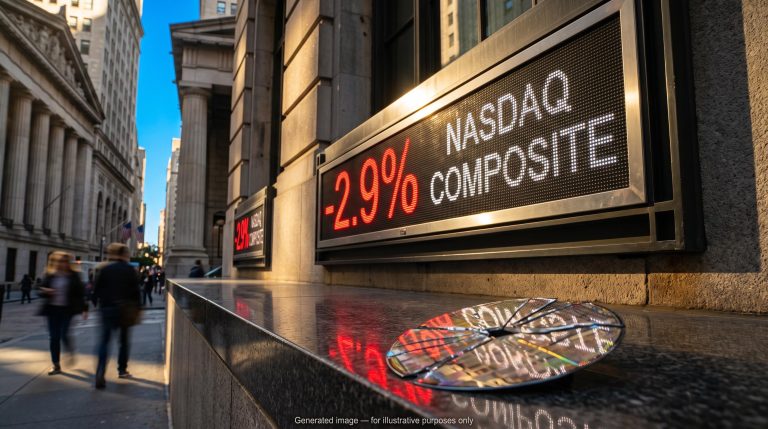
The fall ended a two-day winning streak. It followed Wall Street’s weakest session since June, when the S&P 500 dropped 1.8% and the Nasdaq shed 2.9% on Friday.
It also lands on the eve of a Reserve Bank of Australia (RBA) decision that could lift the cash rate to its highest level in almost two decades.
Here is why the ASX 200 slipped today, which stocks moved on their own news, and which events from Tuesday to Thursday deserve your attention.
Why did the ASX 200 fall as Wall Street’s AI worries crossed the Pacific?
The index opened flat, then slid into the red and stayed there for the rest of the session. By the close, it was down 51.60 points.
- Close: 8,856.50
- Change: down 51.60 points (0.58%)
- Breadth: about 86 stocks rose and about 102 fell
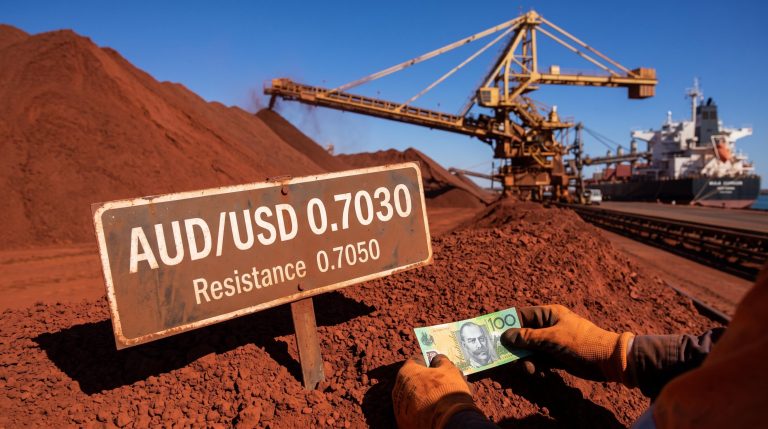
- Australian dollar: steady near 70.2 US cents
Nothing in Australia broke on Monday. The pressure came from the US.
How the US sell-off reached Australian screens
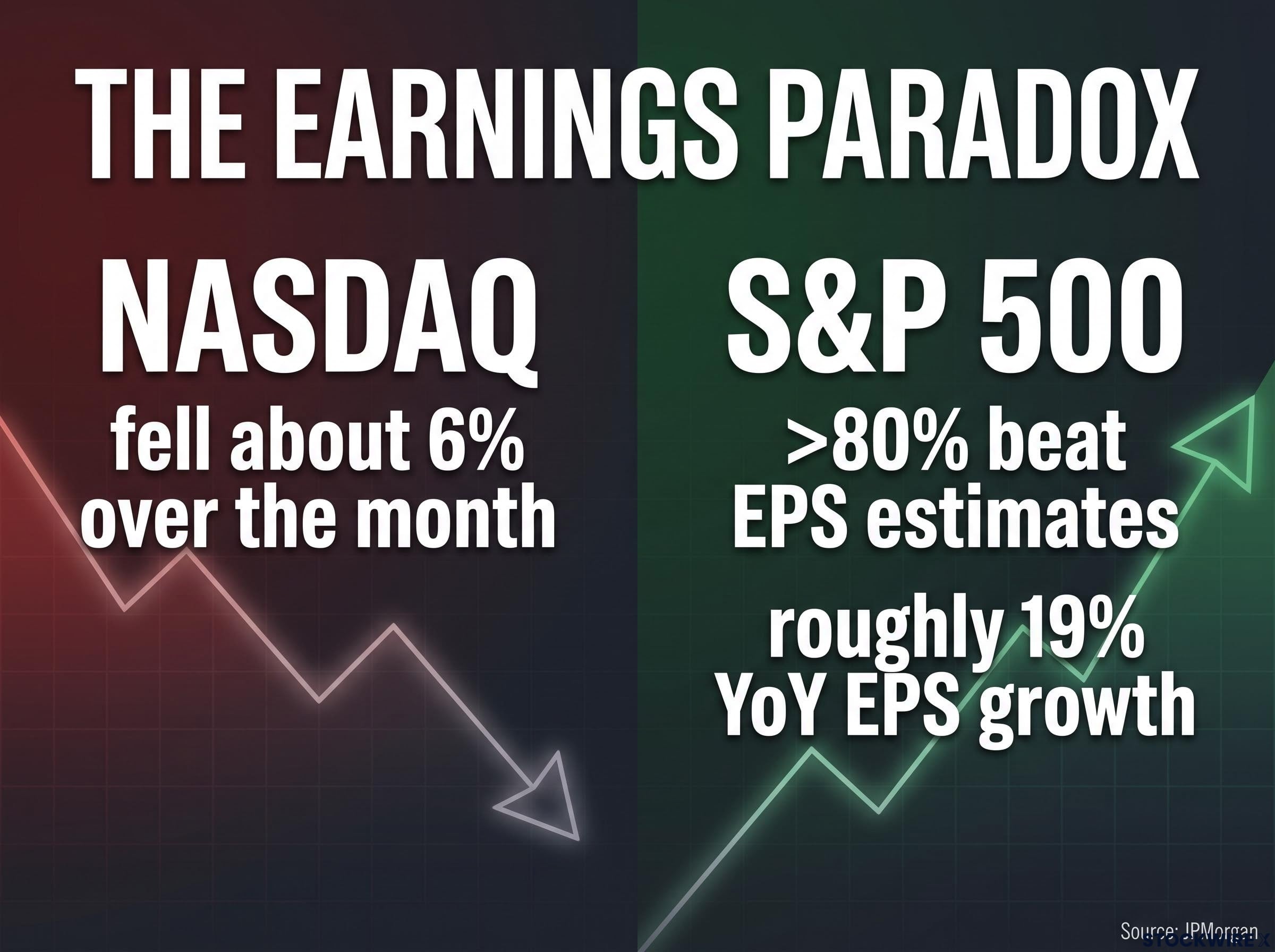
Investors on Wall Street are questioning whether the huge capital spending by hyperscalers will earn an adequate return. Hyperscalers are the largest cloud computing companies, such as Alphabet, Meta and Amazon, and they are pouring money into data centres, chips and power. The Nasdaq has fallen about 6% over the month on that concern.
The sell-off came even though earnings were strong.
The earnings paradox JPMorgan’s equity strategy team pointed out that more than 80% of reporting S&P 500 companies beat earnings per share estimates, with roughly 19% year-on-year EPS growth. Investors are worried about future returns on AI investment, not about current profits.
Goldman Sachs projects hyperscaler spending of $755-$800 billion in 2026, and PIMCO estimates it absorbs 93-94% of operating cash flow, which explains why returns on AI investment have become the market’s central question despite strong current earnings.
In Sydney, that caution spread across most sectors. Materials and consumer staples were among the weakest groups. Industrials and consumer discretionary led the gains. Sources disagree on whether financials dragged on the index or supported it, and Westpac’s small gain points to at least some support from the banks.
Reece stood out on the upside. It rose about 6% on Monday after jumping nearly 9% on Friday, following a first-quarter update that showed sales revenue up 4.3%. Positive US futures also eased the selling across Asia.
The takeaway is that your ASX holdings are priced partly off US tech sentiment and caution ahead of the RBA decision, even if you own no tech stocks at all.
Which stocks moved on their own news: Westpac, 4D Medical, Elsight and AMP?
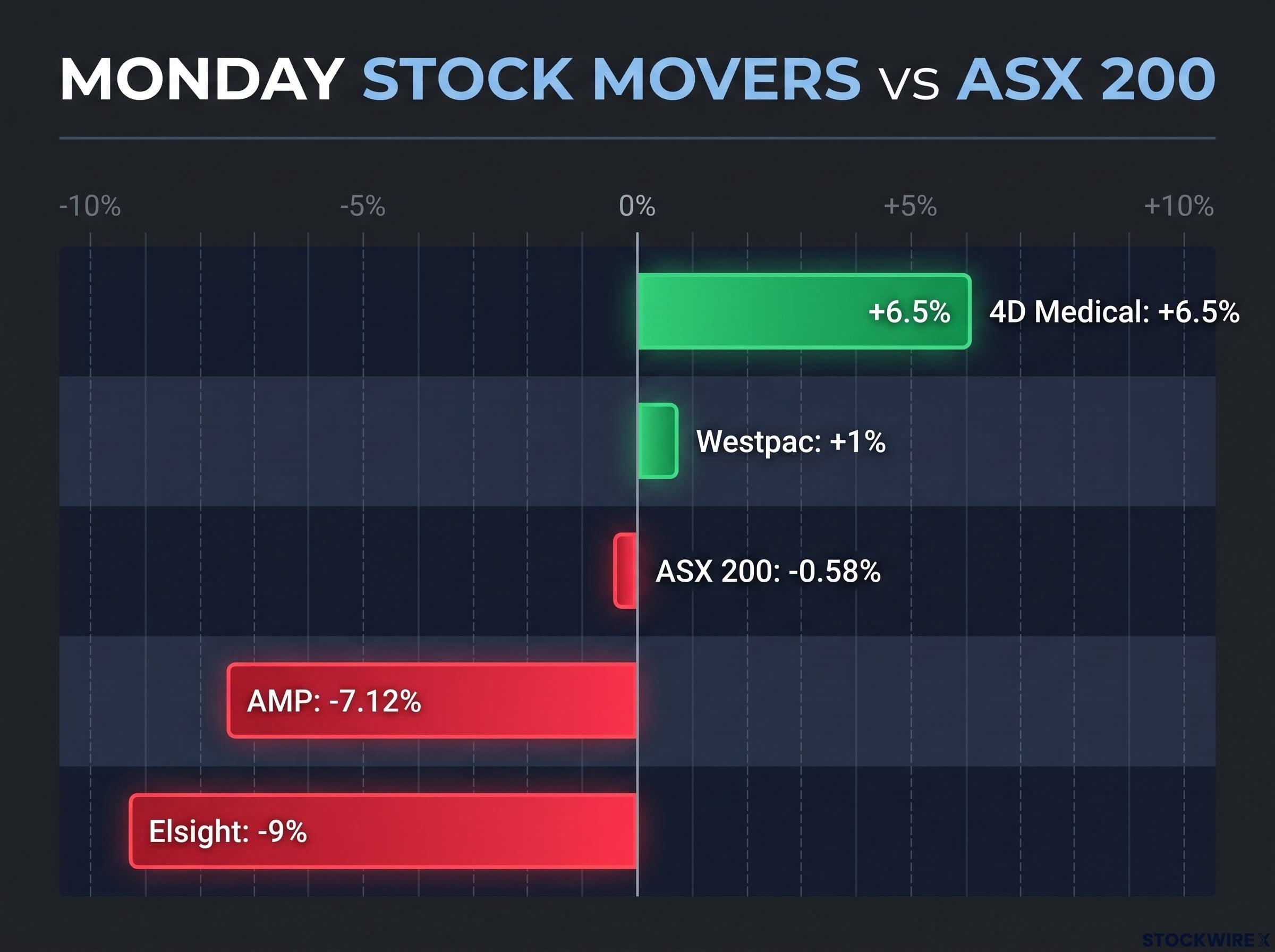
A 0.58% index fall looks small next to single-stock swings of 6% to 26%. Several companies moved on disclosure, governance and margins rather than on the market.
| Stock | Monday move | Driver | Company or analyst comment |
|---|---|---|---|
| Westpac | Up about 1% | FY2026 result, margin decline | JPMorgan and UBS flagged weak core NIM |
| 4D Medical | Up about 6.5% | Rebound after a roughly 25% Friday fall | Knew of no reason for the volatility |
| Elsight | Down about 9% | Board review after a weak quarterly update | Review of capital management, reporting and governance |
| AMP | Down about 7.12% | ASX price query | Partnership guidance unchanged |
Westpac: margin squeeze behind the headline profit
Westpac posted a FY2026 cash profit of about $6.8 billion. Its net interest margin (NIM) fell about 7 basis points to 1.87%, below the 1.89% analysts expected. NIM measures the gap between what a bank earns on loans and what it pays on deposits, and a basis point is one hundredth of a percentage point.
Opinions on the result differ. CommSec described it as largely in line, while JPMorgan’s Andrew Triggs called it softer than expected. UBS analyst John Storey said competition for deposits and loans had squeezed core NIM and was likely to remain a problem in FY2027. Chief Executive Officer Anthony Miller said business and institutional credit demand remained resilient, but he warned that inflation and higher rates would challenge households and businesses.
For readers wanting to judge bank results themselves, our comprehensive walkthrough of NIM, ROE and CET1 shows how to benchmark margin direction against sector averages.
4D Medical rebounded after Friday’s fall, which market coverage linked to a constitutional amendment that shareholders did not approve at the company’s AGM. Elsight, which makes communications technology for drones, has now lost nearly 63% in October. AMP said the volatility might relate to China Life Pension, in which it holds almost 20%, possibly reporting weaker profits or solvency figures.
An ASX price query is a routine request for information, not evidence of misconduct. If you hold small caps, Monday showed that moves can be sharp in both directions and are driven by disclosure and governance, not the index.
What to watch from Tuesday to Thursday: the RBA, Apple, Palantir and NAB
The RBA announces its decision at 2:30pm AEDT on Tuesday 3 November. Markets expect a 25 basis point rise from 4.60% to 4.85%, which would be the fifth increase of 2026.
Why a hike is priced in
Inflation remains too high for the central bank’s comfort. Market pricing puts the chance of a hike at about 80-90%, depending on the source, and a Reuters poll found 31 of 32 economists expect a rise. Deutsche Bank’s Phil O’Donoghue was the only forecaster calling for a hold.
The bigger uncertainty is what the RBA says next. Governor Michele Bullock’s press conference and the Statement on Monetary Policy will show how hawkish the board is. NAB economist Gareth Spence forecasts growth of just 1.0% in 2027, and AMP chief economist Shane Oliver has warned that higher rates could produce a larger housing correction than previously expected.
| Group | Effect of a hike | Effect of a hold |
|---|---|---|
| Borrowers | Higher mortgage and business repayments | Short-term relief on repayments |
| Banks | Lending yields may rise, but competition can squeeze NIM | Opposite short-term reaction likely |
| Rate-sensitive equities | Growth, property and infrastructure stocks may come under pressure | Possible relief rally |
If you have a variable-rate mortgage or hold rate-sensitive shares, the tone of Bullock’s press conference matters as much as the 25 basis point move itself.
The week’s other catalysts
- Monday evening (US time): Apple (fiscal Q4) and Palantir (Q3) report after the US close.
- Tuesday 8:00am AEDT: Wall Street now closes an hour later in Sydney time because US daylight saving has ended.
- Tuesday around 8:30am AEDT: Apple’s results are released.
- Tuesday 2:30pm AEDT: RBA decision.
- Tuesday 3 November: US midterm elections are held on Tuesday, not Wednesday as some coverage has reported.
- Thursday 5 November: NAB reports its results.
How to read the rest of the week: three signals that tie it together
Monday’s session combined three forces: global AI sentiment, local rate policy and company-specific news. The same three will shape the days ahead.
- The RBA’s language on inflation: whether it signals more hikes or a pause.
- Apple and Palantir’s read on AI demand: whether their results ease concerns about returns on AI spending.
- NAB’s margin commentary: whether it shows the same squeeze Westpac reported.
The strong US earnings suggest the market may be repricing the timing of AI returns rather than their direction. If you hold ASX shares, it pays to watch how each of these signals lands before you read too much into a single day’s index move.
This article is for informational purposes only and should not be considered financial advice. Investors should conduct their own research and consult with financial professionals before making investment decisions.