The ASX 200 rose 0.5% to 8,891.80 on Thursday, but the headline gain hides a market that split in two. The big banks climbed about 2%, while retailers fell as much as 4% after three weak trading updates.
The rebound came a day after hotter-than-expected inflation erased an early rally and left the index almost flat. The All Ordinaries added 0.46% to 9,012.60.
One session now remains to settle the week and the month. The index is up about 1.12% for the week and about 1.17% for October, so Friday decides whether both results hold.
This session shows who is gaining and who is losing as a November rate hike approaches. It also sets out the events to watch before the bell on Friday.
Why did banks rally on the same inflation shock that hit retailers?
One inflation number drove two opposite reactions. On Wednesday, September-quarter headline CPI came in at 4.3% year on year, up from 4.0%.
Quarterly trimmed-mean inflation reached 1.0%. Trimmed mean is the Reserve Bank of Australia’s (RBA) preferred measure of underlying inflation, because it strips out the most extreme price moves.
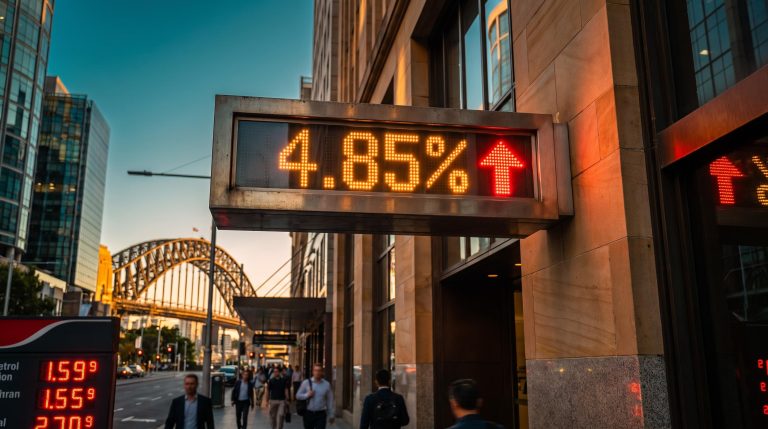
Markets now price a roughly 80-90% chance of a 25 basis point hike on 3 November. That would lift the cash rate from 4.60% to 4.85%. A basis point is one-hundredth of a percentage point.
All four major lenders have now aligned behind a November move, and the shift in big four bank forecasts followed the CPI release, with NAB and CBA abandoning their earlier calls for a pause.
The bank economists’ call CBA’s Australian economics chief Belinda Allen expects a rise to 4.85%, while Westpac chief economist Luci Ellis, a former RBA economist, reaffirmed Westpac’s view that the RBA will hike in November.
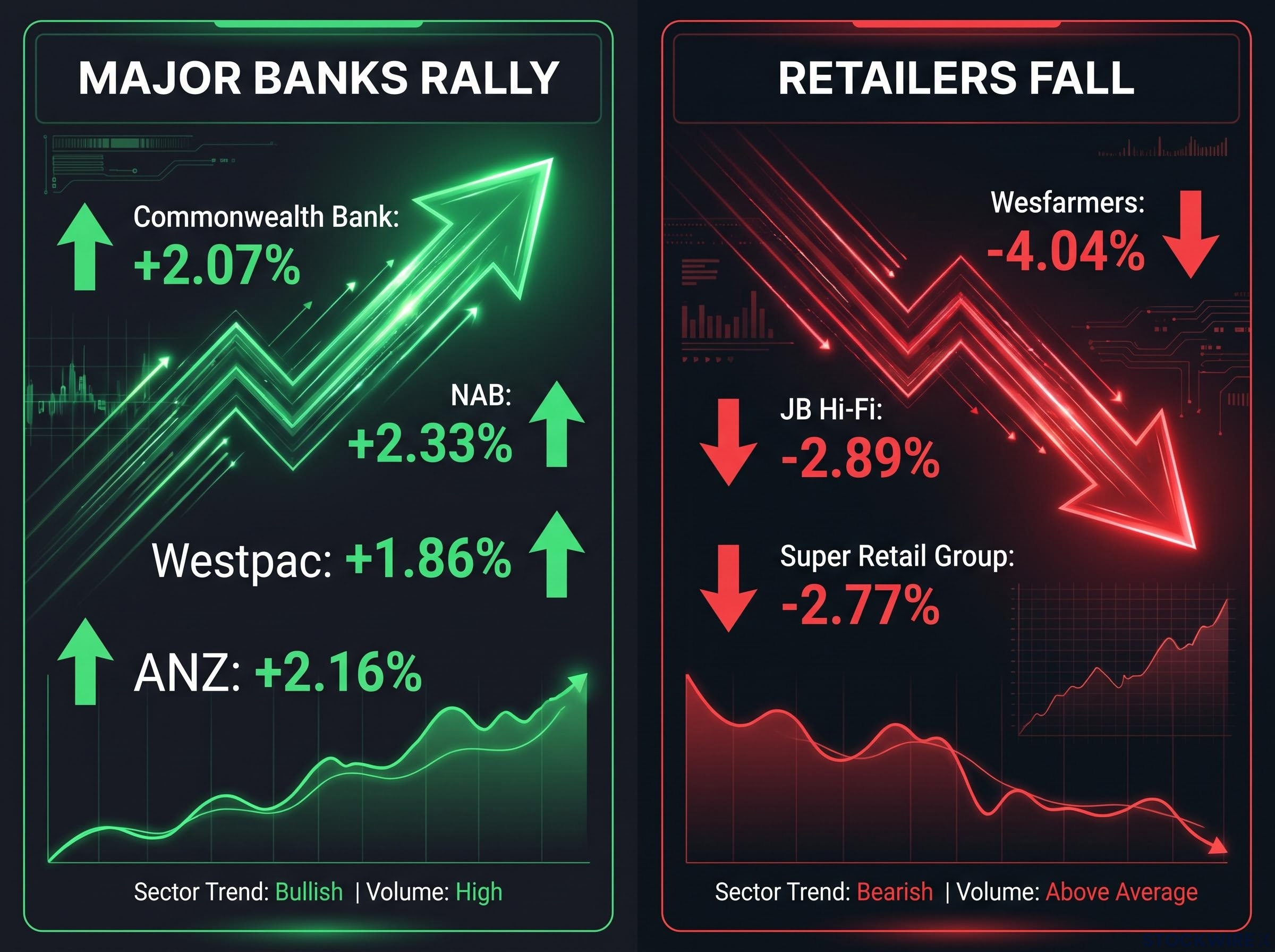
Higher rates can support bank earnings at first through net interest income, which is the gap between what a bank earns on loans and what it pays on deposits. Financials rose nearly 2% to their highest level since 10 August, according to AAP:
- Commonwealth Bank +2.07%
- NAB +2.33%
- Westpac +1.86%
- ANZ +2.16%
The rate story explains only part of the move. Investors had sold the majors since August on warnings about falling mortgage demand. Thursday’s rally partly reflected bargain hunting and short-covering, which happens when traders who bet on a price fall buy shares back to close those bets.
There is also a catch. Higher rates can later push up arrears and slow credit growth, which would erode the same margins that investors are now buying.
If your super or SMSF leans heavily on the banks, today’s gain is mainly a bet on rate-driven margins and a recovery from oversold levels. It does not show that household finances are healthy. The Australian dollar slipped to around US70.4 cents.
Retail updates from Wesfarmers, JB Hi-Fi and Super Retail point to cautious households
Consumer discretionary fell 2% and consumer staples fell 1.8% as three trading updates landed on the same day.
Wesfarmers said sales growth had slowed. It pointed to elevated inflation and four interest-rate increases during 2026. The company described Bunnings as relatively resilient, while Kmart sales were flat.
JB Hi-Fi reported Q1 FY27 total sales down 0.4% and comparable sales down 1.4%. Comparable sales measure the change at stores that were open in both periods. The Good Guys slipped 0.4% on the same basis, and management said sales slowed further in October.
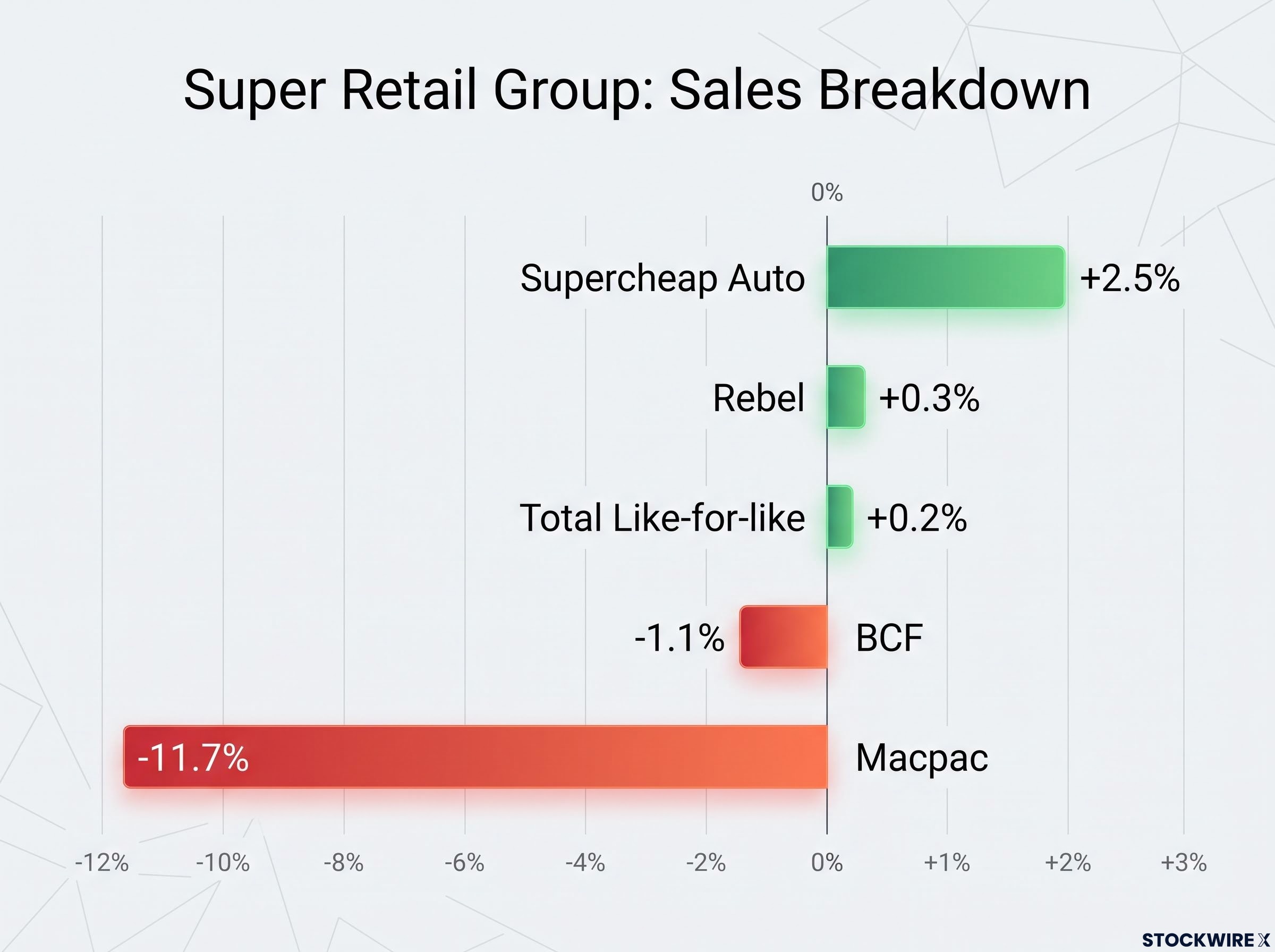
Super Retail Group reported like-for-like growth of only 0.2%, down from 1.8% a year earlier. Like-for-like is another name for comparable sales.
| Company | Share move | Sales metric | Key pressure point |
|---|---|---|---|
| Wesfarmers | -4.04% | Group growth slowed; Kmart flat | Four rate rises in 2026, softer discretionary demand |
| JB Hi-Fi | -2.89% | Comparable sales -1.4% | October slowdown ahead of Black Friday |
| Super Retail Group | -2.77% | Like-for-like +0.2% | Macpac -11.7%, BCF -1.1% |
Within Super Retail, Supercheap Auto grew 2.5% and Rebel added 0.3%. Higher fuel prices weighed on BCF, and a milder winter hurt Macpac.
Is this deferral or a lasting slowdown?
October is usually a soft month, because shoppers hold off until Black Friday. On that cyclical view, sales could pick up in November and December. Spending has not collapsed either: Super Retail’s total sales still rose 2.0%, and Bunnings kept growing.
The structural view is less comfortable. Household budgets have been squeezed for years, and the weakness covers several categories, from outdoor gear to electronics.
For now, the market is pricing deferred demand rather than lost demand. The timing is poor, though. A hike to 4.85% days before Black Friday could turn that delay into lasting weakness, which matters for any retail stock you hold into the Christmas quarter.
Mesoblast, IperionX, Goodman and Lynas lead the winners while lithium miners slide
Company-specific news, not the broad market, decided Thursday’s biggest moves.
The winners
Mesoblast surged 23.4% after Ryoncil net revenue rose 44% to US$28 million, with net operational cash spend improving 86%. IperionX jumped 16.67% to $2.45 after it expanded titanium production capacity at its Virginia facility.
Lynas Rare Earths gained 4.16% on record September-quarter revenue, up 55% to $310.1 million, and a record average price of $102.1/kg. The company warned that planned shutdowns in Malaysia and Kalgoorlie will cut current-quarter production.
Goodman Group, up over 8% for the week, bounced from a two-year low on renewed AI optimism. That rally rests heavily on data-centre expectations, so any delay in leasing those centres is the main risk.
| Stock | Move | Driver |
|---|---|---|
| Mesoblast | +23.4% | Ryoncil revenue growth |
| IperionX | +16.67% | Titanium capacity expansion |
| Lynas Rare Earths | +4.16% | Record quarterly revenue |
| Champion Iron | About -17% | Among the session’s worst performers |
| Pilbara Minerals | Among biggest losers | Falling lithium prices |
Why lithium stays under pressure
Materials fell about 0.6%, ending a three-session winning run. Trading Economics put lithium carbonate at CNY96,100 per tonne, down 3.95% on the day and 21.74% over the past month. A separate SMM quote of US$12,732 uses a different benchmark, so the two prices cannot be compared directly.
The long-term outlook is still bullish. The Resources and Energy Quarterly forecasts demand growth of more than 11% a year to 2031, against supply growth of about 7.3%.
The lithium price recovery earlier this year was driven by battery energy storage demand, which now accounts for an estimated 30% of global lithium demand, so the current slide reverses a sharp run for miners.
In the near term, though, restarted mines are adding supply, and Macquarie has warned that battery-cell makers could cut production further in November and December. Share prices follow the prices miners receive today, not long-range forecasts. If you hold lithium stocks, timing matters more than the thesis.
What Friday’s close and the 3 November RBA meeting could change
Thursday’s gain rested on a valuation-led bank rebound, cautious retailers and commodity-specific moves, not broad strength. Several events in the coming days could shift that picture:
- Thursday night: US PCE inflation data, plus earnings from Eli Lilly, Mastercard, Intel, Shell, Caterpillar and SanDisk
- Early Friday (Australian time): Amazon earnings
- Friday 30 October: Local results from ResMed and Origin Energy
- 3 November: The RBA rate decision
Friday’s session will decide whether October finishes in positive territory. The RBA meeting will decide whether the gap between banks and retailers widens further.
This article is for informational purposes only and should not be considered financial advice. Investors should conduct their own research and consult with financial professionals before making investment decisions. Past performance does not guarantee future results, and forecasts are subject to market conditions and various risk factors.