
Genesis locks in additional gas supply to bolster fuel portfolio through FY29
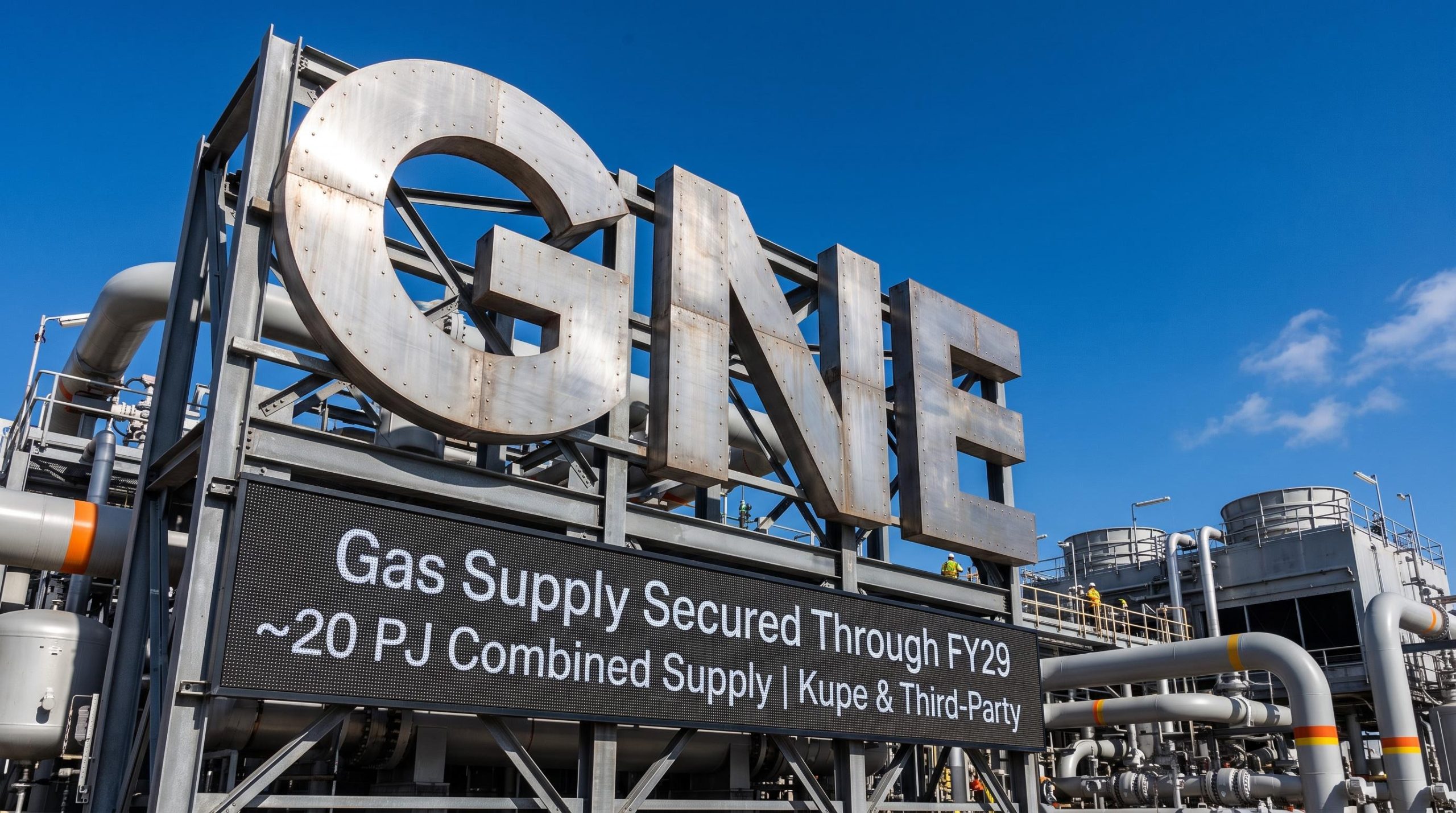
Genesis Energy (NZX: GNE / ASX: GNE) has secured additional gas supply, strengthening its fuel portfolio and gas position through to FY29. The announcement covers two distinct arrangements: approximately 11.4 PJ of additional third-party gas supply, and up to 8.6 PJ of Kupe gas secured through the exercise of a right of first refusal.
Together, the arrangements are intended to provide sufficient gas to meet forecast retail demand and support the company’s transition away from baseload gas generation. The Kupe component, sourced from Beach Energy Resources NZ (Kupe) Limited and Kupe Mining (No.1) Limited (both wholly owned subsidiaries of Beach Energy), remains subject to execution of the relevant transaction documentation and required ministerial approval.
When big ASX news breaks, our subscribers know first
Breaking down the two gas arrangements
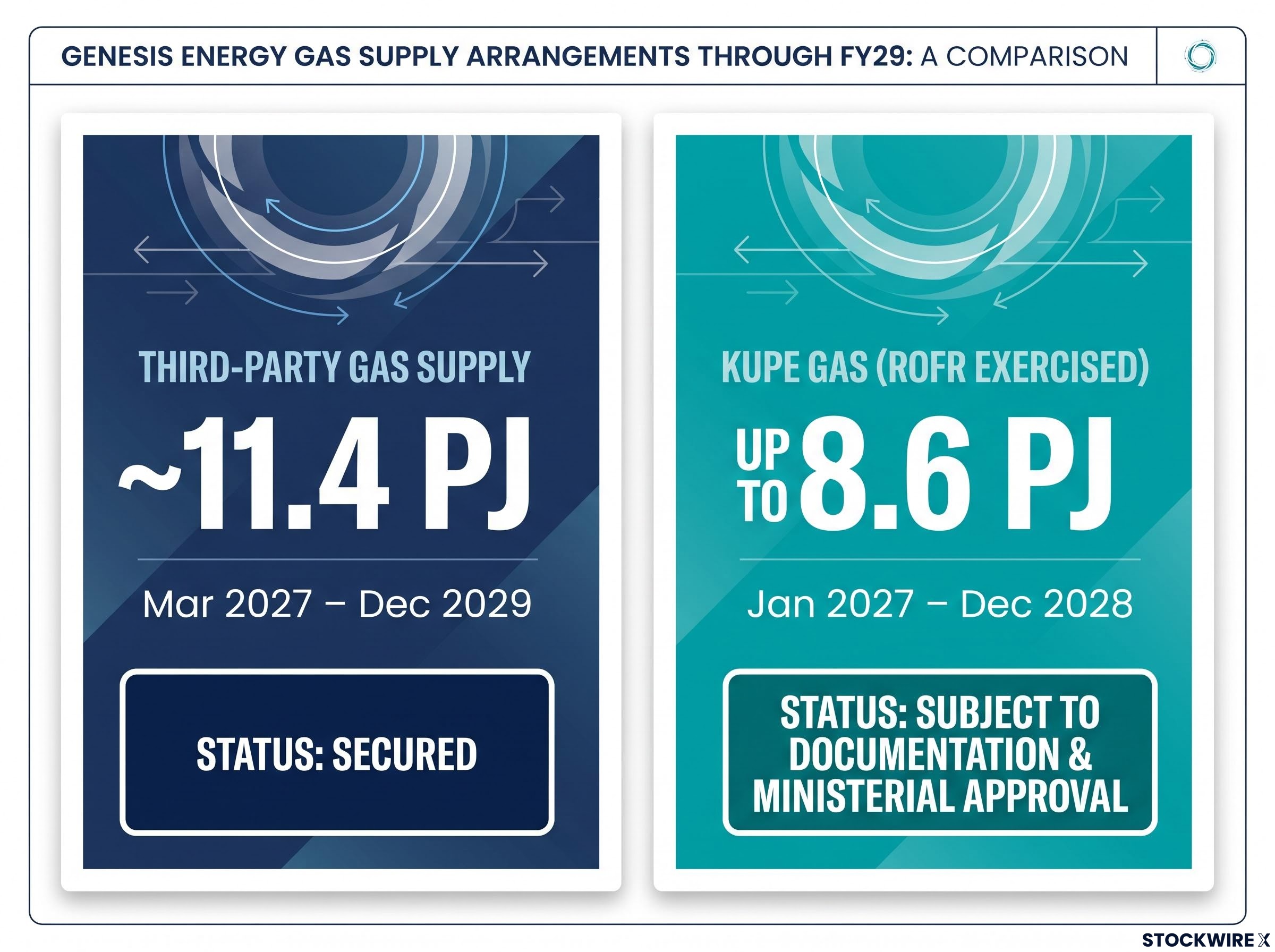
The table below sets out the two arrangements side by side, distinguishing the secured third-party volume from the conditional Kupe right of first refusal (ROFR) component.
| Arrangement | Volume | Supply Period | Status |
|---|---|---|---|
| Third-party gas supply | ~11.4 PJ | Mar 2027 – Dec 2029 | Secured |
| Kupe gas (ROFR exercised) | Up to 8.6 PJ | Jan 2027 – Dec 2028 | Subject to documentation & ministerial approval |
Additional context on the company’s gas position includes:
- Genesis holds a 46% interest in the Kupe Joint Venture, which owns the Kupe Oil and Gas Field offshore of Taranaki, New Zealand.
Kupe Joint Venture production faced headwinds in Q3 FY26 from two unplanned outages totalling 16 days, contributing to a 36% decline in oil output, which illustrates the operational variability that secured gas arrangements are designed to buffer against.
- The company’s gas position is structured across equity, contracted, ROFR and third-party sources.
What this means for Genesis and its energy transition
For a diversified energy generator and retailer, securing gas supply matters because gas underpins both electricity generation and the sale of reticulated natural gas to customers. A “fuel portfolio” refers to the mix of inputs, spanning gas, thermal and renewable sources, that back up a company’s electricity generation and retail supply obligations.
The concept of “baseload gas generation” describes continuous, always-on gas-fired electricity generation. Securing flexible gas supply supports a managed shift away from this model, allowing generation to be dispatched when needed rather than run constantly.
For investors, the arrangements offer greater flexibility in managing the generation mix and the ability to respond to customer demand and changing market conditions. They also provide confidence in meeting forecast retail demand through FY29, reducing supply-risk uncertainty.
This certainty carries weight given the scale of the company’s retail base. Genesis is one of New Zealand’s largest energy retailers, serving nearly 500,000 customers, alongside a diversified portfolio of thermal and renewable generation assets.
Tracey Hickman, Chief Wholesale Officer
“This additional gas gives us greater choice in how we manage our generation mix and respond to customer demand and changing market conditions. It complements our existing fuel arrangements and enhances the flexibility of our generation portfolio.”
What comes next
The next milestone to watch is the Kupe ROFR arrangement, which remains subject to execution of transaction documentation and required ministerial approval. Once finalised, the combined arrangements are structured to underpin the company’s gas position through to FY29.
Stay Ahead on ASX Energy Sector News
Big News Blast delivers FREE breaking ASX announcements directly to your inbox within minutes of release, complete with in-depth analysis already done for you. Join 20,000+ investors who never miss a market-moving update. Click the “Free Alerts” button at StockWire X to start receiving alerts the moment news breaks.