

Carnegie eyes US wave energy market as PacWave South opens
The PacWave South wave energy testing facility off the coast of Oregon has officially opened, and Carnegie Clean Energy (ASX: CCE, OTCQB: CWGYF) has welcomed the milestone as a potential pathway into the United States market for its CETO wave energy technology.
The pre-permitted, grid-connected open-ocean site joins only a handful of wave energy test facilities globally, creating a future route for commercial validation in what the company describes as one of the world’s largest untapped renewable resources globally. Carnegie has positioned itself as a prospective future PacWave site user, actively exploring demonstration opportunities rather than confirming a deployment.
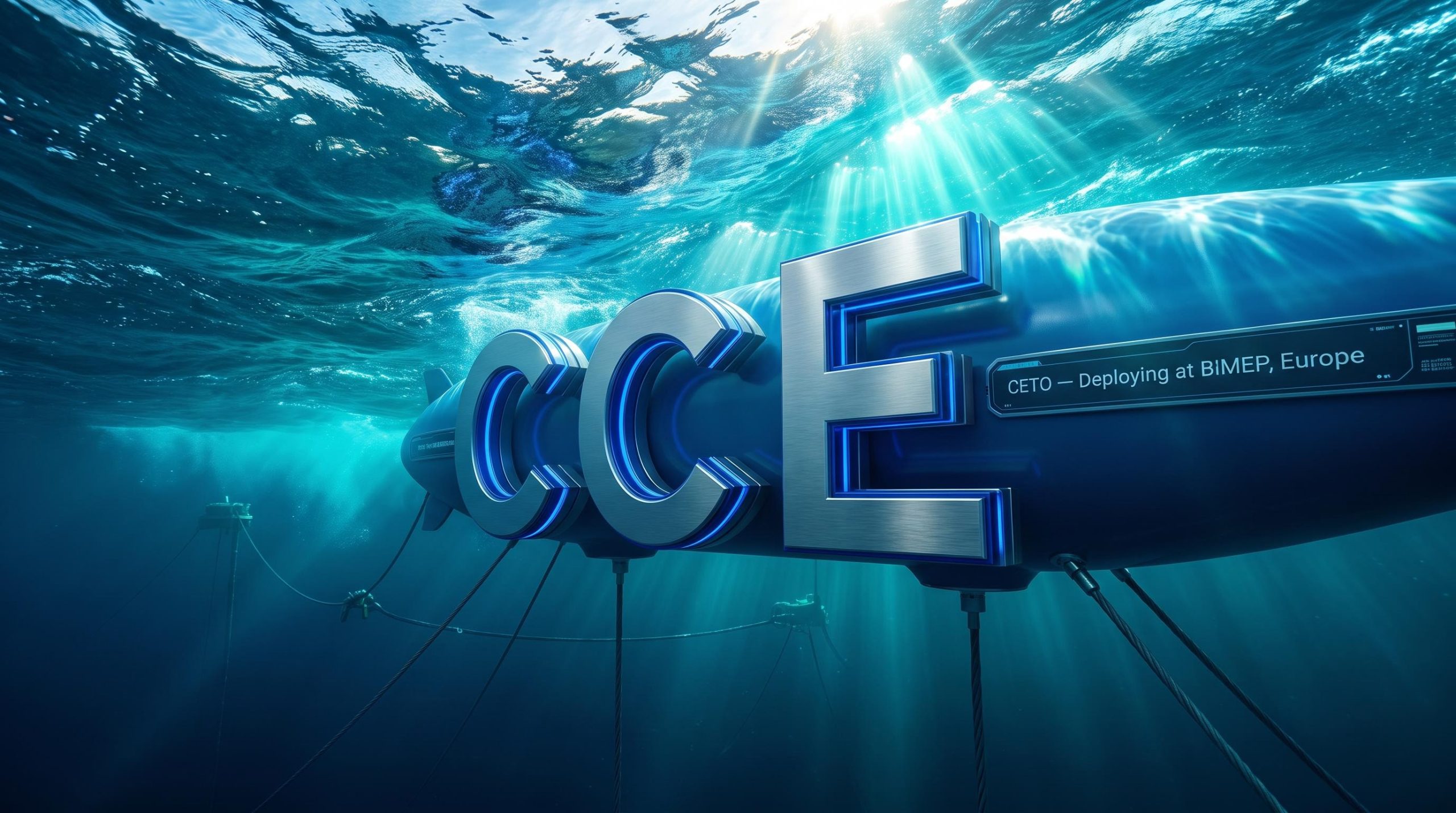
The company is also about to deploy its ACHIEVE CETO Unit at the Biscay Marine Energy Platform (BiMEP) in Europe, its current active programme.
When big ASX news breaks, our subscribers know first
The US marine energy opportunity
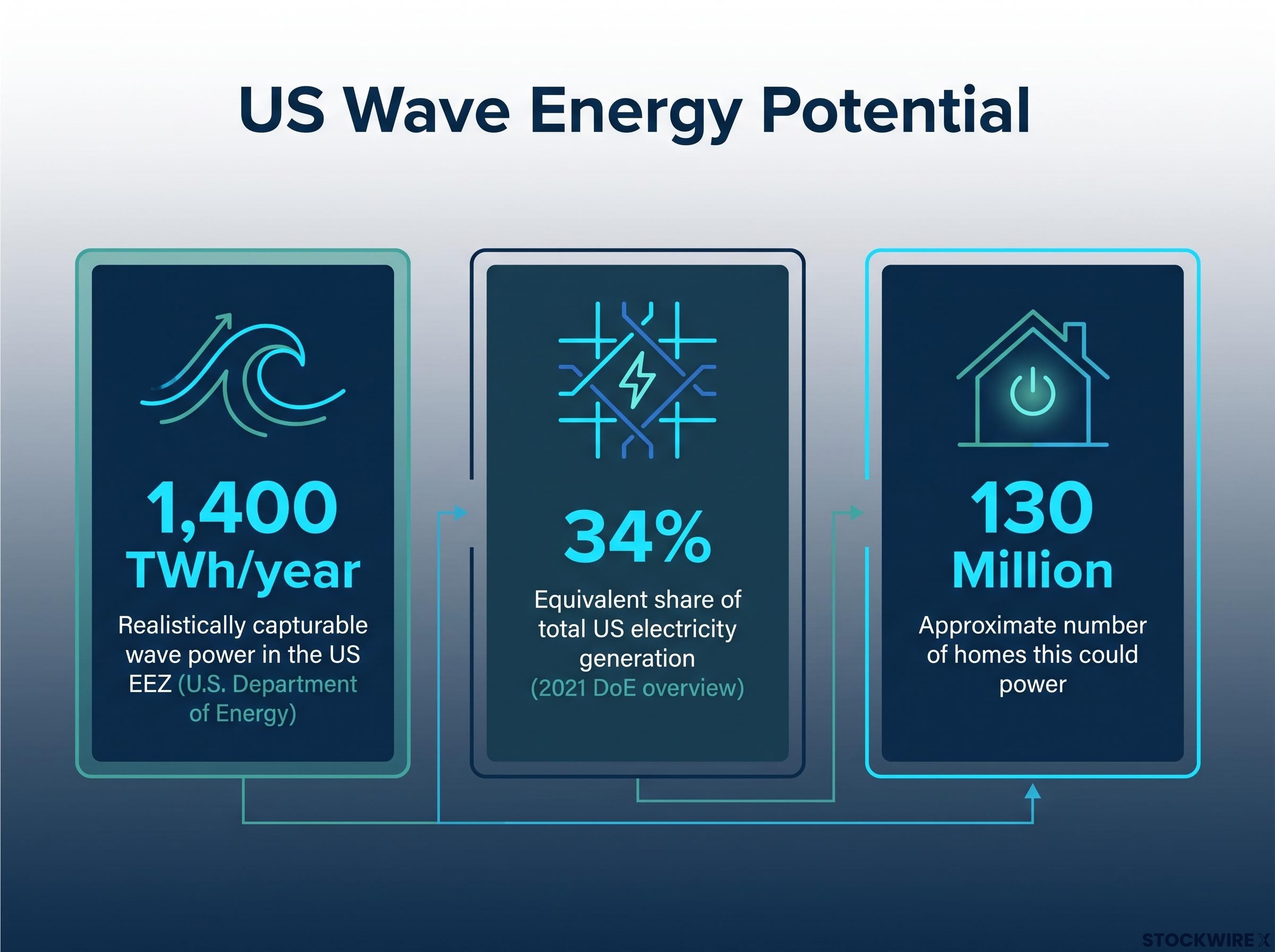
The scale of the US resource frames why the facility matters for investors. According to assessments by the U.S. Department of Energy, the US Exclusive Economic Zone (EEZ) holds an estimated 1,400 terawatt-hours (TWh) per year of realistically capturable wave power.
That technical potential is equivalent to supplying 34% of total US electricity generation, enough to power approximately 130 million homes, according to the Department of Energy’s 2021 overview of marine energy in the United States.
The opening of PacWave now makes this large addressable market commercially testable, providing a dedicated pathway for utility-scale validation on US soil.
Educational: How CETO wave energy technology works
Carnegie’s proprietary CETO wave energy converter is designed to capture the energy in ocean waves and convert it into electricity. The technology’s design centres on survivability, consistent generation, and environmental compatibility. Its key characteristics include:
-
Operating entirely beneath the ocean surface, making it invisible from the shoreline and avoiding visual amenity concerns associated with visible offshore energy projects.
-
Underwater positioning that shelters the Unit from destructive breaking waves, avoiding damage during extreme weather events.
-
Delivering predictable power generation that complements solar and wind when the sun is not shining or the wind is not blowing.
-
Additional applications beyond utility-scale projects, including remote, offshore and defence power.
For investors, this differentiation on survivability and environmental compatibility supports US priorities around grid resilience and energy sovereignty, positioning CETO within the broader commercialisation of wave energy technologies.
Why PacWave matters to Carnegie’s commercialisation roadmap
PacWave South provides a pre-permitted, grid-connected, utility-scale testing pathway in the US, supported by the U.S. Department of Energy, the State of Oregon, and Oregon State University. For Carnegie, it represents a potential validation step within its international roadmap.
The company’s current ACHIEVE Programme is deploying a scaled CETO Prototype at BiMEP in Europe. Beyond that programme, the next step in the CETO roadmap is anticipated to be deployment of full commercial scale CETO Units at an international test site such as BiMEP, EMEC or PacWave.
The CETO ocean deployment timeline has crystallised significantly in recent months, with Unit assembly underway at SKF’s manufacturing facility in Germany and foundation installation at BiMEP planned ahead of the targeted October 2026 open-ocean debut.
The company also points to a national security dimension. Recent Associated Press coverage highlights the Department of Energy’s position that wave energy is uniquely suited for national security purposes, including applications requiring persistent, low-visibility power. Carnegie states CETO has the capacity to provide continuous electricity for offshore charging stations, ocean sensing arrays, and isolated microgrids consistent with these identified US needs.
Jonathan Fievez, Chief Executive Officer, Carnegie Clean Energy
“…With a leading wave energy converter, proven intellectual property and deep operational experience, Carnegie is well positioned to be a future PacWave site user. We welcome the opening of this facility and will continue to actively explore opportunities to demonstrate our CETO technology at PacWave South to support commercial deployment across the North American market.”
| Stage | Location | Status |
|---|---|---|
| ACHIEVE Programme | BiMEP, Europe | Deploying scaled CETO Prototype (imminent) |
| Next commercial-scale step | BiMEP / EMEC / PacWave | Anticipated future deployment |
| US market development | Alaska (Chugachmiut) | MOU, preliminary surveys underway |
Building a US and Alaska presence
Carnegie is actively building its presence in the US and Alaska to help turn technical potential into practical projects on the water. A central part of this work to date is a Memorandum of Understanding (MOU) with Chugachmiut, a consortium of Native tribes in Southcentral Alaska.
Under the agreement, Carnegie is supporting Chugachmiut as they carry out preliminary wave energy surveys to better understand local marine conditions and site feasibility. The work supports the MOU’s goal of exploring how CETO technology can be deployed to provide reliable, clean power options for remote coastal and indigenous communities that currently rely on diesel generation.
This activity demonstrates practical near-term US market-building alongside the company’s longer-term aspirations at facilities such as PacWave South.
Carnegie’s relationship with the US Department of Energy extends beyond PacWave, with DOE TEAMER program support of US$193,783 secured to advance MoorPower wave energy technology into offshore aquaculture fish pen arrays, broadening the addressable US market beyond utility-scale generation.
Don’t Miss the Next Clean Energy Breakthrough on the ASX
Big News Blast delivers FREE breaking ASX news straight to your inbox within minutes of release, complete with in-depth analysis. Join 20,000+ subscribers already staying ahead of the market. Click the “Free Alerts” button at StockWire X to get the next big clean energy update the moment it drops.