

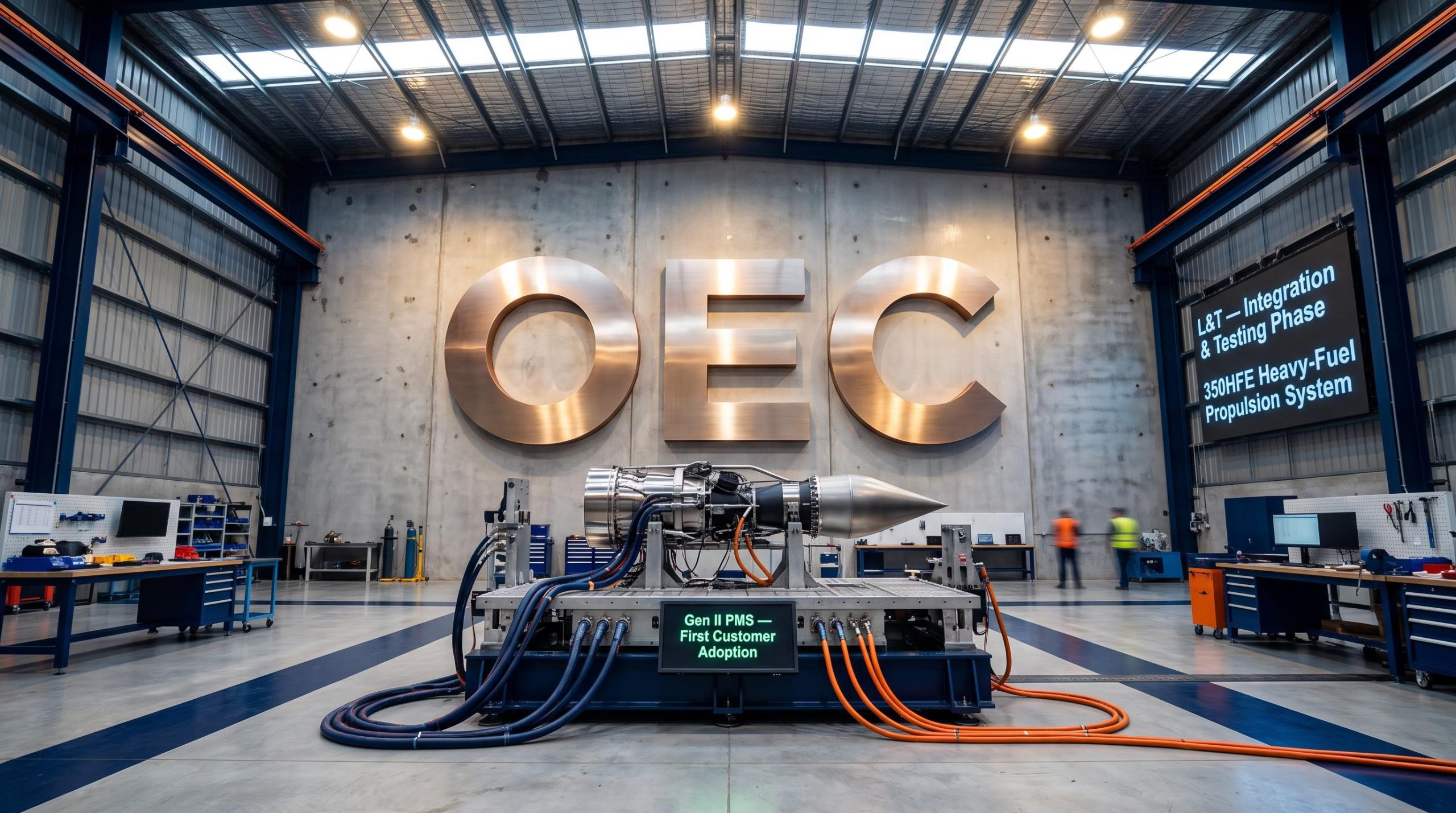
Orbital lands L&T order, marking first adoption of Gen II Power Management System
Orbital Corporation Limited (ASX: OEC) has secured an order from Larsen & Toubro (L&T), one of India’s largest engineering and defence companies, for three 350HFE propulsion systems, each incorporating Orbital’s proprietary Gen II Power Management System (PMS). The order makes L&T Orbital’s second Indian customer, and marks the first time any external customer has adopted the Gen II PMS.
L&T selected Orbital following a technical due diligence process that included a site visit to Orbital’s Western Australian facility and extensive bench testing. The evaluation led L&T to replace an existing engine solution on its Group 3 tactical UAV platform with Orbital’s integrated offering. The initial three systems are intended to support platform integration and further testing, with potential for additional propulsion system orders if the programme progresses to military production.
When big ASX news breaks, our subscribers know first
Q2 FY27 order context — what the L&T win represents
The order carries two distinct layers of significance. It represents the first external customer adoption of Orbital’s Gen II PMS, and it establishes Orbital’s propulsion technology within an L&T-led Indian military UAV programme.
L&T selected Orbital after recognising the advantages of its integrated heavy-fuel propulsion and power management technology over the incumbent engine solution. The Gen II PMS delivers a meaningful capability step for platform developers, combining propulsion and onboard electrical power in a single matched solution.
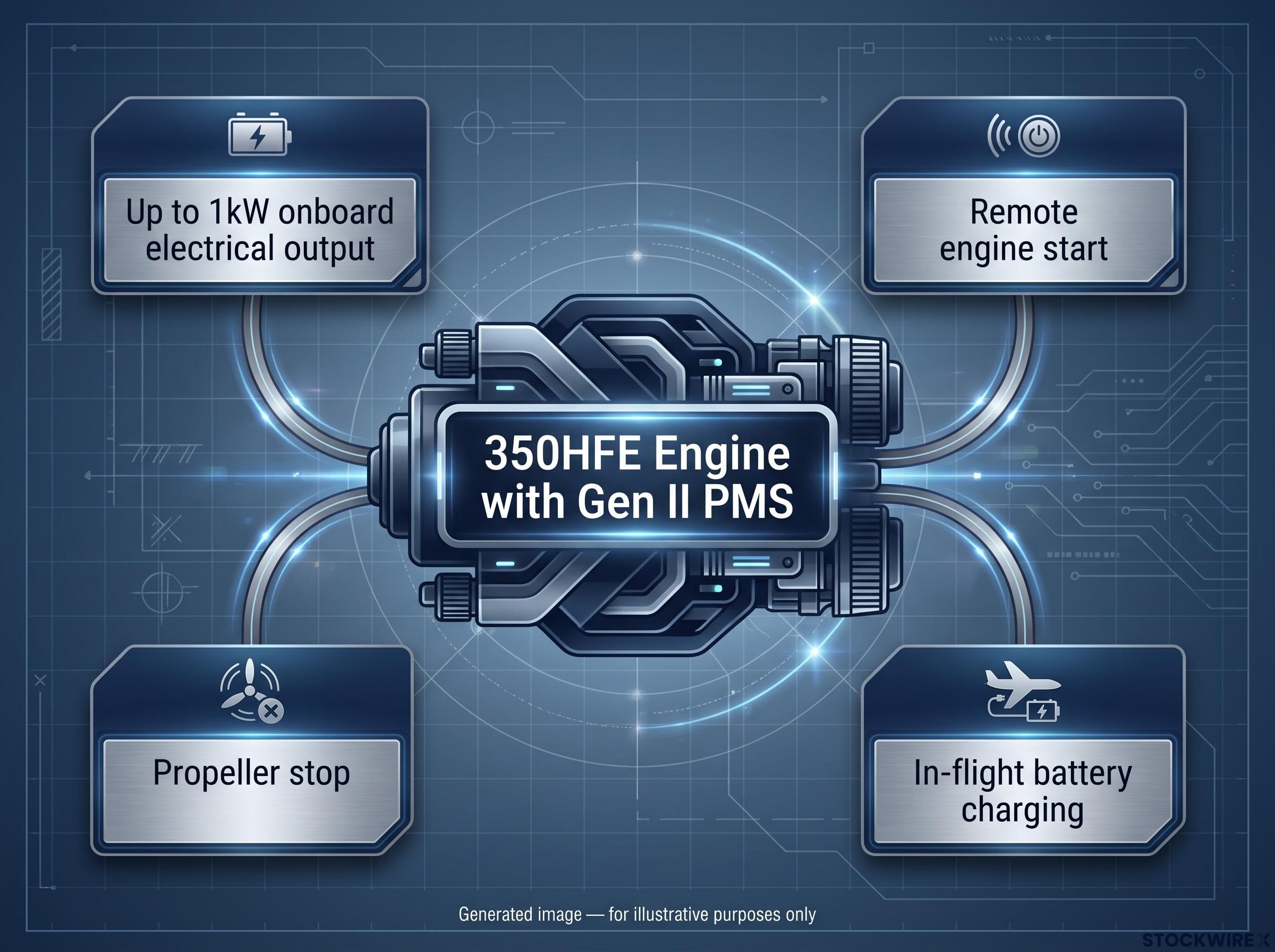
Key Gen II PMS capabilities include:
- Up to 1kW of onboard electrical output, doubling available power
- Remote engine start
- Propeller stop
- In-flight battery charging
Pairing the 350HFE engine with this proprietary power management system gives platform developers like L&T a matched solution rather than requiring separate sourcing and integration of propulsion and power components.
Stephen Pearce, CEO, Orbital Corporation Limited
“The relationship with L&T provides a pathway for Orbital to put this defence industry cooperation into practice, supplying propulsion technology designed and built in Western Australia to support Indian military UAV programmes.”
Understanding heavy-fuel UAV propulsion — why it matters for defence programs
Group 2 UAVs are generally mid-size unmanned systems, while Group 3 platforms are larger. These categories are typically used for surveillance, reconnaissance, and tactical military roles where endurance and reliability are priorities.
Heavy-fuel engines (HFE) are preferred in military applications because they run on heavy fuels, which are already used across military logistics networks. This fuel commonality simplifies supply chains, reduces the number of fuel types a unit must carry in the field, and supports longer mission endurance than battery-electric alternatives.
A Power Management System in a UAV context regulates and distributes the electrical power generated by the engine to onboard systems, sensors, and payloads. Sourcing propulsion and power management separately requires the platform developer to manage two suppliers and integrate two systems, which increases complexity and risk. An integrated solution, where the engine and PMS are designed and validated together, reduces that burden.
Orbital brings over 40 years of engineering heritage and more than 1.2 million proven in-field service hours to this space, with Tier 1 customers including Boeing and Textron Systems on its reference list.
Tier 1 customers including Textron Systems have deepened their commercial relationships with Orbital beyond initial engine supply, with Textron commissioning 25 Aerosonde engine upgrade kits that validate Orbital’s aftermarket revenue model across an installed base of approximately 1,350 engines.
India’s UAV market and the pathway to military production
India’s Government has identified domestic drone manufacturing as a priority for defence preparedness and strategic autonomy. The country’s Press Information Bureau cites a forecast that India’s broader drone market could reach US$11 billion by 2030 (Government of India, Press Information Bureau). It is important to note this figure relates to India’s broader drone market, rather than Orbital’s addressable propulsion market.
Within that broader context, Orbital is focused on supplying specialist heavy-fuel propulsion systems for Group 2 and Group 3 UAVs. The L&T relationship provides a pathway to participate in Indian military UAV programmes as they progress through development, qualification, and potential production stages.
The L&T relationship is Orbital’s second confirmed Indian customer engagement, sitting alongside the Super Cheel military drone programme where Orbital supplies both the 150HFE and 350HFE engine variants to Dynamatic Technologies for platforms targeting Indian Army and Indian Navy requirements.
Stephen Pearce also referenced the Australia-India Comprehensive Strategic Partnership as the geopolitical foundation for this commercial relationship, noting that Australian manufacturers have specialist technology to contribute as India develops its defence capability.
| Customer | Program Status |
|---|---|
| Larsen & Toubro (L&T) | Platform integration and testing phase (Group 3 tactical UAV) |
| First Indian customer (undisclosed) | Previously confirmed; program details not disclosed in this announcement |
Investors should note the current order is an early-stage beachhead position. Production volumes are contingent on successful integration and testing and the programme’s progression to military production, neither of which is guaranteed at this stage.
Investment thesis — building India exposure one programme at a time
The L&T order delivers two strategically meaningful outcomes for Orbital. The Gen II PMS now has its first confirmed commercial validation, demonstrating that an external customer has evaluated the integrated system and selected it over an existing alternative following a structured technical assessment. That is a material data point for a proprietary product at this stage of market development.
L&T itself is a tier-one partner with the engineering scale and defence relationships to drive meaningful propulsion volumes if the programme advances. The fact that L&T conducted direct due diligence at Orbital’s Western Australian facility before committing to the order reflects a depth of evaluation consistent with a long-term supply relationship rather than a transactional purchase.
The staged nature of the programme is an important qualifier. The current order supports integration and testing, not production, and further orders are conditional on programme progression. Orbital’s broader engine range spanning 50cc to 350cc HFE covers the full Group 2 and Group 3 UAV spectrum, which gives the company flexibility to serve multiple programme types across geographies as its Indian market presence develops.
Get ASX Defence and Tech News Before the Market Moves
Big News Blast delivers FREE breaking ASX news directly to your inbox within minutes of release, complete with in-depth analysis already done. Join 20,000+ investors who stay ahead of the market across Tech, Defence, and beyond. Click the “Free Alerts” button at StockWire X to start receiving alerts the moment news breaks.