
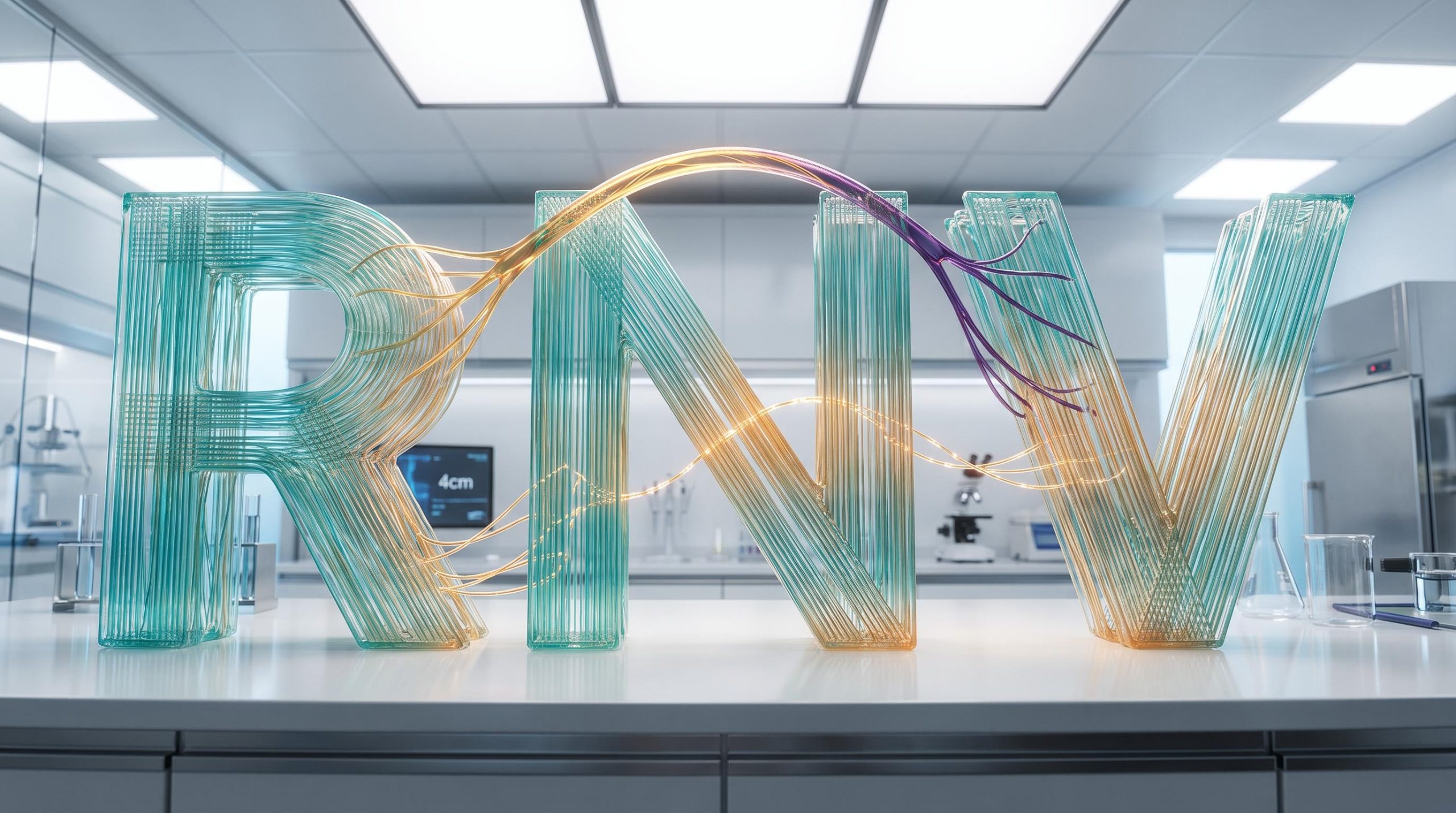
ReNerve reports positive 12-month data for NervAlign Nerve Guide Matrix
ReNerve Limited (ASX:RNV) reported positive interim 12-month preclinical sheep results for the NervAlign® Nerve Guide Matrix (“NGM”), showing nerve regeneration and return of nerve function across a 4cm critical sized defect gap. The data come from an ongoing study comparing the NGM with an autologous nerve graft control.
Animals treated with the NGM showed gait similar to the autologous graft group and to untreated animals. Further animals are scheduled for assessment in November 2026.
The company describes the NGM as in development and not approved for sale in any jurisdiction. Key highlights from the announcement include:
- 12-month sheep data showed strong nerve regeneration and return of nerve function across a 4cm gap
- All treated animals showed walking ability similar to animals treated with an autologous nerve graft and untreated animals
- Animals recovered well, moved freely and recovered quickly after surgery
- Sensory and motor nerve signals returned in both the NGM and autologous graft groups, with similar results between the groups
- Preliminary tissue analysis identified blood vessel and nerve fibre regrowth throughout the implants and into the nerve beyond the repair site
When big ASX news breaks, our subscribers know first
What the 12-month results showed
The study evaluates a 4cm section of the NGM implanted in a sheep peripheral nerve model. It included six implants in total: three NGM implants (N=3) and three autologous nerve grafts (N=3).
Function and recovery
All animals recovered well following surgery and were walking freely within hours. At 12 months, animals treated with the NGM showed gait similar to animals treated with an autologous nerve graft and animals that had not undergone the nerve intervention.
Nerve signals and tissue findings
Nerve conduction testing at 12 months detected both sensory and motor nerve signals in NGM-treated animals, showing that signals were able to travel across the repaired area. Similar results were observed in the autologous graft group.
Preliminary histological assessment found regrown vascularisation and axonal structures in sections taken along the length of the implants and into the distal nerve segment. Axons are the long fibres that carry signals along a nerve. More detailed staining and analysis is in progress.
| Measure | NGM group | Autologous graft group |
|---|---|---|
| Implants | N=3 | N=3 |
| Gap length | 4cm | 4cm |
| Gait at 12 months | Similar to autologous graft and untreated animals | Similar to NGM group |
| Sensory and motor nerve signals | Both detected | Similar results observed |
The announcement notes that, because of the small number of animals reported to date, formal statistical assessment is not yet possible.
Dr Julian Chick, CEO and Managing Director
“…we have seen nerve fibres regrow across the full 4cm NGM implant, together with the return of sensory and motor nerve signals…”
Dr Chick also said the results show the NGM “has the potential to offer a true alternative to autologous nerve grafts.”
Why a 4cm gap matters
Peripheral nerve injury involves damage to nerves outside the brain and spinal cord. Autologous nerve grafting, where a patient’s own nerve is used to repair a damaged nerve, is a commonly used surgical approach for larger nerve gaps. The study is assessing whether the NGM can support nerve regeneration across a 4cm gap without requiring a donor nerve.
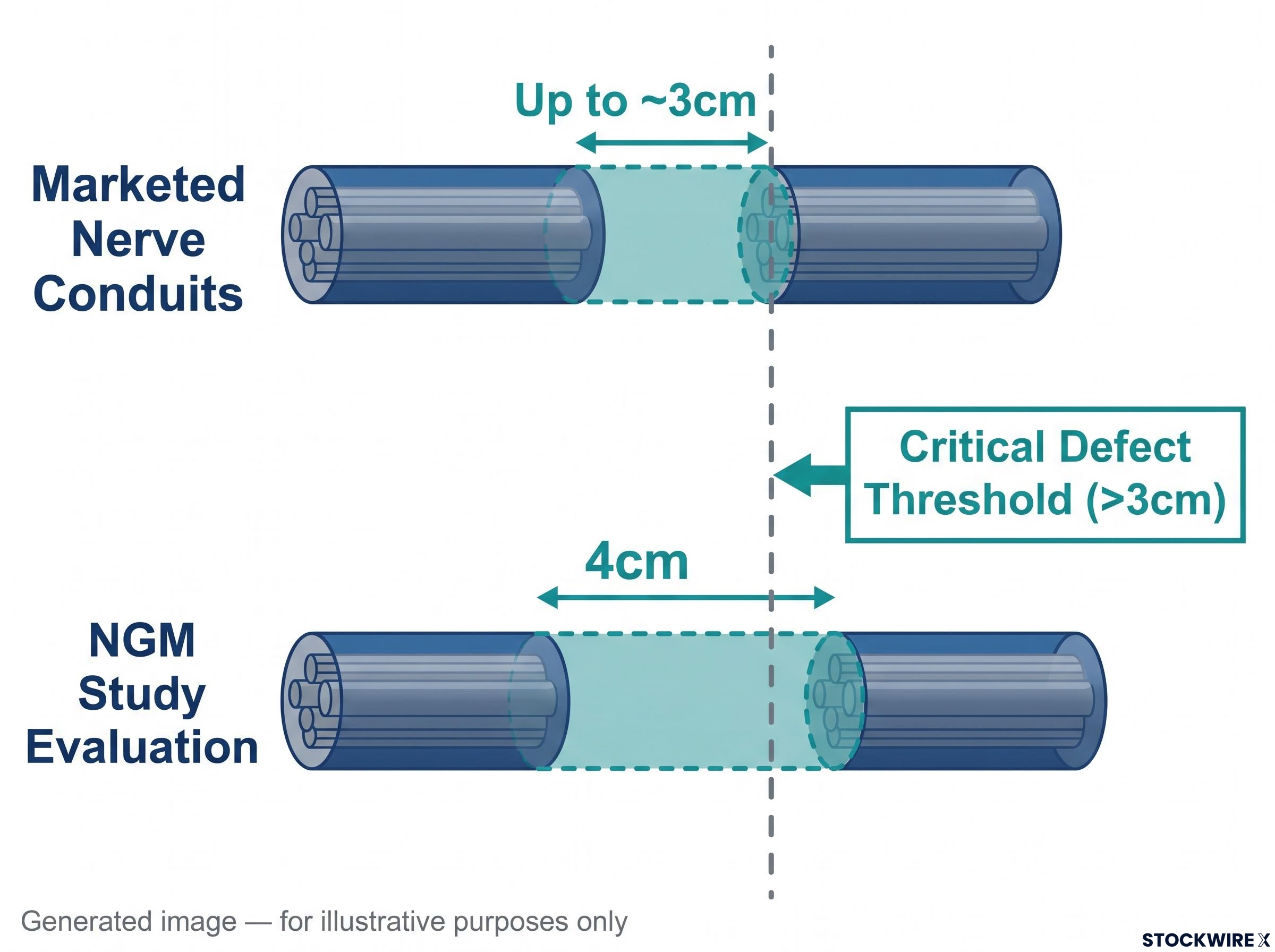
Nerve defects longer than 3cm are generally considered critical. Published literature cited in the announcement notes that marketed nerve conduits have demonstrated reliable regeneration only over shorter gaps of up to approximately 3cm, and whether reconstruction of defects of 4cm or more is possible has been identified as a key question in the field.
The use of a large animal model is also relevant to human application, as rodent models have been criticised as poorly suited to translational nerve research because of differences in scale. ReNerve describes the NGM as a “customised and ready-to-use alternative to existing nerve grafts” for longer nerve gaps and more severe injuries.
Three reasons the company’s 4cm result is relevant:
- The gap exceeds the approximately 3cm range over which marketed conduits have demonstrated reliable regeneration.
- The study uses a large animal model, which the announcement describes as relevant to human application.
- The study is assessing whether regeneration is possible without requiring a donor nerve.
The company’s boilerplate cites a global nerve repair market valued at US$1.6 billion in 2024 and projected to reach $6.2 billion by 2031.
Inflammation finding, next steps and regulatory path
One implant under investigation
In one NGM animal, a minimal area of inflammation was observed within the implant at 12 months, although axonal regrowth was present throughout the length of that implant. Earlier ReNerve data showed some inflammation at around three months, clearing by around ten months, which may be part of the normal remodelling process.
The inflammatory cell accumulation in this single implant is so far unexplained, however the company says it could be part of natural nerve regeneration. It is being investigated as part of the ongoing histological analysis.
What comes next
- Additional animals are scheduled to be explanted in late November 2026
- The company will complete detailed histological analysis, including the inflammatory finding
- ReNerve expects to provide a further update once data from the additional animals and the full analysis are available
The results complement existing 3-, 6- and 10-month data, as well as additional bench testing and safety profiling of the NGM. Preclinical results are not necessarily predictive of outcomes in humans.
The NGM is in development and is not approved for sale in any jurisdiction. ReNerve continues to consult with the regulatory authorities on its path forward to regulatory marketing approval.
The FDA pre-submission feedback on the preclinical model and control group design has given the company clearer expectations for its testing plan, though no submission date has been set.
For context, the company’s on-market NervAlign® Nerve Cuff is FDA-cleared, and ReNerve reported 53% revenue growth in FY25, reaching $271k in sales. The announcement does not attribute any revenue to the NGM.
The Nerve Cuff also gained Indonesian marketing approval in 2026, extending its regulatory footprint to six markets across the US and Asia-Pacific.
Get Healthcare News Before the Market Moves
Join 20,000+ investors receiving FREE breaking ASX news within minutes of release, complete with in-depth analysis and the full announcement. Click the “Free Alerts” button at Big News Blast to get real-time alerts the moment the next healthcare breakout hits the market.