
Regis Healthcare delivers at top end of EBITDA guidance with $135m result
Regis Healthcare expects to deliver underlying EBITDA of approximately $135 million for FY26, positioning at the top end of guidance. The result reflects sustained high occupancy, strong refundable accommodation deposit inflows and solid cash generation through Q3 FY26, announced on 30 April 2026.
Regis (ASX: REG) is one of Australia’s largest aged care operators, serving more than 10,000 older Australians through residential aged care homes, home care service hubs, day therapy and respite centres, and retirement villages. The company employs over 13,000 staff across its operations.
Delivery at the top end of guidance signals operational execution and positions the company favourably heading into FY27.
When big ASX news breaks, our subscribers know first
Occupancy levels drive performance
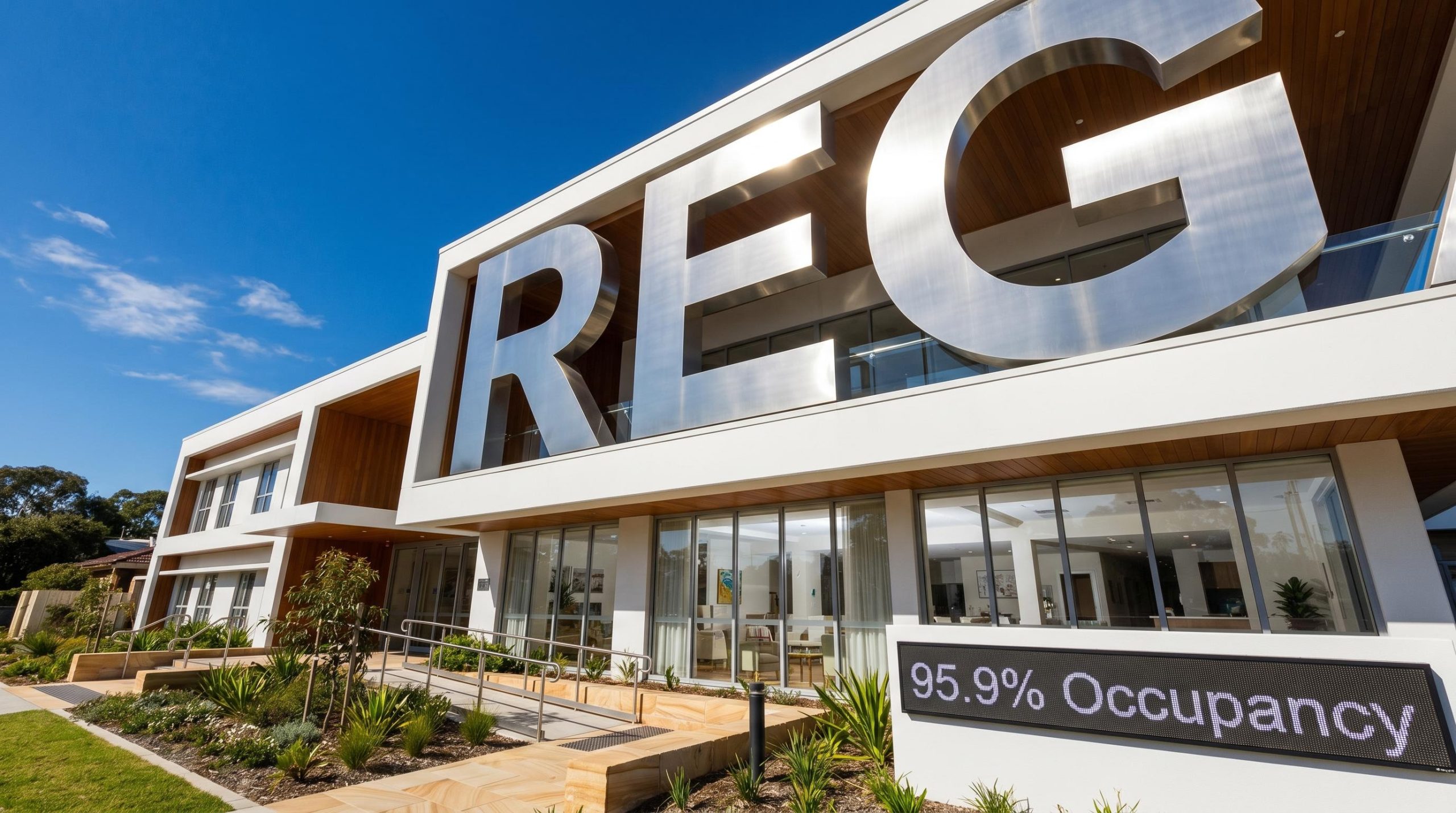
Mature home occupancy averaged 95.9% in Q3 FY26, up from 95.5% in the prior corresponding period. Occupancy performance continues to benefit from targeted sales initiatives, improved hospital discharge pathways and an increasing shortage of available beds in the market.
Regis Oxley, a 150-bed facility acquired as part of the Rockpool acquisition in September 2025, reached full occupancy in March 2026 — approximately twelve months after opening. The facility forms part of the mature homes portfolio from 1 April 2026.
Occupancy above 95% demonstrates strong demand capture in a supply-constrained market. This performance underpins revenue stability and positions the operator to capitalise on pricing adjustments as resident turnover occurs.
RAD inflows provide cash visibility
Regis generated net RAD cash inflows of $44.5 million in Q3 FY26, taking total net RAD cash inflows for YTD March FY26 to $223 million. The paid-up RAD balance was approximately $2.3 billion as at 31 March 2026.
Net RAD cash inflows were supported by recent acquisitions, including Rockpool and OC Health, room pricing adjustments and an increase in the proportion of residents paying RADs. A clear runway exists for ongoing RAD cash inflows. As resident turnover occurs, the progressive repricing of existing paid-up RADs to current advertised room prices is expected to generate net operating cash inflows of approximately $400 million over time, based on average resident tenure of 2.5 years.
| Metric | Q3 FY26 | YTD March FY26 | Balance/Runway |
|---|---|---|---|
| Net RAD Cash Inflows | $44.5m | $223m | — |
| Paid-Up RAD Balance | — | — | $2.3b |
| Future Repricing Runway | — | — | $400m |
The repricing runway provides visible future cash inflows and increases RAD retention earnings, supporting balance sheet strength and investment flexibility.
What is EBITDA and why does it matter for aged care investors?
Underlying EBITDA is a measure of operating profitability before financing costs, tax, depreciation, amortisation and accounting adjustments. Regis defines underlying EBITDA as earnings before interest, tax, depreciation and amortisation, excluding imputed income on RADs and Bonds and one-off items, and including operating lease expense.
EBITDA is particularly relevant in aged care, a capital-intensive sector with significant property holdings and lease obligations. The metric focuses on operating performance without the distortion of financing structures or non-cash accounting items. For Regis, excluding imputed income on RADs provides a clearer view of cash-generating capability from operations.
Achieving top-end guidance indicates management’s ability to forecast and control costs in a regulated funding environment. This reliability is important for income-focused investors assessing earnings visibility and dividend sustainability.
Cost savings and capital recycling strengthen the portfolio
Regis has implemented a structured cost-savings programme aimed at creating a more agile and efficient operating model whilst maintaining care quality and frontline capability. Savings are being delivered through an ongoing programme of work including:
- Further streamlining the management structure
- Targeted support office efficiency initiatives
- Improved roster optimisation
- Data analytics and AI-enabled tools to enhance workforce planning
- Automation of routine processes to support more informed decision making
The company also continues to actively recycle capital to improve the quality, sustainability and earnings profile of the portfolio. The group continues to progress a disciplined strategy of quality acquisitions and greenfield developments in attractive catchments, together with the divestment of non-core or lower-returning assets.
In March 2026, Regis completed the divestment of its two residential aged care homes located in Far North Queensland (Ayr and Home Hill), generating a one-off profit before tax of $25 million, to be recognised in FY26. This capital recycling approach allows the company to redeploy proceeds into higher-returning assets and improve overall portfolio quality.
Government funding reform provides sector tailwinds
On 22 April 2026, the Federal Government released the Independent Review of Residential Aged Care Accommodation Pricing and announced a $3 billion funding package to deliver more beds, expanded in-home care services and better care for older Australians. The specifics will be detailed in the May 2026 Federal Government Budget.
The Government has indicated that its initial response will focus on:
- Targeted capital subsidies for residential aged care
- Providing additional funding for supported residents for newly built or refurbished homes
- An increase to the Accommodation Supplement
- Structural changes to introduce new tiers and additional payments for homes with a higher proportion of supported residents
The Review also sets out a number of broader recommendations for future consideration, including expanded access to interest-free Government loans to support greenfield development, reforms to RAD and DAP pricing settings, and measures to simplify the approval process for accommodation pricing above the regulated maximum.
In addition, the Health Minister noted the Government’s ambition to reallocate funding from higher private health insurance rebates for Australians aged over 65 to residential aged care.
Regis will continue to assess the details of the Review and Budget announcements. The proposed measures are expected to be supportive of sector sustainability. Potential benefits for Regis depend on the company’s resident mix and the final design and timing of policy implementation.
The reform direction is positive for sector sustainability and may benefit operators like Regis depending on implementation. The funding package addresses long-standing capital constraints in the sector and could support greenfield development and refurbishment activity.
Management outlook
Dr Linda Mellors, Managing Director and CEO
“The release of the Accommodation Pricing Review and the Government’s initial funding response represent an important step toward improving the long-term sustainability of residential aged care. Whilst further detail and consultation will be important, the direction of reform is positive and aligns with the sector’s need for a more sustainable funding and capital framework.”
Investment case for Regis Healthcare
The announcement provides several key investment takeaways for shareholders and prospective investors:
-
FY26 EBITDA at top end of guidance demonstrates execution: Delivery of approximately $135 million underlying EBITDA shows management’s ability to forecast and control costs in a regulated environment.
-
Occupancy above 95% in a supply-constrained market: Mature home occupancy of 95.9% reflects strong demand capture and provides revenue stability heading into FY27.
-
$400 million RAD repricing runway provides visible future cash inflows: Progressive repricing of existing paid-up RADs to current advertised room prices supports balance sheet strength and investment flexibility.
-
Cost-savings programme positions for margin improvement: Streamlined management structure, improved roster optimisation and AI-enabled workforce planning create operational leverage.
-
Capital recycling improving portfolio quality and earnings profile: Disciplined strategy of quality acquisitions and divestment of non-core assets enhances overall portfolio returns.
-
Government reform direction supportive of sector sustainability: The $3 billion funding package addresses capital constraints and could support greenfield development, with final benefits dependent on policy implementation.
The May 2026 Federal Budget will provide further detail on funding measures, whilst continued occupancy momentum and RAD inflow performance remain key metrics to watch heading into the final quarter of FY26.
Don’t Miss the Next Healthcare Winner
Join 20,000+ investors getting FREE breaking ASX healthcare news delivered to your inbox within minutes of release, complete with in-depth analysis. Click the “Free Alerts” button at StockWire X to receive market-moving alerts the moment they break.