

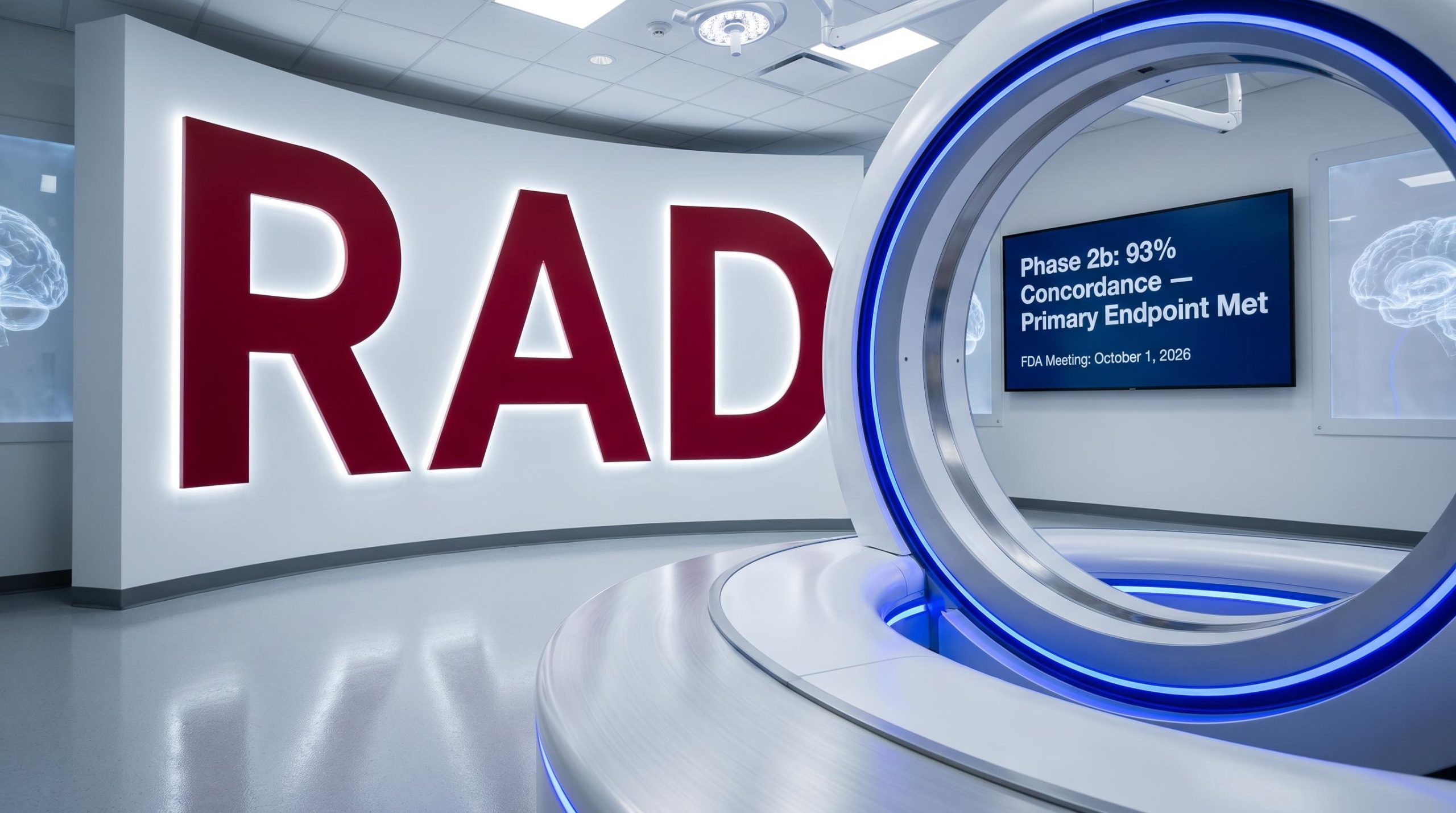
RAD101 meets primary endpoint with 93% concordance in Phase 2b brain metastases imaging trial
Radiopharm Theranostics has reported that its RAD101 imaging agent met the primary endpoint of its Phase 2b clinical trial, achieving 93% concordance between PET and MRI across all evaluable lesions in patients with suspected recurrent brain metastases. Separately, the trial data has been selected for a late-breaking oral presentation at the 31st Annual Meeting of the Society of Neuro-Oncology (SNO26), scheduled for November 12–15, 2026 in Philadelphia.
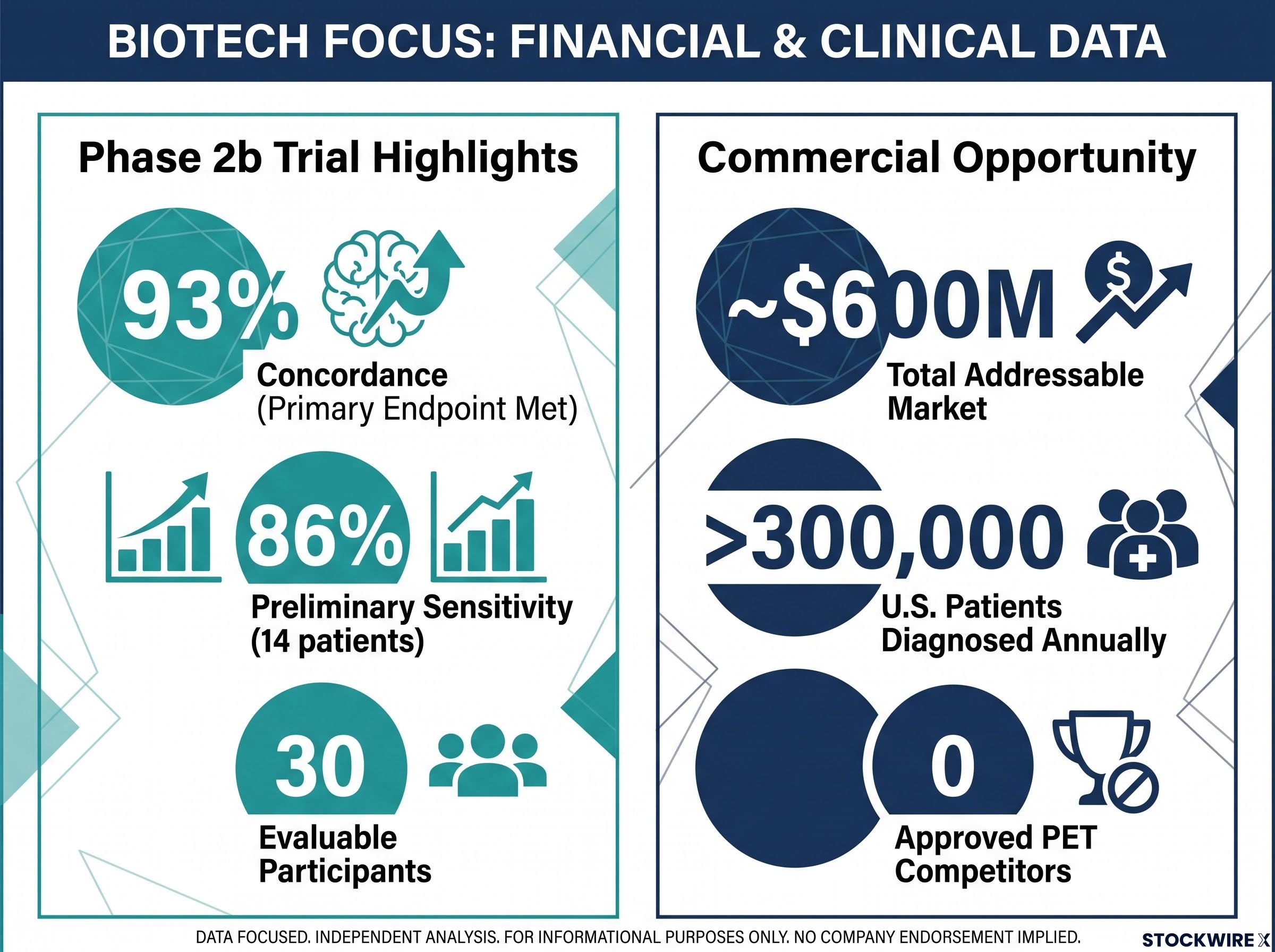
The results arrive in a market with an estimated ~$600 million total addressable market and no currently approved PET products for this indication, positioning RAD101 as a potential first-mover in a clinically underserved space. A meeting with the FDA is planned for 1 October 2026 to align on the Phase 3 pivotal trial protocol.
When big ASX news breaks, our subscribers know first
Q1 FY27 clinical milestone — what the Phase 2b data shows
The Phase 2b trial assessed the diagnostic performance of 18F-RAD101 across 30 evaluable participants with suspected recurrent brain metastases from solid tumours of different origins. The trial was a U.S. multi-centre, open-label, single arm study.
The 93% concordance figure in the full 30-patient cohort represents a step up from the second interim analysis, which reported 90% concordance across 20 evaluable patients and first confirmed the primary endpoint had been met.
Key results from the interim analysis include:
- Primary endpoint met: 93% concordance between 18F-RAD101 PET-positive lesions and equivocal lesions on conventional MRI (with gadolinium) in patients with suspected relapse after stereotactic radiosurgery (SRS)
- Secondary endpoint trend: 86% preliminary sensitivity in 14 patients with evaluable six-month follow-up and/or biopsy data, representing a strong positive trend (not a final result)
- Imaging confirmation: PET images confirmed metabolic activity compared to equivocal MRI findings, with substantial and selective tumour uptake of RAD101
The primary objective of the study was concordance between 18F-RAD101 PET-positive lesions and equivocal lesions seen on MRI in participants with known brain metastases and suspected relapse after stereotactic radiosurgery (SRS). Secondary endpoints include sensitivity and specificity of RAD101 in identifying tumour recurrence versus radiation-associated changes in previously SRS-treated brain metastases.
Riccardo Canevari, CEO and Managing Director
“The neuro-oncology community understands better than anyone the challenges associated with distinguishing active brain metastases from treatment effects using current imaging approaches… We believe these data underscore RAD101’s potential to address a significant unmet need by helping physicians make more informed decisions and potentially changing the course of disease management for patients with suspected recurrent brain metastases.”
Understanding brain metastases imaging — why current tools fall short
More than 300,000 patients are diagnosed annually with cerebral metastases in the U.S. alone. The incidence of intracranial metastatic disease (IMD) continues to increase, partly because improvements in systemic therapy are producing more durable control of tumours outside the central nervous system, meaning patients are living longer but facing greater risk of brain involvement.
Contrast-enhanced MRI (CE-MRI) is currently the preferred method for imaging IMD. However, it carries limitations in follow-up surveillance, particularly when clinicians need to distinguish active tumour recurrence from treatment effects such as radiation-associated changes following SRS. Getting this distinction wrong can fundamentally alter a patient’s treatment path and prognosis.
No PET imaging product is currently approved for this indication. RAD101 targets fatty acid synthase (FASN), a multi-enzyme protein that is overexpressed in cerebral metastases from solid tumours. By selectively binding to FASN, RAD101 may enable more accurate detection of cancer cells in the central nervous system, potentially offering a clinically relevant complement to existing MRI-based approaches.
Key market context
~$600 million total addressable market. Zero approved PET competitors in brain metastases imaging.
FDA meeting and Phase 3 pathway — what comes next for RAD101
The data from the Phase 2b trial will be used to support the initiation of a pivotal multi-centre, global Phase 3 imaging trial. The next immediate step is an FDA meeting scheduled for 1 October 2026, where Radiopharm Theranostics expects to align on the Phase 3 trial protocol.
Key upcoming milestones include:
- The FDA Fast Track Designation already in place covers distinguishing between recurrent disease and treatment effect of brain metastases originating from solid tumours of different origins, including leptomeningeal disease
- A partnership with Siemens Healthineers is confirmed, with Siemens Healthineers to manufacture and distribute doses of 18F-labeled RAD101 to support the upcoming Phase 3 pivotal trial in the U.S.
- The late-breaking oral presentation slot at SNO26 signals peer recognition of the clinical importance of the data
The Siemens Healthineers supply agreement, which covers manufacturing and distribution of 18F-labeled RAD101 across the U.S. radiopharmacy network, was secured ahead of the Phase 3 announcement, giving Radiopharm a logistics infrastructure already in place when the pivotal trial opens.
| Milestone | What It Is | Target Date | Significance |
|---|---|---|---|
| FDA Meeting | Alignment on RAD101 Phase 3 pivotal trial protocol | 1 October 2026 | Critical step toward initiating the global Phase 3 trial |
| SNO26 Late-Breaking Oral Presentation | Presentation of Phase 2b interim analysis data | 12–15 November 2026, Philadelphia | Peer recognition of clinical importance; broad neuro-oncology community exposure |
| Phase 3 Trial Initiation | Multi-centre, global pivotal imaging trial | TBC post-FDA meeting | Potential path toward regulatory approval in a ~$600M market with no approved PET competitors |
Don’t Miss the Next Healthcare Breakthrough
Get FREE breaking ASX healthcare news delivered to your inbox within minutes of release, complete with in-depth analysis already done for you. Join 20,000+ investors who stay ahead of the market the moment announcements drop. Click the “Free Alerts” button at Big News Blast to start receiving alerts today.