

RAD101 hits primary endpoint with 93% MRI concordance in brain metastases trial
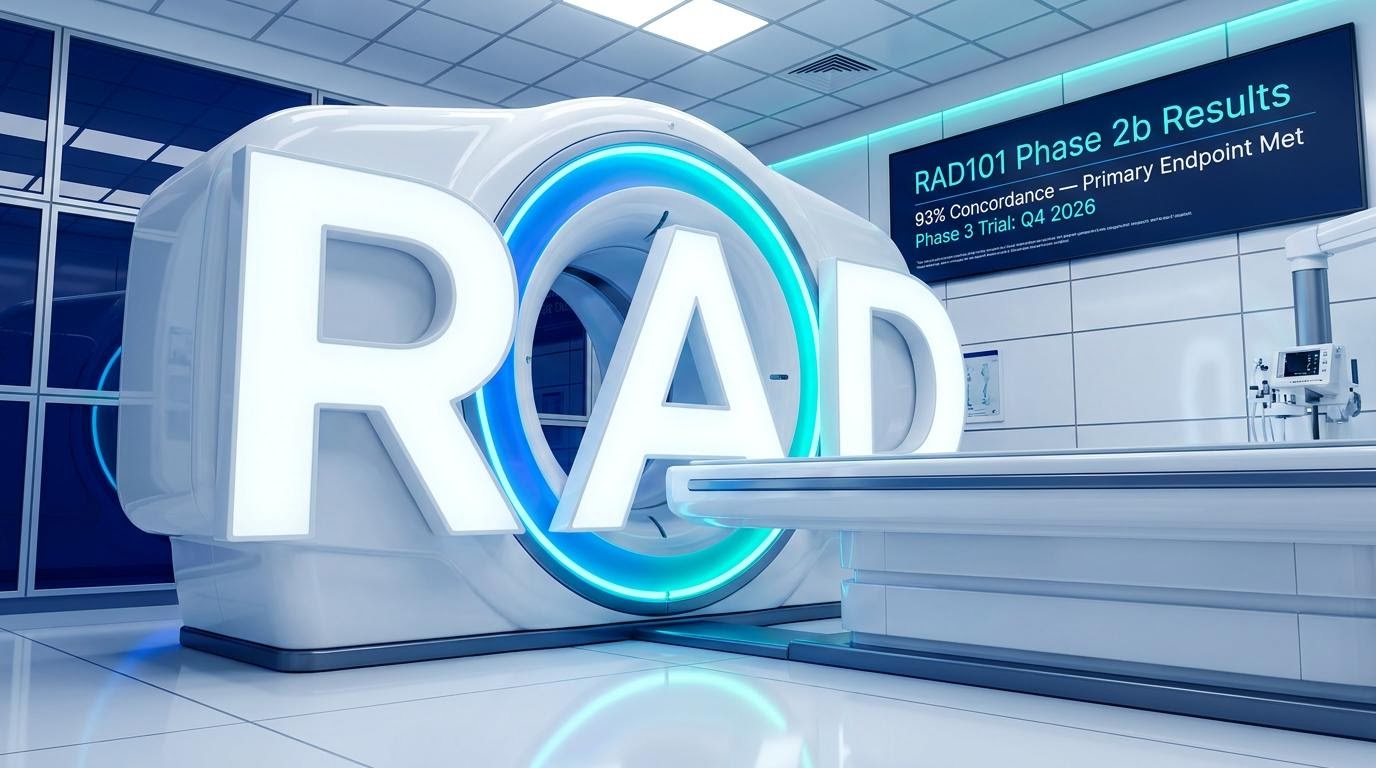
Radiopharm Theranostics (ASX:RAD) has reported positive Phase 2b results for its imaging candidate RAD101, announcing on 22 July 2026 that the trial met its primary endpoint. The headline finding was 93% concordance between RAD101 PET imaging and MRI across all evaluable lesions.
The data came from all 30 evaluable patients with suspected recurrence of brain metastases following radiotherapy. The result forms the basis for a pivotal, multi-centre global study.
Radiopharm plans to advance RAD101 into a U.S. Phase 3 pivotal trial in Q4 2026, positioning the candidate for a registrational pathway in a market with no currently approved PET product.
When big ASX news breaks, our subscribers know first
The trial results in detail
The primary objective assessed concordance between RAD101 PET-positive lesions and equivocal lesions seen on conventional MRI with gadolinium. The 93% concordance result showed substantial and selective tumour uptake of RAD101, with images confirming metabolic activity on PET compared to equivocal MRI findings.
On the secondary front, 14 patients with available six-month follow-up and/or biopsy data showed a preliminary 86% sensitivity (12/14), which the company described as a strong positive trend. Sensitivity measures an imaging test’s ability to correctly identify patients who have disease.
Specificity, the second of the two secondary endpoints, has not yet reported. Radiopharm confirmed that specificity data will be available in Q4 2026.
| Metric | Result | Endpoint Type | Status |
|---|---|---|---|
| Concordance (PET vs MRI) | 93% | Primary | Met |
| Sensitivity | 86% (12/14) | Secondary | Positive trend |
| Specificity | Pending | Secondary | Data due Q4 2026 |
CEO Commentary
“The entirety of this dataset captures the strength and potential of RAD101 to address a difficult diagnostic challenge in neuro-oncology. Achieving the primary endpoint provides strong validation of our approach and supports the advancement of RAD101 into an intended registrational Phase 3 program. We look forward to continuing our discussions with the U.S. FDA as we finalize the study design and work toward bringing a more precise diagnostic tool to patients and clinicians. With this positive data in hand, we have a strong foundation from which to launch our pivotal trial,” said Riccardo Canevari, CEO and Managing Director of Radiopharm Theranostics.
What RAD101 is and why brain metastases imaging matters
RAD101 is a novel imaging small molecule that selectively binds to fatty acid synthase (FASN), a multi-enzyme protein that catalyses de-novo fatty acid synthesis and is overexpressed in cerebral metastasis from solid tumours. It is radiolabelled with Fluorine-18 (18F) and is being developed for the diagnosis of suspected recurrent brain metastases.
Targeting FASN activity may allow for the more accurate detection of cancer cells in the central nervous system (CNS). This addresses a genuine clinical gap. Contrast-enhanced MRI (CE-MRI) is currently the preferred method for imaging Intracranial Metastatic Disease, but it has limitations, particularly in follow-up surveillance scans.
Supportive Phase 2a data from Imperial College London showed significant tumour uptake of 18F-RAD101 that was independent of the tumour of origin, across both radiosurgery pre-treated and treatment-naïve patients.
Key technical features of RAD101 include:
-
Targets fatty acid synthase (FASN), overexpressed in cerebral metastasis
-
Radiolabelled with Fluorine-18 (18F) for PET imaging
-
Uptake independent of the tumour of origin (Phase 2a data)
-
Holds U.S. FDA Fast Track Designation
For investors, a more precise diagnostic tool that can better distinguish recurrent disease from radiation-associated changes speaks directly to a real unmet clinical need in neuro-oncology.
The market opportunity and investment case
The imaging brain metastases total addressable market is estimated at ~$600m+, with no currently approved PET product available. This represents a clear whitespace opportunity for a candidate that can demonstrate registrational-grade performance.
The clinical scale is substantial. In the U.S. alone, more than 300,000 patients are diagnosed annually with cerebral metastases, and the incidence of Intracranial Metastatic Disease continues to increase, driven in part by improvements in systemic therapy that extend control of tumours outside the CNS.
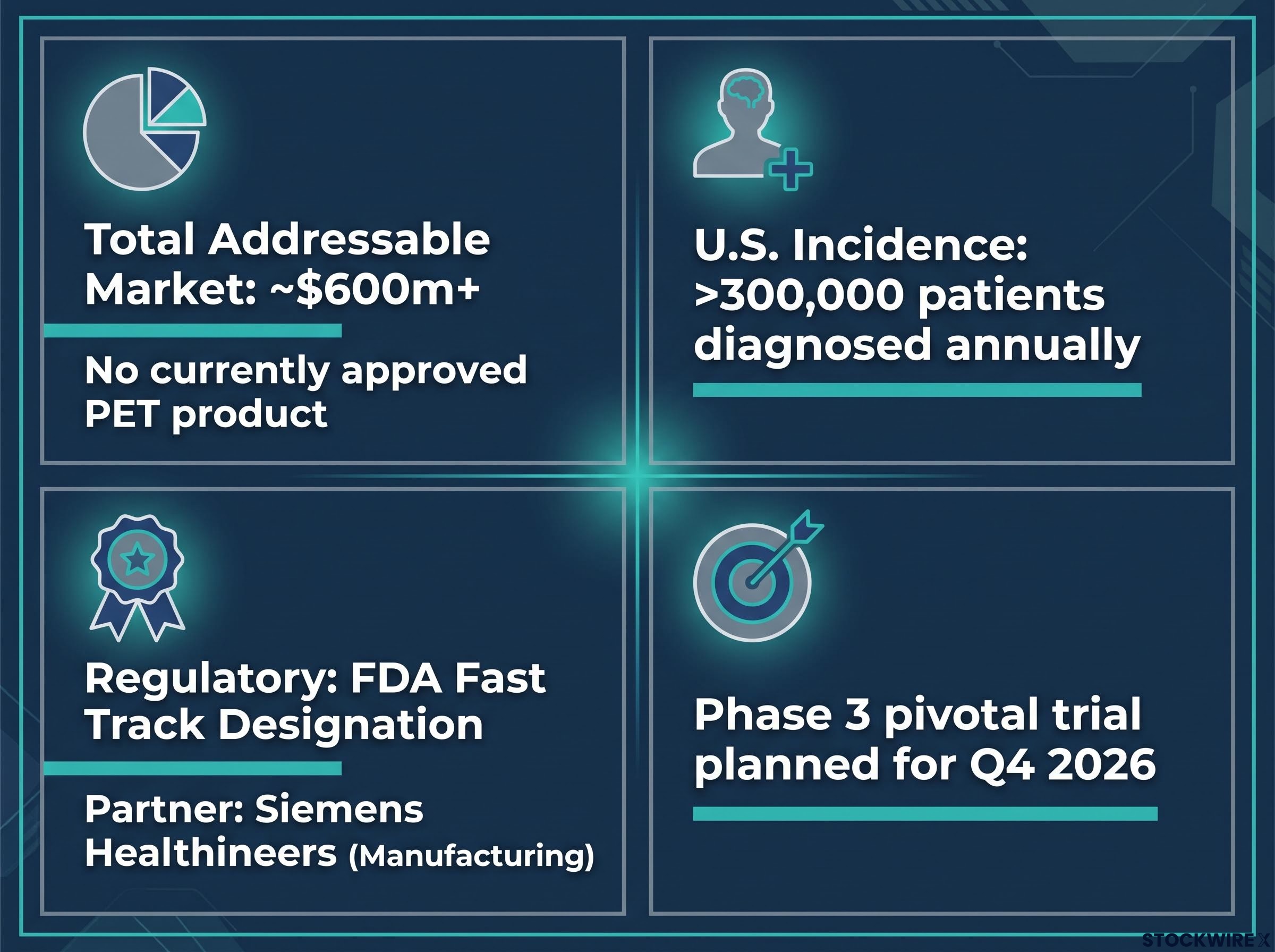
Several factors help de-risk the pathway to Phase 3. RAD101 has received FDA Fast Track Designation to distinguish between recurrent disease and treatment effect. Radiopharm also recently announced a partnership with Siemens Healthineers, which will manufacture and distribute doses of 18F-labelled RAD101 to support the upcoming Phase 3 pivotal trial in the U.S.
The Siemens Healthineers supply agreement, announced in April 2026 alongside that interim data, covers manufacture and distribution of Fluorine-18-labelled RAD101 across Siemens’ U.S. radiopharmacy network, providing the logistical backbone needed to run a multi-centre registrational trial at scale.
Taken together, a met primary endpoint, Fast Track Designation, a secured manufacturing partner and the absence of an approved competitor combine to give RAD101 a strong strategic position heading into the pivotal program.
What’s next for Radiopharm
Near-term catalysts for investors to monitor include:
-
Specificity data expected in Q4 2026.
-
Initiation of the U.S. Phase 3 pivotal (registrational) trial planned for Q4 2026.
-
Ongoing discussions with the U.S. FDA to finalise the Phase 3 study design.
RAD101 sits within a broader pipeline that spans peptides, small molecules and monoclonal antibodies for use in cancer. Radiopharm’s clinical programme currently includes one Phase 2b and five Phase 1 trials across solid tumour cancers, including lung, breast and brain metastases. The company is dual-listed on the ASX (RAD) and NASDAQ (RADX).
177Lu-BetaBart, Radiopharm’s lead radiotherapeutic targeting B7-H3-expressing solid tumours, entered its Phase 1/2a trial in February 2026 under a partnership with MD Anderson Cancer Center, adding a multi-tumour therapeutic asset to the same pipeline that houses RAD101.
With a met primary endpoint and a manufacturing partner in place, Radiopharm now carries clear momentum toward the launch of its intended registrational programme in the fourth quarter of 2026.
Don’t Miss the Next Healthcare Breakthrough on ASX
Big News Blast delivers FREE breaking ASX healthcare news directly to your inbox within minutes of release, complete with in-depth analysis already done for you. Over 20,000+ subscribers rely on it to stay ahead of market-moving announcements. Click the “Free Alerts” button at Big News Blast to get the next big healthcare update the moment it drops.